

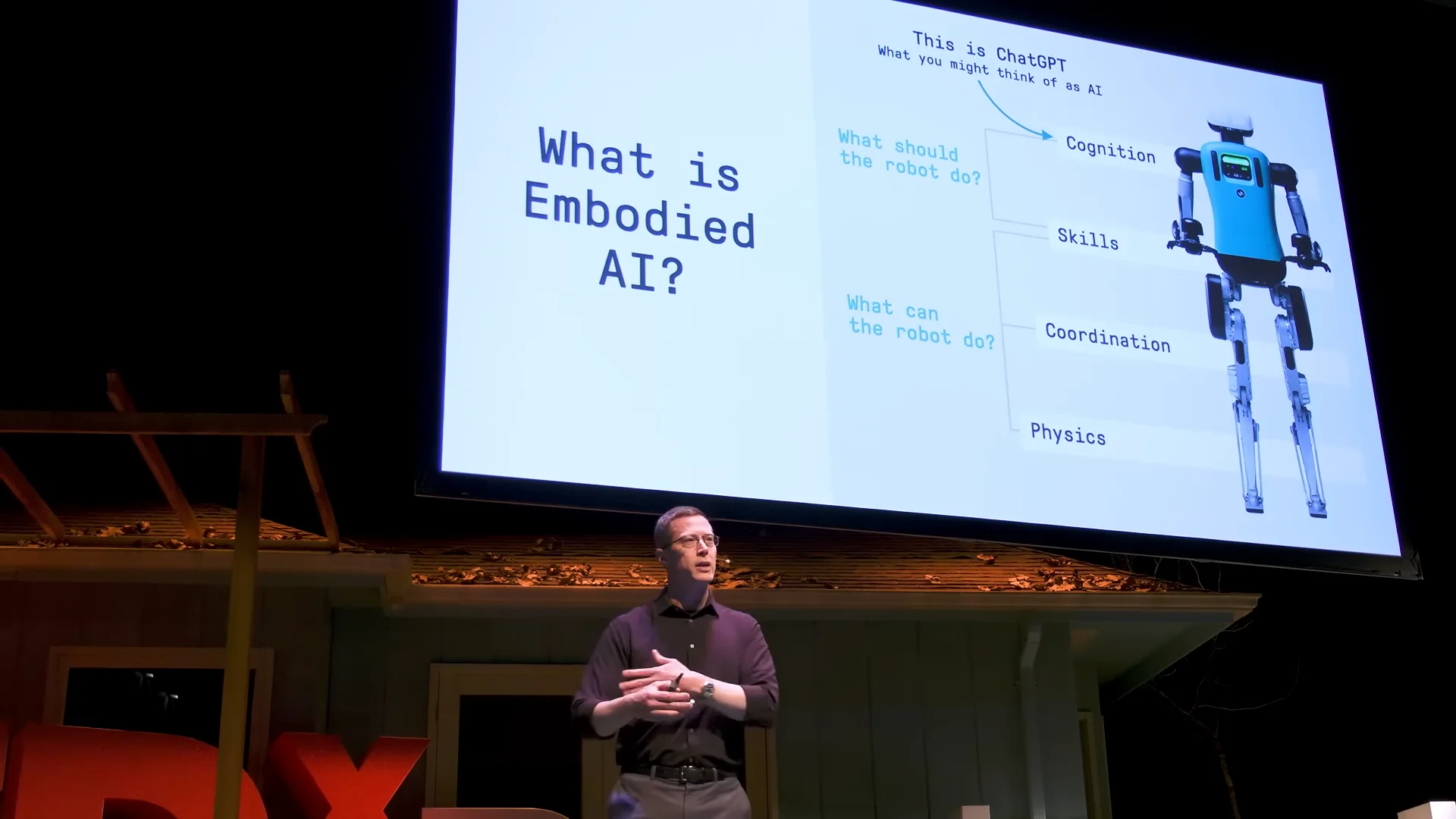
Agility co-founder Jonathan Hurst recently presented a pragmatic vision for the future of humanoid robots during a TED Talk. He projected that by 2050, the humanoid robot market could be twice the size of the current automotive industry, marking a significant shift in robotics. Hurst emphasized that this new era of robotics is characterized by embodied AI, which allows machines to perceive their environments and make autonomous decisions.
Hurst highlighted the challenges of translating digital intelligence into physical motion, noting that unlike text-based models, there is a lack of physical coordination data for robots. This data must be generated through simulation and reinforcement learning, which is a major reason Agility has been cautious about entering the consumer market. He identified three main obstacles preventing humanoids from being used in homes: the chaotic nature of human environments, the need for cost-effective solutions, and the critical importance of safety.
Agility is focusing on industrial applications as a proving ground for humanoid robots, with deployments like Digit working with partners such as Toyota. Hurst likened this approach to the early adoption of electricity, where initial applications were simple yet valuable. He stressed that while safety is a significant barrier, the company is committed to ensuring compliance and reliability in its robots before expanding into more complex environments.
Editor's Note
The robotics industry is at a pivotal moment as companies like Agility navigate the complexities of humanoid robot development. With a focus on safety and practical applications, the shift towards embodied AI presents both opportunities and challenges. As the market evolves, understanding the balance between innovation and risk management will be crucial for stakeholders in robotics and automation.









Leave a comment