

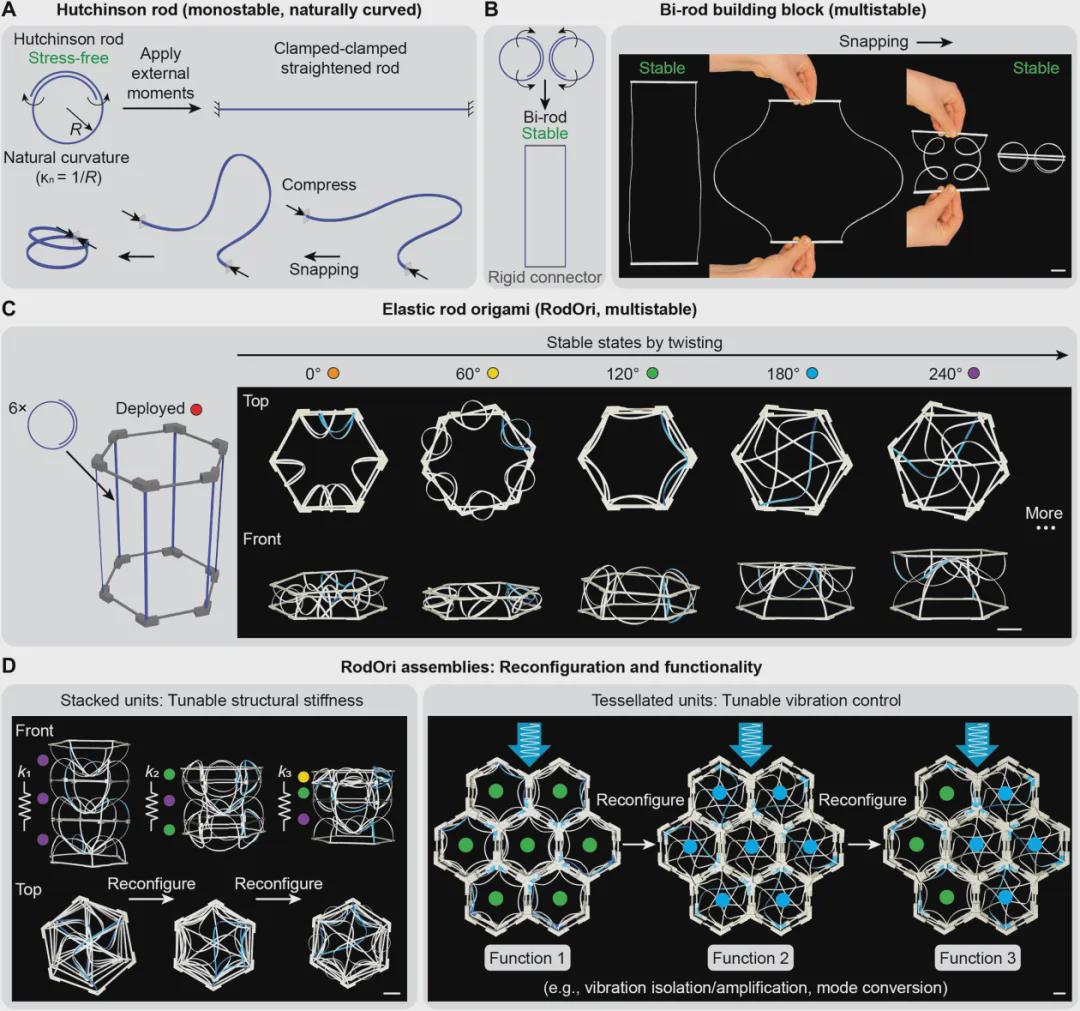
Researchers at Stanford University have developed an innovative robot skeleton that utilizes six elastic rods and 3D-printed frames, enabling it to transform into 20 million distinct shapes without the need for motors or electronic components. This groundbreaking advancement in soft robotics and programmable materials was unveiled recently, showcasing the potential for more versatile and adaptive robotic systems. The team's work aims to enhance the functionality and application of soft robotics, paving the way for future developments in the field. By eliminating traditional mechanical parts, the robot skeleton demonstrates a novel approach to design and engineering, which could lead to significant improvements in how robots interact with their environments.
Copyright Notice
This briefing is an independently written summary based on publicly available reporting and is provided for industry information and news discovery. The original report and source publication are credited and linked where applicable. RobotToday does not claim ownership of third-party source material.
Rights concerns? If you believe any material in this briefing infringes your copyright or other rights, please contact [email protected] with the relevant URL and details. We will review the matter and take appropriate action where warranted.
































Leave a comment