


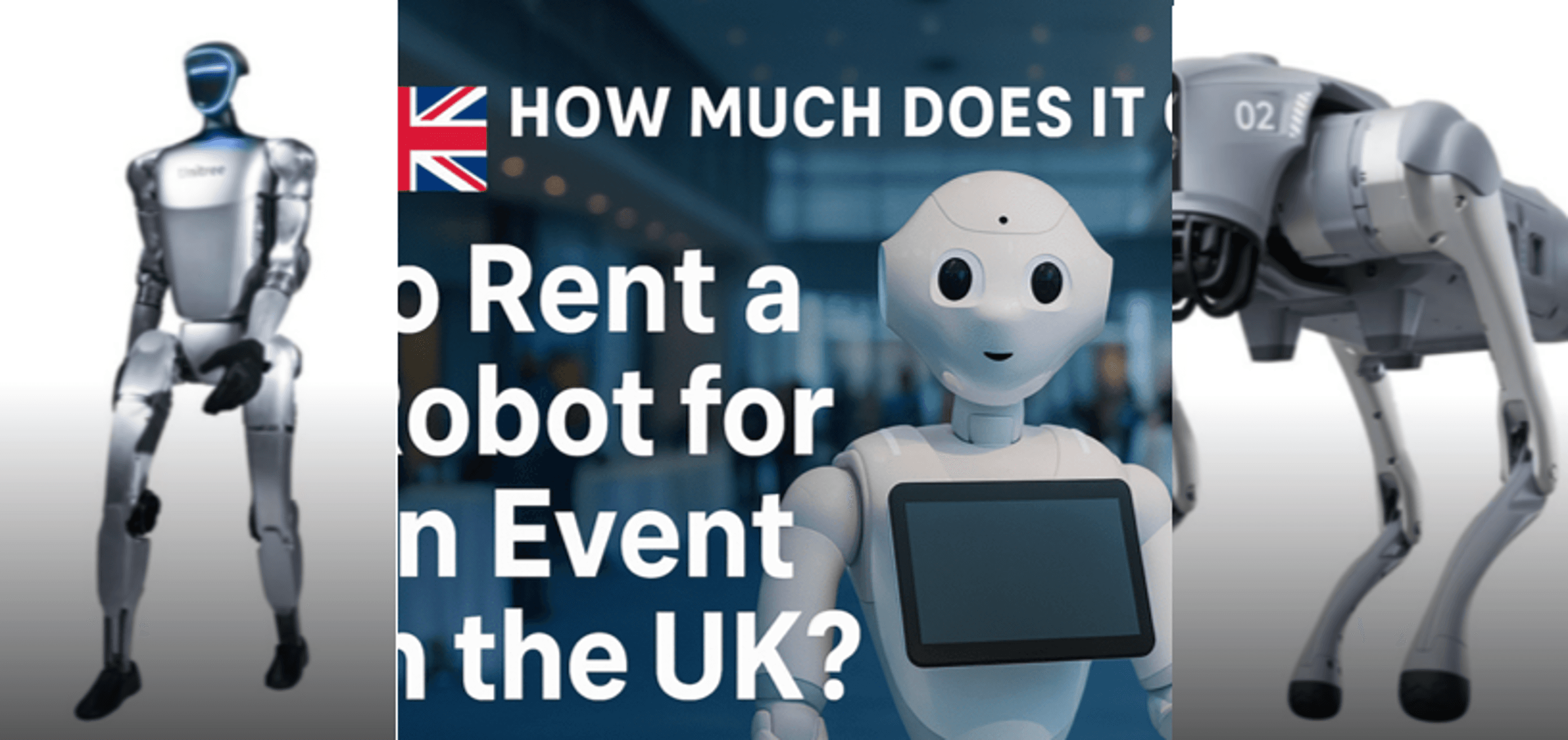
In 2025, the most stress-free and best-paid “employees” aren’t humans—they’re robots.
Europe’s humanoid robots casually show up, take two photogenic steps, and walk away with $3,500/day, like diva models who don’t need makeup. In the U.S., quadruped robots wander around construction sites for $500/day, while human coworkers wonder why they’re still filling timesheets. China? Pure robotics involution—robots have price tiers, service packages, even “event presence standards.” No G1 or H1? Clients think you’re cutting corners. And Japan wins the comedy award: you can rent a robot for the night for the price of bubble tea—cheaper than dating, and absolutely zero arguments.
Methodology: How This Price Index Was Built
Publicly disclosed robot rental prices are rare, fragmented, and often event-specific. This index is based on a combination of: (1) open price lists from rental providers (for example, Unitree Go2 starting around $199/day in the US, Pepper quoted at €3,500–5,000/day in Europe), (2) media reports on Chinese and Japanese rental cases, and (3) normalized estimates compiled by RobotToday Research across multiple vendors and regions. All values are expressed in USD and intended as indicative price bands, not legally binding quotes.
1. Price Index — Humanoid Robots (USD/day)
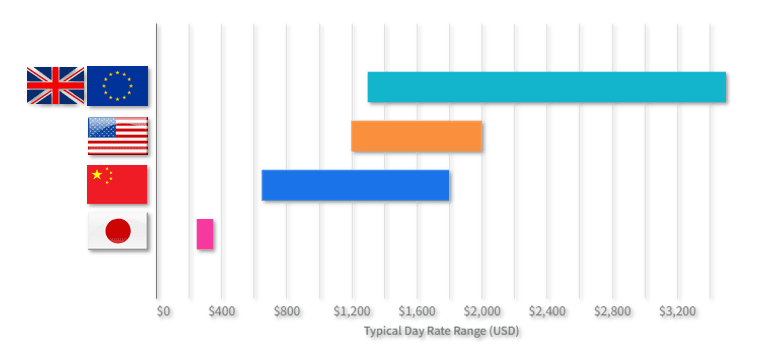
Humanoids: Europe highest ($1.3k–$3.5k), US mid-high ($1.2k–$2k), China competitive ($650–$1.8k), Japan experience-only ($250–$350/night).
2. Price Index — Quadruped Robots (USD/day)
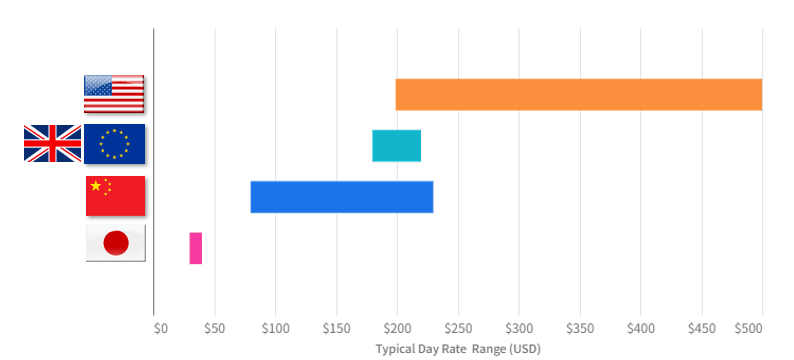
Quadrupeds: US leads engineering ($199–$500), Europe stable ($180–$220), China multi-tier ($80–$230), Japan lifestyle rentals ($30–$40/night).
3. Global Market Heat & Price Dynamics (Jan–Nov 2025)
China — Scale, Speed, and Robot Involution
The Runaway Champion of Robot Rentals
If there’s one place on Earth where humanoid-robot rentals went from “fun gimmick” to “mandatory event equipment,” it’s China.
January–March brought an explosion in demand. Whether it was tech summits, new-mall openings, or corporate ceremonies, everyone wanted a humanoid robot front and center.
By April–July, manufacturers rolled out a full armory—G1, H1, A2, PM01—locking in price tiers and reshaping the entire market.
Then, true to China’s competitive rhythm, August–November saw supply flood in, trimming prices by 3–7% without breaking a sweat.
Today, China is the only country with a fully structured, scalable ecosystem for robot rentals.
In fact, renting a humanoid robot in Beijing or Shanghai feels almost as routine as renting stage lights or audio gear.
China didn’t just create a market—
it industrialized it.
United States — Engineering First, Humanoids Later
Quadrupeds Are Pros; Humanoids Still Finding Their Role,
The U.S. robot-rental landscape has a distinctly American logic to it:
quadruped robots are the professionals,
humanoids are the interns.
Boston Dynamics Spot, the Unitree Go2, and their peers hold steady at $199–500/day, functioning as reliable tools for construction sites, industrial inspection, and engineering work—very blue-collar, very mission-driven.
Humanoids, meanwhile, mostly circulate through demos, exhibitions, product launches, and media events. They grab attention, but they aren’t clocking industrial shifts yet.
In short:
Quadrupeds in America = the star athlete.
Humanoids = the student club hoping for varsity.
But when U.S. humanoids mature, expect the price spread to change fast.
Europe (UK/EU) — Premium Pricing With Zero Apology
Europe treats humanoid robots differently from anywhere else:
as premium entertainment assets. Not labor. Not tools.
Think: high-status performers.
Event agencies in the UK and EU book them like celebrity guests:
high appearance fee, high labor fee, custom scripting, custom staging—and even travel charges that rival touring musicians.
The results speak for themselves:
prices stay high, fluctuate very little, and remain fully accepted by corporate clients.
Why? Because in Europe’s brand-driven event economy:
Robots aren’t workers—
they’re the headliners.
Japan — The World’s First “Robot Airbnb” Economy
Japan doesn’t just rent robots.
Japan romanticizes robots.
Where most countries rent robots for work, Japan rents them for companionship.
Consumers can take home a G1 or Go2 for a night—like a futuristic pet crossed with a smart gadget—at prices so accessible they feel unreal.
This isn’t industrial deployment.
This is lifestyle.
Japan has quietly created the world’s only consumer-grade robot rental culture—
a preview of how personal robotics may enter everyday life.
4. Key Takeaways for RobotToday Readers
1|The Global Price Gap Is Not Subtle—It’s Dramatic
- Europe: the priciest humanoids on Earth
- Japan: the cheapest (experience-based) rentals
- China: the most transparent and structured price ecosystem
2|China Remains the Only Truly Scalable Robot-Rental Market
With diverse suppliers, rich model variety, high deployment frequency, and clearly tiered pricing, China is the only country where humanoid rental has evolved into a real industry—fast, competitive, and standardized.
3|Humanoid Rental Is Still Early Worldwide—But Regional Identities Are Already Clear
- China: commercial activations + tech showcases + emerging light-industrial use
- United States: content production + engineering tasks (quadrupeds dominate)
- Europe: premium branding & live-event entertainment
- Japan: consumer-experience economy & lifestyle robotics
Robot rental prices reveal how close each country is to real humanoid adoption—and who is leading the shift from “show robots” to “working robots.”






Leave a comment