


Preferred Networks
Tokyo deep learning company founded 2014; develops MN-Core AI chips, PLaMo LLMs, Kachaka AMR, and physical AI solutions for robotics and manufacturing.
Contact Preferred Networks
WEBSITE
https://www.preferred.jpPHONE
2026.04.21HEADQUARTERS
Japan

Company Facts
Founded
2014
Primary Role
Software/Algorithm
Company Size
-
Primary Region
Asia-Pacific
Annual Sales
-
Funding Stage
-
Funding Total
-
U.S. Nuclear Power Plants Embrace AI Integration for Operational Efficiency
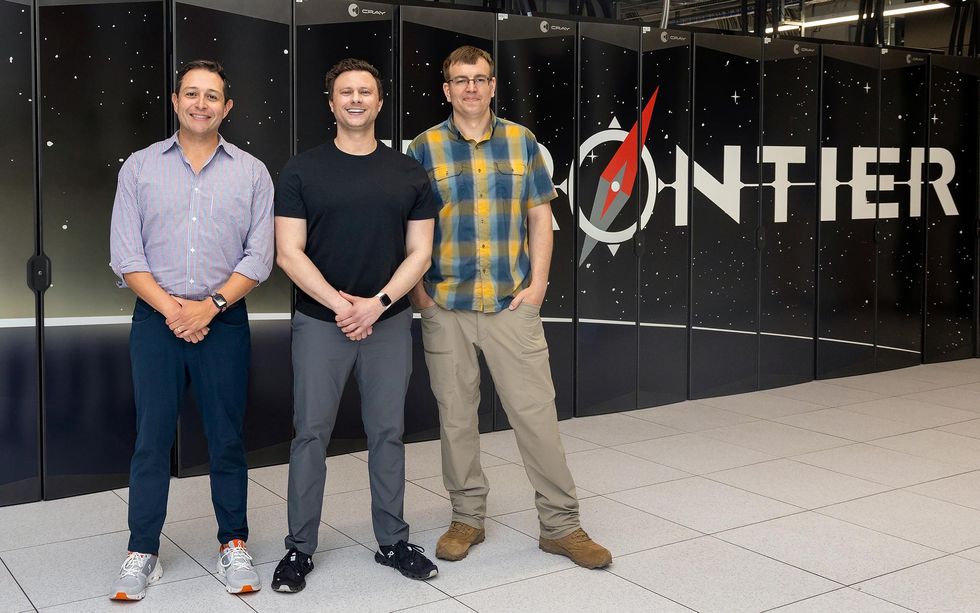
The U.S. nuclear power sector is increasingly adopting AI technologies to enhance operational efficiency. Nearly all of the 94 nuclear reactors in the U.S. have been offered AI integration, with many accepting the opportunity. Atomic Canyon's NIVA, a virtual assistant for the nuclear industry, is now available across the fleet, while Nuclearn's products are utilized by over 65 partners, addressing workforce challenges and regulatory complexities. The integration of AI is crucial for the nuclear industry, which faces an aging workforce and hardware. According to Nuclearn CFO Jerrold Vincent, AI can help manage intricate regulations and streamline documentation processes, essential for regulatory compliance. The collaboration between technology firms and the nuclear sector aims to revitalize nuclear power, which is seen as vital for meeting the growing electricity demands of data centers. Looking ahead, the nuclear industry must navigate public perception challenges while leveraging AI to enhance operational capabilities. As the demand for advanced reactors increases, the successful integration of AI will be pivotal for the industry's future. No further timeline was disclosed at the time of publication.
Nuclear-power Artificial-intelligence Epri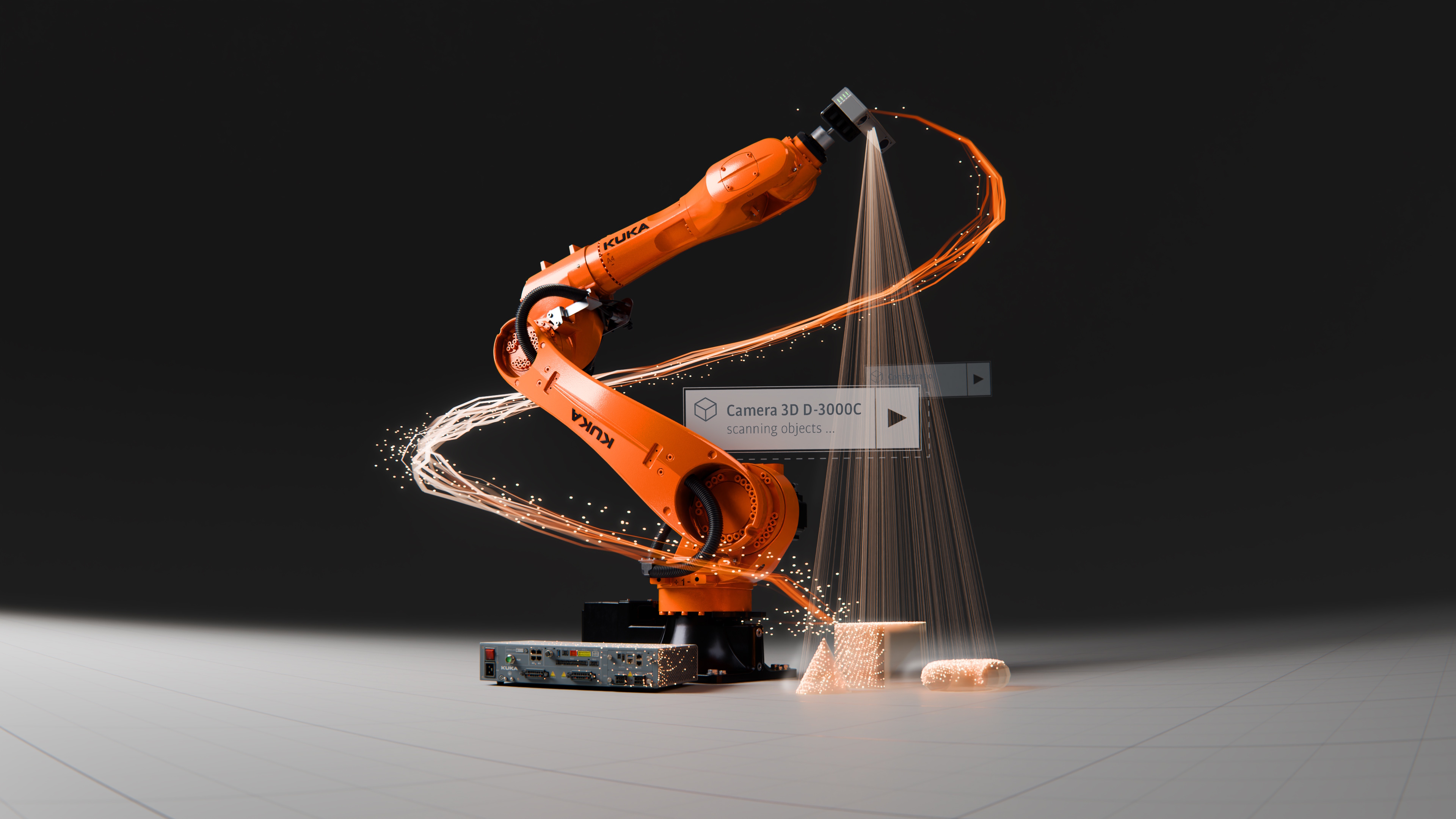
iiQKA.AI Vision Enhances Industrial Image Processing with User-Friendly Interface
iiQKA.AI Vision has introduced a standalone vision application within iiQWorks, designed to simplify industrial image processing. This application features a graphical user interface that allows users to implement vision applications efficiently, utilizing drag-and-drop functionality, pre-built templates, and guided workflows from setup to commissioning. The significance of this development lies in its ability to ensure process reliability through robust image processing capabilities, including precise 2D and 3D object recognition, automatic position determination, and gripper point calculation. The system is designed to perform reliably under varying component conditions and changing lighting, making it suitable for diverse industrial applications. Looking ahead, the seamless integration of iiQKA.AI Vision with iiQWorks and the robot controller facilitates a unified system from engineering to operation. This integration supports a consistent workflow from configuration to deployment, along with centralized management and monitoring via a web interface. No further timeline was disclosed at the time of publication.
First Coordinated Drilling Robot Achieves 10x Speed and 99% Accuracy
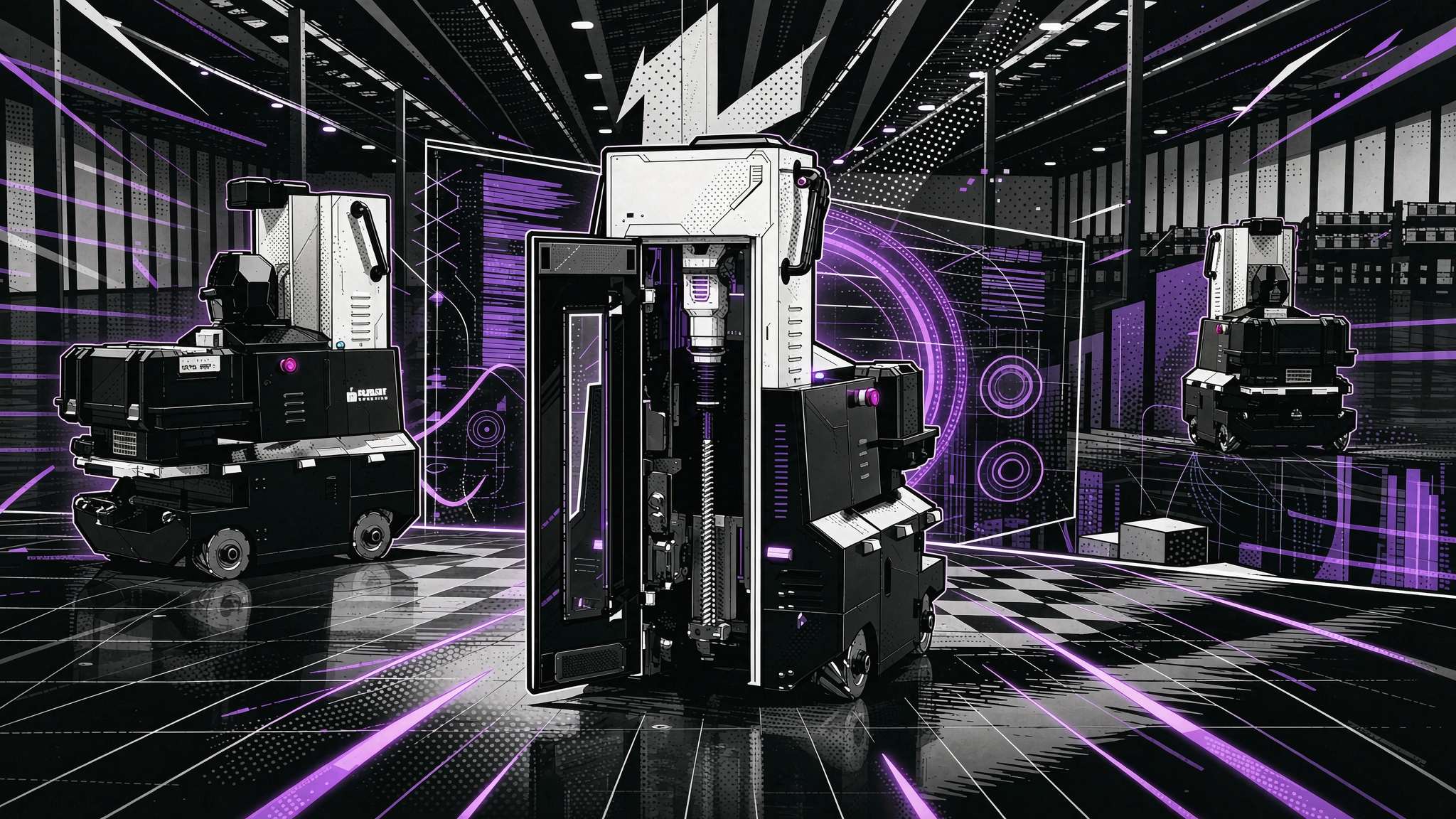
A groundbreaking drilling robot has been developed, showcasing the ability to perform coordinated operations with a speed ten times greater than traditional methods and an accuracy rate exceeding 99%. This innovation marks a significant advancement in drilling technology, potentially transforming various industrial applications. The introduction of this robot is crucial as it addresses the limitations of conventional drilling techniques, which often suffer from slower speeds and lower precision. By enhancing operational efficiency, this technology could lead to cost savings and improved outcomes in sectors that rely on drilling processes. Looking ahead, industry stakeholders should monitor the deployment and performance of this drilling robot in real-world scenarios. No further timeline was disclosed at the time of publication.
Robotics Automation AI
IROS 2026 Best Paper Finalists: South Korea Leads
Ten papers made the IROS 2026 Best Paper and Best Student Paper shortlist, four from South Korea. What each one does and what it means for industry.
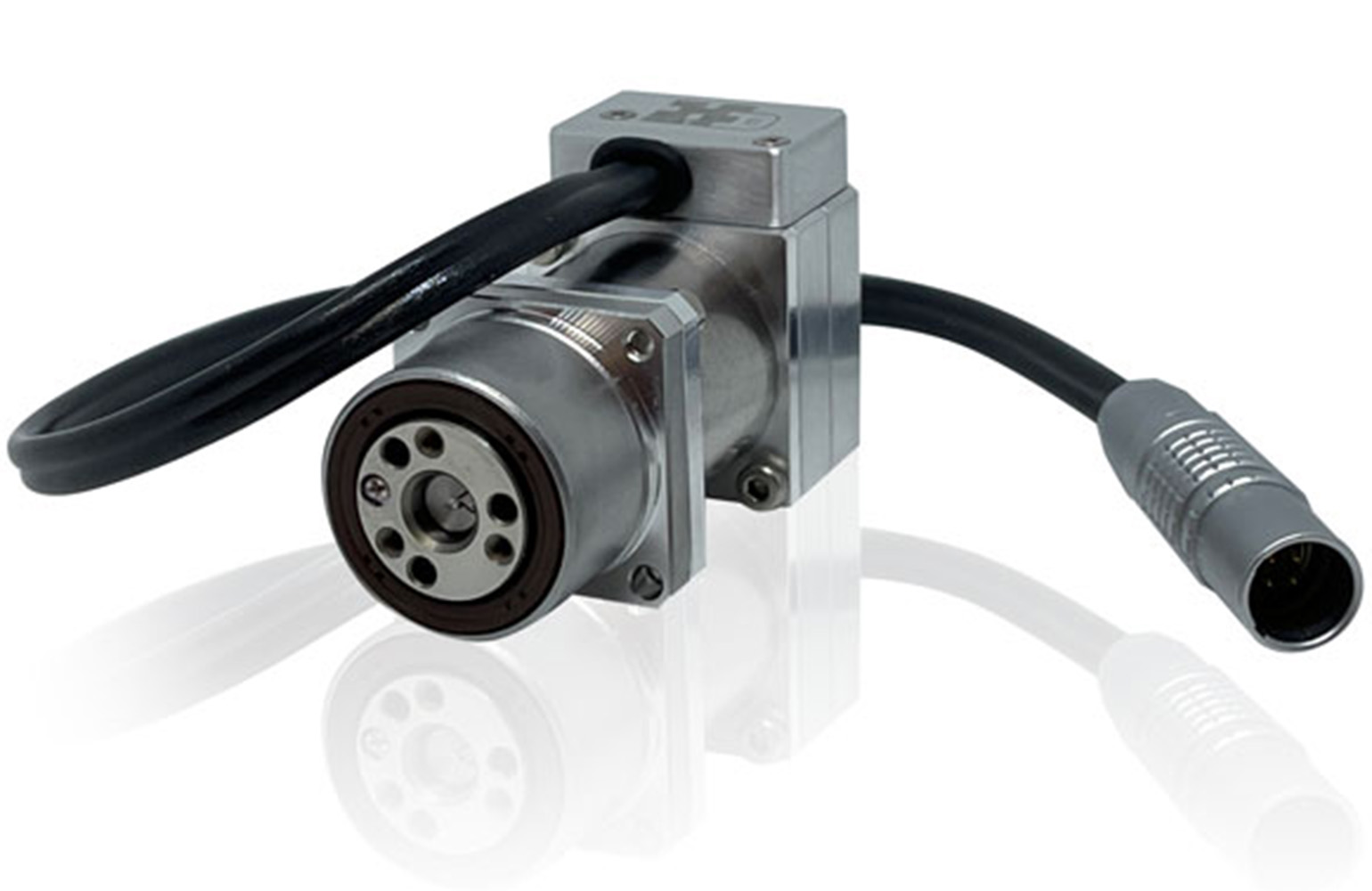
Harmonic Drive to Present on Integrated Actuators at RoboBusiness 2026
At RoboBusiness 2026, Marcel Almonte from Harmonic Drive will lead a session on integrated drive actuator design. Scheduled for October 20 at 10:30 a.m. PT in Santa Clara, California, the session will explore the benefits of integrated actuators in reducing engineering complexity and enhancing system performance. This presentation is significant as it addresses the critical decision-making process in selecting motion architectures for robotics. Attendees will learn how integrated actuators can streamline system integration, reduce cabling complexity, and accelerate time-to-market, ultimately leading to more efficient robotic designs. Participants should watch for practical insights on selecting motion solutions tailored to specific application requirements and constraints. No further timeline was disclosed at the time of publication.
Actuators / Motors / Servos Events Motion Control News Robot Components Technologies
Elmo Motion Control Introduces Innovative Titanium and Platinum Servo Solutions
Elmo Motion Control has unveiled its latest innovations, the Titanium multi-axis motion controller family and the Platinum servo drive series. These products integrate multi-axis control, high computing power, and functional safety into a compact design, enabling machine builders to enhance performance while minimizing component complexity. This development is significant as it addresses the growing demands in sectors like semiconductors, robotics, medical devices, and defense, where traditional machine designs often rely on multiple controllers and external safety systems. Elmo's integrated approach allows for smaller, faster, and safer machines, ultimately reducing the total cost of ownership for OEMs. Looking ahead, the focus will be on how these advancements can further streamline installation and commissioning processes, particularly with the introduction of Elmo’s Application Studio III (EASIII). No further timeline was disclosed at the time of publication.

IEEE CASE 2027 Linz: Aug 23–27 | Automation Science
IEEE CASE 2027, the 23rd Conference on Automation Science and Engineering, runs Aug 23–27, 2027 in Linz, Austria. Chairs, deadline and scope.

Transforming Industrial Maintenance: The Role of Agentic and Physical AI in Repair Efficiency
The industrial sector has long relied on predictive maintenance to foresee equipment failures, but this approach often leads to administrative bottlenecks. Alerts generated by AI models trigger slow, manual processes that hinder timely repairs. To overcome these challenges, industries are shifting towards a model that incorporates agentic AI and physical AI, enabling autonomous orchestration of logistics and execution of repairs. Agentic AI allows for the autonomous management of maintenance tasks, optimizing scheduling and logistics without human intervention. This transition is crucial for enhancing operational efficiency, as it transforms maintenance from a reactive process into a self-optimizing engine. For instance, in high-volume manufacturing, agentic AI can immediately address issues flagged by predictive models, significantly reducing downtime and improving return on investment. Looking ahead, the integration of agentic and physical AI is set to redefine maintenance operations. As organizations adopt these technologies, they must ensure safety through deterministic bounding to mitigate risks associated with autonomous decision-making. The future of industrial maintenance will likely see a seamless blend of AI-driven logistics and physical execution, paving the way for more efficient and effective repair processes.
Factory / Analytics
Exploring Custom Motor Solutions and Advanced Motion Control Technologies
Mosrac Motor Co., Ltd. specializes in custom frameless motor solutions tailored to various applications, focusing on torque, voltage, size, structure, and materials. Their engineers collaborate with clients to design motors that meet specific requirements, making Mosrac a reliable partner for high-performance motors. The H-811.I2HS hexapod from PI USA (Physik Instrumente) offers six-axis motion and high dynamics, ideal for precision applications in photonics, optics, and automation. This compact system features patented overload protection, ensuring reliability during operation and setup, which is crucial for demanding environments. Additionally, KNF vacuum pumps and Harmonic Drive's miniature speed reducers are highlighted for their durability and precision in automation applications. With innovations in motor technology and control solutions, companies like MMP Inc. and Elmo Motion Control Inc. are pushing the boundaries of performance and efficiency in robotics and automation systems. No further timeline was disclosed at the time of publication.
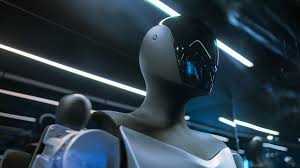
Automation Solutions for the Future of Sheet Metal Processing
The increasing variety of parts, shorter cycle times, and a shortage of skilled labor are intensifying the demand for automation in sheet metal processing. Schmalz addresses this need with a comprehensive portfolio of end-of-arm tooling (EOAT) and handling solutions, including vacuum grippers and gripping systems, as well as intelligent complete solutions for automated processes. This shift towards automation is crucial as manufacturers seek to enhance efficiency and productivity in response to market demands. The ability to quickly adapt to diverse production requirements while maintaining quality is essential for competitiveness in the sheet metal industry. Looking ahead, the focus will be on how companies like Schmalz continue to innovate and provide solutions that meet the evolving challenges in sheet metal processing. No further timeline was disclosed at the time of publication.
Allgemein
Teradyne Launches Titan HP Platform with Enhanced Burn-In for AI Data Center Devices
Teradyne, Inc. has unveiled its Titan™ HP platform, which features advanced burn-in capabilities tailored for high-power AI and automotive devices. This innovative system allows for per-device thermal control and realistic workload testing, optimizing reliability stress functions and reducing costs associated with testing and time to market. The introduction of the Titan HP platform is significant as it addresses the increasing demand for high-reliability testing in AI silicon, akin to standards in the automotive sector. By enabling system-level reliability stress testing, Teradyne aims to enhance the quality of shipped devices while managing capital costs and manufacturing space constraints. Looking ahead, Teradyne's Titan HP is positioned to support the evolving power requirements of future AI accelerators. The platform is already available for production use, with demonstrations scheduled at upcoming industry events, including SEMICON West and the IEEE International Test Conference.

Understanding Connector Failures in Robot Cabling: M8 and M12 Selection for Motion Applications
The article discusses the critical factors affecting the performance of M8 and M12 connectors in robotic applications. It emphasizes that while connectors may meet datasheet specifications, their performance in real-world motion scenarios is often overlooked. This oversight can lead to recurring failures in robotic systems, particularly when connectors are subjected to mechanical loads during operation. Understanding the dynamics of robot movement is essential for ensuring reliable connections. The article highlights that connectors and cables must be evaluated as part of a complete moving system, considering factors such as cable length, support points, and the mechanical loads introduced by the robot's motion. Failure to address these issues can result in intermittent faults that persist even after component replacement. Looking ahead, it is crucial for engineers to assess the entire motion envelope of robotic systems when selecting connectors. This includes evaluating the impact of cable routing and support on connector performance. No further timeline was disclosed at the time of publication.
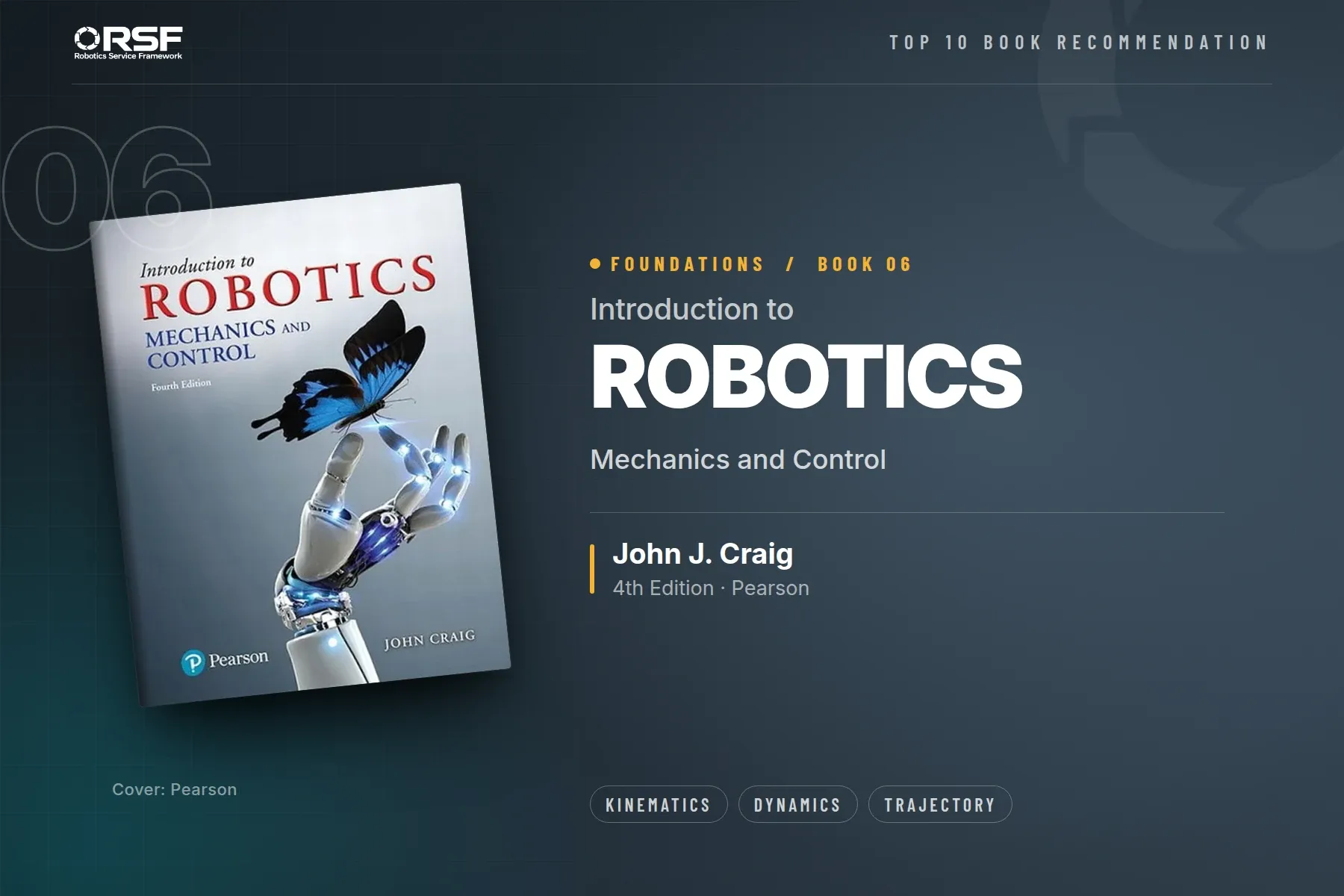
Introduction to Robotics J. J. Craig — RSF Top 10 Robot Education Textbooks · No. 6
Six of ten benchmark universities teach kinematics from Craig. Frames, transforms and D-H parameters: the language vendor manuals already speak.

AI for Science 2026: The Global Race for Scientific Discovery
2026 AI for Science landscape report: WAIC 2026 exhibitor breakdown, MIT Boltz-2 and CMU Coscientist case studies, US/China/EU policy comparison, Anthropic Claude Science, and US academic cautionary views.
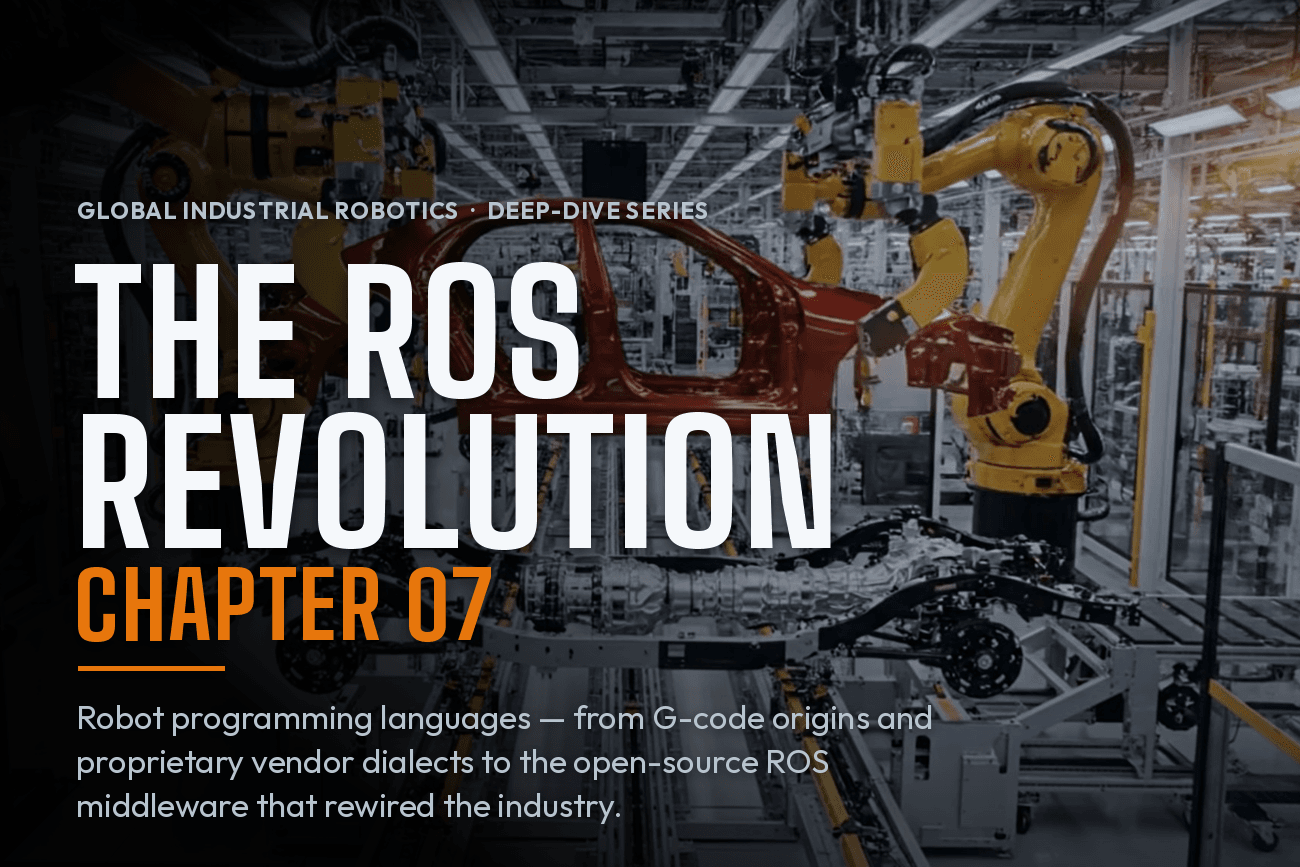
Robot Programming Languages 2026: From G-Code & FANUC KAREL to ROS2 — Complete History & Industrial Guide
A comprehensive guide to industrial robot programming language evolution: G-code and NC origins, FANUC KAREL/TP, ABB RAPID, KUKA KRL, Yaskawa INFORM, the ROS open-source revolution, ROS2 architecture, ROS-Industrial consortium, OPC-UA, TSN, and real-time Linux — how six decades of software history define today's factory floor.

ROBOTTODAY WEEKLY May 11 - 15, 2026
This week in robotics: Figure AI's humanoids hit a 24/7 nonstop autonomous work milestone, Mind Robotics raises $400M to top $1B, Waymo recalls 3,800 robotaxis over flooding, Unitree debuts the world's first mass-produced human-carrying mecha, and WIRobotics closes a $68M Series B. May 11–15, 2026.

SpaceX S-1 Flags Orbital AI Data Centres as High-Risk, Early-Stage Ventures
SpaceX's confidential IPO filing frames orbital AI data centres as early-stage and commercially unproven, flagging Starship dependency and extreme space environment risks as key uncertainties.

Gecko Robotics Wins $71M Navy AI Contract for Fleet Readiness
Gecko Robotics secures a $71M U.S. Navy IDIQ contract deploying AI inspection robots and the Cantilever digital twin platform across the Pacific Fleet to hit 80% readiness by 2027.
Robotics Exits: Why 2026 May Define Founder Leverage for Years
Robotics M&A is entering a critical window. Historical data from LiDAR, 3D printing, and warehouse robotics shows early exits capture premiums—late exits face distressed valuations.

How Japan, Korea, Singapore and Vietnam Are Shaping the Next Global Automation Era
Japan, Korea, Singapore, and Vietnam are driving the next wave of global automation with strategic robotics innovation, manufacturing excellence, and policy support.


