Industry Briefing
A single destination for timely, editor-curated robotics news from around the world.
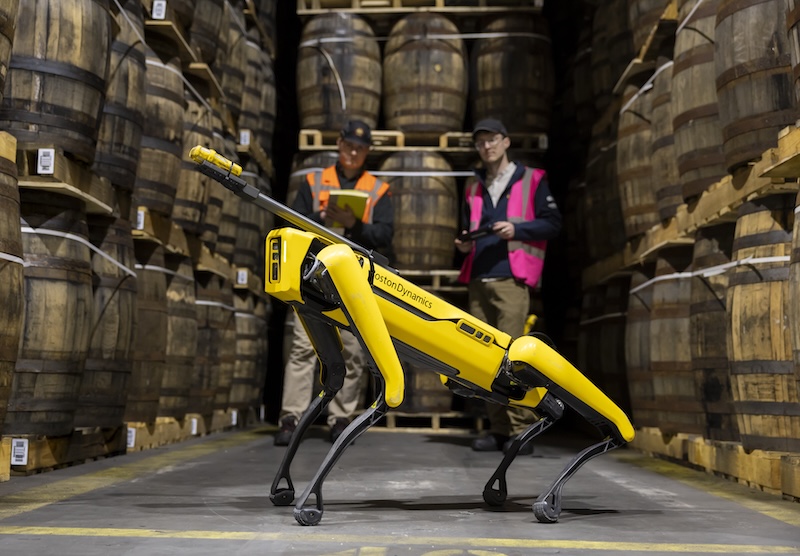
Opinion: Why robot dogs are leading the pack in factory floor efficiency
By Andrew Hamilton, head of the Digital Process Manufacturing Centre (DPMC) at the National Manufacturing Institute Scotland (NMIS) Manufacturing facilities today are sprawling, interconnected environments where equipment operates continuously and processes stretch across large physical footprints. From factory floors and plant rooms to service corridors and external assets, engineering teams need clear visibility across areas […]
Features Industry Autonomous robots boston dynamics spot digital manufacturing factory inspections
China’s Midea to deploy humanoid robots in factory operations next month
Midea, a leading Chinese electrical appliance manufacturer, has announced plans to introduce its self-developed humanoid robots next month at its washing machine factory located in Jingzhou, Hubei Province. The robots will assist with machine operations, conduct equipment inspections, and handle material logistics. This initiative marks a significant step in automating production processes. Additionally, starting in the latter half of this year, Midea intends to deploy these robots in offline retail stores, expanding their roles in customer service and product management. The move aims to enhance operational efficiency and improve customer interactions in a rapidly evolving retail environment.
News Feed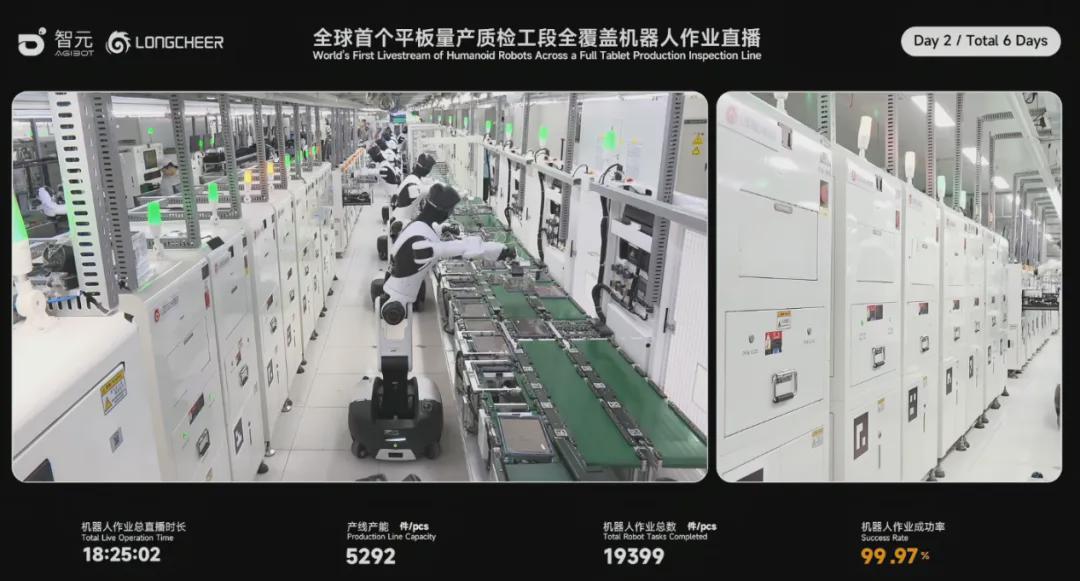
Robots Transition to 'Deployment Mode': Insights from Zhiyuan's 6-Day Live Stream
Longqi Technology's Nanchang factory hosted a six-day live stream event from June 23 to 28, showcasing the capabilities of its Zhiyuan G2 humanoid robot cluster as it conducted quality inspections on tablet computers. This demonstration represented a pivotal transition from traditional single-task operations to a more integrated approach to workflow management, underscoring the growing demand for flexible automation solutions within the 3C manufacturing industry. The event highlighted the G2 robots' effectiveness in real production settings, illustrating their potential to enhance efficiency and adaptability in manufacturing processes.
Humanoid Robots Quality Inspection Flexible Automation 3C Manufacturing Industrial Robotics
ZhiYuan G2 Launches Live Broadcast of Global First 3C Production Line Quality Inspection
Beginning June 23, Longqi Technology will host a six-day live broadcast featuring multiple ZhiYuan G2 robots operating on the production line at its Jiangxi factory. This event aims to provide an unedited and unrehearsed look at the robots as they conduct thorough quality inspections within the 3C electronics manufacturing process. The initiative highlights the practical application of embodied intelligence in a real-world setting, showcasing advancements in automation and robotics in the manufacturing industry.
Robotics Quality Inspection 3C Electronics Manufacturing Automation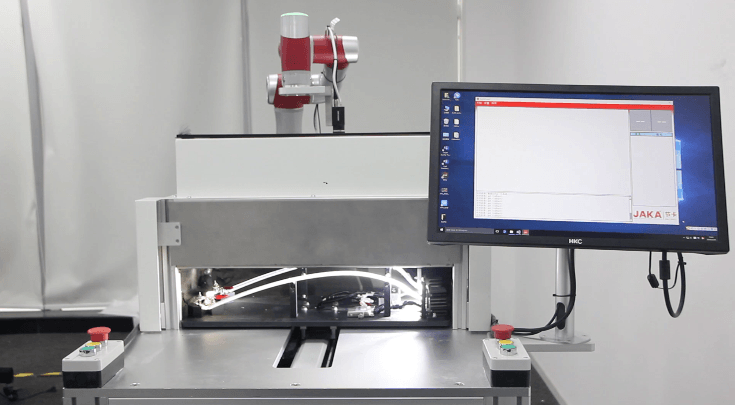
Top 5 Trends of the Industrial Robot Arm Industry in 2026
In 2026, the landscape of industrial automation and robotics is undergoing a transformative shift, moving from rigid machines to intelligent, adaptive systems. This evolution is driven by global manufacturing challenges, including labor shortages and the demand for hyper-personalization. Key advancements in connectivity and artificial intelligence are reshaping productivity and safety on factory floors. A major trend is the emergence of "self-evolving" robots that utilize generative AI to autonomously learn new tasks, minimizing the need for manual programming. Additionally, agentic AI empowers these machines to make informed decisions in complex environments, enhancing their ability to predict equipment failures and optimize operations in real-time. The convergence of Information Technology (IT) and Operational Technology (OT) is facilitating seamless data exchange between digital systems and physical robots. This integration allows for the creation of digital twins, enabling manufacturers to simulate production changes before implementation. Cloud connectivity has become standard, with nearly half of new deployments leveraging IoT technology for predictive maintenance. This capability allows robots to monitor their health and schedule repairs proactively, reducing unplanned downtime and long-term costs. Furthermore, advanced 2D and 3D vision systems are enhancing robots' capabilities, enabling them to perform high-speed quality inspections and adjust their behavior for safety around human workers. The shift towards modular and scalable automation is also notable, as manufacturers adopt flexible robot cells that simplify integration and facilitate quick changeovers. Leading this innovation is JAKA Robotics, whose JAKA A12 model exemplifies the future of flexible automation. With a 12 kg payload and a 1425 mm working radius, the JAKA A12 combines high performance with user-friendly deployment through a wireless software ecosystem, positioning itself as a key player in the evolving industrial landscape.
Deep Robotics Deploys Quadruped Robots at FAW Plant for Inspection
Deep Robotics has introduced its Jueying X30 quadruped robots at a FAW Group factory, marking a significant step towards automating inspection tasks and enhancing industrial maintenance efficiency. This deployment, which took place in October 2023, aims to streamline operations within the manufacturing environment. By utilizing advanced robotic technology, the initiative seeks to reduce human error and increase productivity in routine inspections. The integration of these robots is expected to not only optimize maintenance processes but also contribute to overall operational effectiveness at the facility.
News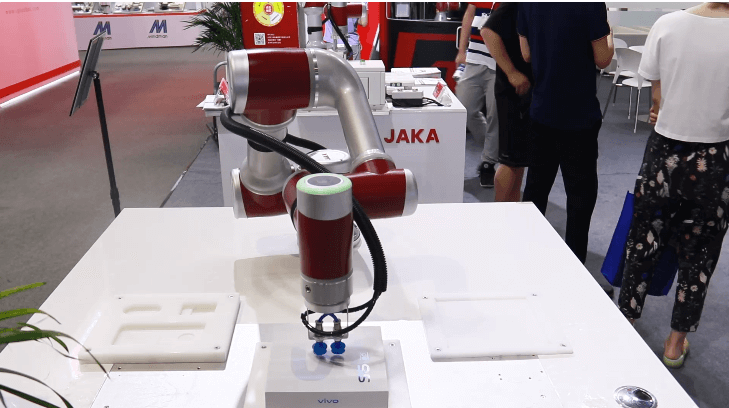
How to Maintain and Manage Industrial Robot Arms for Performance
JAKA, a leader in industrial automation, emphasizes the importance of regular maintenance and systematic management for the longevity and reliability of industrial robot arms. The company advocates for a proactive approach to care, which includes establishing a consistent maintenance routine that involves mechanical inspections and software updates. JAKA’s robot arms are designed with durability in mind, featuring robust circuit designs that minimize unexpected faults and facilitate efficient inspections. To enhance management, JAKA incorporates built-in diagnostics and intuitive controls, allowing technicians to easily access system status reports and error logs. This functionality aids in quickly identifying performance issues before they impact production. The company also highlights the significance of optimizing the operational environment, ensuring that factors such as dust levels and ambient temperature align with the robot's specifications to maintain its performance. By integrating their robot arms into a factory's control system, JAKA enables centralized monitoring of performance metrics, which supports data-driven maintenance decisions. The combination of routine care, advanced technology, and environmental management is essential for sustaining the performance of industrial robot arms. JAKA’s design philosophy aims to support these practices, ensuring that their robotic systems remain reliable and productive assets for manufacturers.
Industrial Cobots vs. Automated Guided Vehicles (AGVs): Better for Assembly Logistics?
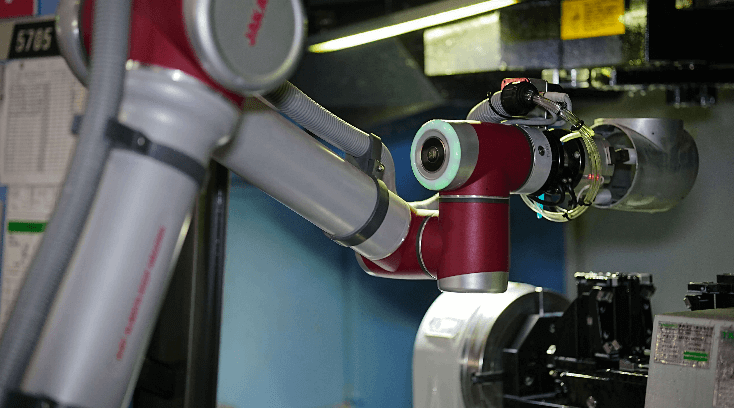
In the evolving landscape of modern manufacturing, JAKA is advocating for the adoption of industrial collaborative robots (cobots) over traditional Automated Guided Vehicles (AGVs) for assembly logistics. This shift is driven by the need for greater flexibility and efficiency in material handling, particularly as production demands change. While AGVs have long been utilized for point-to-point transport along fixed paths, they struggle to adapt to the dynamic requirements of assembly lines, which often necessitate rapid reconfiguration for different product variants. In contrast, a stationary cobot can easily manage hand-offs between multiple workstations and human operators, allowing for quicker reprogramming and less disruption during production adjustments. Moreover, cobots offer added value by performing tasks such as quality inspections or light assembly during the transport process, transforming logistics nodes into productive checkpoints. This capability not only reduces handling time but also shortens overall cycle times, a benefit that standalone AGVs cannot match. Additionally, the integration of cobots simplifies factory layouts by eliminating the need for dedicated navigation lanes and charging stations required by AGVs. Operating within existing workspaces, cobots streamline operations and reduce the complexity of managing multiple systems. Ultimately, while AGVs remain effective for long-distance transport of standardized loads, JAKA's cobots present a compelling alternative for intricate, variable tasks within compact assembly environments, enhancing both logistical efficiency and production value.
Robotics needs a service framework.
RSF defines a common language for robot service capability, lifecycle operations, certification pathways, and service-provider networks.