Industry Briefing
A single destination for timely, editor-curated robotics news from around the world.

The Importance of Companion Mobile Apps in Robotics and Automation Systems
Companion mobile apps are becoming essential in robotics and automation, allowing operators to manage machines remotely. As the International Federation of Robotics reported 542,000 industrial robot installations in 2024, the need for efficient monitoring and maintenance alerts has surged, making these apps integral to operations. The rapid growth of robot fleets, now exceeding 4.6 million units globally, necessitates real-time telemetry and role-based access in companion apps. These applications must provide offline functionality and timely alerts to prevent operational delays, as a five-minute lag in communication can lead to significant production losses. Looking ahead, the evolution of robotics-as-a-service is transforming companion apps to support features like usage-based billing and in-app payments. This shift indicates that the role of these apps will expand beyond monitoring to include handling regulated financial data, reflecting the changing landscape of industrial automation.
Automation Robotics Software automation companion apps cybersecurity
Advancements in PLC Programming for Contemporary Automation Systems
The evolution of programmable logic controllers (PLCs) has transformed industrial automation, shifting from hard-wired systems to software-configurable solutions. Initially, PLC programming was constrained to factory floors with handheld devices, but advancements in microprocessors and personal computers have allowed for offline editing and the adoption of the IEC 61131-3 standard, which formalized programming languages. Modern PLCs now utilize integrated development environments (IDEs) that support advanced features like simulation and live debugging, while Ethernet-based networking has integrated PLCs with IT systems. This evolution has led to the emergence of safety-certified controllers and motion-integrated PLCs, enhancing the capabilities of PLC programming and aligning it with real-time software engineering principles. As industrial automation continues to evolve, the separation of real-time control from higher-level functions has become a key advantage. This architecture allows for deterministic control logic to coexist with non-deterministic functions, enabling PLCs to operate as integral components of sophisticated cyber-physical systems. No further timeline was disclosed at the time of publication.

Advancing End-to-End Automation by Integrating Factory Operations with Business Systems
Manufacturers have long automated physical production processes, utilizing robots and sensors for efficiency. However, many surrounding processes still rely on manual data entry and communication, leading to inefficiencies. The next phase of automation focuses on integrating operational systems with business software, enhancing communication across departments. This integration is crucial as it allows for real-time information sharing between operational technology and business systems, which traditionally serve different purposes. For instance, while a machine can detect performance issues, the process of creating maintenance tickets often remains manual. End-to-end automation aims to streamline these handoffs, ensuring that relevant information flows seamlessly across organizational boundaries. Looking ahead, the implementation of an embedded integration platform is essential for connecting operational data with various business applications like ERP and CRM systems. This approach not only simplifies the integration process but also ensures that operational decisions remain within the appropriate environments while coordinating necessary administrative actions. No further timeline was disclosed at the time of publication.
Automation Business Design Engineering ai agents business process automation
ETCO Incorporated Launches New Electrical Connectors and Terminals for Robotics and Automation
ETCO Incorporated has unveiled a new range of standard and custom electrical connectors and terminals designed specifically for automation systems and robotics. These products are engineered to endure intense operations, constant motion, and vibration, making them suitable for demanding applications. The introduction of these connectors and terminals is significant as they address the growing need for reliable electrical components in automation and robotics. With the increasing complexity of automated systems, the durability and performance of electrical connections are crucial for operational efficiency and safety. Looking ahead, industry stakeholders should monitor the adoption of ETCO's new products in various applications. The effectiveness of these connectors and terminals in real-world scenarios will be key to their success in the market. No further timeline was disclosed at the time of publication.

AutoStore Establishes Global Supply Agreement with Amazon for Automation Systems
AutoStore has entered into a strategic supply agreement with Amazon, allowing the e-commerce leader to procure AutoStore automation systems worldwide. This agreement outlines the terms for future supply but does not obligate Amazon to purchase specific quantities of equipment at this time. The significance of this agreement lies in the potential expansion of collaboration between two major players in warehouse automation and e-commerce fulfillment. While no financial details, order volumes, or deployment timelines were disclosed, the framework facilitates future procurement without the need for renegotiation. Looking ahead, the agreement positions AutoStore to leverage Amazon's extensive logistics operations, which heavily utilize robotics and automation. AutoStore has approximately 2,000 systems installed in 68 countries, and the company is focusing on its “Intelligent Fulfillment” approach, integrating automation, software, and AI to enhance fulfillment processes. No further timeline was disclosed at the time of publication.
News Retail Warehouse robots amazon amazon robotics asrs
Stronger Cybersecurity for Today's Connected Automation Systems
Bosch Rexroth is hosting an event focused on the Cyber Resilience Act (CRA) to address the growing challenges of cyber threats and regulatory requirements faced by manufacturers. Scheduled for October 2023, this session aims to provide attendees with practical strategies for securing connected automation systems. The discussion will emphasize the importance of proactive vulnerability management and lifecycle security, highlighting how these measures can transform cybersecurity into a competitive advantage for businesses. By integrating built-in cybersecurity into automation platforms, manufacturers can enhance their operational efficiency while navigating the complexities of modern cyber risks.

Mouser Expands Industrial Automation Portfolio with New Manufacturer Additions to Support Next-Gen Systems
A recent expansion initiative aims to enhance access to essential technologies in artificial intelligence, connectivity, power, control, and sensing. This development is crucial for fostering the integration of industrial environments, which are becoming increasingly interconnected. By broadening the availability of these key technological components, the initiative seeks to support industries in adapting to modern demands and improving operational efficiency. The move is expected to facilitate innovation and growth across various sectors, positioning them to better meet the challenges of a rapidly evolving technological landscape.
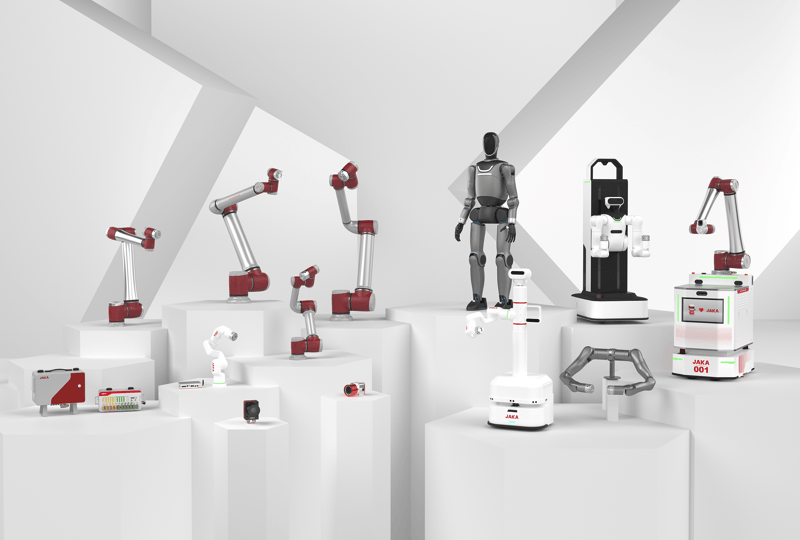
Beyond Cobots: Integrating Robotic Automation with AGVs and IIoT Systems
In recent years, manufacturing has experienced a significant transformation as companies shift from standalone automation to interconnected and flexible systems. JAKA, a leader in collaborative robot technology, has observed this evolution, where production environments are increasingly designed around coordinated robots, autonomous guided vehicles (AGVs), and Industrial Internet of Things (IIoT) platforms. This transition enables automation to adapt dynamically to real production conditions while ensuring safety and flexibility in workplaces that prioritize human interaction. Initially, collaborative robots were embraced for their ability to work safely alongside human operators, facilitating smoother automation processes. As their applications have matured, integrating these robots with AGVs and IIoT systems has become a logical progression. This integration allows for synchronized material handling and processing tasks, enhancing efficiency. IIoT connectivity further supports real-time data exchange, enabling predictive maintenance and improved process visibility, which is crucial for maintaining flexibility in production lines. AGVs play a pivotal role in extending automation beyond fixed workstations. When connected through IIoT infrastructure, these vehicles and robots can share crucial information, reducing idle time and manual interventions while enhancing workflow traceability. This coordination not only boosts operational efficiency but also increases transparency, allowing for continuous optimization and informed decision-making. To facilitate this integrated approach, JAKA has developed the Ai12, a collaborative robot designed for easy deployment through wireless teaching and graphical programming. This technology enhances safety and adaptability, allowing for seamless human-robot interaction. JAKA envisions a future where industrial robotic automation is not merely a collection of isolated machines but a cohesive system that evolves with production demands, fostering smarter and more responsive industrial environments.

7 Key Engineering Hurdles in Building High Precision Gantry Systems for Automation
Multi-axis gantry platforms play a crucial role in enhancing automation across various industries, including semiconductor inspection, laser processing, and advanced metrology. Despite their significance, the challenges associated with achieving precision, reliability, and readiness for production are frequently overlooked. As industries increasingly rely on these platforms to improve efficiency and throughput, addressing these technical hurdles has become essential for advancing automation technologies. The ongoing development and refinement of these systems are vital for meeting the growing demands of high-tech manufacturing processes.
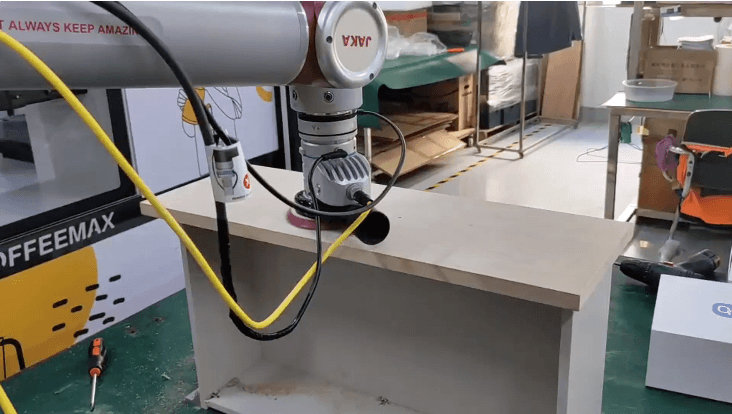
Understanding Automation Robotics Technology: From Sensors to Control Systems (JAKA CAB V3)
JAKA, a leader in automation robotics technology, has unveiled its advanced polishing robot, powered by the innovative CAB V3 controller, designed to enhance the precision and consistency of metal component finishing. This cutting-edge system, which integrates sophisticated sensing and control mechanisms, addresses the challenges faced by skilled artisans in achieving flawless surfaces. The CAB V3 controller serves as the brain of the robot, translating high-resolution sensor data into precise motion commands. Equipped with advanced proprioceptive sensors and force control technology, the polishing robot can adapt to subtle variations in part geometry, ensuring optimal tool orientation and pressure during operation. This real-time feedback loop allows the robot to maintain high standards of quality while compensating for any deviations. JAKA's design philosophy emphasizes the seamless integration of sensing, computation, and mechanical action, enabling the polishing robot to operate smoothly without vibrations that could damage surfaces. The CAB V3 also supports connectivity with external vision systems and factory networks, enhancing flexibility in mixed-production environments. By leveraging this advanced automation technology, manufacturers can achieve unprecedented levels of consistency and quality in their finishing tasks, transforming the traditional polishing process into a highly efficient and repeatable operation.

Arvato Systems presenta en Logistics & Automation su SGA inteligente con módulos de IA
Arvato Systems is set to participate in the upcoming Logistics & Automation event, collaborating with Locus Robotics, which will also have a presence at the exhibition stand. This partnership aims to showcase innovative solutions in logistics and automation, highlighting advancements in technology that enhance operational efficiency. The event is scheduled to take place in the near future, providing a platform for industry leaders to connect and explore the latest trends and technologies in the logistics sector. By joining forces, Arvato Systems and Locus Robotics seek to demonstrate their commitment to driving progress in the industry and addressing the evolving needs of businesses in a rapidly changing market.
Robotics needs a service framework.
RSF defines a common language for robot service capability, lifecycle operations, certification pathways, and service-provider networks.
Join the RobotToday community on LinkedIn
Daily robotics news, in-depth analysis, conference highlights, and discussions with professionals worldwide.