Industry Briefing
A single destination for timely, editor-curated robotics news from around the world.
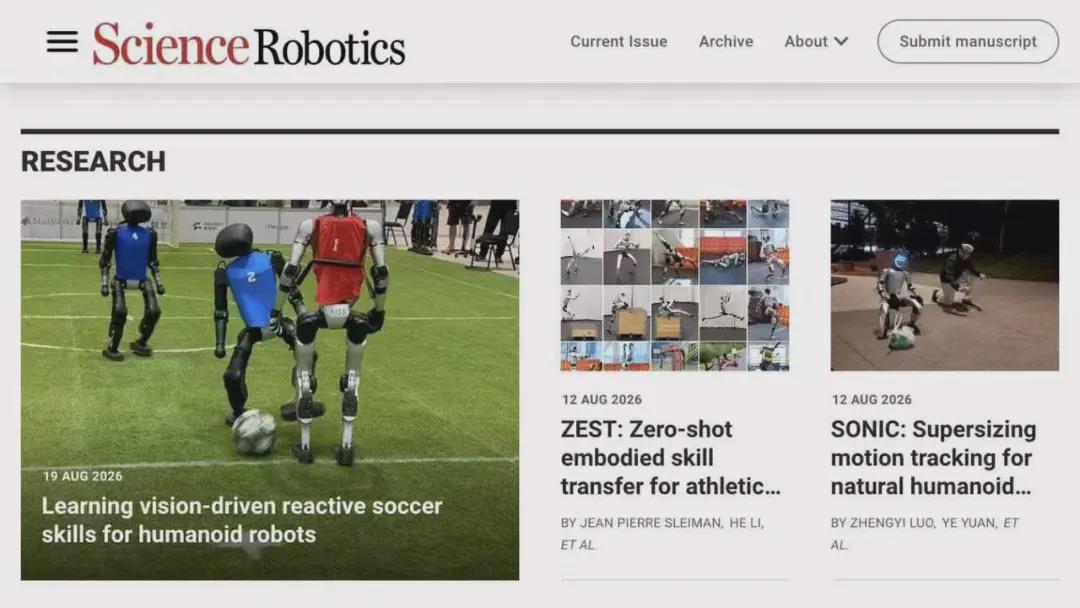
Tsinghua University Team Unveils Soccer-Playing Humanoid Robot in Science Robotics
On August 19, a team led by Professor Zhao Mingguo from Tsinghua University's Department of Automation published a paper in Science Robotics titled "Learning Vision-Driven Reactive Soccer Skills for Humanoid Robots." The research introduces a unified perception-motion reinforcement learning framework that enables a humanoid robot, known as Booster, to autonomously locate and kick a soccer ball without relying on external positioning or motion capture systems. This development is significant as it addresses the challenges of dynamic environments where visual perception is often unreliable. Traditional robotic soccer systems typically follow a modular pipeline, which can amplify errors due to perception noise and delays. The new framework allows the robot to make accurate movements even under imperfect visual conditions, marking a notable advancement in the field of robotics. Looking ahead, the implications of this research could extend to various applications in robotics, particularly in environments where visual feedback is compromised. The paper's publication in a prestigious journal underscores its importance, and the team’s innovative approach may pave the way for future developments in humanoid robotics and autonomous systems. No further timeline was disclosed at the time of publication.
Humanoid Robots Reinforcement Learning Robotics Research AI Autonomous Systems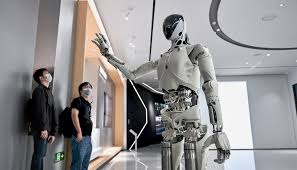
Developing Vision-Driven Reactive Soccer Skills for Humanoid Robots
A recent study published in Science Robotics explores the development of vision-driven reactive soccer skills for humanoid robots. The research focuses on enhancing the robots' ability to perceive and respond to dynamic environments, which is crucial for effective participation in soccer games. This advancement is significant as it addresses the challenges faced by humanoid robots in real-time decision-making and adaptability during sports activities. By improving these skills, researchers aim to enhance the robots' performance in competitive scenarios, potentially paving the way for more sophisticated applications in robotics and AI. Looking ahead, the implications of this research could extend beyond soccer, influencing various fields where real-time interaction and adaptability are essential. No further timeline was disclosed at the time of publication.
Research Article
Chinese Team Secures Championship at 2026 RoboCup Robotics Soccer World Cup
In late July, the RoboCup 2026 concluded in Incheon, South Korea, where Tsinghua University's THMOS team triumphed, defeating their opponent 6-2 to claim the humanoid robot soccer championship. This victory marks the team's second consecutive championship win, showcasing the advancements in robotics and artificial intelligence in competitive sports. The significance of this achievement lies in the integration of sports and technology, with humanoid robots serving as a testing ground for embodied intelligence. The competition featured 364 teams from 45 countries, highlighting the growing intensity of robotics competitions over the past decade. The dominance of Chinese hardware platforms, particularly from Booster Robotics, played a crucial role in the success of multiple teams. Looking ahead, the evolution of humanoid robots in soccer suggests a future where these machines may rival human athletes. With over 700 humanoid robots shipped globally and partnerships with more than 70 educational and research institutions, Booster Robotics is positioned to lead in this innovative field. No further timeline was disclosed at the time of publication.
Humanoid Robots Robotics Competitions AI Sports Technology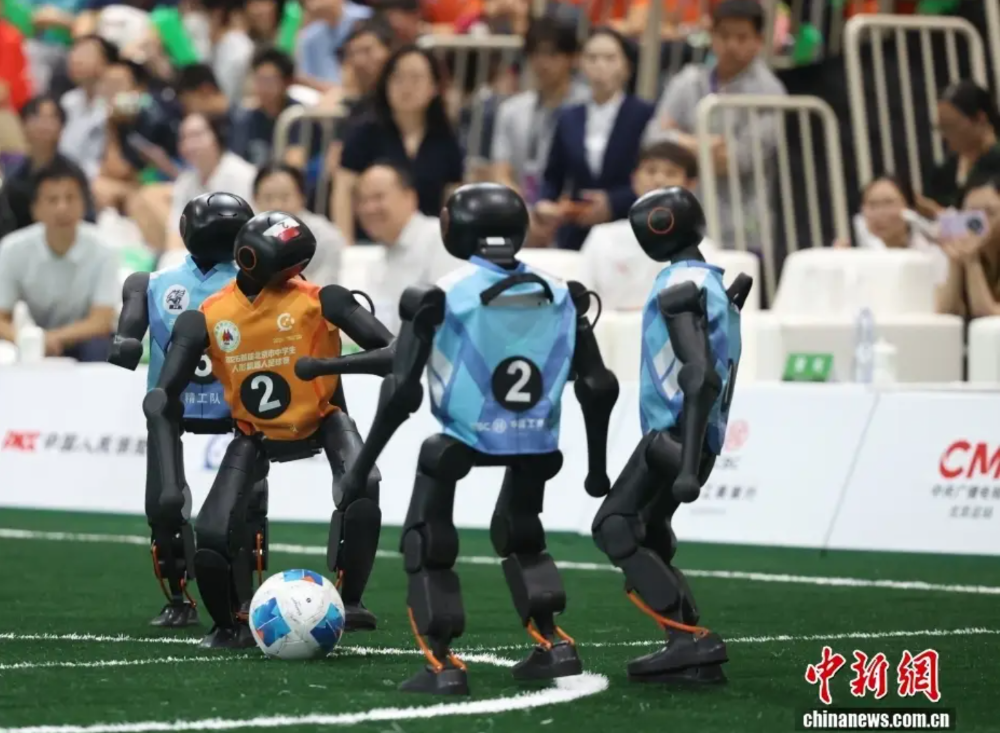
Beijing Hosts First Humanoid Robot Soccer Championship for High School Students
On July 22, the inaugural Beijing High School Humanoid Robot Soccer Championship concluded at Tsinghua University High School. Launched on April 11, the competition involved 55 teams from 16 districts in Beijing and Xiong'an New Area, divided into two groups: Group A with 24 teams and Group B with 31 teams. The championship aimed to integrate artificial intelligence education with practical technology application. Students not only programmed their robots but also developed algorithms, fine-tuned motion controls, and optimized visual recognition and teamwork strategies, enabling robots to make autonomous decisions during matches. The event served as a unique platform to enhance students' technological literacy and engineering skills through hands-on experience. As students watched their programmed robots navigate the field, AI transformed from a theoretical concept into a tangible reality, showcasing the potential of the next generation of engineers who have already coded their own robots at just 16 years old.
Humanoid Robots AI Education Robotics Competitions STEM Education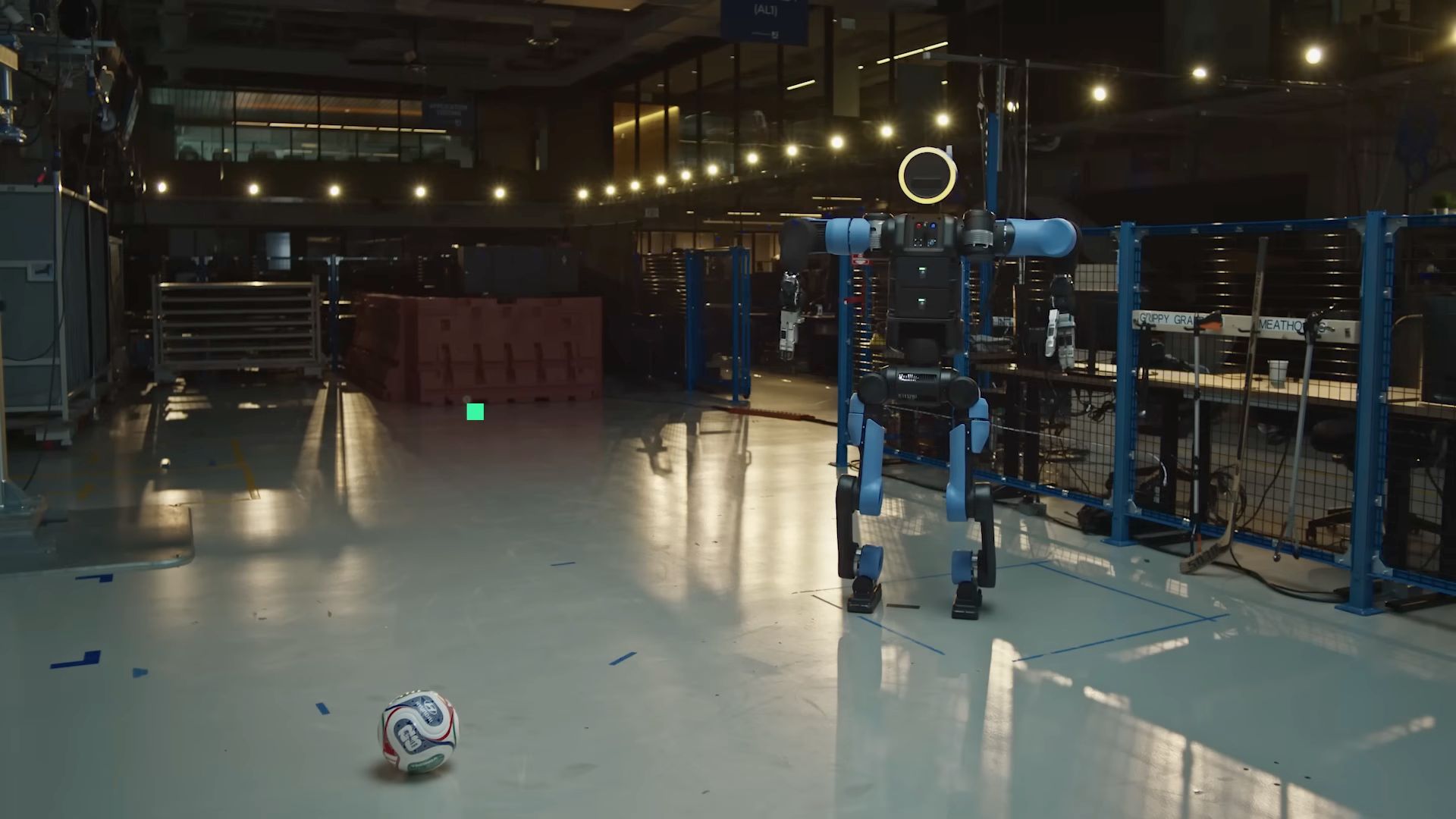
Video: Atlas humanoid robot learns soccer skills from World Cup game footage
Boston Dynamics has unveiled a new video featuring its Atlas humanoid robot, showcasing its advanced capabilities in preparation for the 2026 World Cup. Released recently, the video highlights the robot's agility and precision as it performs a series of complex movements, including running, jumping, and navigating obstacles. This demonstration aims to illustrate the potential applications of robotics in sports and entertainment, particularly as the world gears up for the highly anticipated tournament. The release comes as part of Boston Dynamics' ongoing efforts to push the boundaries of robotic technology and its integration into various fields. By showcasing Atlas's skills, the company hopes to inspire innovation and spark discussions about the future role of robots in athletic events and beyond.
Robotics needs a service framework.
RSF defines a common language for robot service capability, lifecycle operations, certification pathways, and service-provider networks.
Join the RobotToday community on LinkedIn
Daily robotics news, in-depth analysis, conference highlights, and discussions with professionals worldwide.