Industry Briefing
A single destination for timely, editor-curated robotics news from around the world.

Addressing Space, Real-Time, and Reliability Challenges in Robotic Hands Development
The bionic dexterous hand is becoming a key growth area in the robotics industry, with significant advancements expected by 2026. Currently, dexterous hands account for 17%-30% of the total material costs of robotic systems, and funding in this sector is projected to exceed 25 billion yuan in the first half of 2026, with annual sales potentially reaching 70,000 units. This shift signifies a departure from mere conceptual discussions to tangible orders and performance realization. The recent World Artificial Intelligence Conference (WAIC) in Shanghai showcased various exhibitors demonstrating high-degree-of-freedom dexterous hands capable of intricate tasks, highlighting the industry's common challenges in precision actuators. Developers face three critical hurdles: achieving 22 degrees of freedom or more for fine movements while integrating miniature motors, sensors, and wiring in a compact palm, all while balancing space constraints, real-time synchronization, and long-term reliability. The solution lies in innovative control chip architecture. National Technology has introduced a 1+4 distributed MCU architecture designed for 22-degree-of-freedom dexterous hands, optimizing performance through layered control. This system utilizes a main control chip and four node chips for individual fingers, enhancing computational power, real-time response, and compact design, thereby addressing the industry's pressing challenges.
Robotic Hands MCU Architecture Industrial Automation AI Robotics
Study Reveals How Expressiveness Affects Trust in Humanoid Robots
A research team from Drexel University published findings in 'Science Robotics' that simultaneously measured brain activity, hormones, self-reported attitudes, and behaviors, revealing the complete chain of trust formation and breakdown between humans and robots. The study found that 50 participants paid more attention to the expressive Pepper robot, which engaged in eye contact, gestures, and nodding. However, when the robot made mistakes—such as irrelevant comments or illogical justifications—participants' brain responses indicated a violation of social norms rather than a machine malfunction. This distinction is crucial as it highlights that trust loss is quantifiable. The calculations showed that once the robot began to err, its influence on human decision-making was halved, indicating a significant drop in trust. Surprisingly, the hormone oxytocin increased when the robot made mistakes, suggesting that in human-robot interactions, oxytocin acts more as a 'warning signal' than a 'bonding signal.' The researchers emphasized that expressiveness comes with risks. Frank Krueger, one of the authors, stated that high expressiveness raises the stakes; once a robot fails, it can lead to greater disappointment than a less expressive counterpart. The study serves as a clear warning for industries investing in social, anthropomorphic robots—such as healthcare, education, and customer service—to prioritize reliability before charm.
Humanoid Robots Human-Robot Interaction Social Robotics AI Healthcare Technology
Manufacturers Assess Automation ROI by Evaluating IT Reliability and Downtime Costs
Manufacturers typically calculate the return on investment (ROI) for automation by focusing on labor savings and increased throughput. However, a critical factor often overlooked is the cost associated with automation downtime, which can significantly impact overall profitability. This aspect of IT reliability is essential for determining the true financial benefits of robotic systems in smart manufacturing environments. Understanding the hidden costs of automation downtime is vital for manufacturers aiming to optimize their operations. When automation systems experience failures, the resulting downtime can negate the anticipated labor savings and throughput gains. This highlights the importance of investing in reliable IT infrastructure to ensure continuous operation and maximize the ROI of automation investments. Looking ahead, manufacturers should prioritize strategies that enhance IT reliability to mitigate downtime risks. No further timeline was disclosed at the time of publication, but ongoing assessments of automation systems will be crucial in refining ROI calculations and ensuring sustainable manufacturing practices in the future.

Three Key Challenges Hindering the Development of Advanced Humanoid Robots
The development of humanoid robots, akin to C-3PO, faces significant challenges in reliability, dexterity, and data management. While advancements in AI have improved reasoning capabilities, the physical aspects of robotics remain problematic. Current robots excel in specific tasks but struggle with complex manipulations that require high precision and reliability. These challenges are critical as they impact the deployment of robots in various sectors, including healthcare and manufacturing. For instance, surgical robots like the da Vinci system demonstrate the gap between theoretical intelligence and practical application, where reliability is paramount. The need for robots to perform consistently across millions of cycles is essential for their acceptance in sensitive environments. Looking ahead, the industry must focus on overcoming these bottlenecks to enable broader adoption of humanoid robots. The reliance on a combination of real and synthetic data for training highlights the ongoing need for innovative solutions. No further timeline was disclosed at the time of publication.
Factory / Robotics
Multi-Layer AI Safety Framework Improves Robot Reliability
Experts in artificial intelligence and robotics emphasize the importance of implementing layered defenses and context-aware guidelines to enhance safety in AI robotics. This initiative aims to mitigate potential risks and prevent real-world harm, especially in dynamic environments where interactions with humans and other systems are frequent. As the field continues to evolve, the need for robust safety protocols has become increasingly critical. These measures are designed to ensure that AI systems can operate safely and effectively, adapting to various situations while minimizing the likelihood of accidents or malfunctions. The ongoing discussions and developments in this area highlight a proactive approach to addressing the challenges posed by advanced robotics in everyday settings.

Real‐Time Detection of Undesired Human Interventions in Robotic Work Cells Using a Convolutional Neural Network‐Based Novel Architecture and Reliability Analysis With Explainable Artificial Intelligence
A recent study published in the Journal of Field Robotics highlights advancements in autonomous robotic systems designed for agricultural applications. Researchers from various institutions conducted the study to explore how these technologies can enhance efficiency and productivity in farming practices. The findings, released in early October 2023, indicate that the integration of robotics in agriculture not only streamlines operations but also addresses labor shortages faced by the industry. The research was carried out in diverse agricultural settings, showcasing the adaptability of robotic systems to different crops and farming techniques. By employing sensors and artificial intelligence, these robots can perform tasks such as planting, monitoring crop health, and harvesting with precision. The motivation behind this innovation stems from the need to increase food production while minimizing environmental impact and labor costs. As farmers face growing challenges from climate change and a declining workforce, the study emphasizes the potential of robotics to transform traditional farming methods. The researchers advocate for further investment in robotic technologies to ensure sustainable agricultural practices and improve overall food security. This study marks a significant step towards the future of farming, where automation plays a crucial role in meeting the demands of a growing global population.
RESEARCH ARTICLE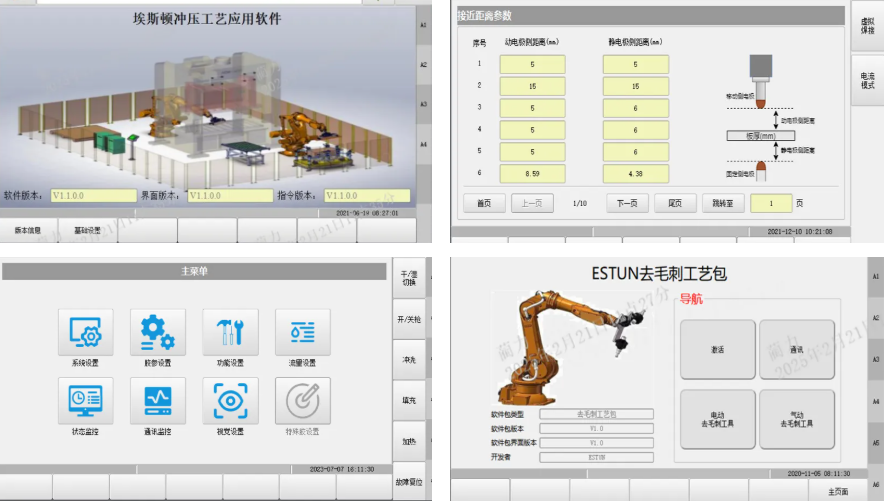
ESTUN Heavy-Payload Robots Set the Gold Standard in Industrial Reliability with MTBF 120,000 Hours Certification!
ESTUN has announced a significant milestone for its heavy-payload series of industrial robots, achieving a Mean Time Between Failures (MTBF) certification of 120,000 hours with a zero-failure performance. This accomplishment underscores the company's commitment to producing highly stable, reliable, and durable robotic solutions, positioning its products at the forefront of the industry. The certification reflects rigorous testing and quality assurance processes, demonstrating ESTUN's capability to meet the demanding needs of high-end manufacturing sectors. This achievement not only enhances the company's reputation but also sets a new standard in the robotics field, potentially influencing future developments and innovations in industrial automation.
ESTUN AUTOMATION ROBOTICS SERVO SYSTEMSRobotics needs a service framework.
RSF defines a common language for robot service capability, lifecycle operations, certification pathways, and service-provider networks.
Join the RobotToday community on LinkedIn
Daily robotics news, in-depth analysis, conference highlights, and discussions with professionals worldwide.