Industry Briefing
A single destination for timely, editor-curated robotics news from around the world.

NVIDIA Forms Partnerships to Mobilize Over $500 Billion for AI Compute Infrastructure Financing
NVIDIA has announced strategic partnerships with Apollo, BlackRock, Blackstone, Brookfield, Goldman Sachs, and KKR to create independent compute financing platforms. These platforms aim to mobilize over $500 billion in third-party capital to support the development of AI infrastructure, addressing the increasing demand from governments, enterprises, and startups. The significance of this initiative lies in its potential to transform AI infrastructure into a viable investment asset. NVIDIA's compute technology is designed to be flexible, widely adopted, and continuously improved, making it an attractive option for investors. The partnerships will enable the establishment of dedicated capital pools to facilitate the growth of AI factories across various industries. Looking ahead, the collaboration between NVIDIA and these financial institutions is expected to play a crucial role in the AI buildout, which requires substantial investment and skilled labor. No further timeline was disclosed at the time of publication.

Mitsubishi Motors to Collaborate with Highlanders for Humanoid Robot Production by 2027
Mitsubishi Motors has announced a partnership with Highlanders, a robotics startup incubated by the University of Tokyo, to commence mass production of humanoid robots at its Kyoto factory by early 2027. The production facility will utilize previously idle space originally designated for engine manufacturing, with an initial monthly output target of 1,000 units, fully funded by Mitsubishi Motors. This collaboration marks the first instance of a Japanese automotive company signing an agreement with a humanoid robotics firm for mass production. Mitsubishi has already made a strategic investment in Highlanders and plans to provide additional funding in the future. The upcoming robots will stand approximately 1.75 meters tall and will feature AI-driven autonomous control, enabling them to assess their surroundings and perform tasks such as stable walking and object manipulation. The robots will initially be deployed within Mitsubishi's own factories for tasks like component handling and engine assembly, continuously collecting data to improve operational precision through software updates. Mitsubishi's chairman, Takao Kato, emphasized that this partnership aims to establish a new industrial foundation for human-robot collaboration, while Highlanders' representative, Hiroya Nagaoka, highlighted the significance of this collaboration in achieving their company's goals.
Humanoid Robots AI Manufacturing Automation Robotics Automotive Industry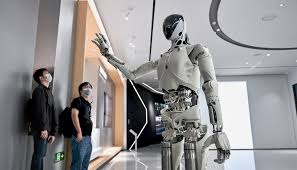
Lux Capital's Deena Shakir Highlights Trust and Partnerships in AI's Next Wave for Health Care and Robotics
Deena Shakir, a partner at Lux Capital, recently emphasized that the next phase of AI innovation will focus on trust and partnerships, particularly in sectors like health care and robotics. This shift comes in light of recent insights from Anthropic and OpenAI, which have redirected discussions towards real-world applications and security concerns. The importance of building trust in AI technologies is crucial as industries seek to implement these systems effectively. Shakir's perspective suggests that future advancements will not solely rely on enhancing foundational models but will also prioritize vertical applications that address specific industry needs, such as those found in health care and robotics. As the conversation around AI evolves, stakeholders should monitor how these partnerships develop and the impact they have on the deployment of AI solutions in health care and robotics. No further timeline was disclosed at the time of publication.

PokeBot Secures Significant Pre-A Funding Round Led by Shunwei Capital and Matrix Partners
On August 3, PokeBot, a company specializing in embodied intelligence, announced the completion of a significant Pre-A funding round. This round was led by Shunwei Capital and Matrix Partners, with participation from several other investment firms. This marks the second funding round for PokeBot since its establishment five months ago. The importance of this funding lies in PokeBot's innovative approach to robotics, focusing on developing a world model that directly inputs and outputs video and actions. Founder Xu Huazhe emphasizes the need for robots to operate in chaotic home environments, which he believes are ideal for training general models. The company aims to evolve household tasks through its unique technology and is already demonstrating capabilities in complex cooking tasks. Looking ahead, PokeBot's team, which consists of around 20 core members from Tsinghua University, is working on enhancing its embodied world model. The company has ambitious plans to expand its product offerings beyond cooking to include various household tasks. No further timeline was disclosed at the time of publication.
Embodied Intelligence Household Robots Robotics Technology Artificial General Intelligence Startup Funding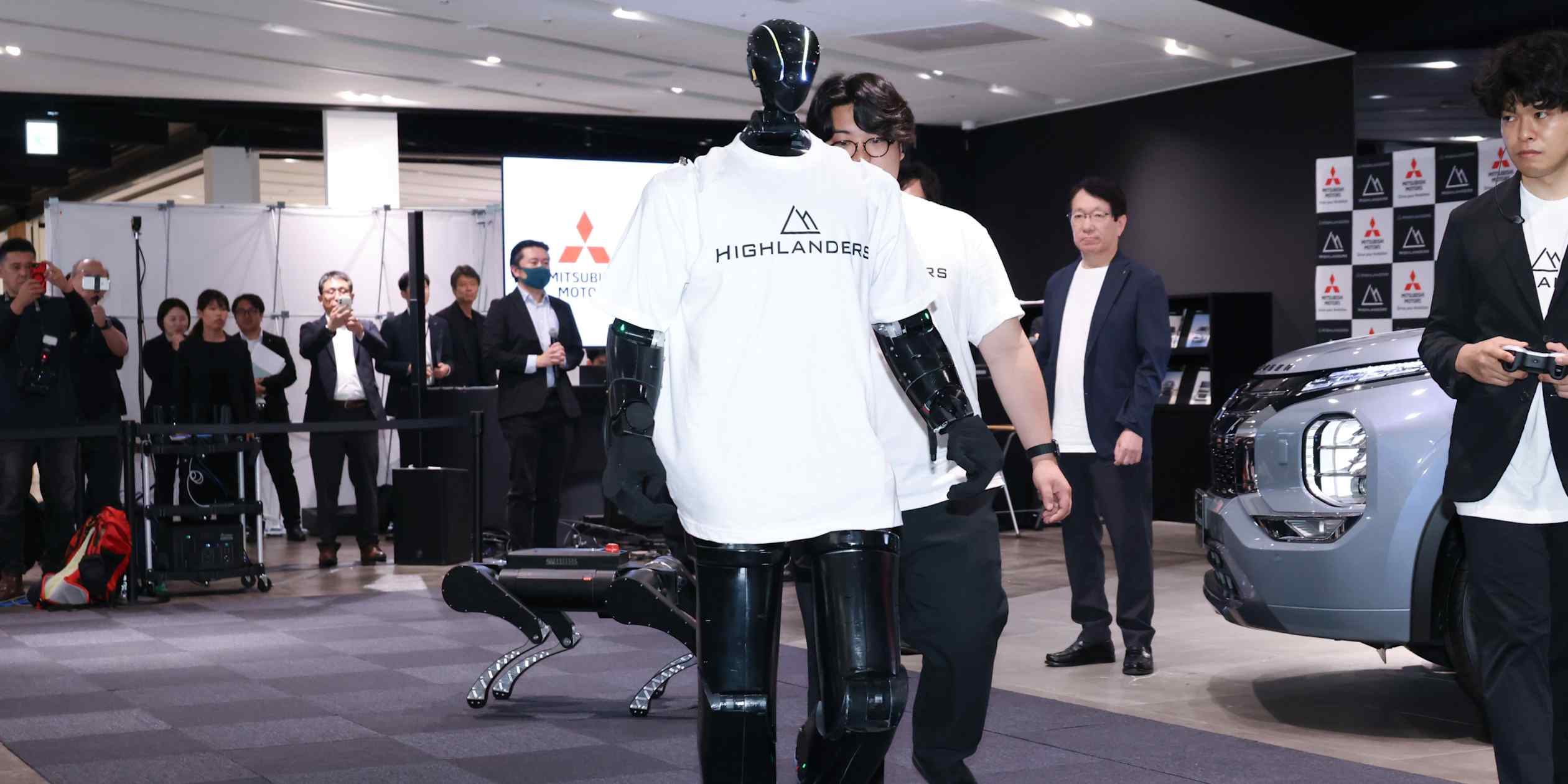
Mitsubishi Motors Partners with Highlanders for Humanoid Robot Production by 2027
Mitsubishi Motors has announced a collaboration with Tokyo-based startup Highlanders to mass-produce humanoid robots for its automotive factories. Production is set to commence as early as 2027, with the partnership aiming to enhance automation within Mitsubishi's manufacturing processes. This initiative was unveiled during a demonstration event in Tokyo on July 9, showcasing the jointly developed humanoid robot. The significance of this collaboration lies in Mitsubishi's strategic move to integrate advanced robotics into its production lines, reflecting a broader trend in the automotive industry towards automation and efficiency. By leveraging Highlanders' expertise in humanoid robotics, Mitsubishi aims to address labor shortages and improve operational productivity, aligning with global shifts towards smart manufacturing technologies. Looking ahead, industry observers will be keen to monitor the development and deployment timeline of these humanoid robots, as well as their impact on Mitsubishi's manufacturing capabilities. No further timeline was disclosed at the time of publication, but the partnership signals a commitment to innovation in the automotive sector.
NVIDIA Unlocks AI Compute at Scale, Inviting Capital Partners to Power the AI Infrastructure Buildout
As artificial intelligence transitions from model development to production inference, the demand for computing power is rapidly increasing. This surge is driving the establishment of continuously operating AI factories that are capable of generating tokens at scale. The shift towards these large-scale, multi-tenant accelerated computing environments is essential to meet the growing needs of AI applications. This transformation is occurring as organizations recognize the necessity for robust infrastructure to support the evolving landscape of AI technology. The move towards these advanced facilities is expected to enhance efficiency and scalability, enabling businesses to leverage AI more effectively in various sectors.
Robotics needs a service framework.
RSF defines a common language for robot service capability, lifecycle operations, certification pathways, and service-provider networks.
Join the RobotToday community on LinkedIn
Daily robotics news, in-depth analysis, conference highlights, and discussions with professionals worldwide.