Industry Briefing
A single destination for timely, editor-curated robotics news from around the world.
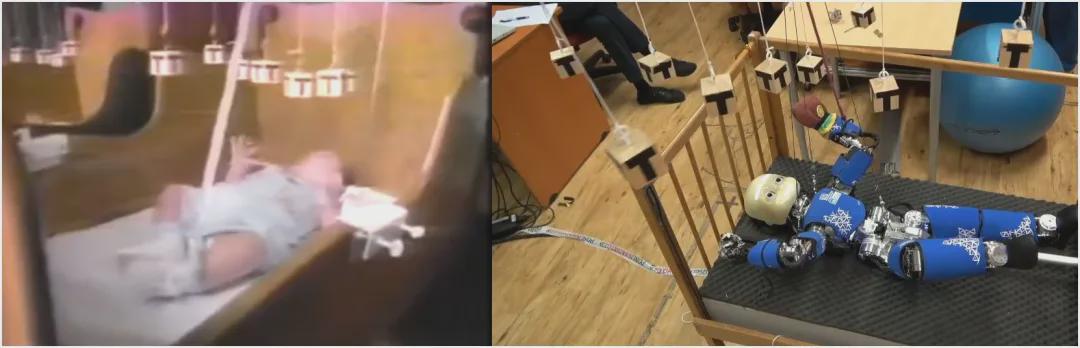
Humanoid Robot Participates in Classic Developmental Psychology Experiment to Explore Sensorimotor Contingency
A collaborative research team from the University of Hamburg, Czech Technical University in Prague, and Université Paris-Est/CNRS published findings in 'Science Robotics' on how infants learn the connection between their movements and changes in their environment. The study utilized a humanoid robot, iCub, to replicate the mobile paradigm experiment first proposed in 1969 by Rovee and Rovee. This research is significant as it addresses a longstanding question in developmental psychology regarding how infants recognize that their actions can influence their surroundings. By employing a robot to physically engage in the experiment, the team aimed to provide insights into the mechanisms behind sensorimotor contingency, which have been difficult to observe in infants due to variability in responses. Looking ahead, the implications of this study could enhance our understanding of cognitive mechanisms that support human behavior, such as prediction errors and curiosity. No further timeline was disclosed at the time of publication.
Humanoid Robots Developmental Psychology Sensorimotor Learning AI Robotics ResearchRobotics needs a service framework.
RSF defines a common language for robot service capability, lifecycle operations, certification pathways, and service-provider networks.
Join the RobotToday community on LinkedIn
Daily robotics news, in-depth analysis, conference highlights, and discussions with professionals worldwide.