Researchers at Carnegie Mellon University have developed an innovative algorithm that enhances assistive feeding technologies by predicting when individuals are ready for their next bite. This advancement, driven by wearable sensors, allows robots to better adapt to the complexities of real-world dining experiences, including managing conversations and pauses during meals. The system features adjustable settings that enable users to control the pace of feeding, thereby reducing the physical workload associated with mealtime assistance. This breakthrough aims to improve the quality of life for individuals requiring feeding support, showcasing the potential of robotics in personal care.


Education & Research
Healthcare & Senior Care
Software & Algorithm Provider
Human-Machine Interaction

Original from ri.cmu.edu: Predicting the Next Bite
Predicting the Next Bite
RobotToday Initiative
Robotics needs a service framework.
RSF defines a common language for robot service capability, lifecycle operations, certification pathways, and service-provider networks.
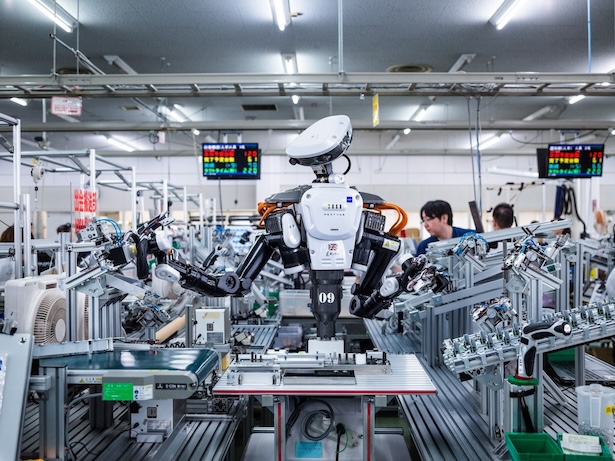
Correction Notice for Research Article on Robot Peer Failures and Student Learning
An erratum has been issued for the research article titled 'Observing a robot peer’s failures facilitates students’ classroom learning' published in Science Robotics. This correction addresses inaccuracies found in the original publication, ensuring the integrity of the research findings. The importance of this erratum lies in its impact on the understand...
Errata
International Research Team Embarks on Greenland Expedition to Study Melting Glaciers
An international team of researchers is set to begin a six-week expedition in Greenland on July 16, 2026, to investigate the rapid melting of fjord glaciers and its implications for the Atlantic Ocean. The study aims to assess how this melting contributes to potential climate tipping points, particularly affecting ocean currents. The research is part of a...
rrs sir david attenborough glaciers melting fjord glaciers
New Quantum Hermite Transform Algorithm Enhances AI and Scientific Computing Potential
Researchers from the U.S. Department of Energy’s Brookhaven National Laboratory, Northeastern University, Google Quantum AI, and the University of Texas at Austin have introduced a new quantum computing algorithm called the quantum Hermite transform (QHT). This algorithm aims to broaden the scope of problems that future quantum computers can address, part...
AI and Robotics
Nous Research Secures New Funding Talks at $1.5 Billion Valuation for Hermes Agent
Nous Research, the creator of the open-source Hermes agent, is in discussions to secure a new funding round led by Robot Ventures, aiming for a valuation of $1.5 billion. The company is looking to raise at least $75 million, following a previous $50 million Series A funding announced just three months prior. This funding round is significant as it reflect...
AI Startups Venture
Addressing the Human Bottleneck in Healthcare Automation: Aligning Physicians with Patient Demand
Hospitals are increasingly adopting automation to enhance care delivery by integrating software for administrative tasks, utilizing robots for logistics, and deploying AI for documentation and scheduling. These advancements aim to reduce waiting times and streamline workflows, allowing clinical teams to focus more on patient care. However, despite these t...
Automation Health artificial intelligence
The Escalating AI Arms Race in Software Engineering Technical Interviews
The landscape of software engineering job interviews is rapidly evolving due to the increasing use of AI by both candidates and employers. Applicants are employing AI assistants to enhance their performance during remote technical interviews, while companies are countering with AI tools designed to detect such assistance. This dynamic creates a competitiv...
Hiring-trends Interviews Ai-bias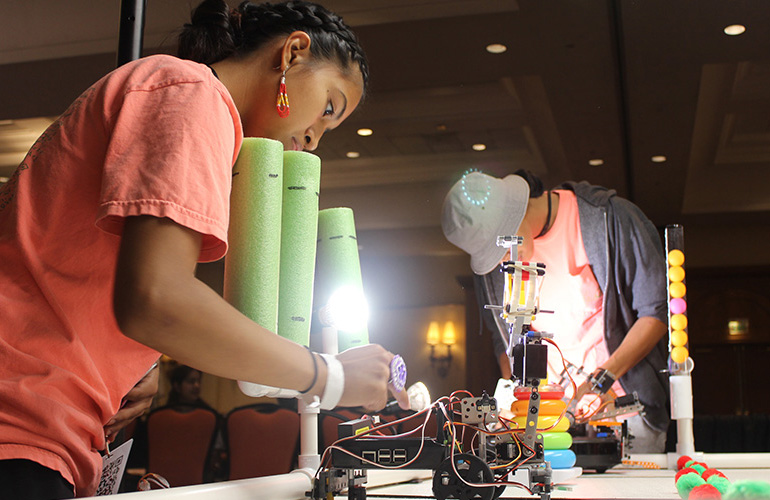
KISS Institute Launches BotBall to Enhance STEM Education with Student-Led Robotics
The KISS Institute for Practical Robotics (KIPR) has introduced BotBall, a robotics program designed to foster creativity and critical thinking among students. This initiative emphasizes student-led engineering, allowing participants from elementary to high school to engage in hands-on learning using a standardized kit. The program ensures a level playing...
Autonomous Mobile Robots (AMRs) Educational News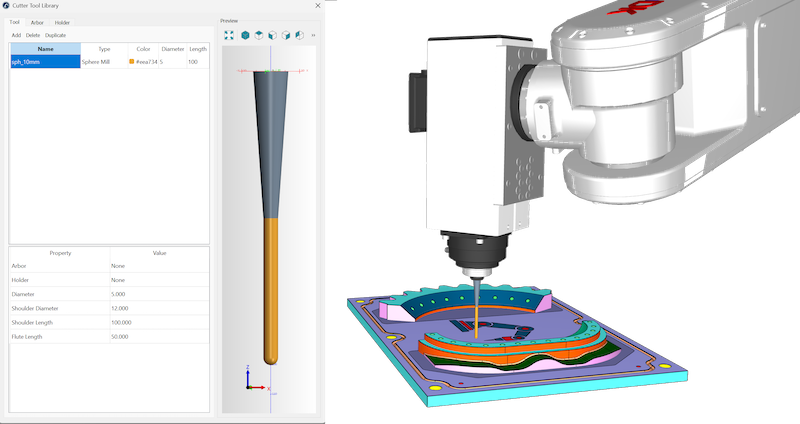
RoboDK Launches CAM Software to Reduce Robotic Machining Deployment Time by 40%
RoboDK has introduced its new CAM software, enabling robotic machining programs to be generated directly from CAD files. This innovation, showcased at the Automate Show, promises to reduce deployment time by up to 40%, allowing users to create toolpaths and collision-free motions without manual coding. The software aims to simplify the robotic machining p...
News Robot simulation Software
Physical AI Landscape: From Digital Intelligence to the Embodied Physical World
A comprehensive industry analysis of Physical AI — covering Embodied AI, Field AI, Factory AI, VLM, World Model, VLA, and the VLA vs WAM architecture debate. Includes 20+ companies, 28 references, and the RobotToday Physical AI Landscape diagram. July 2026.
Artificial Intelligence
RoboDK Enhances Manufacturing with Digital Twin and OLP Software Features
RoboDK has introduced advanced features in its digital twin and offline programming (OLP) software, enabling manufacturers to simulate robotic cells virtually. This software allows users to model robots, tooling, and surrounding equipment, facilitating pre-installation testing of automation systems. Key functionalities include accurate robot simulation, c...
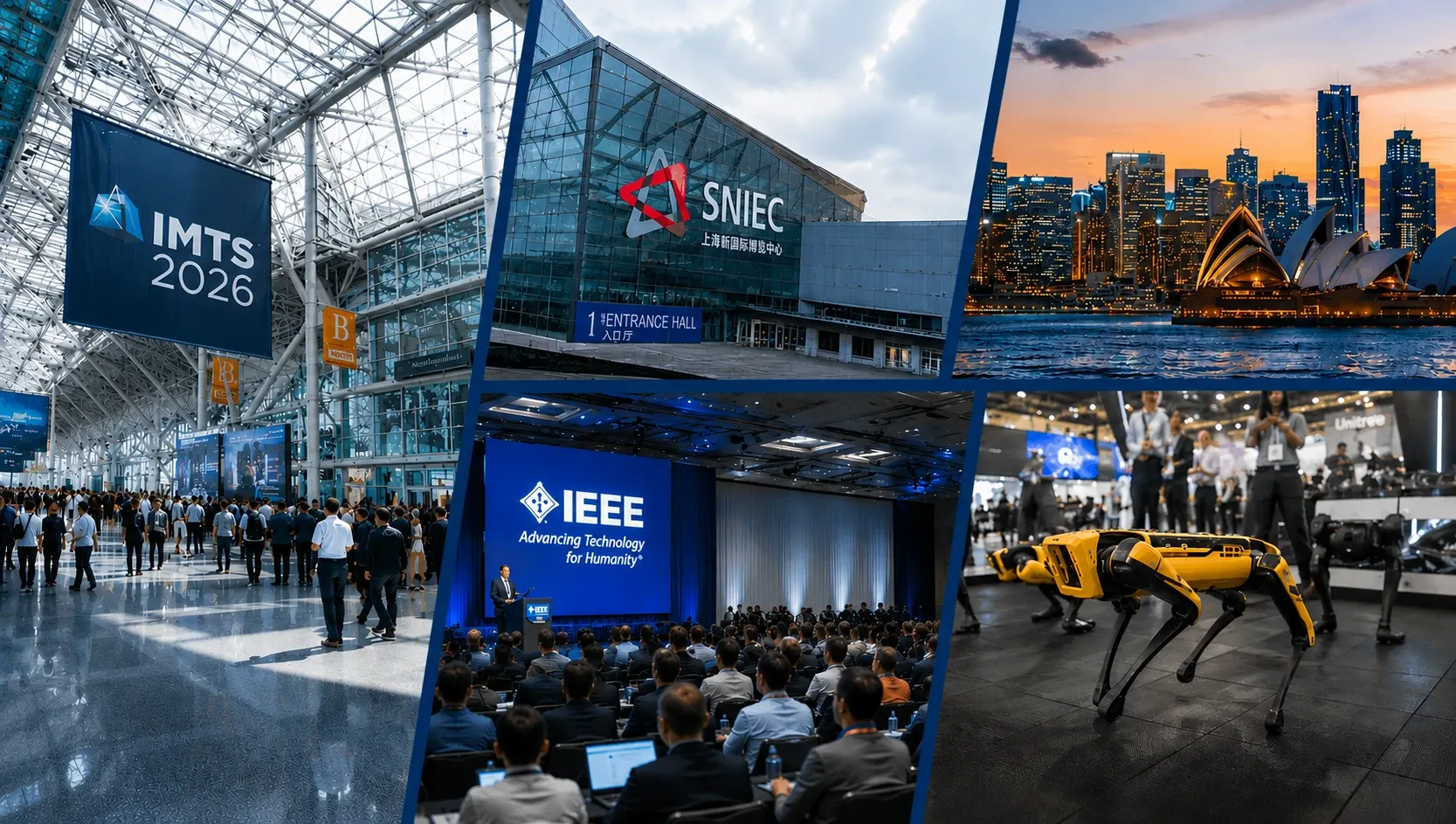
2026H2 Robotics Events Briefing: Tailored Recommendations for Robotics Readers
Discover the ultimate directory of global robotics events in 2026. Tailored briefings for engineers, investors, and founders on humanoid robots, AI, and industrial automation by RobotToday.
Events Market and Business News
ROBOTTODAY Weekly June 30 – July 4, 2026
Unitree wins CSRC approval for China’s first humanoid IPO, Korea unveils ₩312T AI investment, RoboCup 2026 opens in Incheon, and Paris launches Europe’s inaugural Physical AI summit.
RobotToday Weekly
HERL (Human Engineering Research Lab)
United States
Joint University of Pittsburgh and US Department of Veterans Affairs laboratory conducting rehabilitation engineering research. Develops mobility devices, assistive technologies, and medical-grade products for people with disabilities.

Joanneum Research Assoc (AT)
Austria
Joanneum Research Institute for Robotics and Flexible Production conducts applied R&D in industrial robot systems, production automation and robot safety, offering feasibility analysis, consulting and testing in a robotics solution centre.

St Petersburg National Research U of ITMO
Russian leading research university (ITMO University) specializing in information technology, optical engineering, and photonics. Active research programs in AI, robotics, computer vision, and cyber-physical systems.

Robot Care Systems
Netherlands
The URL resolves to Robots.nu, an informational portal covering personal, service, care, and educational robots. The site aggregates overviews and news about robots used in homes, healthcare, and workplaces, targeting general audiences exploring robotic technology applications.

Top Grade Healthcare (CN)
Top Grade Healthcare is a Chinese healthcare products and services company. It has limited verifiable presence in robotics; however, the company is listed in context of healthcare automation and senior care robotic applications in the Chinese market.

Xenex Healthcare Services
United States
Xenex Healthcare Services manufactures the LightStrike UV disinfection robot, which uses pulsed xenon UV technology to reduce microbial load in hospital rooms. Provides workflow consulting alongside the robotic system to improve room turnover efficiency.

Green Hills Software
United States
Independent embedded software provider delivering RTOS, compilers, IDEs, and debuggers for safety- and security-critical systems. Serves automotive, avionics, defence, and industrial domains with certified real-time operating system platforms since 1982.

Scorpion Vision Software (UK)
Norwegian-based 2D and 3D industrial machine vision software platform (marketed under Tordivel AS). Offers sub-pixel and micron-level non-contact measurement, configurable inspection tools, and advanced calibration capabilities without programming.

Acquired Data Solutions, Inc.
United States
Provides systems engineering, embedded software development, automation integration, and cybersecurity services for government and commercial defense clients. Capabilities include OT/IT convergence, edge computing, and mission-critical system integration across a 28-year operational history.

Patten Studio
United States
Patten Studio is an interactive design studio based at MIT Media Lab roots, creating technology-driven art installations and experiential environments for brands and public spaces. Work involves sensing, embedded computing, and responsive physical interfaces, with peripheral relevance to human-machine interaction.

Shenzhen Macrotellect Technology (CN)
Macrotellect develops BrainLink EEG headsets and brainwave sensing devices for consumer and research applications. The company focuses on brain-computer interface technology enabling non-invasive neural signal acquisition and human-machine interaction.

Soul Machines
New Zealand
New Zealand AI company (now in receivership as of February 2026) that developed lifelike digital human avatars powered by large language models for customer service and enterprise deployment. Created Digital Workers and Workforce Connect platforms.



Leave a comment