

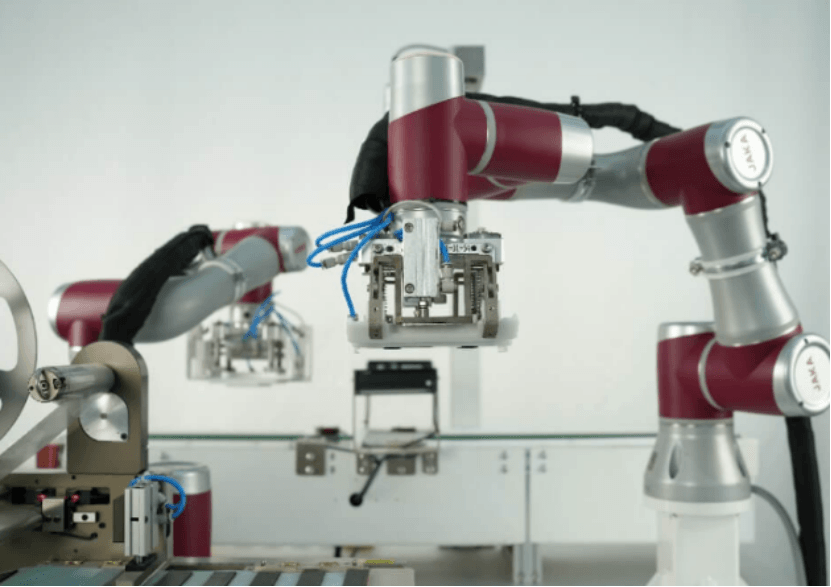
In the realm of modern manufacturing, JAKA emphasizes the importance of selecting the appropriate robotic system to enhance efficiency and quality. The company evaluates the suitability of 6-axis robot arms versus Cartesian robots for large workspaces, with decisions hinging on factors such as flexibility, reach, and specific application needs. JAKA's expertise in various kinematic configurations enables them to guide clients toward solutions that optimize precision and adaptability while mitigating operational risks.
Jointed arm robots are highlighted for their superior flexibility, allowing them to navigate complex geometries and obstacles in expansive environments. In contrast, Cartesian robots are limited to linear movements, which can hinder access in cluttered spaces. JAKA's 6-axis robot arm solutions, particularly the JAKA Zu Adhesive Application system, demonstrate the ability to maintain processing precision across diverse points, thereby reducing defect rates and minimizing manual intervention.
Programming ease is another critical consideration. JAKA offers highly reprogrammable systems that enable users to efficiently adjust parameters for different workpieces, shortening product modification cycles and reducing equipment investment. This adaptability allows clients to swiftly switch production tasks, ensuring high throughput and minimal downtime.
Safety is also a paramount concern in manufacturing. Jointed arm robots can replace human operators in hazardous settings, thus reducing direct exposure to dangerous equipment. The JAKA Zu system exemplifies this advantage by performing tasks with precision while safeguarding personnel. Overall, JAKA advocates for the use of jointed arm robots in large workspaces, citing their flexibility, adaptability, and safety benefits as key factors in optimizing manufacturing processes.



























Leave a comment