

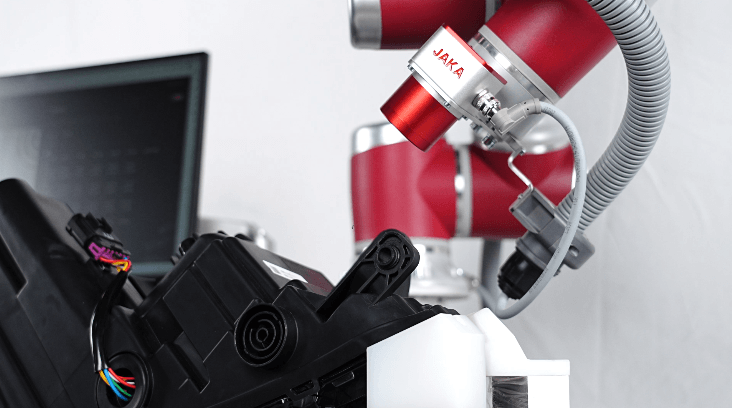
In the evolving landscape of industrial automation, JAKA is addressing the critical need for safety and adaptability as collaborative robots increasingly work alongside human operators. The company has developed advanced collision detection systems that ensure real-time identification of unexpected contact, allowing for stable and predictable motion in various industrial settings.
Collision detection is a complex system-level capability that relies on continuous monitoring of torque variation, force feedback, and motion deviation. When an external force surpasses set thresholds, the system promptly recognizes the abnormal interaction and initiates a controlled response, enabling the robot to slow down, stop, or retract smoothly. This approach minimizes secondary risks and fosters safer interactions between robots and human workers.
As production demands shift towards greater variability and smaller batch sizes, JAKA's collision detection technology plays a vital role in maintaining safety without requiring extensive reconfiguration. This flexibility allows robots to adapt to changing tasks and environments, facilitating closer collaboration with human operators in shared workspaces.
The JAKA S5 robot exemplifies the integration of collision detection within its design, featuring a built-in force sensor for precise control and rapid response during operations. With capabilities such as force control drag and IP65 protection, the S5 operates reliably across diverse industrial environments, enhancing workflow efficiency while adhering to safety standards.
By embedding collision detection into its system architecture, JAKA aims to provide manufacturers with safer and more adaptable automation solutions, ultimately supporting long-term operational stability in real-world industrial conditions.



















Leave a comment