


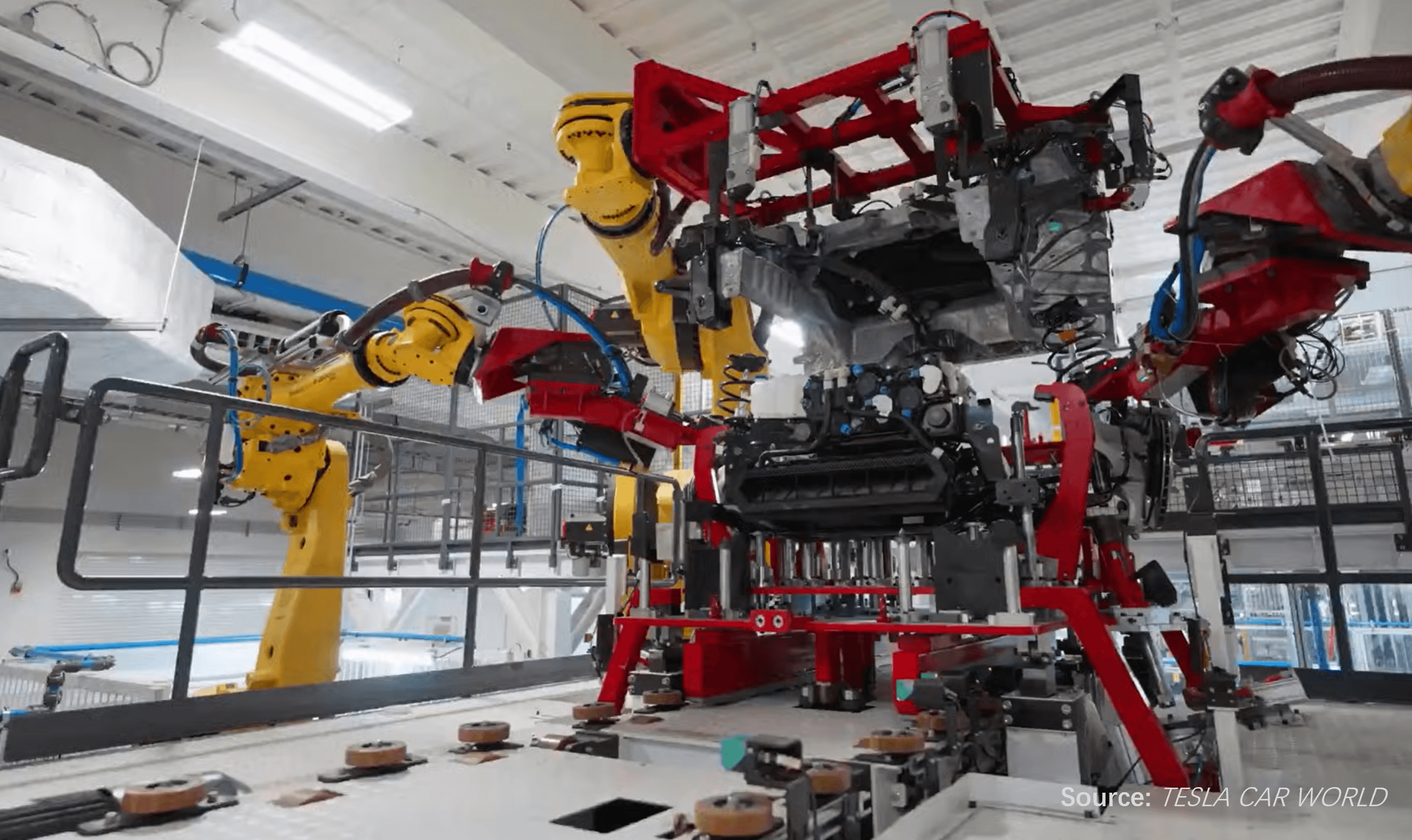
Most robotics jobs are created during deployment, integration, and operations—not product announcements.
This analysis is written for engineers and technical professionals exploring entry points into robotics—not as career advice, but as a structural map of where real opportunities exist as the industry scales.
The robotics market has entered a phase of visible acceleration. Large funding rounds, aggressive roadmaps, and growing media attention have drawn a significant number of engineers toward the sector. Yet for many, the path in remains opaque. Job titles are inconsistent, hiring signals are fragmented, and public narratives often overemphasize elite AI roles while obscuring where most real work is happening.
As robotics moves from experimentation to large-scale deployment, employment opportunities are not evenly distributed. They cluster around specific technical bottlenecks created by scale.
Deployment Is Where Most Jobs Are Created
The most significant source of employment growth in robotics is not research labs or humanoid moonshots, but deployment-heavy environments: warehouses, factories, logistics hubs, and service operations.
Industrial and warehouse robotics technicians form the backbone of this transition. These roles involve commissioning robots, calibrating sensors, integrating fleets with warehouse or manufacturing systems, monitoring uptime, and resolving failures under operational pressure. They sit between software, hardware, and physical reality.
These jobs are expanding rapidly because they address a constraint robots cannot remove: systems break, environments change, and exceptions dominate real operations. As robot fleets scale from dozens to thousands, technician demand grows faster than automation capability.
Crucially, these roles are accessible to engineers from adjacent fields—industrial automation, IT infrastructure, field service, or manufacturing operations—without requiring a full restart or advanced AI credentials.
Embodied AI Engineers: Fewer Roles, Higher Barriers
At the higher end of the spectrum are embodied AI and physical intelligence engineers. These roles attract disproportionate attention, but they represent a much smaller share of total hiring.
What distinguishes them is not AI proficiency alone, but the ability to make intelligence work under physical constraints: latency, noise, safety, and imperfect perception. Skills such as vision-language-action models, sensor fusion, real-time control, and simulation-to-reality transfer are increasingly in demand.
Hiring pipelines here are narrow and selective. Most roles are filled through referrals, prior robotics experience, or demonstrated work on physical systems. For engineers without direct exposure to robotics hardware or deployment, these positions are difficult—but not impossible—to access.
The key insight for engineers is that these roles scale slowly, while deployment roles scale quickly.
Humanoid and Service Robotics: Broad Roles, High Uncertainty
Humanoid and service robotics attract strong interest, but employment opportunities remain structurally limited. Globally, fewer than a few hundred companies operate in this space, and most are still discovering what roles they truly need.
Engineers hired into these teams often span multiple functions: hardware integration, autonomy testing, field deployment, and customer-facing support. Titles are fluid, processes incomplete, and long-term role definitions unsettled.
For engineers, this space rewards adaptability more than specialization. However, it should be understood as a high-variance path rather than a stable employment channel—particularly in the near term.
Manufacturing Automation and the Engineer "Side Door"
Manufacturing automation continues to offer one of the most reliable entry paths into robotics. As factories adopt industrial IoT, robot-assisted workflows, and data-driven optimization, demand is shifting toward engineers who can operate across OT and IT boundaries.
Skills in PLC systems, industrial networking, systems integration, and operations engineering increasingly overlap with robotics deployment needs. In Asia-Pacific—especially China—this overlap is driving large-scale hiring. In North America and Europe, growth is steadier but focused on retrofitting existing facilities.
For many engineers, manufacturing automation remains the most practical side door into robotics.
Robotics Job Visibility Map
The following table shows how different robotics roles compare in terms of hiring volume, accessibility for career transitions, and where to find opportunities. This is designed to help you identify which paths are realistic based on your background.
| Role Type | Hiring Volume | Entry Barrier | Typical Background | Primary Hiring Channels |
| Industrial / Warehouse Robotics Technician | High | Low–Medium | Manufacturing, electrical, field service, automation | Indeed, LinkedIn, system integrator sites |
| Robotics Deployment / Field Engineer | High | Medium | Mechanical/electrical engineering, systems integration | LinkedIn, logistics operators' sites, integrator sites |
| Manufacturing Automation / OT–IT Engineer | Medium–High | Medium | Industrial engineering, PLC programming, controls, operations | Indeed, IEEE Job Site, automation vendor sites |
| Embodied AI / Physical Intelligence Engineer | Medium | Very High | CS/robotics PhD, demonstrated robotics projects, ML + hardware experience | LinkedIn, Wellfound, GitHub job lists, referrals |
| Humanoid Robotics Engineer (Generalist Roles) | Low–Medium | High | Broad engineering background, adaptability, multi-functional skills | LinkedIn, company-direct postings, referrals |
| Robotics Research / Advanced Autonomy | Low | Very High | PhD in robotics/CS, published research, academic credentials | University labs, internal referrals, limited public postings |
Skill Translation: Finding Your Entry Path
Engineers from adjacent fields often have more relevant skills than they realize. Here's how existing backgrounds map to robotics roles:
If you come from manufacturing or industrial automation: Your most direct path is through deployment technician or manufacturing automation roles. Skills in PLC programming, preventive maintenance, and troubleshooting production systems translate directly. Companies value engineers who understand how things break in real operations.
If you come from field service or IT infrastructure: Look for robotics deployment or field engineer positions. Your experience managing uptime, remote diagnostics, and on-site troubleshooting is exactly what scaling robot fleets need. The gap to close is learning robotics-specific tools and sensors.
If you come from mechanical or electrical engineering: Both deployment engineering and systems integration roles are accessible. Your understanding of physical systems, sensor integration, and mechanical troubleshooting provides a foundation that software-focused engineers lack.
If you come from software engineering: The path depends on your specific background. Systems engineers with experience in real-time systems, distributed computing, or embedded systems have clearer pathways than pure web developers. Consider fleet management software, simulation platforms, or control systems roles before pursuing embodied AI positions.
Roles at Risk—and Roles That Persist
Not all roles near robotics are durable. As automation advances, certain positions face displacement while others remain essential.
Roles at risk: Positions centered on narrow, repetitive tasks in structured environments are increasingly automated. This includes routine quality inspection (especially visual inspection), manual data entry for production monitoring, basic material handling in controlled settings, and simple pick-and-place operations that don't require adaptation.
Roles that persist: In contrast, positions that manage complexity, failure, and integration remain resilient. These include troubleshooting unpredictable system failures, managing exceptions that deviate from standard operating procedures, integrating systems across different vendors and protocols, and making judgment calls when sensors provide ambiguous or conflicting data.
The differentiator is not proximity to robots, but the ability to handle situations when systems behave unpredictably—understanding how things fail and how to recover when reality deviates from design assumptions.
Regional Hiring Patterns
Job availability varies significantly by geography:
Asia-Pacific (especially China): The highest volume of deployment and manufacturing automation roles. Large-scale factory automation drives demand for OT-IT engineers, systems integrators, and deployment specialists. Competition is intense but opportunities are numerous.
North America: More concentrated in warehouse automation (e-commerce, logistics) and embodied AI research roles. Growth is steady in manufacturing automation but focused on retrofitting existing facilities rather than greenfield deployment. Higher concentration of advanced AI roles, but fewer overall positions.
Europe: Balanced between automotive manufacturing automation and emerging service robotics. Strong emphasis on industrial safety and certification creates demand for engineers familiar with regulatory frameworks. Remote work is less common for deployment roles due to hands-on requirements.
Remote work viability: Most deployment, field engineering, and integration roles require on-site presence. Remote opportunities exist primarily in simulation, software development, and fleet management platforms—but these represent a smaller share of total hiring.
A Reality Check for Engineers
The robotics industry is expanding, but it is not absorbing talent uniformly. Most engineers who successfully enter the field do so through lateral movement, not direct conversion. Deployment, integration, and operations remain the dominant employment engines, while elite AI roles remain scarce.
For engineers evaluating this transition, the key question is not "How do I get into robotics?" but "Which structural bottleneck can I realistically help solve?"
In 2026, robotics does not suffer from a lack of ideas or ambition. It suffers from a shortage of people who can make machines work—reliably, at scale, and under real-world constraints.
Actionable Next Steps
For engineers ready to explore robotics opportunities:
1. Search for roles with these specific titles: "Robotics Deployment Engineer," "Field Robotics Technician," "Automation Integration Engineer," "Fleet Operations Engineer," or "Manufacturing Automation Engineer." These titles consistently map to real, high-volume opportunities.
2. Target companies in these sectors: logistics operators (Amazon Robotics, Zebra Technologies), warehouse automation providers (Locus Robotics, 6 River Systems), system integrators (Honeywell Intelligrated, Dematic), and manufacturing automation vendors (ABB, KUKA, FANUC).
3. Build hands-on demonstrations if you lack direct robotics experience. Deploy a robot simulation, troubleshoot an open-source robotics stack, or document how you solved a complex integration problem. Practical demonstrations matter more than credentials for deployment-focused roles.









Leave a comment