

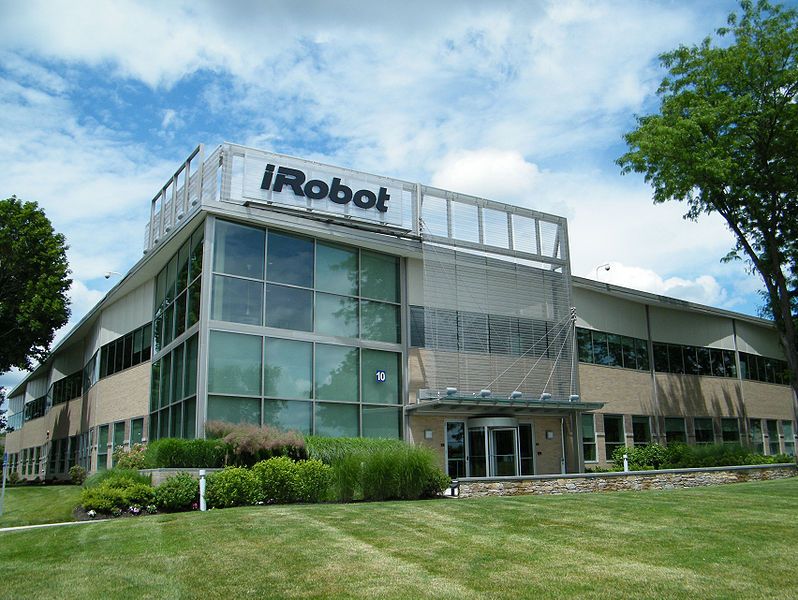
iRobot Was Always a Hardware Company — Until Hardware Turned Against It
Despite its reputation for smart navigation and software-driven cleaning, iRobot has always been a classic hardware company. Its fortunes were tied not to algorithms alone, but to manufacturing scale, bill-of-material costs, inventory cycles, and supplier relationships.
For years, those mechanics worked quietly in iRobot’s favor. Roomba volumes were large enough, margins acceptable, and manufacturing partners stable. But when external pressure mounted—tariffs, competition, and slowing growth—the supply chain stopped being a background system and became the decisive force shaping iRobot’s fate.
Tariffs Forced the China → Malaysia Move — But Only Solved One Problem
The first visible crack appeared with the U.S.–China trade war.
Beginning in 2018, Section 301 tariffs imposed duties of up to 25% on many China-made consumer electronics, including robot vacuums. For iRobot, whose production was heavily concentrated in China, the hit to margins was immediate and material. Management framed the response as proactive “supply chain diversification.” Final assembly for selected Roomba models was moved to Malaysia, primarily with existing partner Jabil. U.S. customs rulings confirmed that Malaysia-assembled products would avoid China-origin tariffs.
On paper, the move worked. Tariff exposure dropped. But strategically, it addressed only one variable—customs treatment—while leaving deeper competitiveness issues untouched.
The Hidden Cost of Partial Relocation: Diluted Leverage
Relocating assembly did not mean rebuilding the supply chain. Most key components—motors, plastics, electronics—remained sourced from China. The result was a split system: Chinese components feeding Malaysian assembly, alongside legacy China-based production. This structure carried two hidden costs. First, operational complexity increased. Dual tooling, dual logistics, and fragmented volumes reduced efficiency.
Second, iRobot’s bargaining power weakened. By splitting production instead of scaling a new hub decisively, the company lost the leverage that comes from concentrated volume.
While Chinese competitors retained fully integrated, high-speed manufacturing ecosystems, iRobot absorbed complexity without gaining strategic advantage.
From Diversification to Dependence: The ODM Pivot After Amazon
The failed Amazon acquisition in 2024 marked a second, more consequential shift. With capital access shrinking and restructuring underway, iRobot pivoted toward a more “asset-light” model. Instead of owning and directing large portions of product development and manufacturing, it leaned heavily on a single Chinese original design manufacturer (ODM): Shenzhen Picea Robotics.
The logic was understandable. ODM platforms promised faster launches and lower upfront costs. But the trade-off was control. New Roomba models increasingly resembled generic midrange robot vacuums—LiDAR turrets, spinning mop pads, standardized shells—features common across the Chinese ODM ecosystem. Reviewers noticed the change. What had once been distinctly “Roomba” now looked interchangeable.
By outsourcing not just manufacturing but design momentum itself, iRobot quietly surrendered differentiation.
The Moment Power Flipped: When the Supplier Became the Creditor
In 2025, the balance shifted decisively.
SEC filings revealed that iRobot owed more than $160 million in manufacturing-related payables to Picea, with a substantial portion overdue. At the same time, Picea’s Hong Kong affiliate, Santrum Hong Kong, acquired iRobot’s secured credit facility from affiliates of The Carlyle Group.
Overnight, iRobot’s primary manufacturer also became its principal secured lender. This convergence was structurally dangerous. The same counterparty now held influence over:
- Production continuity
- Product cost and delivery
- Collateral-backed financial survival
At that point, supply chain strategy was no longer a lever available to management. It had become a constraint imposed from outside.
What Management Believed vs. What the Supply Chain Actually Did
From inside the company, each step appeared rational:
- Move to Malaysia to survive tariffs
- Simplify operations under pressure
- Partner deeply with a capable ODM to cut costs
But supply chains compound decisions. What began as diversification evolved into dependence, then into loss of leverage. The real mistake was not choosing China or Malaysia. It was treating geographic shifts and outsourcing as tactical fixes—without redesigning how power, IP, cash flow, and risk were distributed across the value chain.
The Core Lesson for Robotics Companies
iRobot’s experience offers a hard lesson for every hardware-driven robotics company:
- Geography is not strategy
- ODM efficiency cannot replace differentiation
- And no company should allow one partner to build its products, influence its roadmap, and hold its debt
Supply chains are not neutral infrastructure. Over time, they determine who holds the wheel. For two decades, iRobot defined what home robots could do. In its most difficult chapter, its supply chain defined what the company itself could—or could not—become.
RobotToday Series | iRobot: Rise, Strategy, and Market Failure
- From Co-Creation to Collapse: The Rise and Fall of iRobot, the Original Home Robotics Pioneer
How an early consumer robotics leader lost its strategic edge - When the Supplier Becomes the Power Center: How iRobot’s Supply Chain Strategy Backfired
Why outsourcing control reshaped power dynamics in consumer robotics - Why iRobot Failed: How Roomba Lost the Robot Vacuum Market to Faster Rivals
Execution speed, iteration cycles, and competitive pressure







Leave a comment