

Prologue: Before Co-Creation Became a Business Philosophy
Before iRobot became a publicly listed consumer electronics company, it was an engineering-driven robotics experiment born inside MIT’s research culture. Founded in 1990 by Colin Angle, Rodney Brooks, and Helen Greiner, iRobot emerged from a belief that robots should operate in uncontrolled, human environments—not staged laboratory conditions.
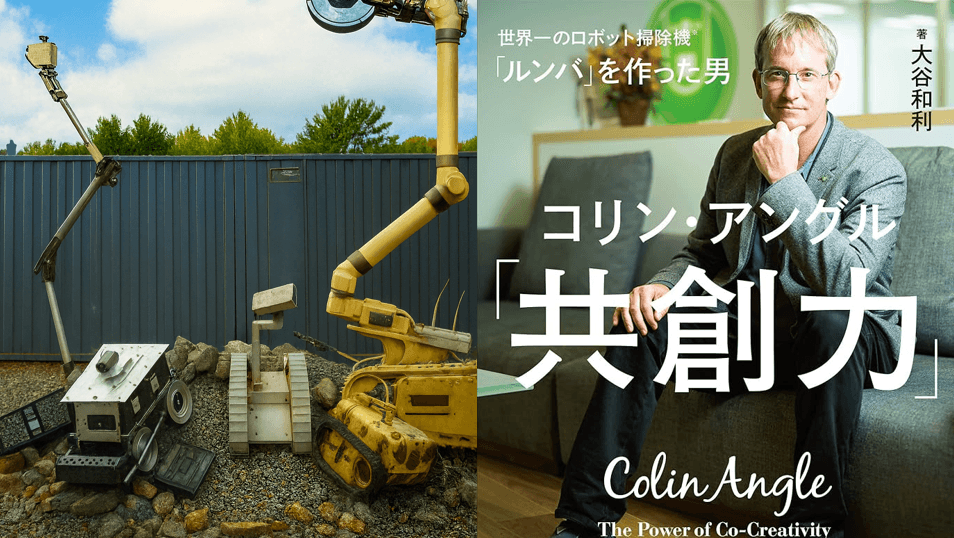
This philosophy was later articulated in Co-Creation Power, a book centered on Angle’s core idea: robotics innovation does not happen in isolation but through continuous interaction between engineers, users, and real-world environments. A robot does not need to be perfect; it needs to be deployable, resilient, and improvable through feedback.
From its inception, iRobot prioritized engineering truth over market storytelling—a strength that would define its success, and later, constrain its adaptability.
How Roomba Solved Home Robotics Before AI Was Ready
Long before AI, deep learning, and real-time perception became mainstream, iRobot solved consumer robotics using systems engineering rather than intelligence. In the early 2000s, sensors were unreliable, onboard computing was limited, and cloud connectivity was minimal. Instead of chasing full autonomy, iRobot optimized for coverage, recovery, and robustness.
Roomba relied on probabilistic navigation, compliant mechanical design, and graceful failure behaviors. When it encountered obstacles, it adapted. When it failed, it failed safely. This approach made Roomba remarkably effective in environments most robots struggled with—cluttered homes, uneven floors, carpets, and pet hair.
The breakthrough was not technological brilliance, but disciplined engineering restraint.
When Roomba Became the Global Standard for Robot Vacuums
By the mid-2000s, Roomba had transitioned from a product into an industry reference point. “Roomba” became synonymous with robot vacuums, much like “iPhone” later defined smartphones. This category ownership was earned through consistent performance rather than novelty.
Strong retail distribution across North America and Europe, combined with premium pricing justified by reliability, allowed iRobot to scale without eroding trust. Over time, more than 50 million units were sold worldwide—an unmatched figure in home robotics. At its peak, iRobot achieved what few robotics companies ever do: durable mainstream adoption.
The 2016 Turning Point: Why iRobot Sold Its Defense Robotics Business
In 2016, iRobot made a decision that would fundamentally reshape its risk profile by selling its defense robotics division.
Under pressure from activist investors, the company chose to focus entirely on consumer products, exiting a segment that had provided steady revenue, advanced technical expertise, and strategic diversification.
The defense business acted as a stabilizer—financially and organizationally. Its removal left iRobot dependent on a single, highly competitive consumer category with short product cycles and intense pricing pressure. What appeared to be focus was, in retrospect, a narrowing of strategic options.
When Engineering Reliability Turned Into Innovation Inertia
As the robot vacuum market matured, the traits that once differentiated iRobot began to slow it down.
While competitors aggressively introduced auto-empty docks, vacuum–mop combinations, and AI-based obstacle avoidance, iRobot adopted these features cautiously and often years later.
Internally, decision-making emphasized minimizing failure rates rather than accelerating iteration speed. This conservatism made sense in an era when robotics failures destroyed consumer trust—but became problematic once the market accepted faster, software-led iteration. Reliability remained a virtue, but velocity became decisive.
The Amazon–iRobot Acquisition That Was Meant to Secure the Future
When Amazon announced its intent to acquire iRobot for $1.7 billion in 2022, it represented more than a typical M&A transaction. The deal promised access to long-term capital, platform-level distribution, and ecosystem integration—capabilities iRobot increasingly lacked on its own.
Regulatory intervention changed everything. Antitrust scrutiny from the FTC and European authorities stalled the acquisition, and despite approval in some jurisdictions, Amazon ultimately terminated the deal in early 2024.
For iRobot, the failed acquisition closed what may have been its last structurally viable exit.
After the Deal Collapsed: Layoffs, Leadership Change, and Strategic Vacuum
The termination of the Amazon deal triggered a rapid internal contraction at iRobot. Large-scale layoffs followed, erasing nearly half of the company’s workforce within a year. Colin Angle stepped down as CEO, marking the end of the founding leadership era.
Despite cost-cutting and restructuring efforts, the company lacked a clear strategic replacement for the failed acquisition. Capital access tightened, morale declined, and long-term planning gave way to survival mode. At a critical moment, iRobot found itself without both a platform and a path.
When the Supply Chain Became the Creditor: iRobot and Chinese Manufacturers
As iRobot’s margins compressed, its dependence on contract manufacturing deepened—and with it, a shift in power.
Chinese manufacturing partners evolved from suppliers into creditors, holding large portions of iRobot’s outstanding debt through affiliated entities.
By late 2025, a significant share of iRobot’s $350 million-plus liabilities was linked directly to manufacturing obligations. In hardware businesses, this dynamic matters: whoever controls production, inventory, and cash flow ultimately influences outcomes.
The supply chain did not sabotage iRobot. It simply asserted leverage that had already shifted.
Why iRobot Lost the Market Without Losing Its Technology
Technologically, iRobot never collapsed. Its products remained functional, reliable, and respected. What changed was the market around them. Chinese brands compressed price bands while expanding features. Premium competitors redefined design and user experience. Retail channels rewarded speed and refresh cycles.
iRobot’s pricing remained rigid, marketing understated, and product cadence slow. The company did not lose because its robots stopped working—but because its business model stopped evolving with the category it created.
Robot Vacuum Competition Redefined the Rules of the Industry
As competition intensified, the robot vacuum market transitioned from engineering-led differentiation to feature-driven comparison. Auto-empty docks, mopping, AI vision, and app-driven customization became default expectations rather than premium upgrades.
In this new landscape, being first mattered less than being fast. Scale favored those who could iterate hardware and software simultaneously at speed—an advantage iRobot no longer held. Market leadership shifted from pioneers to optimizers.
From Cash Pressure to Bankruptcy Risk: iRobot’s Reality in 2025
By 2025, iRobot’s financial position had deteriorated into structural distress.
Cash reserves had fallen below $25 million, debt covenants tightened, and creditor negotiations became unavoidable. In regulatory filings, the company acknowledged that potential strategic alternatives might realistically proceed only through bankruptcy protection.
This situation did not emerge overnight. It was the cumulative result of rational decisions made under changing conditions—each defensible in isolation, damaging in combination.
What iRobot’s Rise and Fall Teaches the Consumer Robotics Industry
Even in crisis, iRobot remains one of the most important companies in robotics history. It proved that home robotics could be commercially viable, established reliability standards competitors still chase, and demonstrated how systems engineering can outperform premature intelligence.
Its decline offers a clear lesson for today’s robotics founders and investors: engineering excellence must be matched by organizational adaptability, market timing, and strategic leverage.
iRobot did not fail to build robots. It failed to evolve the company fast enough to protect what it built.
RobotToday Series | iRobot: Rise, Strategy, and Market Failure
- From Co-Creation to Collapse: The Rise and Fall of iRobot, the Original Home Robotics Pioneer
How an early consumer robotics leader lost its strategic edge - When the Supplier Becomes the Power Center: How iRobot’s Supply Chain Strategy Backfired
Why outsourcing control reshaped power dynamics in consumer robotics - Why iRobot Failed: How Roomba Lost the Robot Vacuum Market to Faster Rivals
Execution speed, iteration cycles, and competitive pressure







Leave a comment