


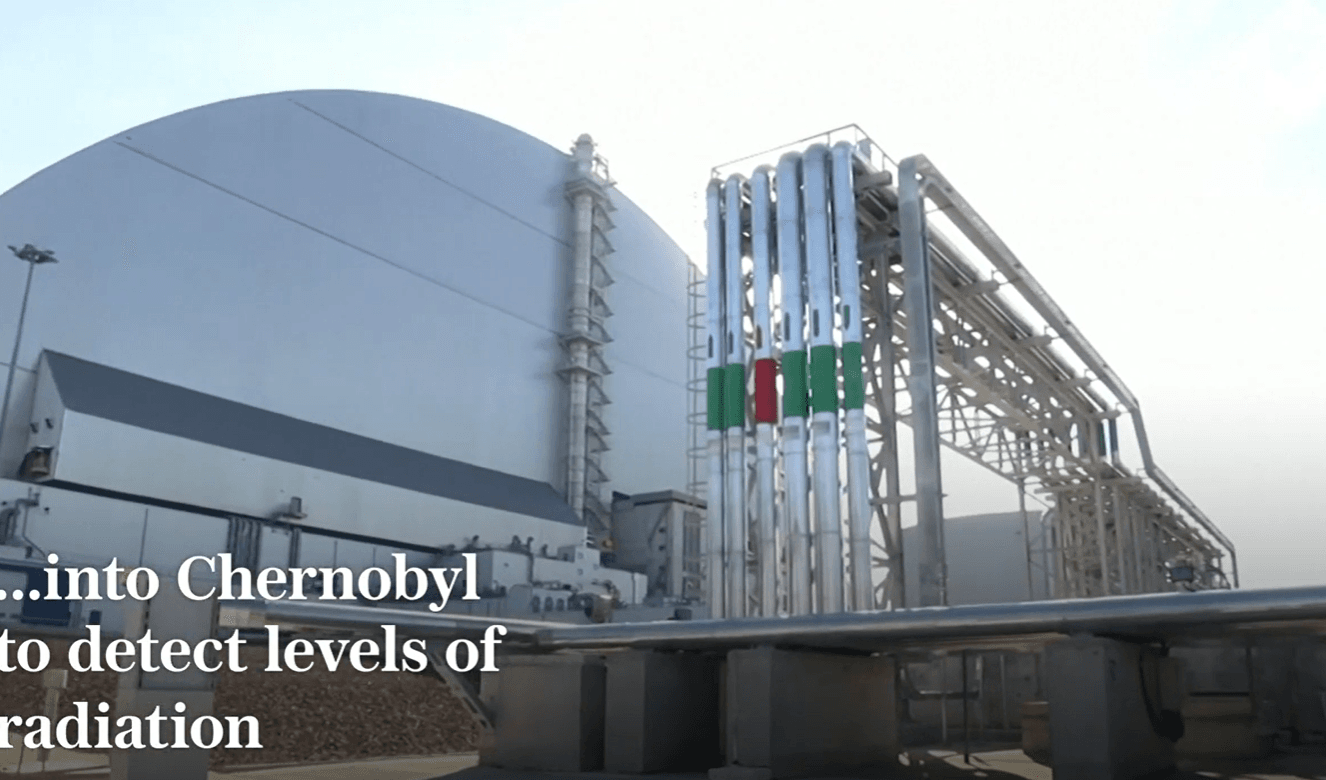
Robotics now plays a structural, not auxiliary, role in nuclear power. Across the U.S., Europe, Japan, and Korea, robots have become embedded in inspection workflows, radiation protection, outage optimization, and decommissioning operations. Their integration is not driven by experimentation or novelty, but by three persistent technical constraints of nuclear environments: radiation, geometry, and dose-driven regulatory requirements. These constraints shape which robotic platforms succeed—and why humanoids, despite recent demonstrations, currently do not.
1. Nuclear Environments Favor Task-Specific, Geometry-Constrained Robotics
Nuclear power plants impose mechanical, geometric, and environmental conditions that are fundamentally incompatible with general-purpose humanoid platforms.
Most high-value maintenance and inspection tasks occur inside confined or submerged structures: pressure vessels, steam generators, primary coolant piping, fuel pools, and legacy waste silos. These environments impose hard physical constraints:
• Access diameters of 12–60 cm
• Curvature radii incompatible with bipedal bodies
• Fully submerged or flooded conditions
• Surface contamination requiring complete decontaminability
• High-dose fields that degrade electronics quickly
| Robot Form Factor / Company | Key Function | Core Technical Requirement |
Submersible Decontamination (e.g., WEDA) | Underwater cleanup of decades-old sludge and debris. | High-power suction/cutting mechanisms; resistance to chemical/radiological contamination. |
Tracked Reconnaissance Vehicles (e.g., iRobot PackBot / Warrior) | High-radiation zone mapping and inspection. | Simple, robust structure with minimal failure points; durable shielding. |
Submersible Inspection Vehicles (e.g., Framatome SUSI) | Pressure vessel and fuel pool surveillance (underwater, up to 20m depth). | Fully sealed, corrosion-resistant, high-precision navigation in fluid dynamics. |
Climbing/Adhesive Robots (e.g., FORERUNNER) | Non-destructive testing (NDT) of steam generator tube plates. | Ability to adhere to and traverse complex metallic surfaces; high-accuracy sensor placement. |
Pipe-Crawling Snake Robots (e.g., Nero / SADIE) | Eddy current inspection of welds in narrow, multi-meter curved piping. | Flexible, high-articulation design for complex geometry access; integration of NDT probes. |
Underwater Inspection Vehicles (e.g., Mitsubishi's A-UT Machine) | Non-destructive testing (NDT) of weld lines inside pressurized water reactor (PWR) vessels. | Propulsion via thruster, locomotion on walls via wheels/adhesion, 7-axis manipulator with pm 0.1 mm precision, remote operation in high-radiation environment. |
Autonomous Quadruped Patrol (e.g., ANYmal, Boston Dynamics Spot) | Plant-wide patrol, monitoring, radiation mapping, and facility building. | Stable gait on uneven/wet surfaces; autonomous SLAM and integrated sensor packages. |
As a result, the prevailing robotic solutions are engineered around specific physical interfaces:
• Tracked or low-profile UGVs optimized for debris, structural mapping, and deployment through narrow access ports.
• Underwater ROVs/AUVs with sealed housings and radiation-tolerant sensors to inspect reactor internals and fuel pools (e.g., Framatome’s SUSI).
• Tube-sheet wall-climbing robots such as FORERUNNER designed explicitly around steam generator geometries.
• Snake-like crawlers (Nero, SADIE) capable of negotiating long, curved, and variable-diameter piping.
• Quadrupeds (ANYmal, Spot) for plant-wide autonomous radiation mapping and acoustic/thermal inspection.
Each platform is a function of three engineering necessities: locomotion feasibility, sensor payload integration, and decontamination tolerance. None of these requirements map naturally to a human-shaped chassis.
2. Radiation Effects and Decontamination Requirements Disfavor Complex Mechatronics
Radiation hardness—not locomotion capability—dictates the lifetime of electronics and materials in nuclear workspaces.
High gamma and neutron fields accelerate degradation in:
- Joint actuators
- Encoders
- Camera sensors
- Polymer-based insulation
- Embedded compute components
Purpose-built nuclear robots minimize these vulnerabilities by reducing actuator count, isolating electronics, and simplifying mechanical interfaces. Many designs are intentionally “semi-disposable” because exposure-induced degradation is expected.
Humanoids, by contrast, are inherently high-actuation and high-sensor-density platforms. Their architecture includes:
- 30–40 independently driven joints
- Distributed wiring looms and harnesses
- Multiple IMUs and vision systems
- Elastic components, covers, and multi-material skins
This complexity is incompatible with standard decontamination processes, which rely on:
- High-pressure water
- Chemical decontaminants
- Abrasion-based cleaning
- Full-surface wipe-down with no inaccessible cavities
The humanoid form introduces dozens of contamination traps, seals, and articulations that cannot be effectively decontaminated or replaced at reasonable cost. In any moderate-to-high dose field, such a platform would rapidly become non-serviceable.
3. Safety and Certification Frameworks Are Optimized for Deterministic Behaviors
Nuclear regulatory frameworks (IAEA, NRC, ASN, NRA, KINS) evaluate robotic systems through deterministic failure modeling. This is feasible for specialized robots that follow predefined trajectories and operate under tightly bounded control logic.
Nuclear-qualified robotics succeed because their behavior is:
- Predictable and formally verifiable
- Limited to deterministic state transitions
- Designed around fixed mechanical pathways
- Auditable and certifiable with clear failure modes
Humanoids currently operate with probabilistic autonomy layers—visual perception, dynamic balance, multi-contact planning, and closed-loop whole-body control. These systems depend on machine learning components that complicate certification:
- Failure modes are not strictly deterministic
- Software updates can alter system behavior
- Recovery behavior after perturbations cannot be exhaustively validated
- Dynamic balance introduces “non-fixed” risk patterns in constrained industrial spaces
For regulators, this introduces unacceptable uncertainty. Until the robotics industry develops certifiable autonomy stacks for safety-critical environments, humanoids cannot satisfy nuclear licensing requirements beyond low-dose, low-risk facility zones.
4. Task Efficiency Favors Specialized Tools, Not General Embodiment
Nuclear tasks are dominated by structured, repetitive operations:
- Eddy-current or ultrasonic scanning along predefined paths
- Standardized weld inspections
- Fuel-pool sludge removal with sweeping patterns
- Steam generator tube inspections
- Core internals visualization
- Precision cutting and waste retrieval during decommissioning
These tasks benefit from:
- End-effectors aligned to specific geometries
- Locomotion structures tailored to positional constraints
- Mounting hardware designed around reactor or pool interfaces
- Repeatability measured in sub-millimeter tolerances
- High mechanical stiffness and low DOF error propagation
Humanoids, even with dexterous hands, provide none of the mechanical advantages needed for these operations. The cost and complexity of adapting humanoids to nuclear tooling far exceed the benefits, especially when the same tasks can be executed faster and more reliably by specialized robots with 90% fewer failure points.
From an engineering economics perspective, humanoid robots deliver negative ROI in nuclear maintenance scenarios today.
5. What the HOXO Deployment Actually Represents
The deployment of the HOXO humanoid at Orano Melox has been widely interpreted as a disruptive step, but technically it is a controlled industrial pilot in low-radiation areas. It serves two pragmatic purposes:
- Evaluate human-scale mobile platforms for routine, non-radiological tasks such as visual documentation, gauge reading, and environmental sensing.
- Study operator workflow integration for future applications in logistics, facility inspection, and labor supplementation in non-critical areas.
HOXO is not entering reactor vessels, steam generators, fuel pools, or hot cells. Its deployment does not replace any existing nuclear-grade robots. Instead, it tests whether humanoids can eventually fill labor shortages in parts of the nuclear ecosystem that resemble traditional industrial facilities.
Engineers inside the sector view it not as a technical pivot, but as data collection for long-term workforce augmentation—not core nuclear operations.
6. The Most Plausible Future: Robots Everywhere, Humanoids Strategically Applied
If we project forward based on current engineering trajectories rather than aspirational templates, a realistic roadmap emerges.
Inside the nuclear island (core operations)
Robotics will remain dominated by radiation-tolerant, geometry-specific platforms with deterministic control architectures. These systems will be integrated into reactor design, SMR architectures, and digital twin workflows. They will handle inspection, outage optimization, and decommissioning.
Peripheral and balance-of-plant environments
Humanoids may have credible roles in:
- Industrial logistics (parts handling, consumables movement)
- Non-radiological inspection rounds
- Autonomous procedural verification tasks
- Training interfaces for skill transfer to specialized robots
In these areas, the humanoid form factor maps well onto legacy human infrastructure—stairs, ladders, doors, handles, shelves—without compromising nuclear-grade safety.
Skill abstraction and transfer
One emerging field where humanoids may become relevant is skill encoding. Human operators could teach tasks in a safe lab setting, while digital twins map those motions onto non-humanoid robots designed for harsh environments. In this architecture, humanoids serve as kinematic teaching interfaces, not primary field robots.
Conclusion: In Nuclear Power, Physics and Regulation Choose the Robot Form
Robots are indispensable in nuclear power. But the robots that succeed are those whose architectures match the physics, radiation fields, geometries, and certification constraints of the environment. Today, those are tracked vehicles, underwater systems, pipe crawlers, wall-climbing scanners, and radiation-mapping quadrupeds—not humanoids.
Humanoid robots may eventually occupy a meaningful role in nuclear facilities, but their utility will remain on the periphery until autonomy becomes certifiable, radiation tolerance improves dramatically, and their mechanical complexity becomes compatible with severe decontamination protocols.
In nuclear power, technology adoption is not driven by aesthetics or universality.
It is determined—precisely and unambiguously—by engineering feasibility.
And by that measure, humanoids still have a long way to go.




Leave a comment