

From Scale to Strength: Moving Into the Global First Tier
During the “14th Five-Year” period, China achieved exponential growth in robotics: the density of industrial robots reached 392 units per 10,000 manufacturing workers, ranking fifth globally, and the country led the world in patent filings. The next stage aims higher—moving from “quantity accumulation” to “quality elevation.” The new target is to build a globally leading, self-reliant industrial ecosystem, where domestic suppliers dominate key components such as reducers, controllers, and servo motors, completing a full chain from components to systems to application.
By 2030, the revenue of China’s intelligent robotics industry is expected to exceed RMB 320 billion (≈ USD 44 billion), marking the transition from assembly-driven production to innovation-led manufacturing.
Industrial Robots: From Substitution to Core Empowerment
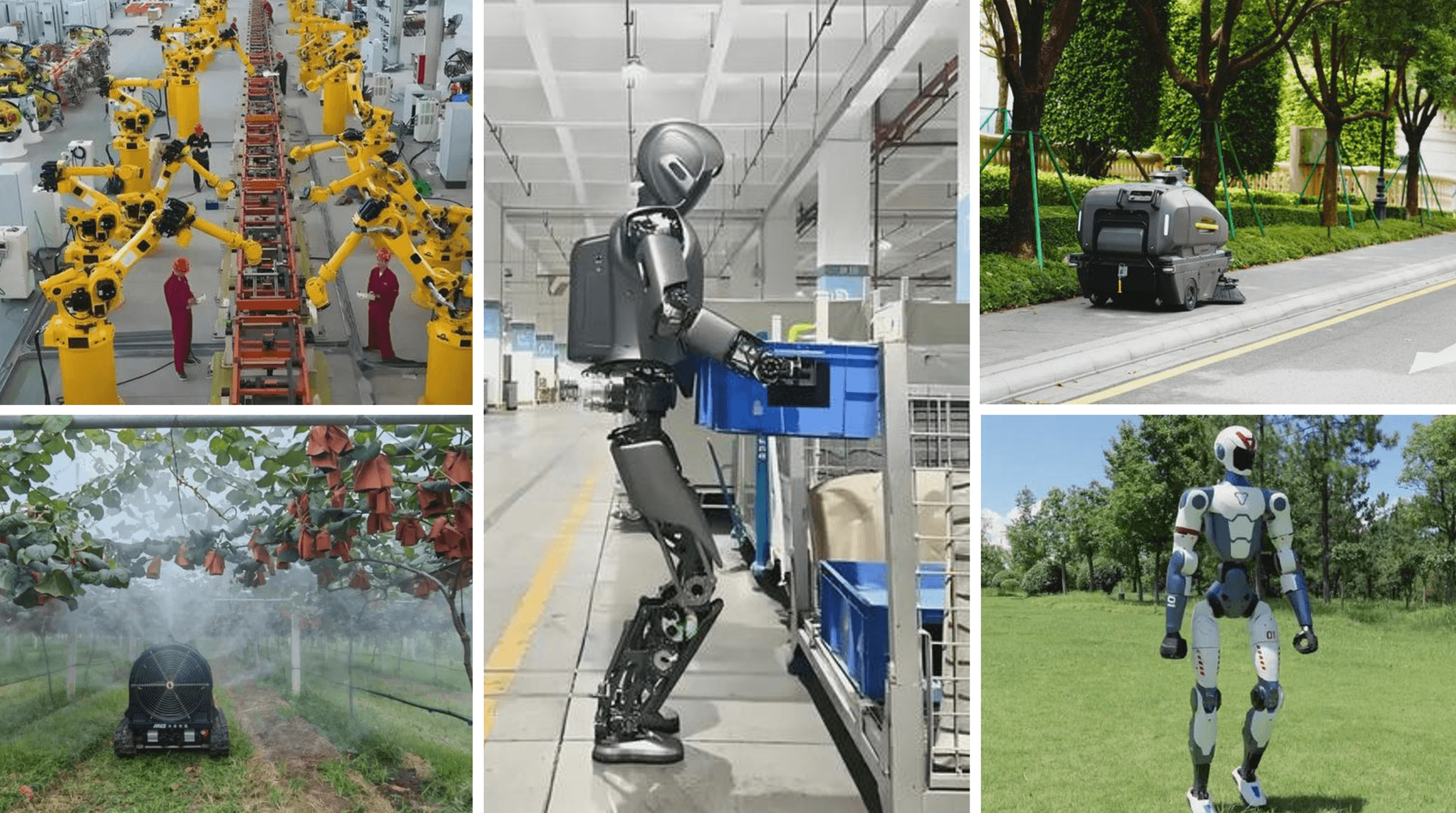
Industrial robots remain the cornerstone of intelligent manufacturing. Although China accounts for over half of new global installations, foreign brands such as ABB and Fanuc still dominate the high-end segment. The focus of the next five years will be twofold:
- Precision breakthroughs in sectors such as new energy vehicles, semiconductors, and aerospace, where micron-level welding and flexible assembly are key;
- Wider adoption through an upgraded “Robot + Manufacturing” initiative, embedding automation in traditional industries like machinery, chemicals, and food processing.
At a projected 8% annual compound growth rate, China’s industrial robot revenue could exceed RMB 215 billion, with local brands capturing over 60% of the market and robot density surpassing 1,000 units per 10,000 workers.
Service Robots: Meeting the Needs of an Aging Population
Service robots will emerge as the fastest-growing segment, driven by healthcare and eldercare demands. China’s population over 60 already exceeds 20%, and the shortage of caregivers and medical staff makes rehabilitation and companion robots a vital supplement. Future priorities include:
- Healthcare robots: localized surgical and rehabilitation systems that reduce dependency on imported platforms and lower treatment costs.
- Eldercare robots: community-based assistants offering mobility support, medication reminders, and remote consultation.
- Public service robots: cleaning and logistics robots for airports, subways, and shopping centers.
In the coming years, service robots will not only scale domestically but also expand globally—particularly in cleaning and healthcare applications through Belt and Road collaborations.
Special-Purpose Robots: Rising to Strategic Challenges
Specialized robots designed for high-risk and complex environments—such as agriculture, disaster relief, mining, and energy—will transition from “follower” to “leader” status.Use cases include drone crop protection, underground inspection, and wind turbine blade maintenance.
The “15th Five-Year” plan envisions a self-reinforcing cycle of demand-driven R&D, field validation, and scale deployment, enabling these robots to contribute to energy security, food production, and emergency response.
Humanoid and General-Purpose Robots: The Frontier of Future Industry
General-purpose humanoid robots are expected to move from laboratory validation to industrialization. During the previous plan, breakthroughs in AI-based motion control, multi-modal perception, and actuator technology laid the groundwork. The next phase will target:
- Embodied intelligence, electronic skin, and bio-inspired movement,
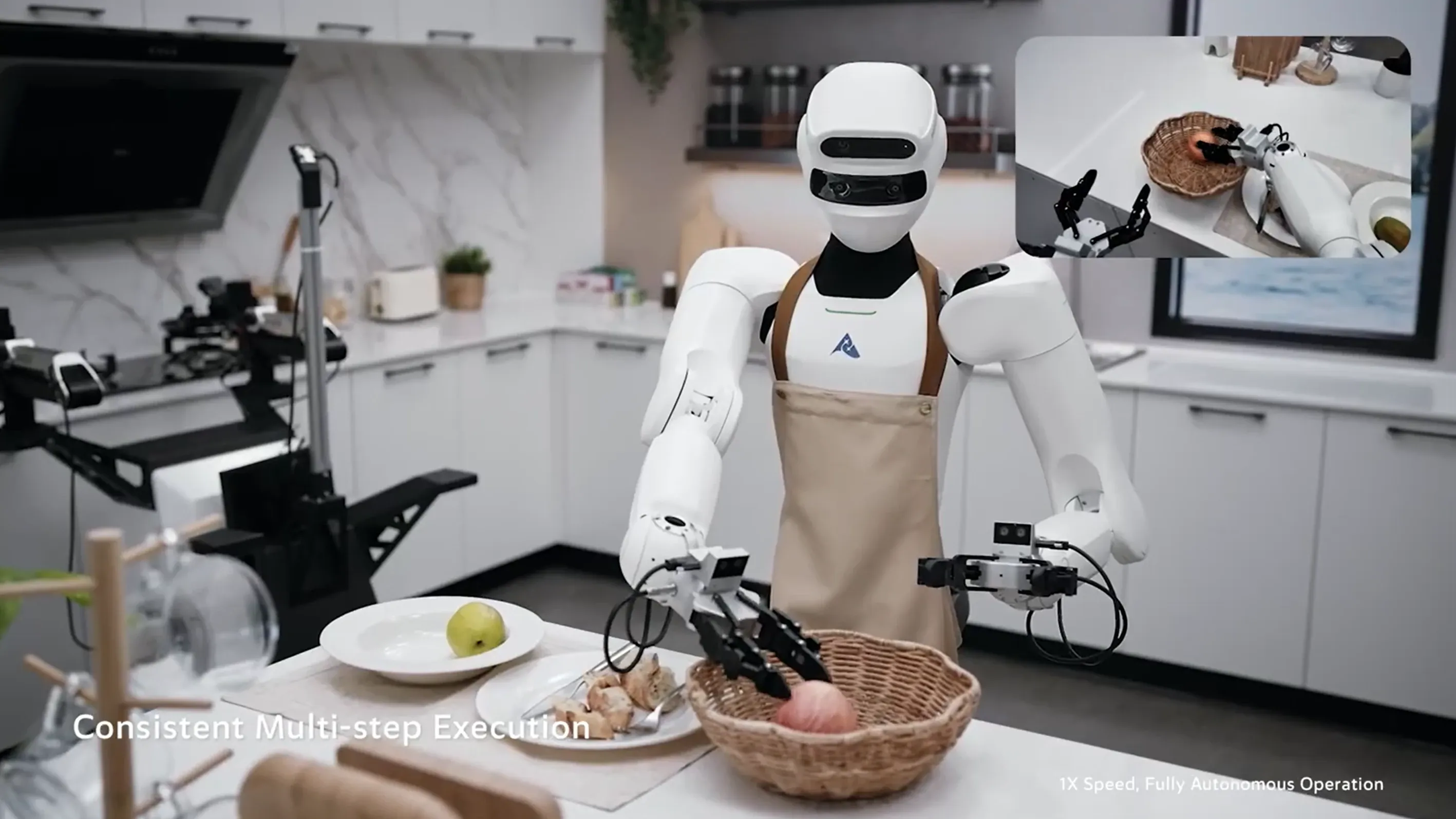
- Pilot applications in advanced manufacturing, home service, and hazardous work,
- Ecosystem building across innovation hubs such as Beijing, Shanghai, and Shenzhen.
Though near-term revenues remain limited, humanoid robots represent China’s bid to claim a global leadership position in next-generation robotics by 2030.
The Triple Engine: Policy, Technology, and Market
The sector’s transformation will result from the synergy of policy guidance, technological innovation, and expanding market demand.
-
Policy Support – A multi-layered framework combining national planning with regional collaboration is taking shape, focusing on seven key initiatives: core technology breakthroughs, quality improvement, open application pilots, chain integration, market leadership programs, security foundations, and international cooperation.
-
Technological Innovation – The emphasis is shifting from single-point advances to multi-disciplinary integration—combining sensing, control, and decision-making. Future breakthroughs will center on high-precision sensors, lightweight actuators, real-time decision algorithms, and AI-driven embodied intelligence.
-
Market Demand – Robotics applications are expanding from industrial transformation to public services and strategic infrastructure. Medical, agricultural, and emergency-response robots will see large-scale adoption, while household and educational robots will shift from optional to essential consumer products.
Building a Collaborative Ecosystem
The industry’s competitiveness will depend less on individual firms and more on ecosystem collaboration. China is developing an integrated structure linking industrial, innovation, talent, and capital chains, supported by:
- Pilot verification platforms to accelerate commercialization,
- National training programs for robotics engineers,
- Dedicated industry investment funds, and
- A tiered enterprise structure (“leading enterprises + specialized champions + emerging innovators”).
At the same time, the country is strengthening standards, certification, and testing systems to ensure reliability, cybersecurity, and ethical compliance—paving the way for international recognition and interoperability.
Looking Ahead: Toward an Intelligent Era
The “15th Five-Year Plan” marks a pivotal moment for China’s robotics sector—shifting from a manufacturing powerhouse to a technology powerhouse.
By 2030, China aims not only to be the world’s largest robotics market but also a global source of innovation, advanced technologies, and integrated solutions.
With robotics enabling the new era of intelligent productivity, the nation’s vision of high-quality, human-centered industrial growth is steadily becoming reality.






Leave a comment