


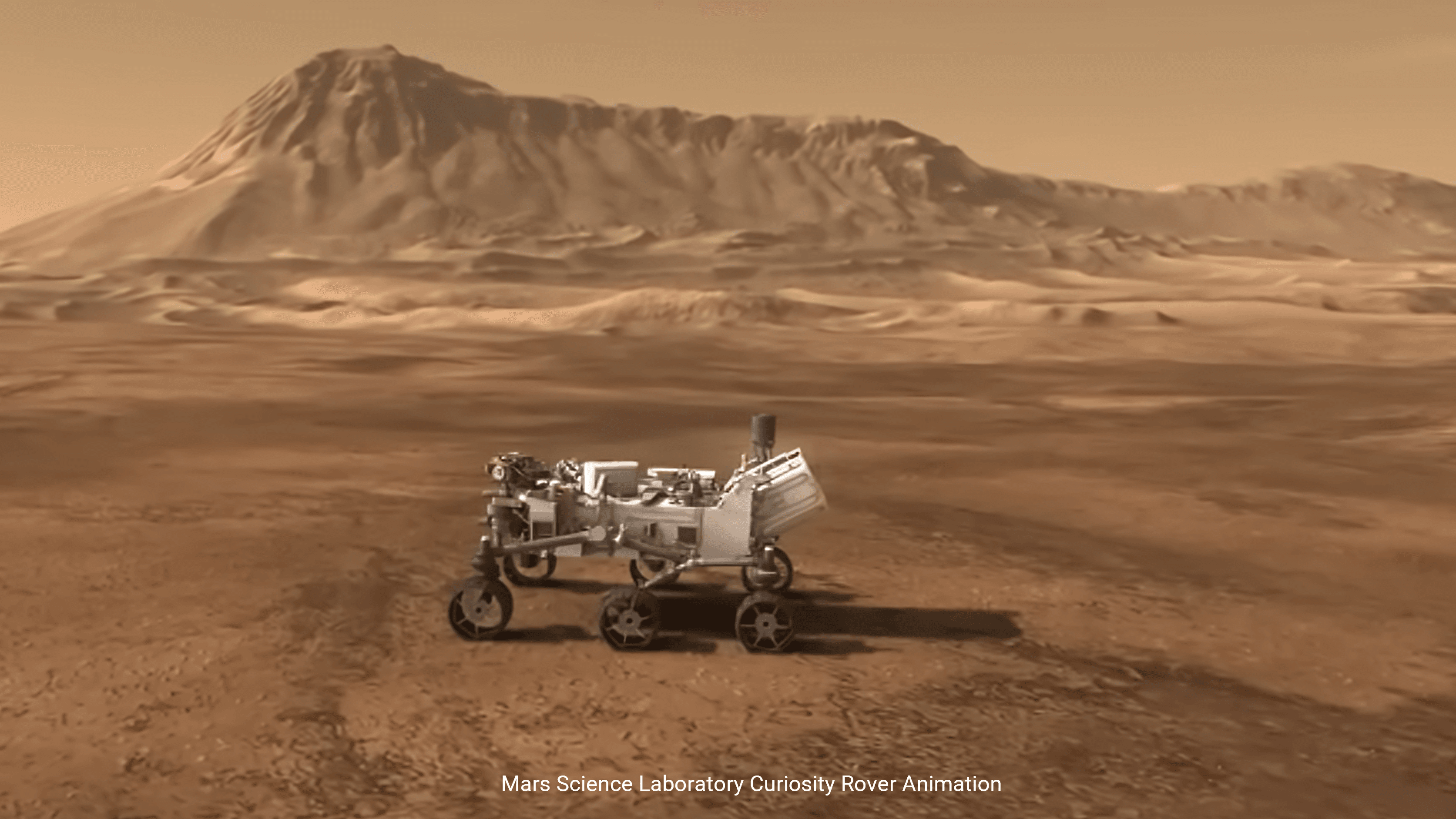
The moon is no longer just a destination for flags and footprints. A new generation of planetary surface robots is transforming Earth's nearest neighbor into a proving ground for autonomous infrastructure development, where rovers must survive temperature extremes that would destroy conventional machinery and dust particles sharper than broken glass.
The Survival Challenge
Planetary rovers face environmental conditions that push engineering to its limits. Lunar surface temperatures swing from 120°C during the day to -180°C at night—a 300-degree range with no atmosphere to moderate the extremes. This 14-day lunar night represents the single greatest obstacle to long-duration surface operations.
China's Yutu-2 rover, which has been operating on the lunar far side since January 2019, addresses this through hibernation cycles. During each lunar night, the rover powers down completely, surviving on radioisotope heating units while temperatures plummet. When daylight returns, solar panels regenerate power and operations resume. As of 2025, Yutu-2 has survived over 70 lunar day-night cycles—far exceeding its three-month design life and breaking the Soviet Lunokhod 1's longevity record.
NASA's upcoming Lunar Terrain Vehicle (LTV) designs take a different approach: 20-kilometer operational ranges, 15 km/h maximum speeds, and critically, the ability to survive multiple lunar nights without human intervention. Three companies—Intuitive Machines, Lunar Outpost, and Venturi Astrolab—are competing for up to $4.6 billion in contracts through 2039.
The Lunar Dust Problem
If temperature is the strategic challenge, lunar dust is the tactical nightmare. Apollo astronauts quickly learned that regolith—the powdery surface layer—is not like Earth soil. Formed by billions of years of meteorite impacts without atmospheric weathering, lunar dust particles are 50-0.1 micrometers in size, electrostatically charged, highly cohesive, and extremely abrasive.
During Apollo 17, when a rover fender broke, the resulting dust spray contaminated everything it touched. Astronauts reported dust jamming spacesuit joints, scratching helmet visors, and causing respiratory irritation inside the lunar module. The problem was so severe that some Apollo astronauts suggested lunar dust might be the biggest operational challenge for future moon missions.
For rovers, dust infiltration means premature failure of mechanical joints, reduced solar panel efficiency, and optical contamination. NASA's VIPER (Volatiles Investigating Polar Exploration Rover) development team addressed this through multiple defense layers: flexible protective "socks" over wheel units, winding labyrinth seals, felt seals, and spring-loaded Teflon seals around motor components. Each wheel module includes active suspension and independent steering—more joints mean more potential dust entry points, requiring more protection.
Research on protective coatings shows promise. Graphene-based composites tested on the UAE's Rashid rover (which crashed in 2023) demonstrated potential to resist abrasion from sharp regolith particles. Advanced ceramic coatings with Vickers hardness exceeding 1000 are being developed specifically for lunar applications, where plume-surface interactions during landing can accelerate dust particles to 2,000 m/s—creating sandblasting conditions that would destroy unprotected hardware.
From Solo to Swarm
The shift from individual rovers to cooperative swarms represents a fundamental change in planetary exploration strategy. NASA's CADRE (Cooperative Autonomous Distributed Robotic Exploration) mission, scheduled for launch in 2026 aboard Intuitive Machines' IM-3 lander, demonstrates this evolution.
Three suitcase-sized rovers will operate as an autonomous team in the Reiner Gamma region. Without direct human control, they will elect a "leader" based on system health, distribute work assignments, and adapt to changing conditions. Every 30 minutes, the rovers will shut down for thermal management, cooling via radiators before simultaneously reawakening to share status updates through a mesh radio network.
The technical challenge lies in autonomous decision-making. Mission control sends only high-level directives: "explore this region." The rovers must determine navigation paths, avoid hazards, and coordinate measurements without Earth intervention—communication delays of 1.3 seconds each way make real-time control impractical.
This architecture enables new science. Simultaneous measurements from multiple locations can map subsurface structures, track resource distribution, and create 3D terrain maps. One rover can explore dangerous terrain while others maintain safe positions to receive data. If one unit fails, the mission continues.
Commercial Space Infrastructure
The business model for lunar rovers is evolving beyond government contracts into infrastructure-as-a-service. Intuitive Machines, which achieved the first commercial lunar landing in February 2024 (despite the lander tipping over), exemplifies this shift.
The company projects $250-300 million in revenue for 2025, with profitability targeted for 2026. Their strategy encompasses three revenue streams: transportation and payload delivery ($100M+ from NASA CLPS contracts), lunar data services (communications and navigation satellites in lunar orbit), and surface infrastructure (power systems, communications networks). The Near Space Network Services contract alone brought in $9 million in Q1 2025, with $18 million secured for subsequent phases.
For the IM-2 mission launched February 2025, Intuitive Machines demonstrated this model in practice. Nokia's 4G/LTE system connected the Athena lander with Lunar Outpost's MAPP rover and Intuitive Machines' Micro-Nova Hopper. Commercial customers can book payload space alongside government instruments, reducing costs for all participants while building the communications infrastructure that future missions will rely on.
The Lunar Terrain Vehicle program follows similar economics. NASA is not purchasing vehicles but contracting mobility services. Companies retain ownership, operating rovers for NASA missions while marketing excess capacity commercially. This "Uber for lunar exploration" approach could see the same rover supporting scientific research one week and commercial resource prospecting the next.
China's Lunar Roadmap
While Western commercial companies compete for NASA contracts, China is building lunar infrastructure through a state-coordinated program. The Chang'e series has progressed systematically: orbiter mapping (Chang'e 1-2), surface landing and roving (Chang'e 3-4), sample return (Chang'e 5-6), and now resource prospecting (Chang'e 7-8).
Chang'e 7, scheduled for 2026 launch, will deploy an orbiter, lander, rover, and mini-flying probe to the lunar south pole specifically to hunt for water ice—the key resource for sustained presence. Chang'e 8, planned for 2028, will test in-situ resource utilization (ISRU) technologies including 3D-printing experiments using lunar regolith and a sealed ecosystem experiment.
These missions directly support Phase IV of China's lunar program: an International Lunar Research Station (ILRS) near the south pole, targeted for the 2030s. China has secured participation from Russia and announced that Chang'e 8 will carry payloads from 11 countries including Pakistan's lunar rover, Turkey's exploration rover, and Italy's laser retroreflector arrays.
The ILRS represents a different commercialization philosophy than the Western model. Rather than private companies selling services to government, China's approach uses state missions to establish infrastructure that both government and commercial entities can then utilize. This reduces initial commercial risk while ensuring strategic control over lunar development.
Operational Comparison: Current Lunar Rovers
| Parameter | Yutu-2 (China) | MAPP (Lunar Outpost) | Eagle LTV (Artemis) | CADRE Rovers (NASA) |
|---|---|---|---|---|
| Mass | 140 kg | ~50 kg | 2,000+ kg | ~25 kg (suitcase-size) |
| Mission | Farside exploration | Commercial prospecting | Crewed + autonomous | Swarm autonomy demo |
| Range | >1,400 m (cumulative) | Multi-day operations | 20 km operational radius | Local area (~100m) |
| Power | Solar + RHU heating | Solar | Advanced battery + 10-year life | Solar + 30-min cycles |
| Night Survival | Hibernation (70+ cycles) | Not disclosed | Full lunar night capable | 14 Earth days (1 lunar day) |
| Key Tech | Penetrating radar, spectrometers | 4G/LTE connectivity | Goodyear lunar tires, robotic arm | Mesh network, cooperative autonomy |
| Status | Operating since 2019 | Deployed Feb 2025 (IM-2) | Phase 1 assessment (2024-25) | Launch 2026 (IM-3) |
| Operator | CNSA | Lunar Outpost/commercial | NASA Artemis + commercial use | NASA JPL |
Thermal Management Technologies
| Challenge | Temperature | Solution Approach | Example Implementation |
|---|---|---|---|
| Lunar Day Heat | +120°C | Radiators, thermal coatings, 30-min work-rest cycles | CADRE rovers: 30-min operation, then shutdown cooling |
| Lunar Night Cold | -180°C | Hibernation, RHU heating, insulated electronics | Yutu-2: Complete shutdown with radioisotope heating |
| Joint Mobility | 300°C swing | Special lubricants, dust-sealed actuators | VIPER: Triple seal system (labyrinth, felt, Teflon) |
| Electronics Protection | Extreme thermal stress | Insulated enclosures, phase-change materials | Apollo LRV: Survived -173°C to +127°C with passive systems |
| Solar Panel Efficiency | Temperature-dependent | Dust-resistant coatings, optimal positioning | Dust accumulation can reduce efficiency by 30-40% |
Technical Evolution
Modern lunar rovers bear little resemblance to Apollo's Lunar Roving Vehicle with its 0.25-horsepower wheel motors and lawn-chair seats. Today's designs incorporate autonomous navigation, robotic manipulation, ground-penetrating radar, and multiple operational modes (crewed, remote, fully autonomous).
Lunar Outpost's Eagle features Goodyear-developed airless tires that must function across the 300-degree temperature range while resisting abrasion from sharp regolith. Michelin is developing similar technologies for the Intuitive Machines LTV, applying expertise from terrestrial run-flat systems to lunar conditions.
Astrolab's FLEX rover demonstrates another evolution: modular cargo pod architecture similar to shipping containers. The rover picks up standardized pods containing scientific instruments or mining equipment and delivers them to precise locations—last-mile logistics for lunar operations.
The challenge extends beyond mobility to power management. A 14-day lunar night means either carrying sufficient battery capacity to survive without sunlight (adding mass) or developing fission power systems. NASA and the Department of Energy are funding IX (Intuitive Machines/X-energy joint venture) to design systems delivering at least 40 kilowatts—enough to power a small research station.
The Path Forward
Planetary surface robotics is transitioning from exploration missions to infrastructure development. The question is no longer "can we send a rover?" but "how many rovers, doing what tasks, supporting which activities?"
For commercial companies, success requires solving the unit economics of lunar operations. Can data relay services generate sustainable revenue? Will resource prospecting justify the investment before government programs need the infrastructure? The $4.6 billion NASA is allocating for lunar terrain vehicles through 2039 suggests the market is real, but profits remain speculative.
For national space programs, rovers represent tangible assets in a new arena of geopolitical competition. China's systematic buildout toward the ILRS, NASA's commercial partnerships for Artemis, and emerging programs from India, Japan, and the UAE reflect recognition that lunar surface capability matters strategically.
The engineering challenges remain formidable. Temperature extremes, abrasive dust, radiation exposure, and communication delays all conspire against complex machinery operating for years without maintenance. But the solutions being developed—from electrostatic dust shields to cooperative swarm intelligence—are increasingly sophisticated.
Within a decade, lunar surface operations may transition from flags-and-footprints missions to something resembling terrestrial remote operations: fleets of specialized vehicles, each designed for specific tasks, operating semi-autonomously under high-level human supervision. The rovers building infrastructure on the moon today are demonstrating the technologies that will enable that future.
Data Sources
- NASA Jet Propulsion Laboratory - CADRE Mission Overview and Technical Specifications
- https://www.jpl.nasa.gov/news/nasas-mini-rover-team-is-packed-for-lunar-journey/
- https://www.nasa.gov/missions/tech-demonstration/cadre/
- NASA Lunar Terrain Vehicle Program - LTV Requirements and Selection Process
- https://www.nasa.gov/suits-and-rovers/lunar-terrain-vehicle/
- Intuitive Machines - IM-2 Mission Details and Commercial Business Model
- https://www.intuitivemachines.com/im-2
- SpaceNews coverage of business strategy (March 2025)
- China National Space Administration - Chang'e Program Technical Details
- https://www.planetary.org/space-missions/change-4
- Government announcements on Chang'e 7-8 missions and ILRS
- NASA Technical Publications - Lunar Dust Mitigation Research
- "Protective Coatings for Lunar Dust Tolerance" (NASA/TM–20230003195)
- "Thermal Impacts of Lunar Dust for Rovers" (TFAWS 2024)
Explore related analysis across satellite servicing, lunar infrastructure, orbital manufacturing, and AI-enabled space systems.
Space Robotics: The 2026 Breakout
An inflection point in 2026 is expected to accelerate commercialization in space robotics, driven by satellite servicing demand, lunar missions, and in-orbit manufacturing.
Space Robotics' Killer App: The $30B Satellite Servicing Market
The projected $30 billion satellite servicing market is emerging as the primary revenue engine for space robotics, spanning life-extension, refueling, repair, and debris mitigation.
Space Robot- Lunar Rovers: Building Infrastructure on the Moon
Next-generation lunar rovers are transitioning from exploration tools to infrastructure enablers, supporting construction, resource extraction, and sustained operations on the Moon.
Space Station's AI Assistants: From Robotic Arms to Autonomous Partners
AI-enabled robotic systems aboard space stations are evolving from teleoperated manipulators into semi-autonomous partners that enhance crew productivity and operational resilience.
Space Robot- Building Skyscrapers in Space: ISMA's Industrial Revolution
Orbital assembly concepts, including ISMA-driven large-scale structures, signal the beginning of an industrial revolution in space construction and high-rise in-orbit manufacturing.




Leave a comment