Zmotion (CN)

Chinese motion control technology company. Website was inaccessible at time of data collection; however, Zmotion is known as a manufacturer of multi-axis motion controllers and related automation control hardware and software for industrial equipment and robotics applications.

Share
Zmotion (CN)
Zeughausstrasse 43
Zurich 8004
RobotToday Initiative

Robotics needs a service framework.

RSF defines a common language for robot service capability, lifecycle operations, certification pathways, and service-provider networks.

Share

Related Content

Pudu Robotics Unveils Next-Generation Semi-Humanoid Robot 'PUDU D7' at WAIC 2026 in Shanghai

Pudu Robotics Unveils Next-Generation Semi-Humanoid Robot 'PUDU D7' at WAIC 2026 in Shanghai

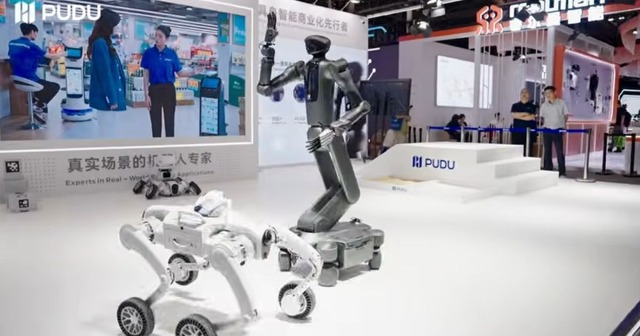
Pudu Robotics showcased its entire product lineup at the 2026 World Artificial Intelligence Conference (WAIC 2026) held in Shanghai from July 17 to 20, including the world premiere of the next-generation semi-humanoid robot 'PUDU D7'. Attendees had the opportunity to take commemorative photos with 'PUDU D7' and receive unique snapshots from the robot's perspective. The event also featured a multi-robot cooperative demonstration with the quadruped robot 'PUDU D5', which autonomously navigated while avoiding pedestrians. The robots demonstrated their autonomous navigation capabilities on an obstacle course simulating gravel, steps, and slopes, achieving a maximum speed of 5 m/s during drift driving. Use cases for autonomous inspection in complex environments such as power substations and industrial parks were also presented. In addition to 'PUDU D7', Pudu Robotics exhibited various robots including the serving robot 'BellaBot', industrial transport robot 'PUDU T300', and commercial cleaning robots 'PUDU MT1 Max' and 'PUDU CC1 Pro', highlighting their applications across diverse industries such as food service, retail, manufacturing, and logistics. No further timeline was disclosed at the time of publication.

FCC Proposes Stricter Restrictions on Foreign Drone Sales to Enhance National Security

FCC Proposes Stricter Restrictions on Foreign Drone Sales to Enhance National Security

The Federal Communications Commission (FCC) is proposing its most extensive restrictions on foreign drone sales to date, which includes a potential ban on the commercial import and sale of specific foreign-made drones. This initiative aims to strengthen the US drone supply chain by extending exemptions for drones that have passed government security reviews. This move is significant as it builds on the FCC's previous actions to address national security risks associated with foreign-produced drones. The agency has already blocked new equipment authorizations for certain drones deemed a threat, while also providing exceptions for trusted manufacturers, which could lead to increased domestic investment in drone manufacturing. Looking ahead, the FCC is seeking public input on whether to prohibit the import and sale of certain military-grade foreign drones, which could have a substantial impact on the drone industry. No further timeline was disclosed at the time of publication.

News
Rimnot and Yuantu Launch 10K-Unit Robot Deployment for Server Manufacturing

Rimnot and Yuantu Launch 10K-Unit Robot Deployment for Server Manufacturing

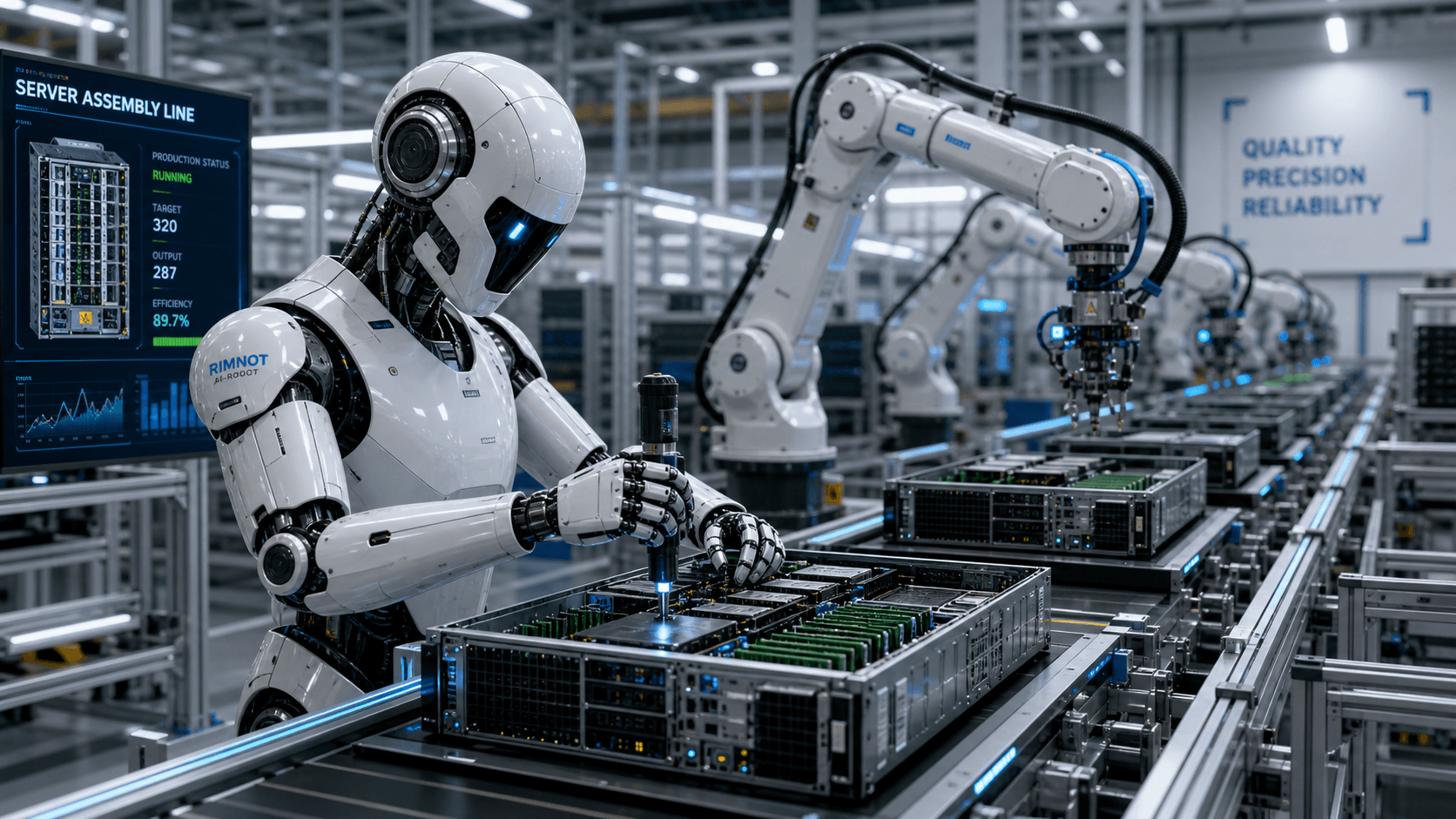
Rimnot, a newly established physical AI startup, has announced a partnership with Yuantu to deploy 10,000 industrial robots in server manufacturing. This initiative was unveiled during the World Artificial Intelligence Conference (WAIC), where the companies showcased their robots' capability to adapt to environments in just 30 minutes. This deployment is significant as it represents a major step forward in integrating physical AI into industrial applications, particularly in the server manufacturing sector. The collaboration between Rimnot and Yuantu highlights the growing trend of leveraging advanced robotics to enhance production efficiency and adaptability in manufacturing processes. Looking ahead, industry observers will be keen to monitor the progress of this deployment and its impact on server manufacturing. The ability of these robots to quickly adapt to different environments could set a new standard for operational flexibility in the industry. No further timeline was disclosed at the time of publication.

Technology
Humanoid Secures $152 Million in Series A Funding, Achieves $1.35 Billion Valuation

Humanoid Secures $152 Million in Series A Funding, Achieves $1.35 Billion Valuation

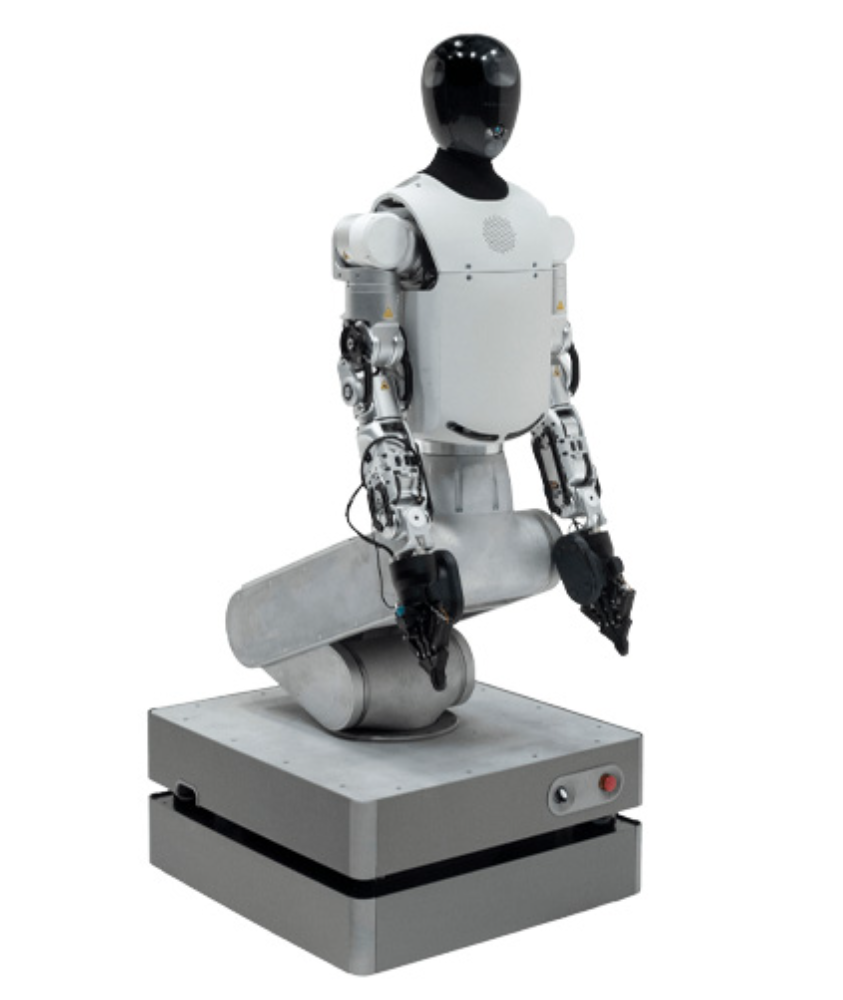
On July 21, Humanoid, based in London, announced the completion of $152 million in Series A funding, achieving a post-money valuation of $1.35 billion. This funding round, led by strategic investors including Schaeffler and Bosch, marks the largest Series A funding for a humanoid robotics company in Europe, bringing the total funding to $270 million. The significance of this funding lies in its strategic partnerships. Schaeffler and Bosch are not only financial backers but also strategic collaborators, with Bosch establishing a manufacturing partnership with Humanoid. This collaboration aims to leverage their industrial expertise and technological capabilities to advance humanoid robotics from vision to industrial reality. Looking ahead, Humanoid plans to utilize the funding to focus on developing the next generation of humanoid platforms and scaling production of wheeled humanoid robots, with a Beta version expected to launch in Q4 2026. The investment from major European industrial players signals a growing momentum in the humanoid robotics sector in Europe.

Humanoid Robots Robotics Funding AI Technology Industrial Automation
Carnegie Mellon University Teaches Humanoid Robots to Think and Compete in Sports

Carnegie Mellon University Teaches Humanoid Robots to Think and Compete in Sports

Carnegie Mellon University's Professor Liu Changliu is leading efforts to teach humanoid robots to understand game dynamics and make decisions on the field. Unlike traditional robotic arms that follow fixed programs, these robots can adjust their movements in real-time, a crucial skill for sports. The goal is ambitious: to develop a humanoid robot team capable of defeating the current World Cup champions by 2050. This involves teaching robots to locate the ball, communicate strategies with teammates, and make real-time decisions, which tests their multi-agent collaboration and motion control abilities. While progress has been made in various sports, including boxing and marathons, significant challenges remain. Liu emphasizes the need for further programming to ensure safety and effective shutdown methods for humanoid robots. The vision of robots competing in sports is becoming increasingly plausible, with the 2050 goal of defeating human champions appearing more attainable than ever.

Humanoid Robots Sports Robotics AI Autonomous Decision Making
SK On's Solid-State Batteries Could Enable 8-Hour Robot Operation Despite Cost Increase

SK On's Solid-State Batteries Could Enable 8-Hour Robot Operation Despite Cost Increase

SK On has announced that solid-state batteries can allow industrial robots to operate for up to 8 hours, addressing a significant limitation of current lithium-ion batteries, which typically provide only 1 to 2 hours of runtime. This advancement could reduce downtime in 24-hour production lines, where frequent battery changes are necessary. However, the cost implications are substantial. Currently, lithium-ion batteries account for less than 2% of the total cost of industrial robots, but switching to solid-state batteries could increase this to approximately 8%, resulting in a fourfold rise in overall costs. For instance, Tesla's Optimus robot has a battery cost of about $300, which is only 0.5% of its total hardware cost. SK On has developed a total cost of ownership (TCO) model that factors in the costs of spare batteries, charging downtime, and additional backup machines, suggesting that solid-state batteries may be more economical in the long run for continuous operation scenarios. The company has completed a solid-state battery pilot plant in Daejeon, South Korea, and plans to commercialize two battery technologies by 2028 and 2029, respectively. No further timeline was disclosed at the time of publication.

Solid-State Batteries Industrial Robots Battery Technology Cost Efficiency
Run Robotics Unveils Hybrid 'Centaur' Robot at WAIC 2026 in Shanghai

Run Robotics Unveils Hybrid 'Centaur' Robot at WAIC 2026 in Shanghai

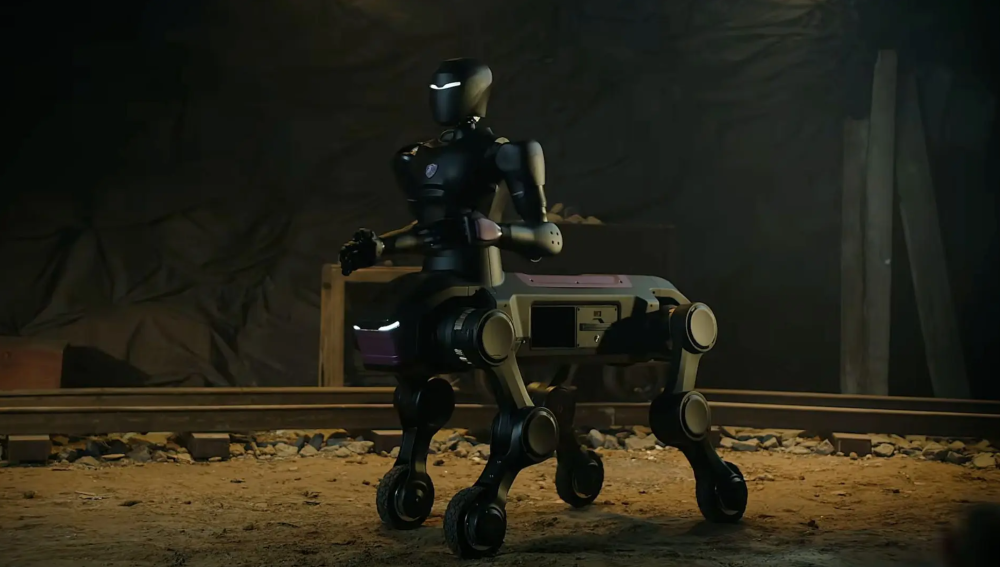
Run Robotics introduced the world's first hybrid 'Centaur' robot at the WAIC 2026 in Shanghai, redefining humanoid robotics. This innovative design features a four-wheeled all-terrain chassis combined with a humanoid upper body equipped with robotic arms, enabling it to navigate complex terrains and perform tasks in hazardous environments. The significance of this development lies in its potential applications in areas deemed unsafe for humans and inaccessible to traditional robots, such as steel mills, oil fields, and disaster sites. With over 95% of its core components sourced domestically, the Centaur robot showcases China's growing capabilities in advanced robotics manufacturing. Looking ahead, Run Robotics plans to complete an automated assembly line by Q4 2026 and has already secured commercial orders for the Centaur robot. This innovation not only highlights the strength of China's robotics industry but also emphasizes a shift in design philosophy—robots need not resemble humans but must be effective in their tasks.

Hybrid Robots Robotics Innovation AI Technology Industrial Automation
MIT Unveils Insect-Scale Flying Robot for Disaster Rescue Missions

MIT Unveils Insect-Scale Flying Robot for Disaster Rescue Missions

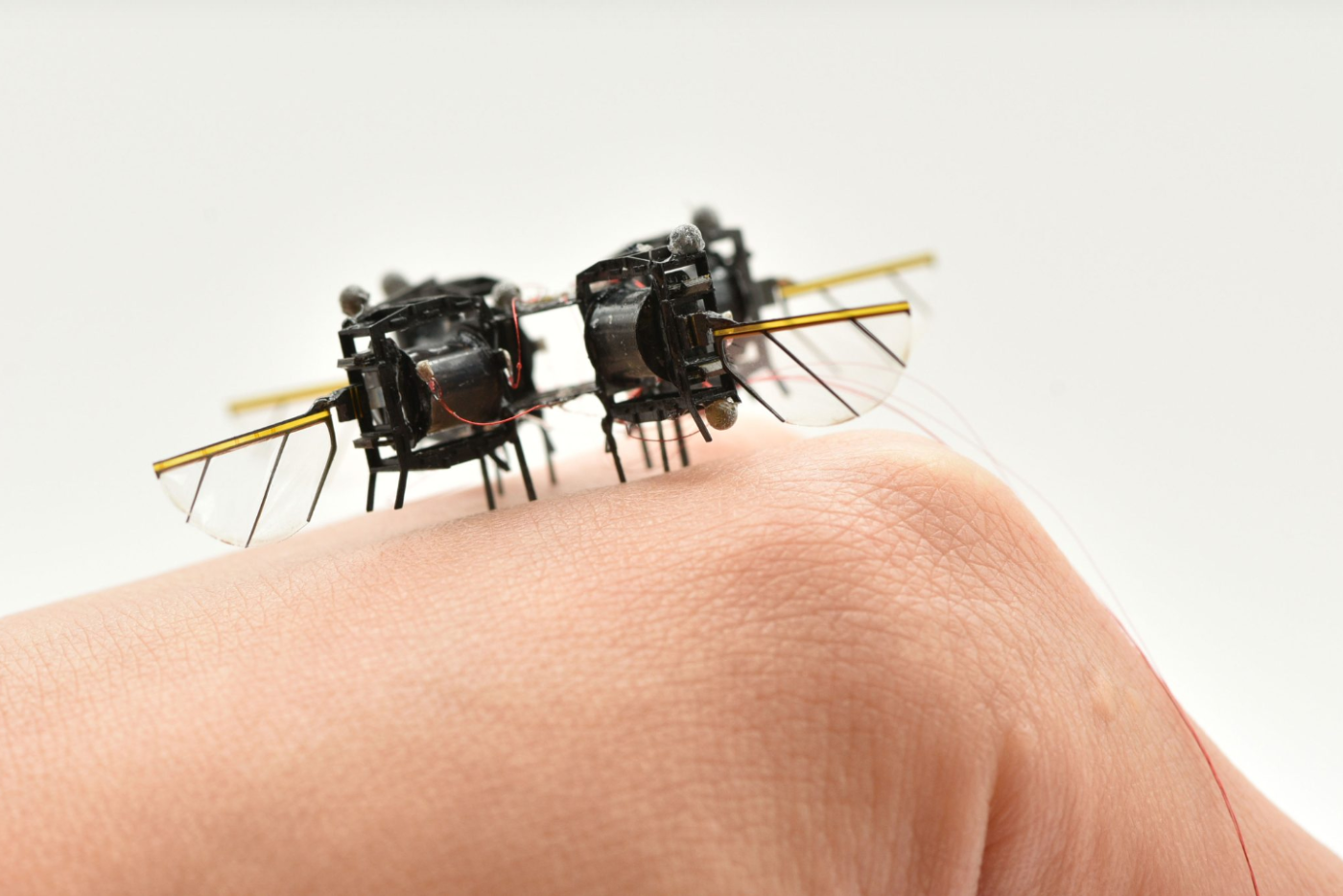
Researchers at the Massachusetts Institute of Technology (MIT) have developed a flying robot that weighs less than a paperclip and is the size of a cassette tape, capable of navigating through tight spaces in disaster scenarios. Published on July 21 in 'Science Advances', this micro flying robot achieves insect-level speed, acceleration, and maneuverability, including continuous flips and sharp turns. The significance of this development lies in its advanced artificial intelligence control system, which enables the robot to perform complex flight maneuvers in real-time despite its lightweight design. The new control system has improved the robot's flight speed by 447% and acceleration by 255%, allowing it to execute ten consecutive backflips in just 11 seconds with minimal deviation. Looking ahead, the research team aims to integrate lightweight cameras and sensors into the robot, enabling it to autonomously navigate through real-world debris and tight spaces. This bionic flight behavior will enhance its ability to locate survivors in disaster situations, potentially transforming rescue operations from traditional probing methods to direct visual assessments.

Micro Flying Robots Disaster Rescue Technology AI Control Systems Robotics Autonomous Navigation
FloatForm Develops Hybrid Control for Reconfigurable Aquatic Swarms of Miniature Robot Boats

FloatForm Develops Hybrid Control for Reconfigurable Aquatic Swarms of Miniature Robot Boats

FloatForm has introduced a novel approach that combines distributed onboard control with lightweight centralized planning to manage self-assembling robotic boats. This innovative hybrid control system allows for effective coordination of miniature robot boats during controlled aquatic experiments. The significance of this development lies in its potential applications in various fields, including environmental monitoring, search and rescue operations, and marine research. By enabling the formation of reconfigurable swarms, FloatForm's technology could enhance the efficiency and adaptability of robotic systems in aquatic environments. Looking ahead, it will be important to monitor further advancements in FloatForm's technology and its deployment in real-world scenarios. No further timeline was disclosed at the time of publication.

Siléane and HBK Innovate Tactile Intelligence for High-Speed Cosmetics Packaging

Siléane and HBK Innovate Tactile Intelligence for High-Speed Cosmetics Packaging

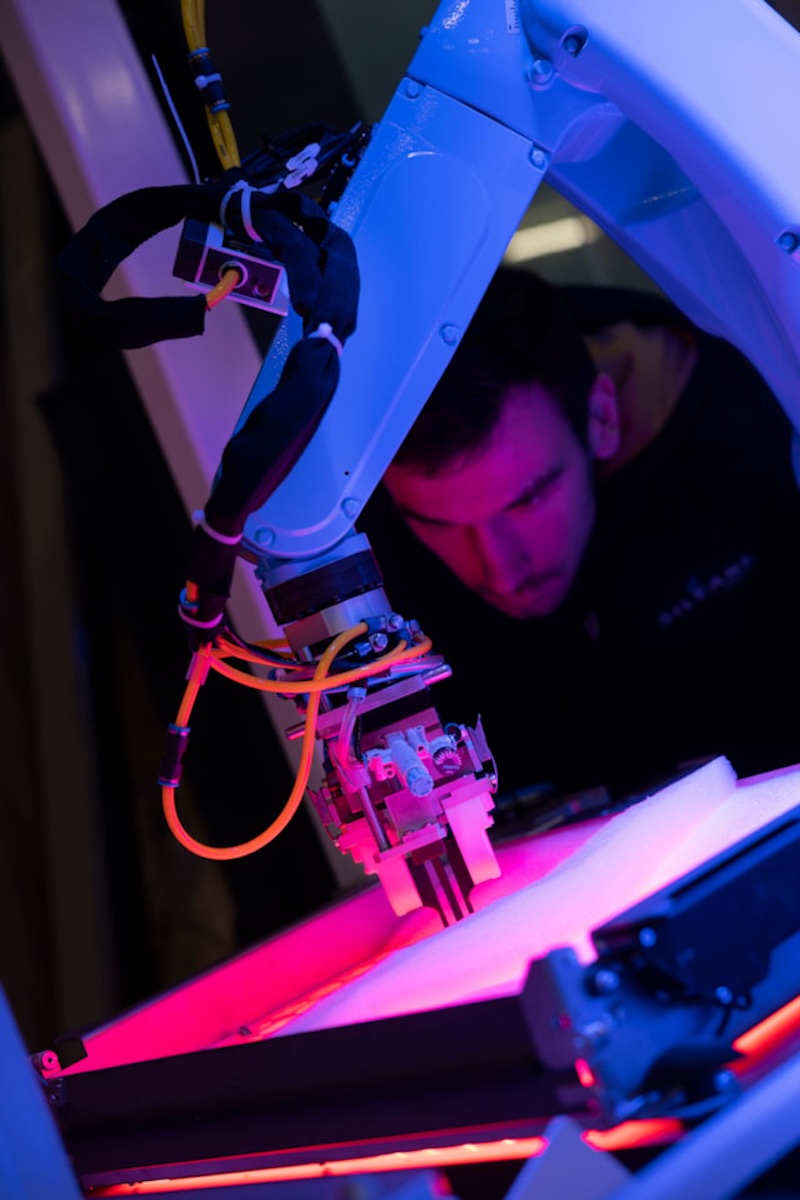
Siléane, a France-based advanced robotics specialist, has partnered with Hottinger Brüel & Kjær (HBK) to create an innovative automated gripping solution for a global cosmetics manufacturer. This solution incorporates smart sensing directly into the end-of-arm tooling, allowing for real-time grip quality validation in fast-paced, regulated packaging environments. The significance of this development lies in its ability to address the challenges faced by traditional robotic systems in handling lightweight and flexible components, such as deformable thermoformed trays. By embedding force measurement at the point of interaction, Siléane's approach enhances reliability and precision, reducing the risk of product loss and tray deformation during high-speed operations. Looking ahead, the integration of HBK's PW22i smart load cells into the robotic gripper marks a pivotal advancement in automation technology. This setup not only captures real-time force data but also allows for immediate responses to deviations, ensuring consistent performance. No further timeline was disclosed at the time of publication.

Engineering Features Manufacturing automation cosmetics manufacturing end-of-arm tooling