-
Website: https://weistek-3d-printer.myshopify.com
-
Email: [email protected]
-
Phone: +86 755 2605 1123
Weistek operates as an online 3D printer filament and consumables retailer, primarily offering PLA filament products. The company's catalogue focuses on affordable FDM printing materials for consumer and hobbyist desktop 3D printers.
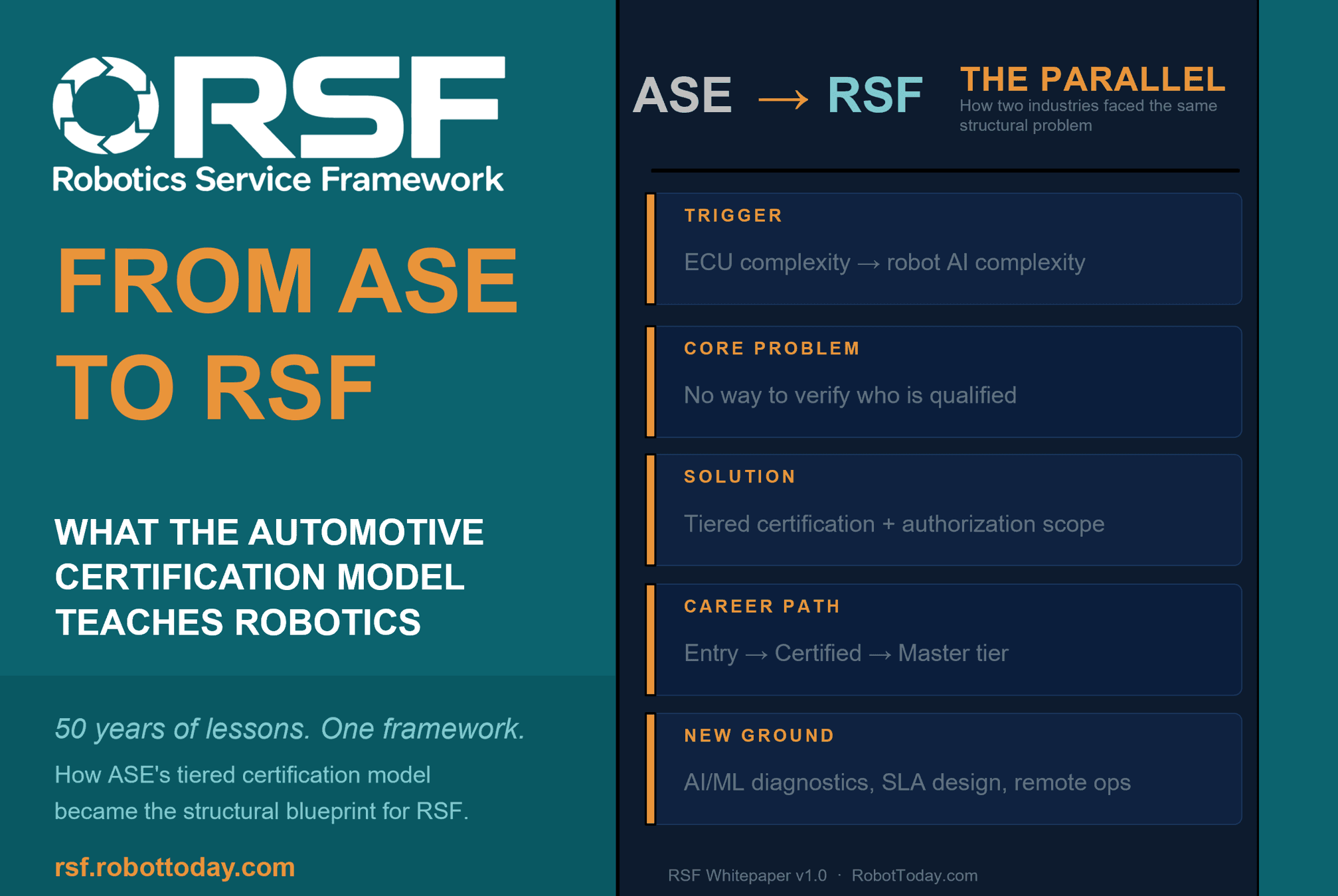
RSF defines a common language for robot service capability, lifecycle operations, certification pathways, and service-provider networks.
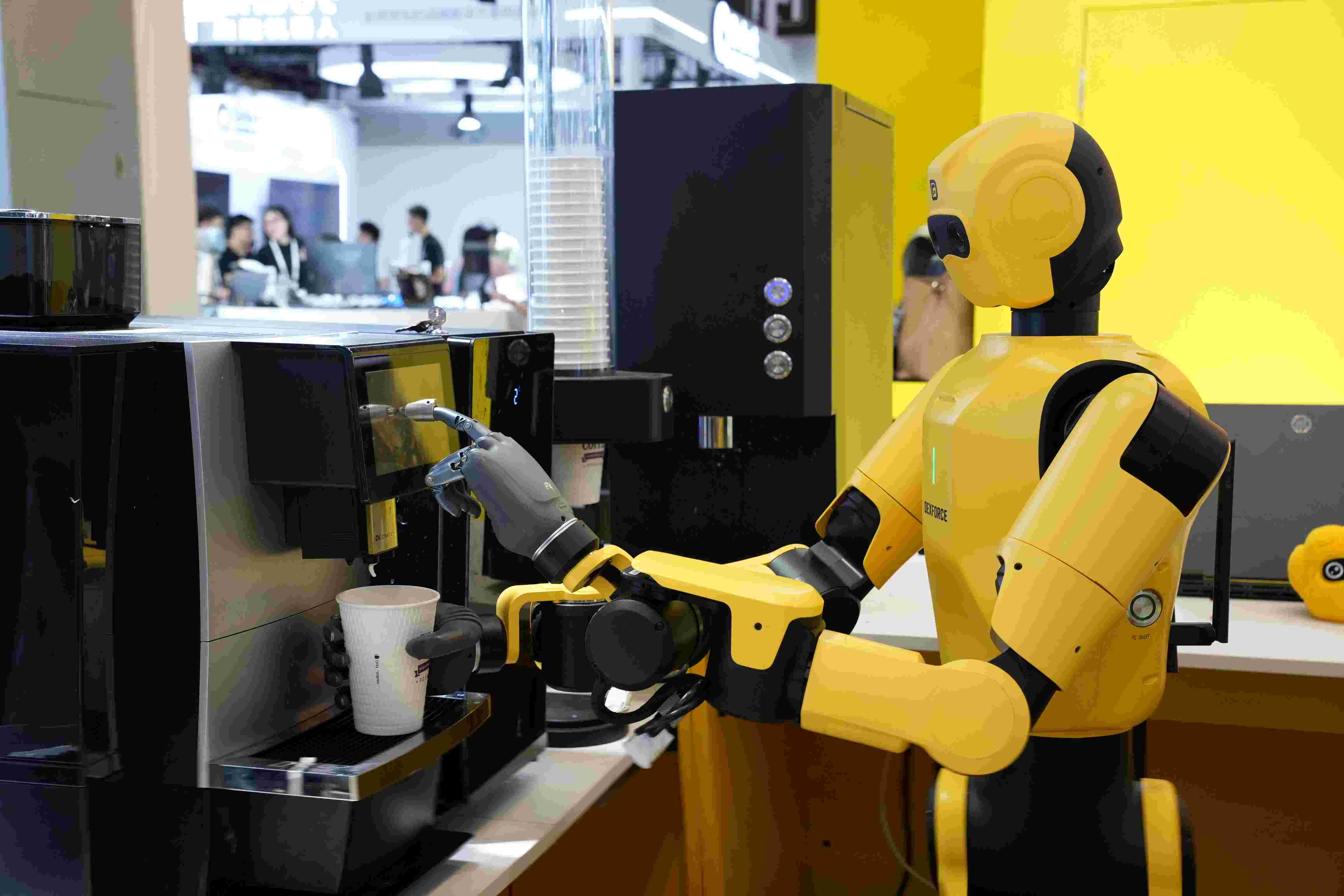
At this year's WAIC, the spotlight in the robotics exhibition was on humanoid robots capable of complex movements, such as walking, dancing, and conversing. However, the real challenge lies in how these robots handle unpredictable real-world scenarios, such as identifying and scanning barcodes from randomly placed products. This capability is crucial for robots to transition from theoretical demonstrations to practical applications. The significance of these advancements is profound, as they reflect a shift in the robotics industry from rigid programming to adaptive learning. Robots must now operate in dynamic environments, requiring them to understand physical laws and continuously learn from their experiences. This evolution indicates a competitive transition where the focus is not just on the robots themselves but on the infrastructure that enables ongoing learning and adaptation. Looking ahead, the industry is poised for a transformation similar to that seen in AI, where NVIDIA played a pivotal role. The next phase of robotics will depend on establishing foundational systems that allow robots to learn from real-world data and simulations. As companies like Kuawei develop datasets and simulation engines, they aim to become the driving force behind the physical AI era, ensuring that robots can evolve and adapt effectively in various environments.
leaderobot.com 3 hours ago Humanoid Robots AI Infrastructure Robotics Learning Data Collection Simulation TechnologyMoonshot AI has introduced Kimi K3, a groundbreaking 2.8 trillion-parameter open-source AI model, marking it as the largest of its kind to date. This model is designed to handle complex workflows and features a one-million-token context window, enabling it to perform tasks significantly faster than traditional methods. For instance, Kimi K3 can complete a task in about two hours that would typically take one to two weeks for an experienced researcher. The significance of Kimi K3 lies in its potential to enhance scientific research workflows, allowing for the creation of interactive reports and presentations. It incorporates advanced features such as Widgets and Dashboard capabilities, which facilitate persistent, interactive workspaces. Despite its impressive performance, Kimi K3 still falls short compared to proprietary models like Claude Fable 5 and GPT 5.6 Sol, indicating that while progress is being made, there is still a competitive gap to close. Looking ahead, the focus will be on how Kimi K3 can further evolve and compete with leading AI models. Moonshot AI's innovative architecture, including Kimi Delta Attention and a Mixture-of-Experts framework, has improved scaling efficiency significantly. No further timeline was disclosed at the time of publication.
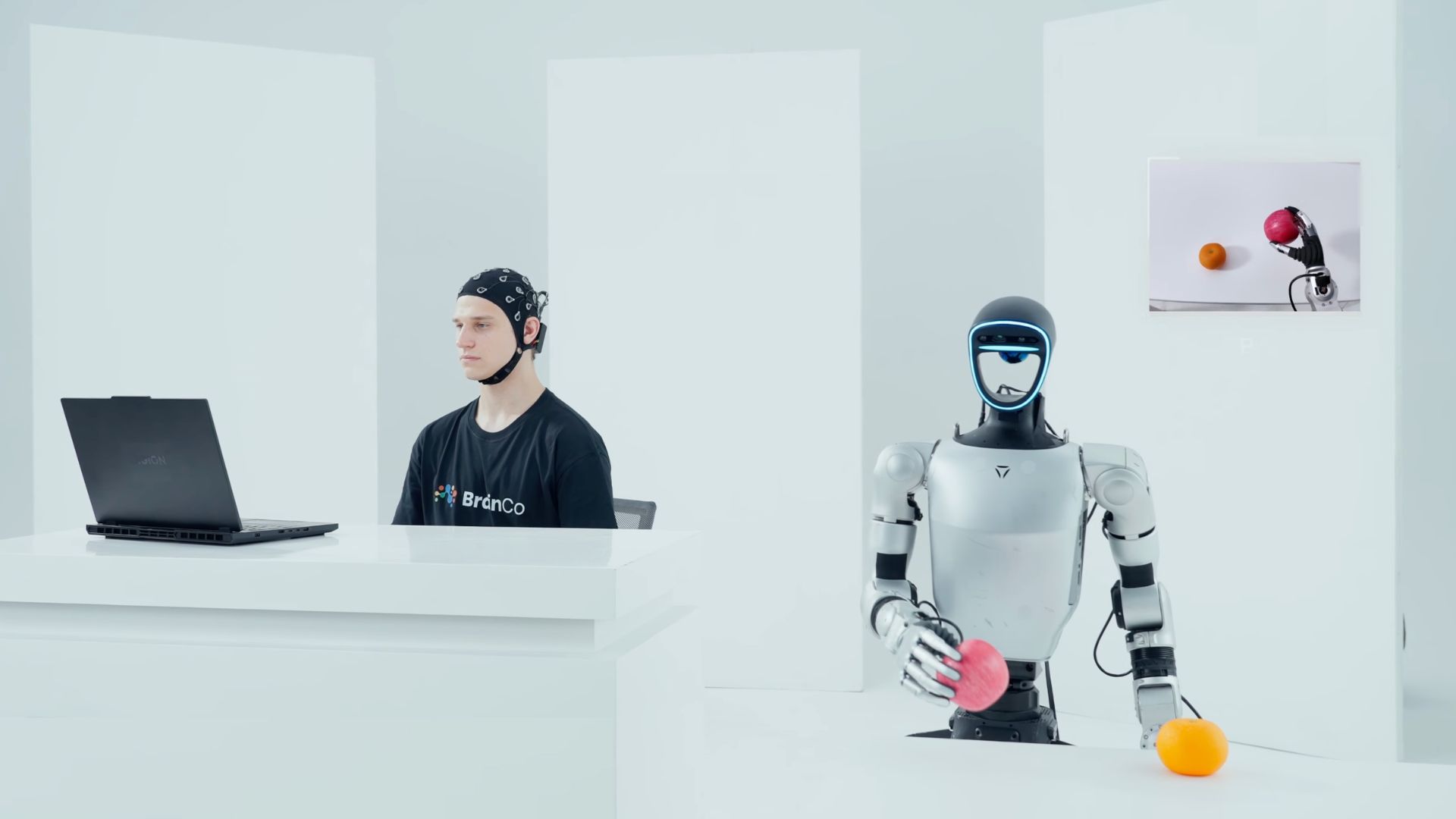
InterestingEngineering.com 6 hours ago AI and Robotics InnovationBrainCo has introduced a groundbreaking 'brain-to-robot' platform at the World Artificial Intelligence Conference in Shanghai. This system enables users to control robots solely through brain signals, utilizing a non-invasive brain-computer interface (BCI) that interprets electrical signals from the brain via an EEG headset. This development is significant as it addresses a major challenge in robotics: understanding human intentions. Nyx He, senior vice-president of BrainCo, emphasized that while robots have advanced in autonomous actions, the next frontier is enhancing their ability to comprehend human commands. The platform also aims to generate high-quality training data essential for training intelligent machines. Looking ahead, BrainCo's platform is compatible with various third-party hardware, including humanoid robots and robotic arms. The potential for this technology extends beyond mere control, as it could significantly improve the training processes for future robots, addressing the critical need for real-world interaction data in embodied AI applications. No further timeline was disclosed at the time of publication.
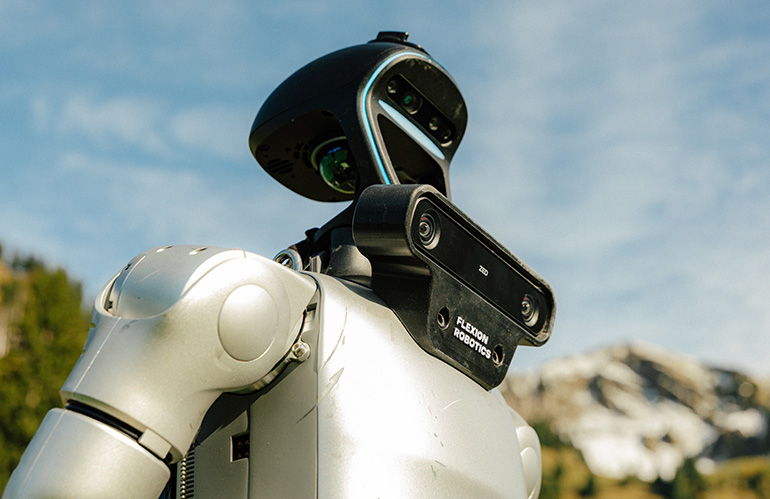
InterestingEngineering.com 6 hours ago AI and Robotics InnovationFlexion is developing a reinforcement learning and sim-to-real platform specifically for humanoid robots. Over the past 18 months, humanoid robotics companies have raised billions, primarily funding human operators to manage robots, which has led to a teleoperation and data challenge within the industry. This reliance on teleoperation as a labor solution raises concerns about the long-term viability of training physical AI systems. The assumption that enough human demonstrations will enable robots to generalize across environments is questionable, especially given that teleoperation datasets are significantly smaller than those used for training language models, creating a growing data gap. Looking ahead, the industry must address the limitations of teleoperation and the dependency on human input for robot training. If humanoid robots require continuous human demonstrations, the original vision of automation may be compromised. No further timeline was disclosed at the time of publication.
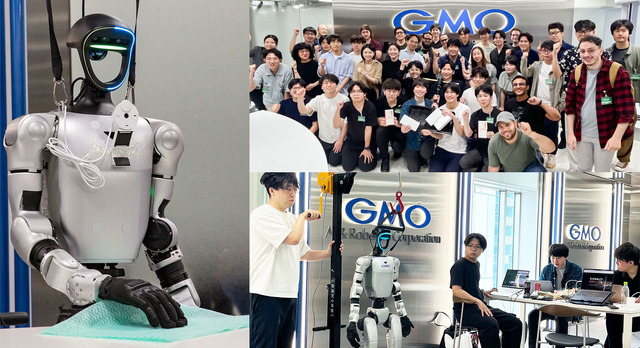
RoboticsBusinessReview.com 6 hours ago Artificial Intelligence Artificial Intelligence / Cognition Controllers Development Tools / SDKs / Libraries Humanoids NewsThe 'Humanoid Hack Tokyo 2' event took place from July 11 to 12 at the GMO Humanoid Lab in Shibuya, Tokyo, showcasing humanoid robots in practical applications. Participants developed new robot applications using the Unitree G1 humanoid and technologies like Vision-Language-Action and Physical AI. This event is significant as it highlights the rapid growth of the humanoid development community in Japan, with around 230 participants competing, compared to over 100 in the inaugural event. The winning team focused on addressing challenges in disaster response, creating a system that allows robots to enter hazardous areas to locate and communicate with victims. Looking ahead, the success of this event may inspire further innovations in humanoid robotics for disaster relief. The winning team's approach emphasizes the potential of humanoids to not only search for victims but also assist in rescue operations, indicating a shift towards more comprehensive support in emergency situations. No further timeline was disclosed at the time of publication.
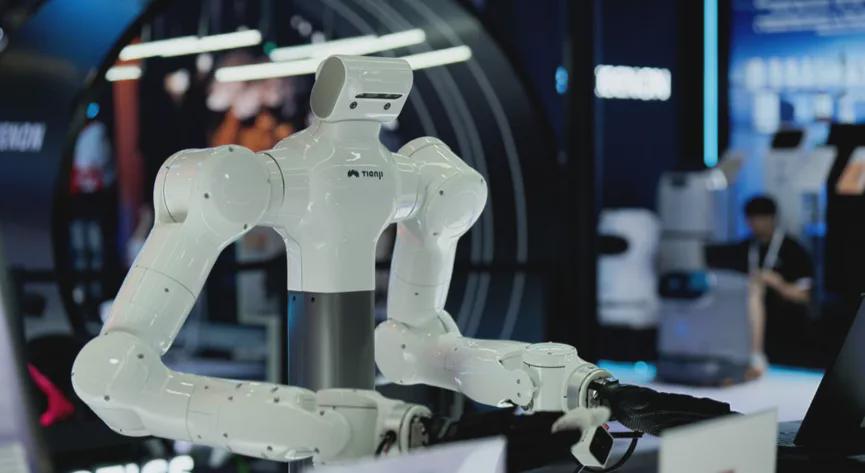
RobotStart.info 6 hours agoAt the WAIC 2023, the AI and robotics sectors have become increasingly intertwined, with robotics taking center stage. Various robotic technologies, including humanoid and dual-arm robots, were prominently displayed, showcasing their capabilities and advancements. This year marked a shift in focus from generative AI to the robotics industry, highlighting the evolution of robots and their functionalities. The event revealed a divergence among robotics companies. Some continue to emphasize the capabilities of robots, demonstrating their speed, precision, and fluidity in performing tasks, which captivates public and investor interest. In contrast, companies like Tianji focus on the stability and safety of robotic operations, emphasizing the interaction between AI models and physical environments, thus addressing the practical applications of robotics in real-world scenarios. This shift in focus from capability to foundational infrastructure signifies a critical transition in the robotics industry. As companies recognize that the limitations to robotics deployment may lie in the supporting infrastructure rather than the robots themselves, the industry is poised for a redefinition of what it means for robots to operate effectively in various environments, including factories and homes. No further timeline was disclosed at the time of publication.
leaderobot.com 12 hours ago Robotics AI Industrial Automation Physical IntelligenceAGIBOT has launched four new products at the World Artificial Intelligence Conference 2026 in Shanghai, showcasing advancements in embodied AI. The new offerings include the AGIBOT A3 Ultra, X2 Edu, G2 Max, and OmniHand 3 Ultra-M, which enhance AGIBOT's range of humanoid platforms, industrial task robots, and dexterous manipulation systems. This product unveiling is significant as it demonstrates AGIBOT's commitment to transforming robotic capabilities into practical, repeatable workflows in real-world settings. With over 30 AGIBOT robots currently operational at WAIC venues, the company is making strides in integrating advanced robotics into various applications. Looking ahead, industry observers will be keen to see how these new products perform in live demonstrations and their potential impact on industrial deployments. No further timeline was disclosed at the time of publication.
RoboticsTomorrow.com 12 hours agoThe second-generation ByteDance Doubao phone, the Nubia NaviX Ultra, was unveiled at the WAIC. This device features multi-app task queuing, a proactive memory system, and the ability to operate autonomously across more than ten platforms. This launch is significant as it showcases advancements in mobile technology, particularly in AI integration. The Nubia NaviX Ultra's capabilities in managing multiple applications simultaneously and its proactive memory system could enhance user experience and productivity. Looking ahead, the focus will be on how the Nubia NaviX Ultra performs in real-world applications and its reception among consumers. No further timeline was disclosed at the time of publication.
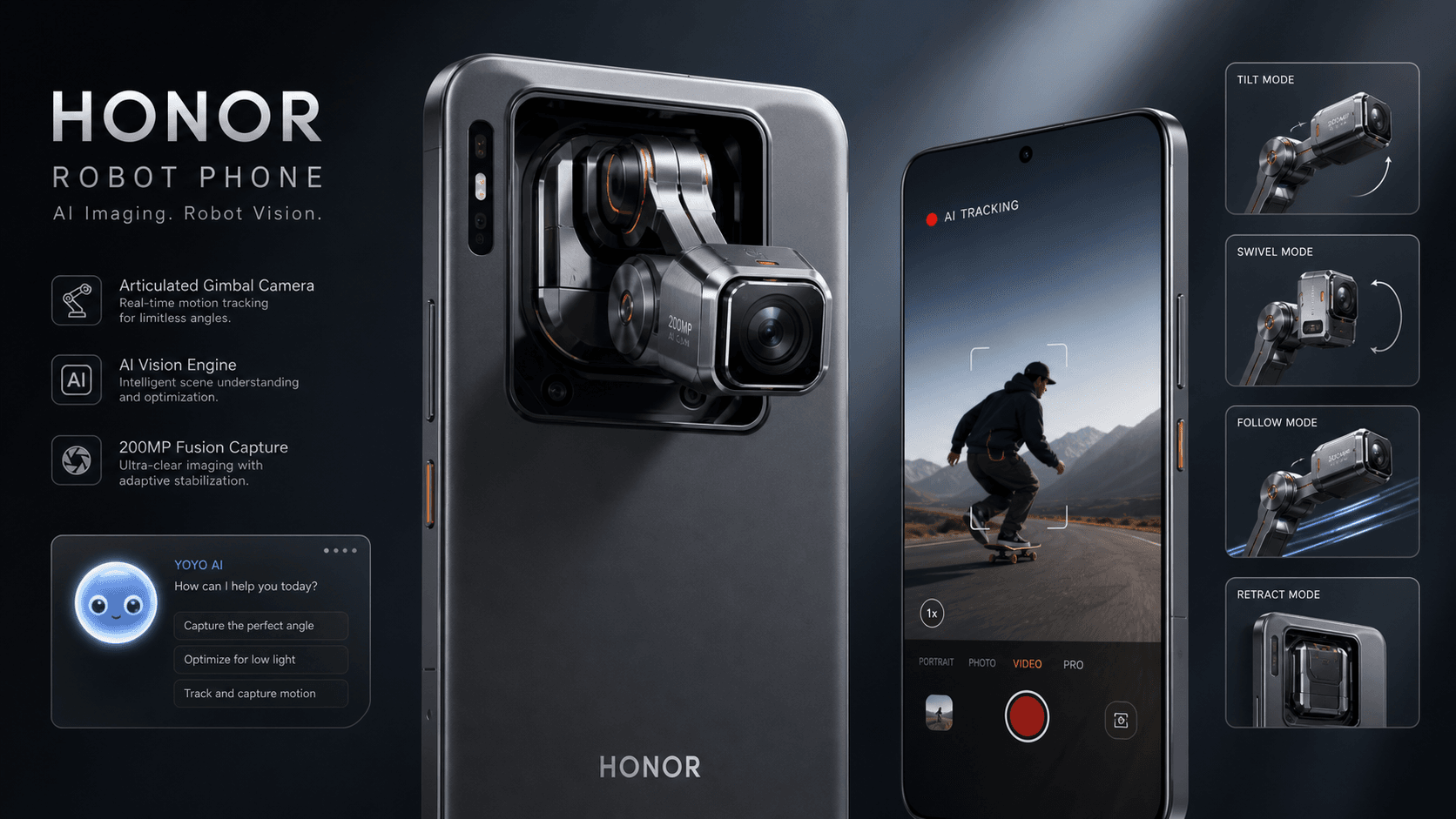
PanDaily.com 12 hours ago GadgetsThe Honor Robot Phone has made its global debut at the WAIC, showcasing a 4DoF titanium mechanical gimbal system. This innovative device features YOYO proactive AI, a 200MP camera, and advanced stabilization technology with CIPA 5.5, enhancing its functionality and user experience. This launch is significant as it represents a breakthrough in mobile technology, combining robotics and artificial intelligence in a smartphone. The proactive AI capabilities allow the device to perform unique tasks, including World Cup predictions, setting a new standard for smart devices in the market. Looking ahead, the integration of advanced AI and mechanical systems in smartphones will likely influence future product developments. No further timeline was disclosed at the time of publication.
PanDaily.com 12 hours ago GadgetsOn July 19, during the 2026 World Artificial Intelligence Conference, Yao Maoqing, Senior Vice President and President of the Embodied Business Division at Zhiyuan, shared insights on the technological pathways for scaling physical AI. Zhiyuan has developed a three-phase training architecture of 'pre-training, post-training, and continuous learning' to advance its VLA and WAM technology routes towards the unified World Reasoning Action Model (WRAM). The integration of data is facilitated by Mifeng Technology, which utilizes the MEgo series of collection terminals and the MEgo Engine governance platform to create a comprehensive physical AI data infrastructure. This infrastructure supports data collection, governance, training, and deployment feedback, ensuring that real-world data continuously enhances model evolution. The collaborative model and data iteration system has already been validated in real industrial scenarios. Yao emphasized that 'models determine the starting point, while data defines the outcome.' He expressed the ambition of Zhiyuan and Mifeng to collaborate with the global academic community, industry, and developer ecosystem to accelerate the evolution of physical AI in real-world applications. No further timeline was disclosed at the time of publication.
leaderobot.com 12 hours ago Physical AI Data Infrastructure Machine Learning AI Development
Leave a comment