Netzer Precision Motion Sensors Ltd.
Israeli maker of proprietary Electric Encoder capacitive position sensors - contactless, non-magnetic, EMI-immune - for robotics servo drives and defense.
Contact Netzer Precision Motion Sensors Ltd.
WEBSITE
https://netzerprecision.comPHONE
+972 4 999 0420HEADQUARTERS
Israel

Company Facts
Founded
1998
Primary Role
Component Supplier
Company Size
-
Primary Region
Middle East
Annual Sales
-
Funding Stage
-
Funding Total
-
Certifications & Memberships
ARM Institute Secures $90 Million for Ten Military Manufacturing Modernization Projects
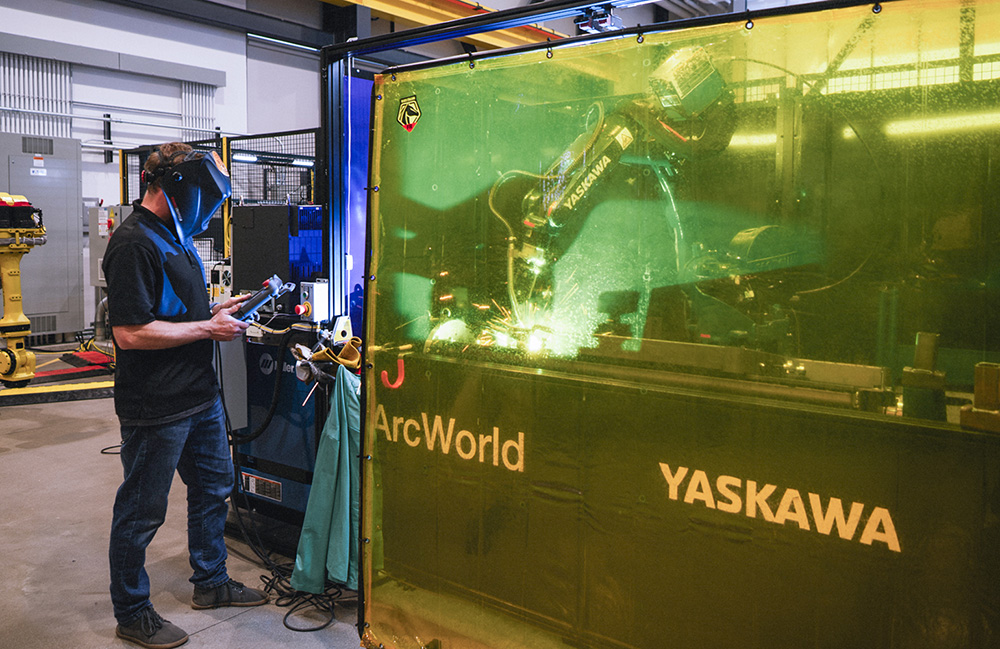
The ARM Institute has been awarded nearly $90 million for ten projects aimed at modernizing military manufacturing. This funding comes from the Organic Industrial Base (OIB) Modernization Challenge initiated by the Office of the Undersecretary of War Manufacturing Technology Office, supporting the U.S. Department of War's efforts to enhance defense manufacturing through innovative technologies and workforce development. This initiative is significant as it involves fifteen member organizations working to address complex automation challenges at twelve military manufacturing sites across the U.S. The ARM Institute emphasizes the importance of a skilled workforce in implementing these technological advancements, ensuring that workers are prepared to operate alongside new systems and processes. Looking ahead, the ARM Institute will focus on workforce readiness as a critical component of each project, identifying necessary skills and potential upskilling opportunities. No further timeline was disclosed at the time of publication.
Defense / Security Financial Investments Manufacturing Markets / Industries News
Hyundai's Louisiana Steel Mill to Supply Materials for Robots and SpaceX Rockets
Hyundai Motor Group Executive Chair Chung Euisun announced that steel from the upcoming Hyundai Steel mill in Louisiana could be utilized beyond automotive applications, potentially in Atlas humanoid robots and SpaceX rockets. This vision was shared during the groundbreaking ceremony for the Hyundai-Posco Louisiana Steel plant, which will initially focus on automotive steel production. The $5.8 billion electric arc furnace facility is set to be Hyundai Steel's first production base in the U.S., with an annual capacity of 2.7 million metric tons, including 1.8 million tons dedicated to automotive steel and 900,000 tons for other uses. Chung's comments reflect a long-term strategy to diversify the mill's output, aligning with Hyundai's plans to deploy Atlas robots in U.S. manufacturing operations by 2028. Looking ahead, Hyundai is cautious about deploying Atlas within the steel mill, emphasizing the need for extensive testing. Chung also highlighted the company's efforts to enhance Atlas' development by reorganizing its structure to accelerate technology adoption and improve capabilities in critical components like actuators and grippers. No further timeline was disclosed at the time of publication.
All News
HII Aims for 15% Increase in Shipyard Throughput Using Robotics for Navy Warships
HII, the largest military shipbuilder in the US, is targeting a 15% increase in shipyard throughput this year to expedite deliveries to the US Navy. The strategy involves workforce expansion, infrastructure upgrades, and enhanced use of technology, particularly physical AI, in shipbuilding operations. Currently, around 40 ships are under construction or modernization at HII's Ingalls and Newport News facilities. This initiative is significant as it highlights the need for skilled workers and modernized production infrastructure to support higher volumes in the US maritime industrial base. HII's plan includes hiring skilled workers, modernizing shipyard infrastructure, and expanding the industrial base for naval construction. Eric Chewning, HII’s executive vice president, emphasized the importance of building on current momentum to deliver ships at an increased pace. Looking ahead, HII plans to outsource over 2 million hours of work in 2026, marking a 178% increase from 2024. This distributed shipbuilding strategy aims to enhance shipbuilding capacity and resilience in the supply chain. As demand for naval vessels grows, HII's approach underscores the critical role of advanced manufacturing technologies in boosting US shipbuilding capacity.
Military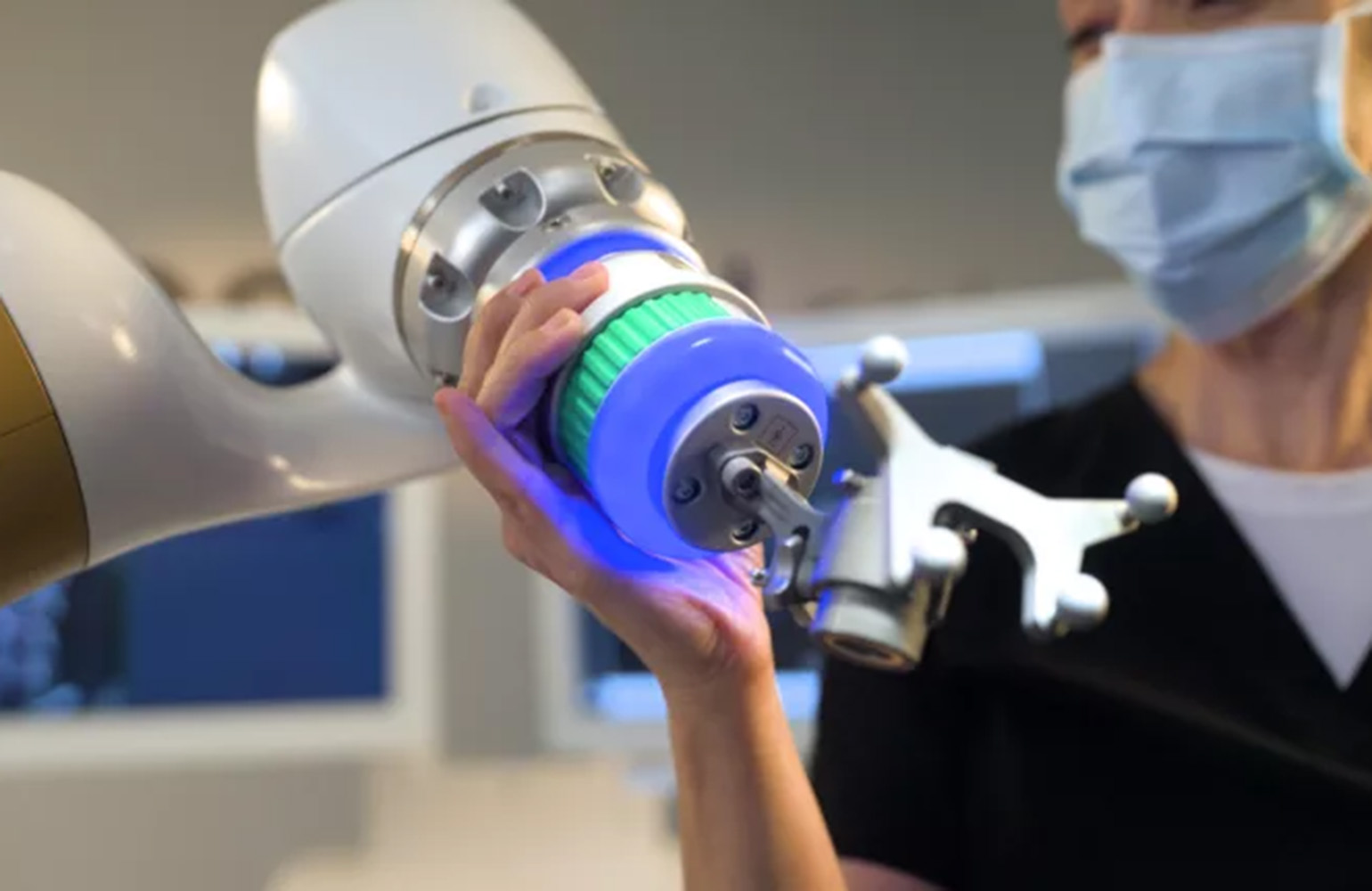
Enovis to Acquire eCential Robotics for Over $180 Million to Enhance Surgical Technology
Enovis Corp. has announced a binding offer to acquire eCential Robotics for approximately €155 million, exceeding $180 million. This acquisition aims to integrate eCential's modular surgical robotics platform into Enovis' ASTRA technology platform, enhancing its capabilities in orthopedic surgery. The addition of eCential's robotic technology is significant as it aligns with Enovis' strategy to provide surgeons with diverse technological options. CEO Damien McDonald emphasized that this move will strengthen their market position and expand strategic opportunities in robotic-assisted surgery, addressing evolving market demands. Looking ahead, Enovis plans to finalize the acquisition by the end of 2026, with an initial payment of €176 million and potential additional payments based on performance milestones. The integration of eCential's expertise is expected to accelerate the development of next-generation robotic solutions, particularly in knee and shoulder surgeries, within the next two years.
Financial Healthcare Robotics Markets / Industries Mergers & Acquisitions News Robots / Platforms
China’s Dexterous Hand Industry, 2026 Part 1 — The Demand Picture
MIR Databank puts China dexterous hand shipments above 30,000 units in 2026, yet only 3.5% of 2025 demand came from factory production. Part 1 of 3.

Exploring the Role of FPGAs in Enhancing Physical AI Security
In Episode 260 of The Robot Report Podcast, Eric Sivertson, vice president of security at Lattice Semiconductor, discusses the significance of FPGAs in physical AI security. He highlights how these field-programmable gate arrays are crucial for building safe and secure robots, emphasizing their role in enhancing trust in embedded systems. The conversation underscores the growing importance of security in robotics, particularly as the industry shifts towards more advanced AI applications. Sivertson's extensive experience in developing technologies for security and connectivity positions him to provide valuable insights into the challenges and opportunities within this sector. Listeners should pay attention to the evolving landscape of physical AI security and the potential for FPGAs to serve as foundational elements in safeguarding robotic systems. No further timeline was disclosed at the time of publication.
Artificial Intelligence Autonomous Mobile Robots (AMRs) Humanoids Manufacturing Markets / Industries Microprocessors / SoC
Pentagon Reports 11 Percent Cost Increase for F-35 Joint Strike Fighter Variants
The Pentagon has announced that the costs for all three variants of the F-35 Joint Strike Fighter are rising by approximately 11 percent. The average flyaway cost for the F-35A has increased to $92 million for production lots 18 and 19, up from $82.5 million, while the F-35B and F-35C have also seen price hikes to $121.4 million and $110.8 million, respectively. This increase in costs is significant as it reflects ongoing challenges faced by the F-35 program, including inflation, rising raw material prices, and supply chain issues. Lockheed Martin, the manufacturer, has indicated that these factors have contributed to the rising costs, which are projected to exceed $50 billion over the program's lifespan due to upgrades and increased spare parts. Looking ahead, the Pentagon plans to acquire 148 aircraft each in lots 18 and 19, totaling 296 aircraft. The F-35 program continues to evolve with modernization efforts, including enhancements to the engine and a new power management system, although some upgrades are behind schedule. No further timeline was disclosed at the time of publication.
Air Warfare Pentagon Air Force Europe F-35 F-35 Joint Strike Fighter
Inspired Flight's Open Platform Strategy Enhances Flexibility in U.S. Drone Market
Inspired Flight, a U.S. drone manufacturer, is adapting to new restrictions on foreign technology by implementing an open aircraft platform strategy. Co-founder Adam Bilmes emphasized the importance of flexibility, allowing operators to utilize various payloads without being limited to proprietary systems. This approach supports over 20 payloads, enabling operators to switch between missions like LiDAR and thermal imaging seamlessly. The significance of this strategy lies in its ability to accommodate the rapid evolution of payload technology, which can outpace the aircraft itself. By focusing on an open system, Inspired Flight ensures that its drones remain relevant and capable of integrating new capabilities as they emerge. Bilmes highlighted that the true value of their aircraft lies in its reliability and ease of use, which enhances operators' workflows in data collection. Looking ahead, Inspired Flight's open platform may set a precedent for future drone development, encouraging collaboration with technology partners. The company provides resources for third parties to innovate around its aircraft, fostering a more dynamic ecosystem. No further timeline was disclosed at the time of publication.
Blue UAS DL Exclusive Drone Manufacturing Drone News Dual Use Feature 1
WAIC 2026 Highlights: Embodied Intelligence and $22 Billion Valuation Insights
At WAIC 2026, the spotlight was on the emergence of embodied intelligence, showcasing innovative forms and applications. Despite the absence of robots at some booths, the event attracted significant interest from data seekers, indicating a growing market for intelligent solutions. The importance of this event lies in its reflection of the current investment climate, with a reported $5 billion in financing and a valuation of $20 billion for a leading company in the edge intelligence sector. This underscores the increasing capital flow into technologies that enhance intelligent manufacturing and automation. Looking ahead, industry stakeholders should monitor the developments in embodied intelligence and its applications, as the market approaches a critical evaluation phase. No further timeline was disclosed at the time of publication.
Robotics Automation AI
U.S. Air Force Requests Anti-Aircraft Gun Systems for Global Base Defense
The U.S. Air Force is actively seeking anti-aircraft gun systems to enhance the defense of its overseas air bases against drones and cruise missiles. This Request for Information (RFI) is part of a broader initiative to improve ground-based air defenses, a role traditionally held by the Army, as the Air Force currently lacks such systems. This initiative is crucial as recent conflicts have highlighted vulnerabilities in the U.S. air defense capabilities for foreign installations, particularly in light of potential threats from adversaries like China and Russia. The RFI emphasizes the need for a Ground-Based, Medium-Caliber Gun Weapon System that can effectively engage subsonic cruise missiles and unmanned aircraft systems, ensuring persistent defense for U.S. Air Force operations. Looking ahead, the Air Force aims for these systems to be rapidly deployable and transportable, utilizing its fleet of transport aircraft. The evaluation will focus on the cost-effectiveness of munitions and the integration of advanced sensors for reliable target acquisition. No further timeline was disclosed at the time of publication.
Land Air Air Forces Short-Range Air Defense Systems (SHORADS) U.S. Air Force
Wing Strengthens Engineering Leadership with New Appointments Ahead of 2027 Expansion
Wing has appointed Brandon Jones as Chief Autonomous Systems and Applications Officer and Paul Gojenola as Chief Hardware Development and Manufacturing Operations Officer. These strategic appointments aim to enhance Wing's engineering capabilities as the company prepares to serve 40 million Americans and expand internationally by 2027. The significance of these leadership changes lies in Wing's commitment to scaling its residential drone delivery services. With Jones overseeing autonomy and Gojenola managing hardware development, Wing is positioned to meet the increasing demand for drone delivery solutions. Their combined expertise is expected to drive innovation and operational efficiency in the company's delivery network. Looking ahead, Wing's focus will be on executing its ambitious plans for 2027. The company aims to expand its reach and enhance its technology leadership in the drone delivery sector. No further timeline was disclosed at the time of publication.
Business and Finance Corporate News Drone News Drone News Feeds News Adam Woodworth Wing CEO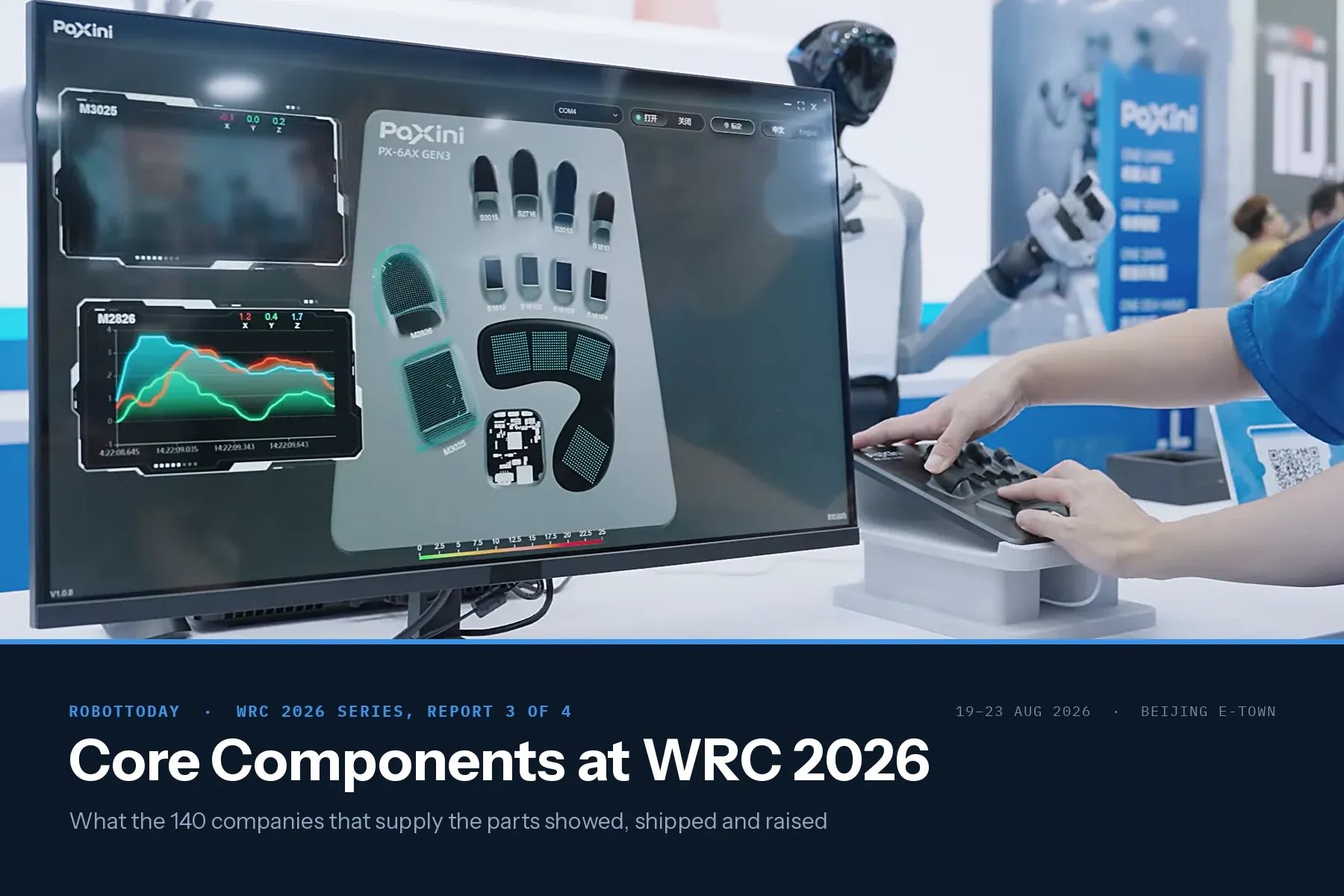
WRC 2026 Core Components: 137 Robot Parts Suppliers
The third report in the WRC 2026 series. Report 1 mapped all 248 exhibitors by category and Report 2 covered the 139 that build finished robots. This one covers the 137 that build what goes inside them.

WRC 2026 Exhibitor Map: 248 Robotics Companies Mapped
We classified 248 WRC 2026 exhibitors with the RobotToday taxonomy. Motion & Actuation leads at 75 companies, Humanoid at 72, and compute stays thin at 12. (Modified 2026-08-27)

Introduction to Robotics J. J. Craig — RSF Top 10 Robot Education Textbooks · No. 6
Six of ten benchmark universities teach kinematics from Craig. Frames, transforms and D-H parameters: the language vendor manuals already speak.

Mechatronics W. Bolton — RSF Top 10 Robot Education Textbooks · No. 1
Bolton's Mechatronics ranks No.1 for robot service engineers: encoders, drives, sensors and the Layer 2 faults most textbooks skip. Difficulty 2/5.

Pittsburgh Regional Alliance Convenes Nine CMU-Rooted Robotics Firms at Automate 2026
At Automate 2026, the Pittsburgh Regional Alliance convened nine robotics firms — most spun out of Carnegie Mellon — spanning materials, perception and AMRs.

CONSTRUCTION ROBOTICS | BUSINESS MODELS & INVESTMENT LANDSCAPE
Construction robotics attracted $4.4 billion in built environment tech funding through Q3 2025. SoftBank acquired ABB Robotics for $5.375 billion. RaaS is displacing capex models. AI-native platforms command 39x revenue multiples. This is where money meets machines.

U.S. Moves to Ban Chinese Robots: Supply Chain Shock or Strategic Decoupling?
A bipartisan U.S. bill targets Chinese humanoid and autonomous robots in federal procurement. We analyse the supply chain, investor, and geopolitical implications for both China and U.S. robotics markets.

RobotToday Weekly Industry Briefing: March 23 – March 27, 2026
RobotToday's weekly industry briefing for March 21–28, 2026 covers Physical Intelligence's $1B raise, Amazon's Fauna Robotics acquisition, Agile Robots' DeepMind partnership, the launch of Europe's first robotaxi service, DJI's Avata 360 drone, Skydio's $52M Army order, and the latest in humanoid, AMR, and drone technology.
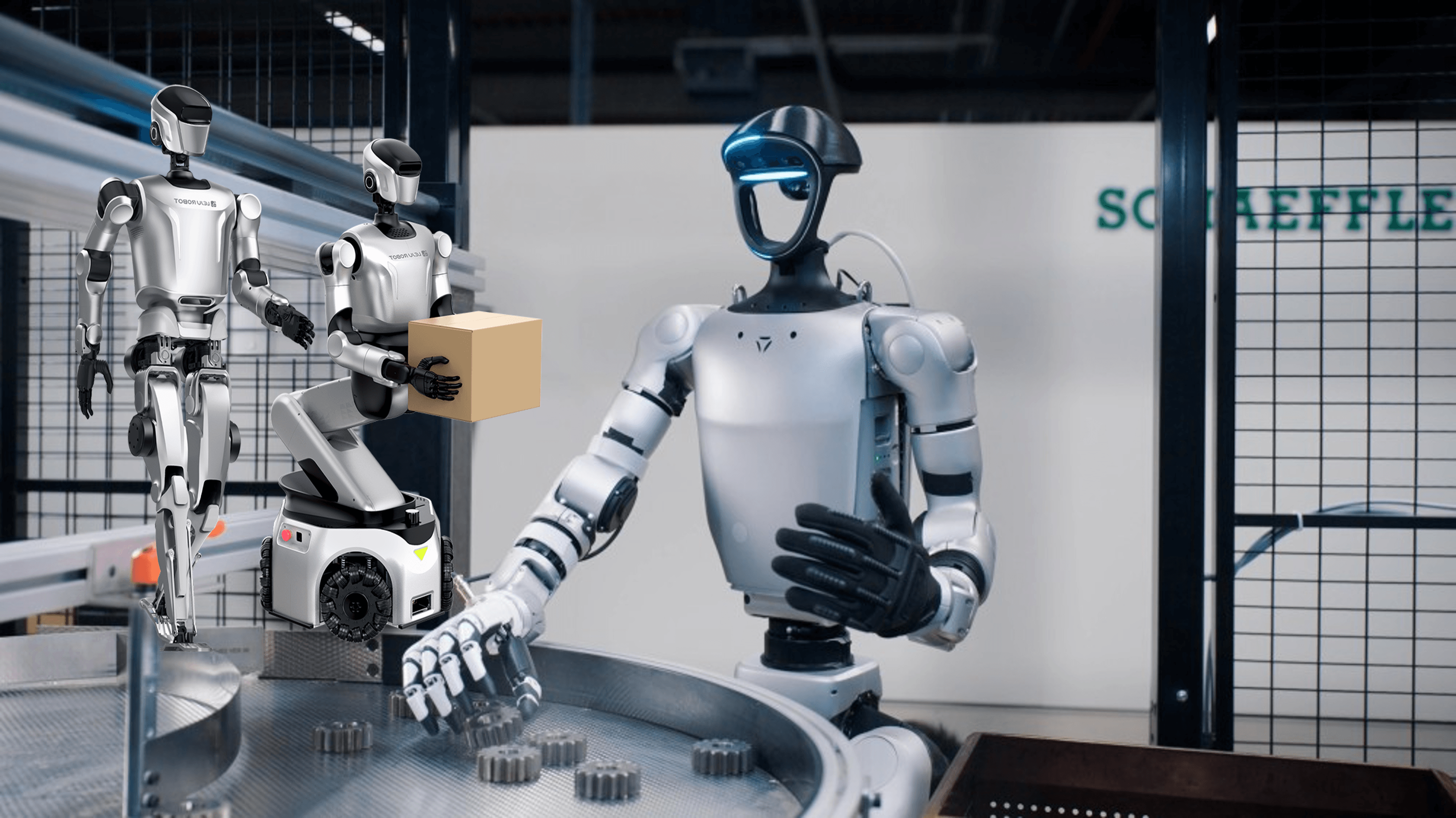
Schaeffler Accelerates Humanoid Robotics Push with Leju Partnership and New China Entity
Schaeffler partners with Leju Robotics and launches China entity to accelerate humanoid robot adoption in industrial manufacturing.