
Nanovel
"Securing the affordability of fresh fruit through autonomous harvesting"
Israeli AgTech startup developing an AI-powered autonomous robotic harvester for tree fruits including citrus, stone fruit, avocado, and mango.
Contact Nanovel
WEBSITE
https://www.nanovel.co.ilHEADQUARTERS
Israel

Company Facts
Founded
2018
Primary Role
Manufacturer
Company Size
-
Primary Region
Middle East
Annual Sales
-
Funding Stage
-
Funding Total
-
Faraday Future's Chris Chen Discusses Robotics as an Extension of Intelligent Vehicles
Faraday Future, primarily recognized as an electric vehicle manufacturer, is expanding its technological applications to include robotics. The company emphasizes that various technologies initially developed for intelligent electric vehicles, such as artificial intelligence, computer vision, and sensor fusion, are highly relevant to robotic systems. This shift is significant as it highlights the versatility of Faraday Future's technology base, suggesting that advancements in electric vehicle technology can drive innovation in robotics. By leveraging their expertise in localization, connectivity, and simulation, the company aims to enhance the capabilities of robots, potentially transforming multiple industries. Looking ahead, it will be important to monitor how Faraday Future integrates these technologies into robotic applications and the impact this may have on both the automotive and robotics sectors. No further timeline was disclosed at the time of publication.
Artificial Intelligence Automotive Features Robotics AIxCrypto artificial intelligence
Kazakhstan Police Utilizes Robotic Dogs for Patrol at Nomad Alemi Festival
During the Nomad Alemi cultural festival in Ulan District, Kazakhstan, police deployed robotic dogs for actual patrol duties. This marks the first time robotic systems have been used for maintaining public order at a large event in the region. The robotic dogs can autonomously patrol designated areas, conduct continuous video surveillance, perform video analysis, and recognize faces, relaying real-time information back to the operations control center. The deployment of robotic dogs is significant as it addresses the challenge of limited police presence at large events while needing to monitor numerous points. These robots can cover areas not reachable by fixed cameras and can navigate through crowds, enhancing public safety. The East Kazakhstan police emphasized that these robotic systems are now part of the region's digital security framework, moving from trial and demonstration to regular operational use. Looking ahead, the capabilities of facial recognition integrated into the robotic dogs raise important questions regarding data retention, comparison permissions, and error handling. While the current deployment is limited in scale and focused on controlled environments, it provides a sample for observing the role of robotic dogs in public safety. Future developments will reveal whether this model expands to routine street patrols and how the data collected will integrate into broader security networks.
Robotic Dogs Public Safety Surveillance Technology Law Enforcement AI
Growing Demand for Robot Electronic Skin: Market Insights and Projections
The demand for electronic skin in humanoid robots is projected to reach 1.525 million square meters by 2030, with a market size of approximately 27.4 billion yuan. This shift indicates that electronic skin is transitioning from experimental samples to regular procurement items, as evidenced by a company receiving 13,000 orders for biomimetic skin in June alone. The significance of this demand lies in the evolving role of electronic skin, which enhances robots' capabilities in unstructured environments where visual data alone is insufficient. High-performance electronic skin, which collects various physical attributes, is essential for training models to understand object interactions, making it a critical component for robots operating in real-world scenarios. As humanoid robot manufacturers begin small-scale deliveries, the increase in electronic skin orders aligns with this trend. However, the integration of electronic skin with the design of the robots presents challenges, as factors like finger size and sensor layout must be collaboratively defined. The anticipated increase in demand and decrease in price hinges on the manufacturers' production capacity and the ability of electronic skin companies to maintain tactile precision while reducing costs.
Humanoid Robots Electronic Skin Tactile Sensors Robotics Technology
MIT Researchers Develop New AI Technique for Safety-Critical Applications
MIT researchers have introduced a novel method that enhances generative artificial intelligence models for high-stakes problem-solving. This technique allows models to generate outputs that not only provide plausible solutions but also adhere to strict safety and task-specific requirements, known as hard constraints. By allowing more freedom during the generation process and enforcing constraints only on the final output, the method consistently delivers better solutions across various applications, including robotics and computer vision. The significance of this development lies in its potential to improve the reliability of AI in safety-critical environments. Traditional methods often struggle to balance the generative capabilities of AI with the necessity of meeting stringent safety standards. The new approach enables pretrained generative models to be adapted for use in scenarios where compliance with safety rules and physical laws is essential, thus expanding their applicability in real-world situations. Looking ahead, the adaptability of this technique suggests a promising future for generative AI in complex environments. As industries increasingly rely on AI for tasks like robot path planning, the ability to enforce hard constraints without compromising output quality will be crucial. No further timeline was disclosed at the time of publication.
Research Computer science and technology Artificial intelligence Machine learning Algorithms Mechanical engineering
SegCert-PCR: Certifiable Point Cloud Registration for Ground Segmentation in Unstructured Environments
The Journal of Field Robotics has published an early view article on SegCert-PCR, a method for certifiable point cloud registration focused on ground segmentation in unstructured field environments. This innovative approach addresses the challenges of accurately registering point clouds, which is crucial for various robotic applications in unpredictable terrains. The significance of SegCert-PCR lies in its potential to enhance the reliability and safety of robotic systems operating in complex environments. By ensuring certifiable registration of point clouds, this method can improve the performance of robots in tasks such as navigation, mapping, and environmental monitoring, where precision is paramount. Looking ahead, the adoption of SegCert-PCR could lead to advancements in robotic technologies that require robust ground segmentation capabilities. As the field of robotics continues to evolve, monitoring the implementation and effectiveness of this method will be essential for future developments in autonomous systems. No further timeline was disclosed at the time of publication.
RESEARCH ARTICLE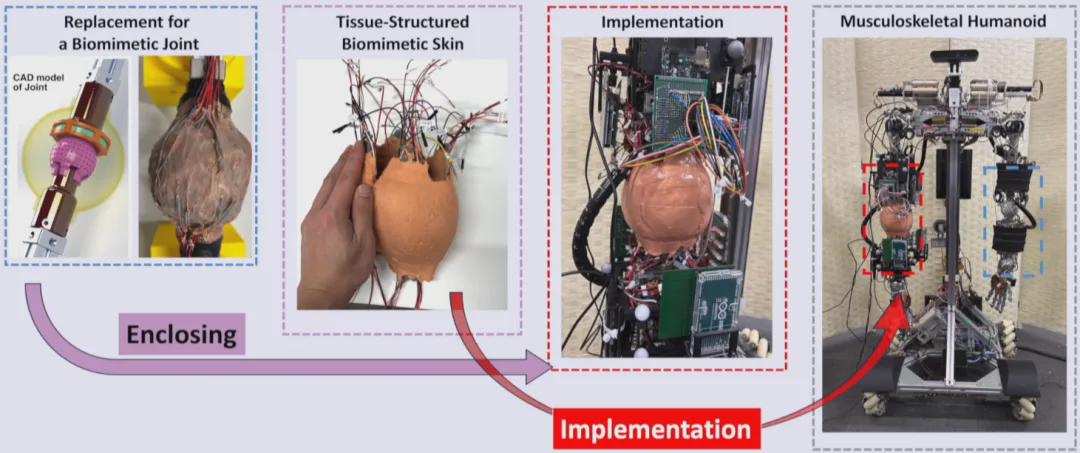
Tokyo University Innovates Artificial Skin for Enhanced Joint Angle Sensing in Robots
Tokyo University's research team has developed an artificial skin that enables robots to accurately sense joint angles through its deformation. This bionic skin, designed with a tissue-like layered structure, was tested on the Musashi-W humanoid robot. The results indicated that the average estimation error for joint angles could be maintained within approximately 3 degrees, and further accuracy was achievable by integrating skin and muscle information. This advancement is significant as traditional muscle-driven humanoid robots face challenges in measuring joint angles directly, unlike conventional robotic joints that utilize encoders. Current methods rely on limited sensors, such as muscle length and tension sensors, to infer joint angles. The research team's approach mimics biological structures by embedding numerous small sensors within soft tissues, enhancing the robot's ability to discern between external disturbances and internal state changes. Moving forward, the integration of these sensors into robotic systems could revolutionize how robots perceive their own movements and interactions with the environment. No further timeline was disclosed at the time of publication.
Humanoid Robots Proprioception Biomimetic Technology Robotic Sensors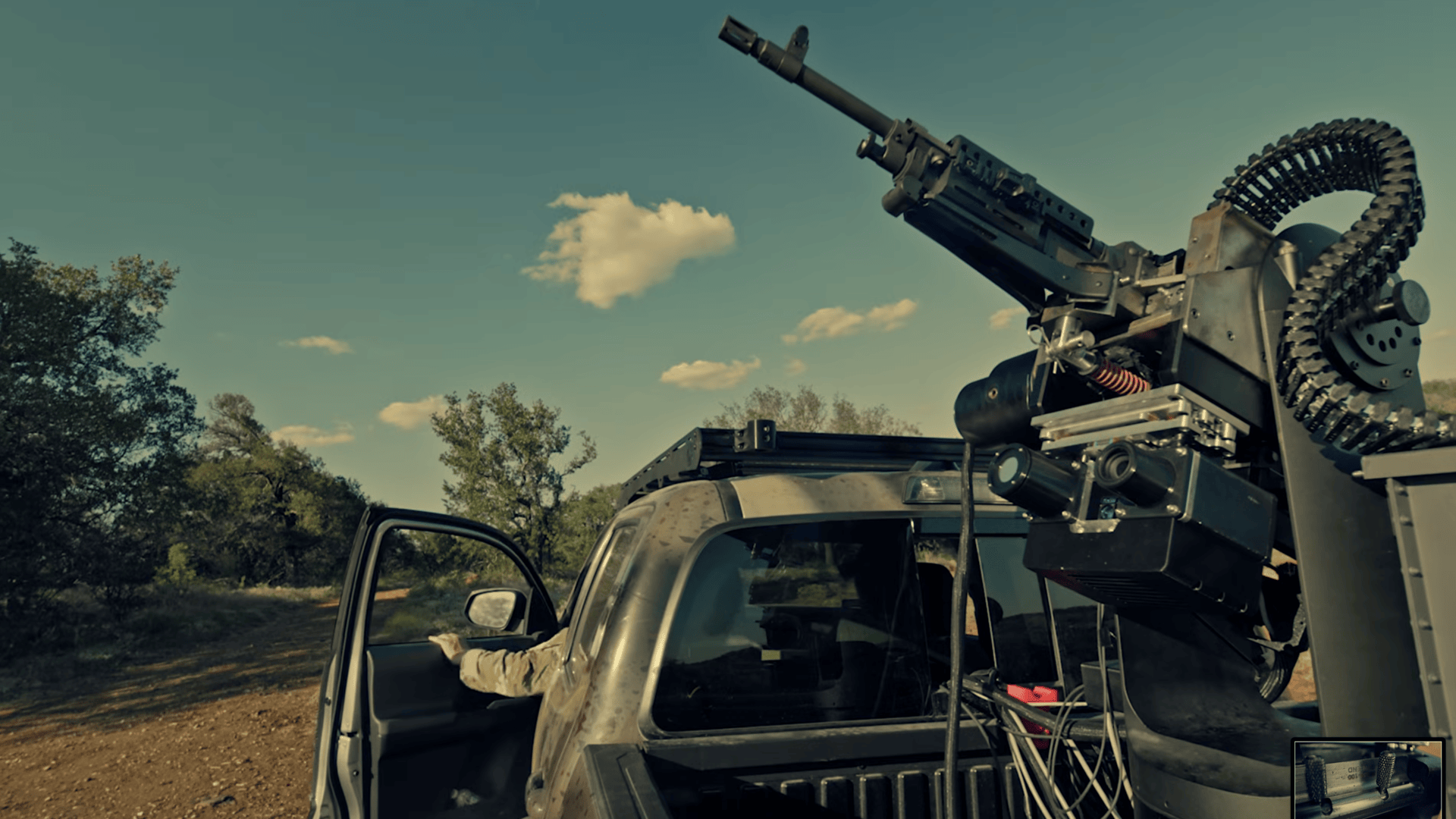
Alien Control Systems Opens 191,000-Square-Foot Facility for Bullfrog Counter-Drone Production
Alien Control Systems (ACS) is launching a new 191,000-square-foot manufacturing facility in Austin, Texas, to enhance production of its Bullfrog counter-drone system. This expansion is a direct response to increased demand from the U.S. and allied nations for effective countermeasures against weaponized drones. The new facility will allow ACS to rapidly scale production of Bullfrog, which integrates computer vision, autonomous control, and precision robotics. The system has already been deployed by the U.S. Army and Navy, and it has contracts with Joint Interagency Task Force 401 and several allied militaries, underscoring its significance in safeguarding critical infrastructure. Looking ahead, ACS aims to further expand Bullfrog's deployment across U.S. military services, following its recent selection by the U.S. Marine Corps for the Ground Based Air Defense program. No further timeline was disclosed at the time of publication.
Military
UltraSense Proposes Ultrasound as a Solution for Tactile Intelligence in Robotics
UltraSense has introduced ultrasound technology as a solution to enhance tactile sensing in robotics, addressing the wear and tear associated with traditional electronic skin. As robots evolve to interact more effectively with their environments, reliable touch sensing becomes crucial for various applications, including humanoid hands and industrial systems. The challenge lies in developing a scalable tactile architecture that can withstand harsh mechanical conditions while maintaining signal integrity over time. The significance of this development is underscored by the limitations of current tactile sensing technologies, which often struggle with durability and accuracy due to environmental factors. Traditional methods, such as capacitive and piezoelectric sensors, face challenges like wear, hysteresis, and recalibration burdens, particularly in high-duty-cycle applications. UltraSense's approach aims to provide a more robust solution that can sustain performance across millions of contact cycles, making it a potential game-changer in the field of physical AI. Looking ahead, the industry will need to monitor advancements in ultrasound technology and its integration into robotic systems. As physical AI continues to gain traction, the ability to maintain accurate and reliable tactile sensing will be critical for the success of various robotic applications. No further timeline was disclosed at the time of publication.
Artificial Intelligence / Cognition Grippers Human Robot Interaction / Haptics Humanoids Microprocessors / SoCs News
New Images of China's WZ-X Stealth Drone Reveal Key Features and Flight Capabilities
Recent images have surfaced showing China's WZ-X stealth drone, resembling the American B-2 Spirit. These photos, taken at an undisclosed location, highlight the drone's unique serrated trailing edge, suggesting advanced stealth capabilities. This design feature is intended to deflect radar signals, enhancing its operational effectiveness in contested airspace. The significance of the WZ-X lies in its potential role for reconnaissance missions, akin to the US RQ-170/RQ-180 drones. Analysts speculate that it could gather crucial intelligence while maintaining a low radar profile, thanks to its flying-wing design. The drone's daylight test flights indicate a shift towards a more advanced flight-test phase, suggesting increased confidence in its capabilities. Future developments to watch include the potential integration of advanced sensor systems such as synthetic-aperture radar and electronic-intelligence equipment. However, the exact specifications and operational capabilities of the WZ-X remain largely unverified, as the designation is unofficial and the images have not been independently authenticated.
Innovation Military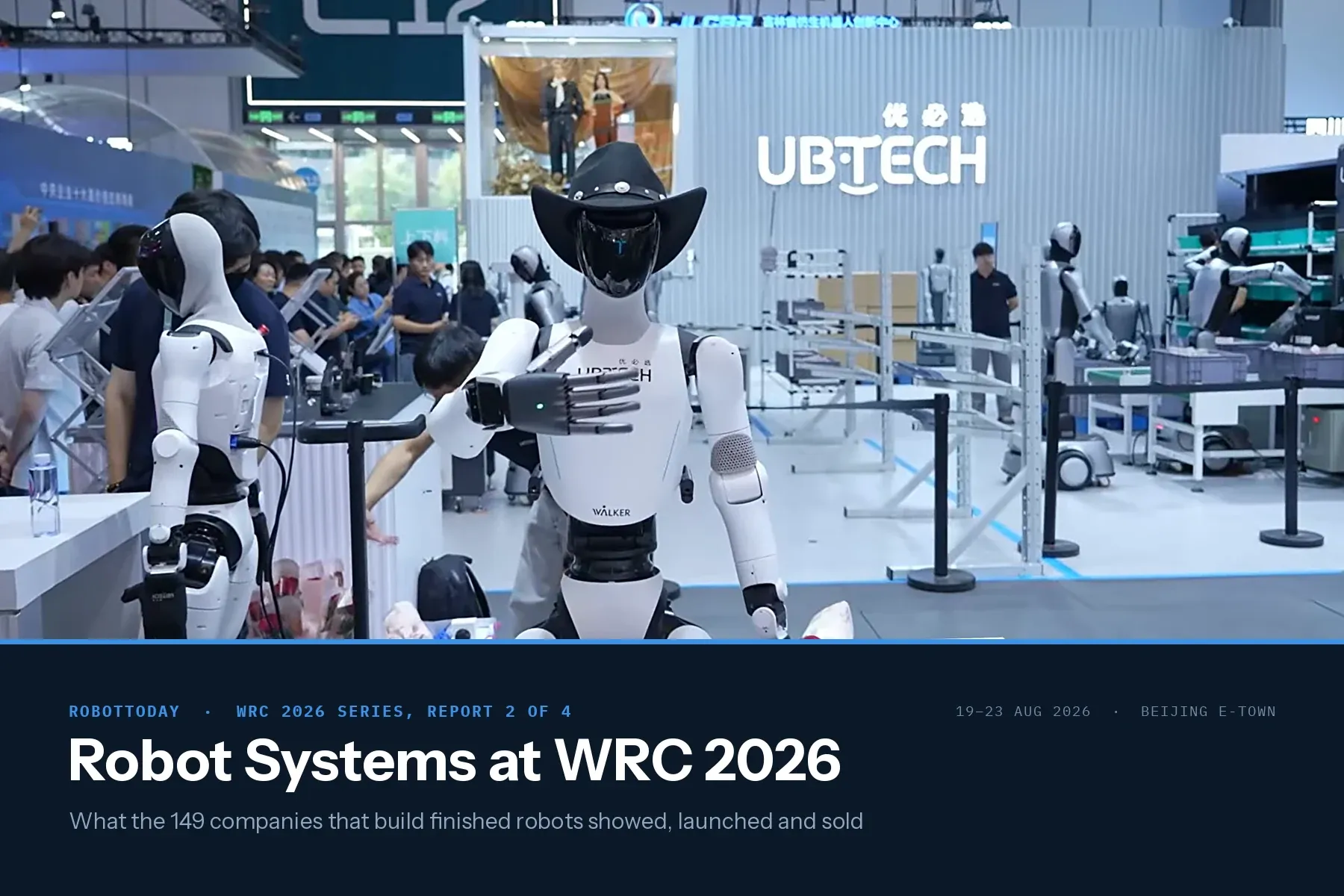
WRC 2026 Robot Systems: 149 Companies That Build Robots
149 of the 248 classified WRC 2026 exhibitors build finished robots. 93 build humanoid or legged machines. The audited humanoid sales number is one unit.

Nanovel Develops Autonomous Citrus Harvesting Technology to Address Labor Challenges
Israeli ag robotics startup Nanovel is tackling the complexities of robotic citrus harvesting. Their patented autonomous harvester features robotic arms that can reach deep into citrus trees, using a vacuum gripper to collect fruit while minimizing damage. The system employs computer vision and AI to navigate the canopy and manage a fleet of robots. This innovation is significant as manual labor constitutes about 50% of production costs in citrus farming, particularly in regions sensitive to labor availability. Nanovel's technology aims to reduce these costs, with harvesting expenses estimated at $25-30 per 900-lb field bin compared to $42-43 for manual labor. The ability to schedule harvests reliably without dependence on seasonal workers enhances operational efficiency. Looking ahead, Nanovel plans to conduct trials with leading growers in southern Europe in 2027, followed by pilot deployments in 2028 and commercial rollout in 2029. The company has secured a €2.5 million grant from the European Innovation Council to support its development efforts.
Agtech Artificial intelligence Deeptech EMEA Precision agriculture Startups & funding
ROBOTTODAY Weekly July 20 – 24, 2026
Your weekly robotics briefing: AGIBOT unveils four new robots at WAIC 2026, the NDAA bars Chinese humanoids from the U.S. military, SoftBank eyes Gravis Robotics for its Roze vehicle, and Anduril reveals its Thunder autonomous attack tiltrotor at Farnborough.

US Restrictions on Chinese Humanoid Robots: The Full Map
Every US restriction on Chinese humanoid robots — NDAA Sec. 163, GUARD Act, the 1260H list — plus the supply-chain math and a 4-tier map of decoupling.

FUTURE WARFARE | The Geopolitical Competitive Landscape
Military robotics is no longer a U.S.-centric story. Global defence spending crossed $2.75 trillion in 2026; defence-tech VC hit a record $49.1 billion in 2025; and a multipolar robotics order is crystallising in real time — with China’s 15th Five-Year Plan institutionalising civil-military fusion, Europe’s €381 billion defence budget financing its own AI champions, and Turkey and Israel reshaping the export market with affordable, combat-proven systems. Part Five of the Future Warfare Series maps the country-by-country competitive landscape, the collapsing regulation race, and the investment forces reshaping who builds — and who controls — the autonomous weapons of the next decade.
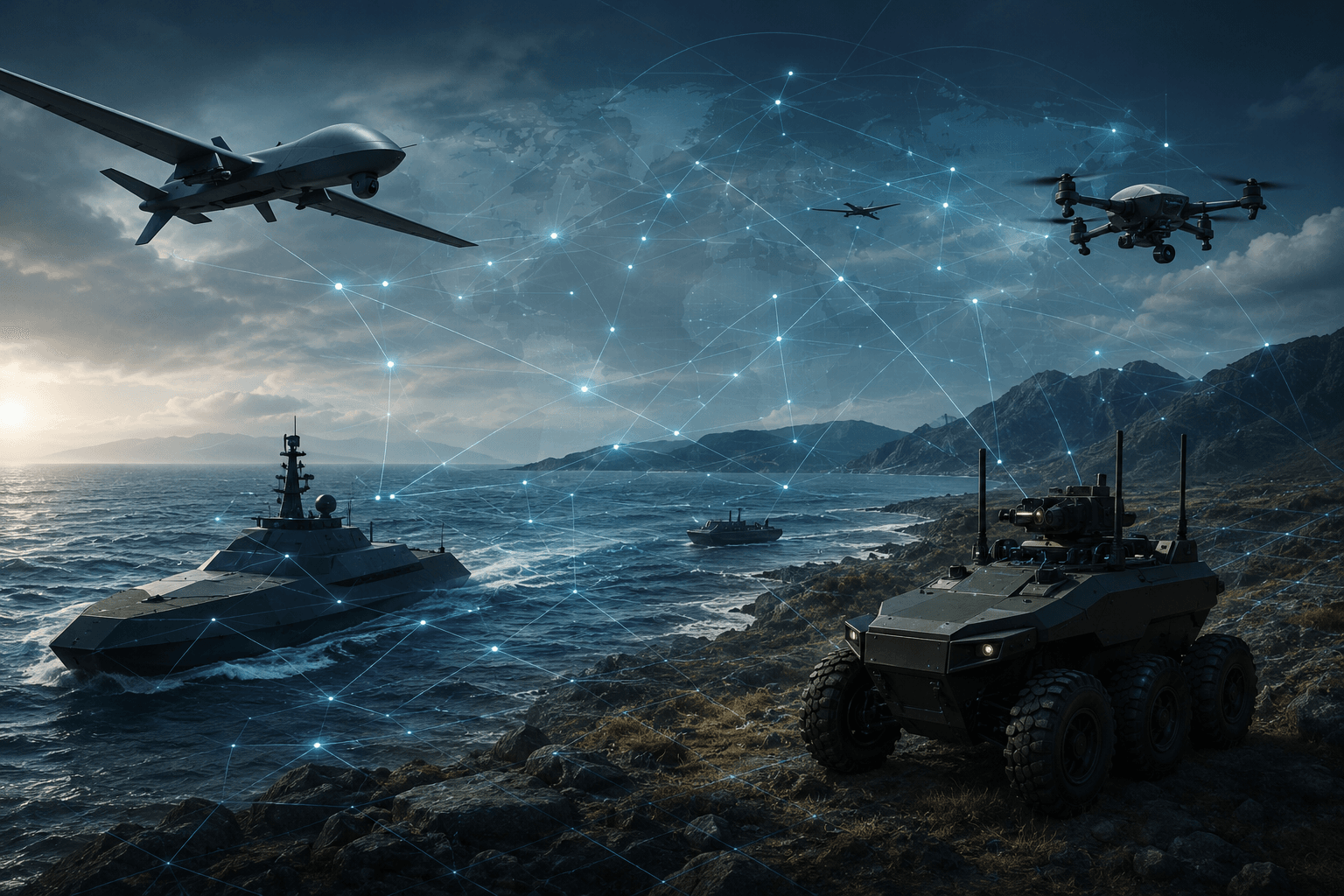
FUTURE WARFARE | Cross-Domain Integration - Integration How Land, Sea, Air and Software Are Converging Into a Single Kill Chain
Cross-domain robotics is reshaping modern warfare as drones, UGVs, AI targeting systems, and autonomous logistics converge into a single networked kill chain across land, sea, air, and software.

GLOBAL ROBOTICS INDUSTRY Comprehensive Sector Overview
A comprehensive global robotics industry overview for 2025, analyzing 14 key market segments — from industrial and humanoid robots to logistics AMRs, military systems, and service robots — with expert market sizing, US case studies, five-year forecasts, and bilingual English-Chinese analysis for executives and investors.
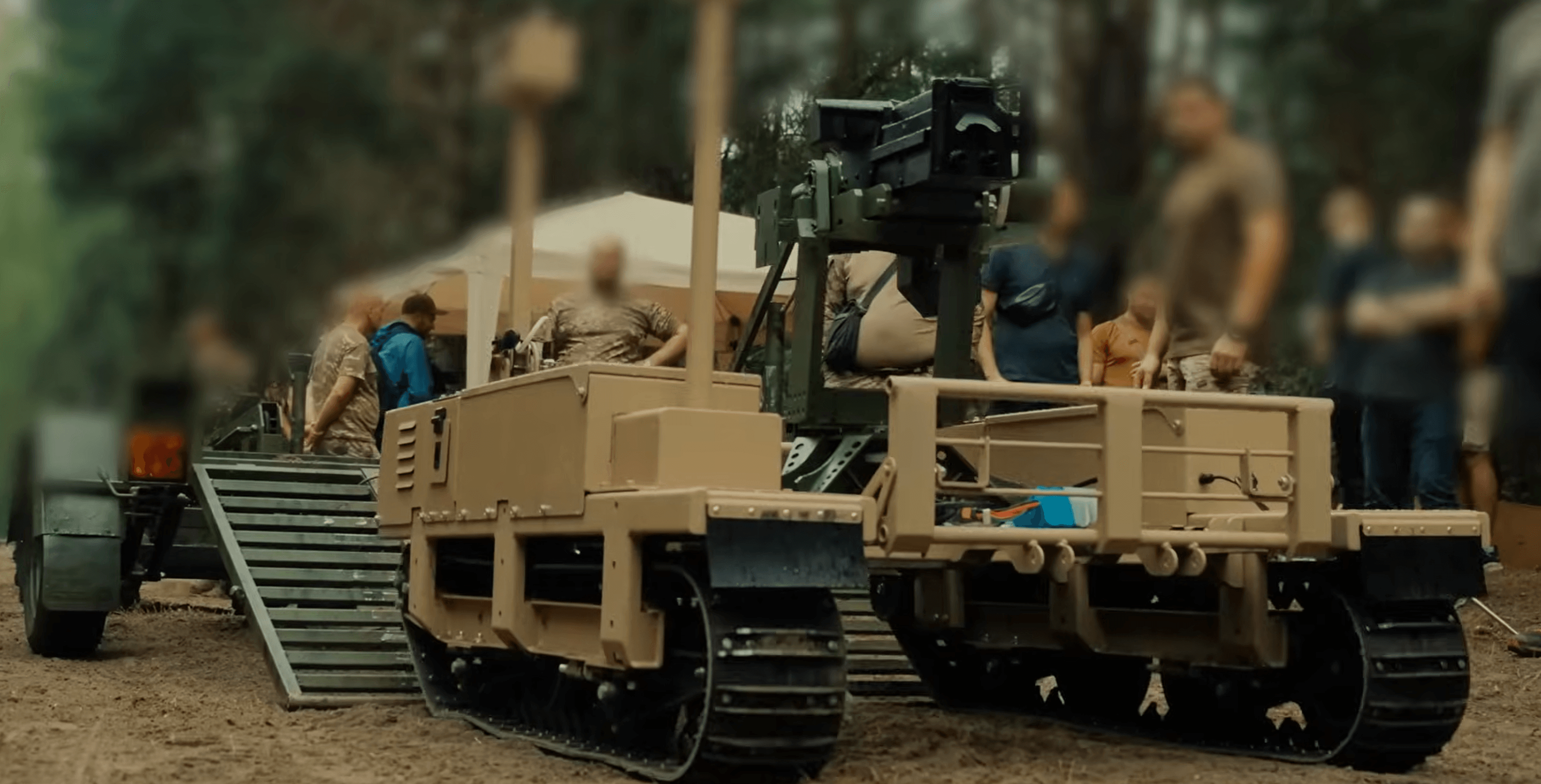
FUTURE WARFARE | Land - Unmanned Ground Vehicles — From Logistics Mules to Front-Line Robots
Ukraine fielded 15,000 unmanned ground vehicles in 2025 — surpassing its own procurement targets by over 100 percent. A single UGV held a front-line position for 45 days. Up to 90 percent of supplies to Pokrovsk now move by robot, not truck. The U.S. Army cancelled its $3 million Robotic Combat Vehicle and is starting over. China is deploying $3,000 robot dogs in PLA urban-warfare exercises. This article maps the emerging UGV battlefield — from Ukraine’s garage-built logistics fleet to the Pentagon’s stalled combat-vehicle ambitions, and from Ghost Robotics’ Vision 60 to the quadruped proliferation problem no treaty has yet addressed.

EU Bets €1.5B on Drones and AI: Inside EDIP's 2026–2027 Defence Industry Programme
The EU's €1.47 billion European Defence Industry Programme (EDIP) 2026–2027 targets drones, counter-UxS systems, AI-enabled autonomy, and loitering munitions across six major funding calls — allocating over €232 million directly to unmanned systems and related electronics supply chains.

FUTURE WARFARE | The Autonomy Spectrum
How modern weapons shattered the concept of human control — from kill-switch confirmation to AI systems that select targets independently.

EKA Mobility Secures $57 Million from NIIF’s India-Japan Fund to Drive Leadership in Electric Commercial Vehicles
EKA Mobility raises $57 M from the India-Japan Fund (NIIF) to accelerate electric commercial vehicle growth and electrification leadership in key markets.