


4AG Robotics
Canadian agri-robotics company making autonomous vision-guided robots that pick, trim, and pack mushrooms for commercial farms.
Contact 4AG Robotics
WEBSITE
https://4ag.aiPHONE
+1 250-833-5647HEADQUARTERS
Canada

Company Facts
Founded
2019
Primary Role
Manufacturer
Company Size
-
Primary Region
North America
Annual Sales
-
Funding Stage
-
Funding Total
-

China National Petroleum Corp. Achieves 29.6 Million Tons Oil Extraction Milestone
China National Petroleum Corp. (CNPC) has announced a significant production milestone at the Fuman Oilfield, having extracted over 29.6 million U.S. tons of oil and gas from depths exceeding 19,685 feet in the Taklimakan Desert. This achievement underscores the country's commitment to exploring ultra-deep hydrocarbon resources in challenging environments. The extraction of 29.6 million tons includes 20.36 million metric tons of crude oil and 8.15 billion cubic meters of natural gas, marking a substantial contribution to China's energy sector. The operation has seen the drilling of 485 ultra-deep wells, with many yielding over 100,000 metric tons of oil and gas, establishing the Tarim Oilfield as a key player in ultra-deep hydrocarbon production. Looking ahead, the recent recovery of rock cores from depths of 8,080 meters will enhance understanding of hydrocarbon generation potential in the region. No further timeline was disclosed at the time of publication.
Energy
Black Sea Drone Strikes Target Cargo Ships Amid Escalating Ukraine Conflict
Recent drone strikes in the Black Sea have targeted cargo ships, highlighting the growing dangers in this vital trade corridor. These attacks underscore the escalating tensions in the region, particularly affecting agricultural trade routes crucial for Ukraine's economy. The significance of these strikes lies in their impact on global food supply chains, as the Black Sea is a key route for transporting agricultural products. Disruptions in this area could lead to increased prices and shortages, affecting markets worldwide. Looking ahead, stakeholders should monitor the situation closely, as further escalations could threaten maritime safety and trade stability. No further timeline was disclosed at the time of publication.
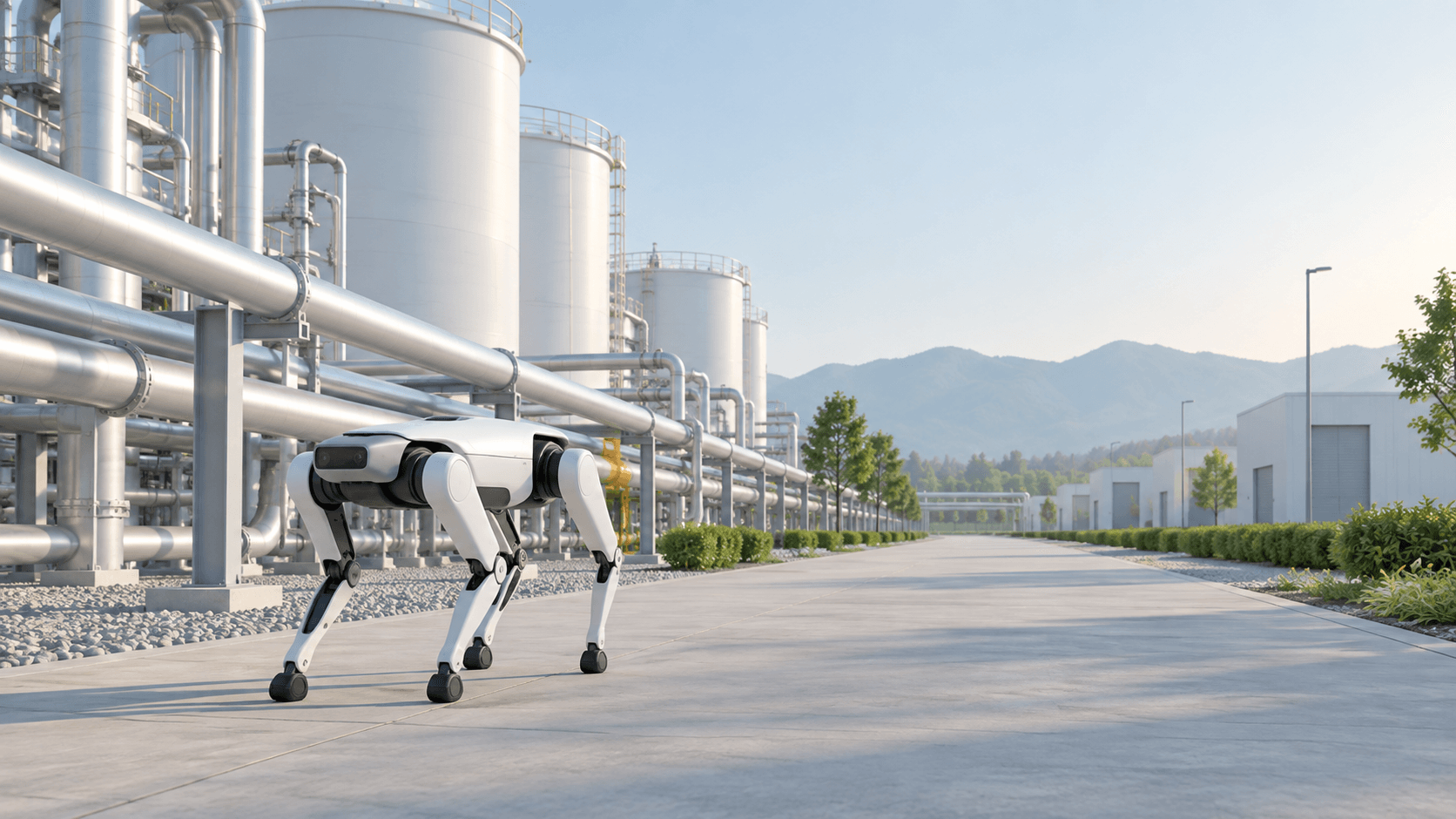
Transfar Launches Over 300 Industrial Scenarios for Embodied AI Testing and Deployment
Zhejiang-based manufacturer Transfar is initiating over 300 real industrial scenarios, including chemical plants, logistics parks, and farms, to serve as testing grounds for robots. This initiative aims to enhance the training and deployment of embodied AI technologies in various sectors. The significance of this development lies in Transfar's commitment to advancing robotics and AI applications across diverse industrial environments. By providing these scenarios, the company is facilitating the practical application of robotic solutions, which could lead to increased efficiency and innovation in operations. Looking ahead, industry stakeholders should monitor how these testing grounds evolve and the impact they have on the adoption of embodied AI technologies. No further timeline was disclosed at the time of publication.
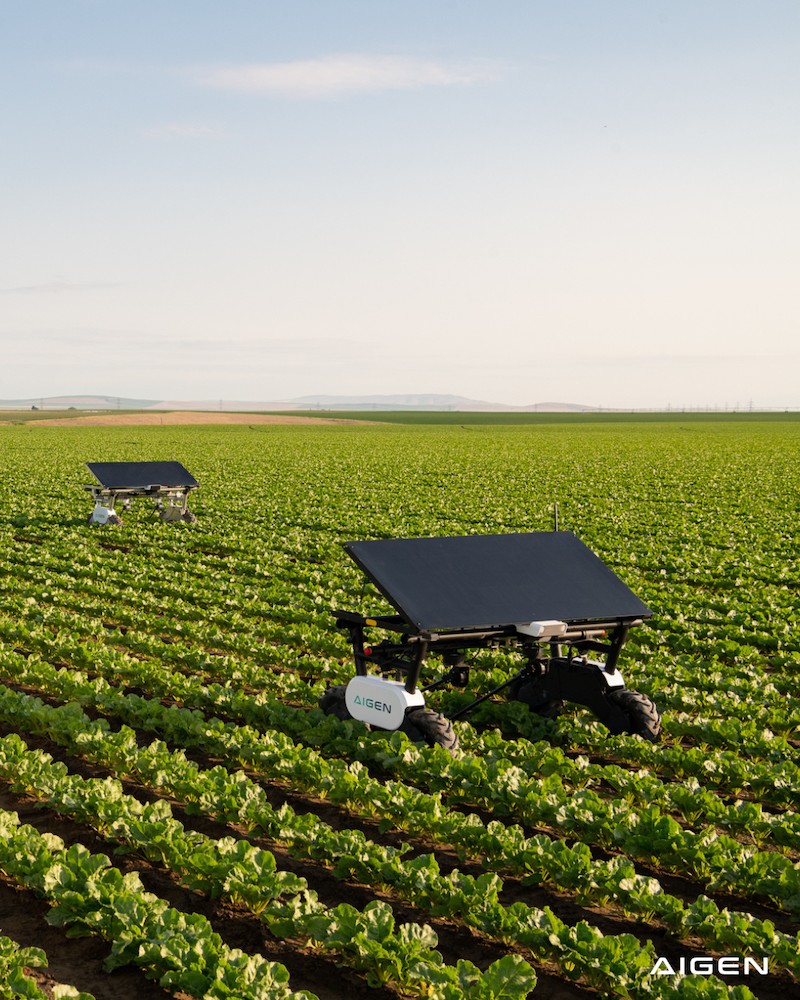
Aigen Develops Simulation System to Train Solar-Powered Farming Robots in Under a Week
Aigen has announced the development of a simulation and world-model system that enables its autonomous agricultural robots to adapt to new crops in less than a week. Utilizing the Alchemy simulation platform, the company generates synthetic training data for its solar-powered Element robots, which recently learned to work with lettuce before being deployed in the field. This advancement is significant as it potentially reduces the time required for agricultural robots to adapt to various crops, enhancing efficiency in farming operations. Aigen's Element robots utilize onboard AI and cameras to identify crops and weeds, mechanically removing weeds without herbicides while also collecting data on crop health and weed pressure. Looking ahead, Aigen has built over 100 robots and logged more than 15,000 autonomous operating hours across multiple states. The company aims to further expand the use of its Element robots, which are already being utilized by Fortune 500 companies for weed control and agricultural analytics. No further timeline was disclosed at the time of publication.

Extend Robotics Secures £2.6M Funding to Enhance Outcome-Based Robotics Services
Extend Robotics has successfully raised £2.6 million in pre-Series A funding to advance its Result-as-a-Service model, enabling manufacturers to pay for robotic work completed rather than purchasing robots outright. This funding, led by Skyworks Venture Capital Fund with participation from Neo Venture Europe and Zip Capital, will facilitate the company's expansion across the U.K. and Europe, as well as the development of a distributed remote-operator network. Extend's AMAS platform integrates immersive teleoperation with AI assistance, currently serving 35 subscription customers across various sectors including agriculture and manufacturing. Looking ahead, Extend Robotics aims to leverage its funding to enhance its service offerings and expand its customer base. The company is focused on addressing manufacturing challenges that are difficult to automate with traditional systems, particularly in high-mix production and hazardous environments. No further timeline was disclosed at the time of publication.
AI Funding & Investment Physical AI AI Extend Robotics industrial robotics Pre-A financing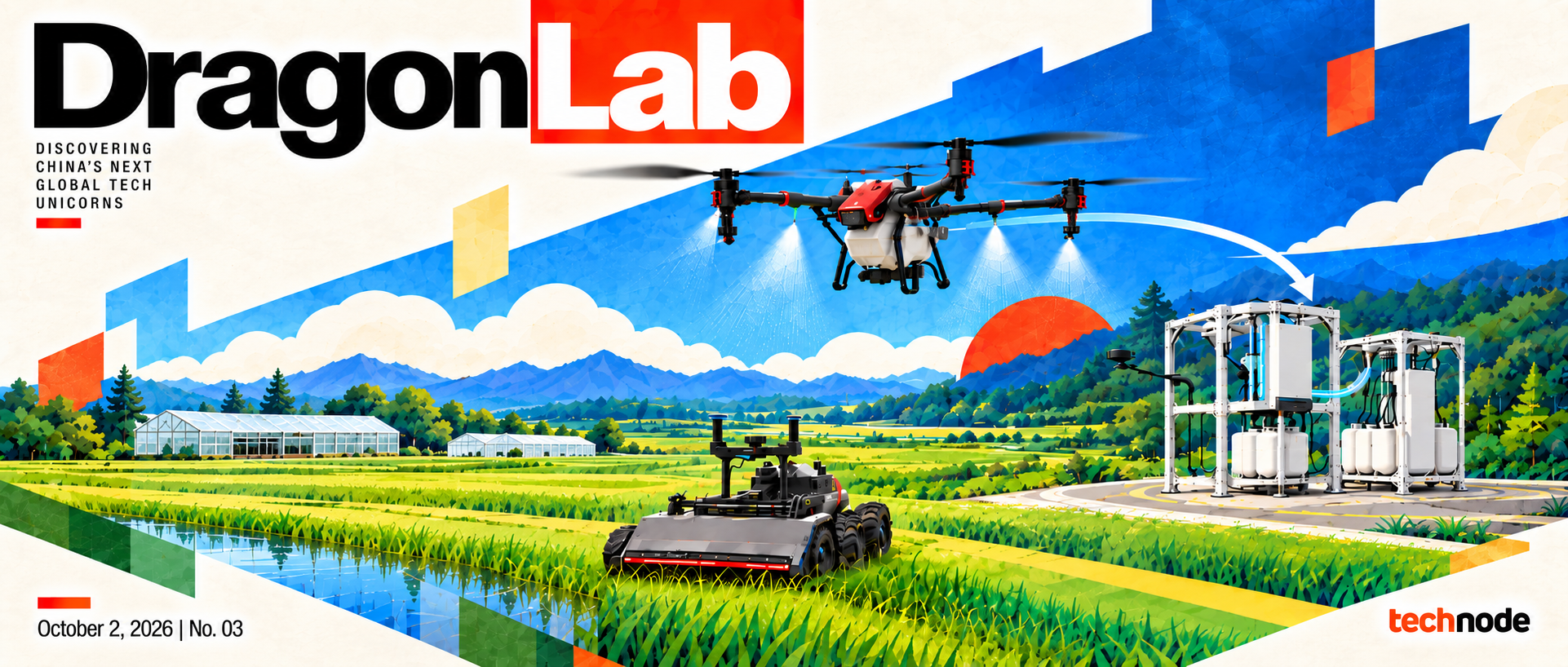
XAG Advances Autonomous Farming with New Agricultural Robot System
XAG is enhancing agricultural automation by developing a new X Series robot system that integrates drones and automated liquid-handling equipment. This system aims to streamline the processes of charging, refilling, and cleaning drones, reducing the need for human intervention. The recent demonstration at XAG’s SuperX Farm in Guangzhou showcased the efficiency of this system, with drones being recharged and refilled in approximately three minutes. The significance of XAG's advancements lies in its potential to transform farming practices, particularly in regions with fragmented farmland and an aging rural workforce. By automating labor-intensive tasks such as pesticide spraying, XAG is addressing the challenges faced by farmers in China and other markets. The company’s approach aligns with global trends in agricultural technology, where efficiency and productivity are paramount. Looking ahead, XAG's focus on automating the turnaround processes for drones could lead to further innovations in agricultural robotics. As the company continues to expand its international presence, it will be important to monitor how its technology adapts to different farming environments and regulatory landscapes. No further timeline was disclosed at the time of publication.
Heavy Hitters
Antobot Plans 300 Deployments of UV-C Robots in Strawberry Crops by 2027
UK-based startup Antobot is targeting the deployment of 300 autonomous robots in strawberry crops by 2027. These robots utilize UV-C light to combat powdery mildew and other fungal pathogens, offering a chemical-free alternative to traditional fungicides. According to VP Marc Jones, this technology not only reduces chemical usage but also contributes to healthier crop yields. The significance of Antobot's initiative lies in its potential to transform agricultural practices by minimizing reliance on chemical treatments. As growers increasingly adopt UV-C technology, the company aims to expand its distributor network, having already signed agreements in the UK and Spain. The shift towards a more sustainable approach is driven by consumer concerns over pesticide residues and the need for effective disease control in various markets. Looking ahead, Antobot plans to transition from a robots-as-a-service model to a direct sales approach, allowing customers to purchase and operate the machines themselves. This change is expected to enhance operational efficiency as the company scales its deployments. No further timeline was disclosed at the time of publication.
Agtech APAC Artificial intelligence Deeptech EMEA Startups & funding
The Importance of AI Security in Food and Beverage Manufacturing Processes
The integration of AI in food and beverage manufacturing presents both opportunities and risks, particularly concerning cybersecurity. As AI enhances connectivity on the factory floor, it simultaneously exposes sensitive data to potential cyberattacks, which can have severe financial and reputational consequences. Scott Alldridge, a board advisor at the Cybersecurity Association of the Food Industry, emphasizes that any alteration to systems can compromise food safety, regardless of data theft. With the increasing complexity of manufacturing facilities, traditional systems are inadequate to combat modern cyber threats. AI technologies, while improving efficiency through applications like drones and data collection, necessitate stringent cybersecurity measures to protect sensitive information. Food and beverage companies must ensure that customer data is not shared with external AI providers and that all data processing occurs within secure environments to maintain compliance and data sovereignty. Looking ahead, manufacturers must prioritize AI governance to ensure safety and accuracy in outputs. This includes implementing robust validation controls and technical guardrails to prevent unsafe AI responses. As the reliance on AI grows, the responsibility for security and data integrity will increasingly fall on both manufacturers and SaaS providers, necessitating rigorous audits and adherence to best practices.
Process / Analytics
Cambridge Researchers Investigate Soil as an Intelligent System for New Technologies
Researchers at the Bio-Inspired Robotics Laboratory at Cambridge are examining the behavior of soil as an intelligent system. Their study focuses on the soil's structure, chemistry, and the biological networks of microbes and fungi. This research aims to inspire advancements in bio-inspired computing, precision agriculture, and environmental sensing. The significance of this research lies in its potential to reshape our understanding of soil and its capabilities. By recognizing soil as a complex system that can process information, the team hopes to develop innovative technologies that could enhance agricultural practices and environmental monitoring. This perspective could lead to more sustainable approaches in various sectors. Looking ahead, the ongoing research may yield new insights into the applications of soil intelligence in technology. As the team continues to explore the interactions within soil ecosystems, it will be important to watch for developments that could influence bio-inspired computing and precision agriculture. No further timeline was disclosed at the time of publication.
Robotics
IndexBox Forecasts 7.7% Growth in Delta Robot Market by 2035, Driven by Food and Electronics
IndexBox has projected that the Delta robot market will experience a growth rate of 7.7% by the year 2035. This growth is primarily attributed to increasing demand in the food and beverage and electronics sectors, which are expected to drive significant investments in automation technologies. The anticipated growth in the Delta robot market is crucial as it highlights the ongoing trend towards automation in various industries. As companies seek to enhance efficiency and reduce operational costs, the adoption of Delta robots is likely to become more prevalent, particularly in sectors that require precision and speed. Looking ahead, stakeholders should monitor advancements in Delta robot technology and their applications in different industries. The focus on food and beverage and electronics sectors will be particularly important, as these areas are poised for substantial growth and innovation in automation solutions. No further timeline was disclosed at the time of publication.
Robotics Automation AI
WRC 2026 Robot Systems: 149 Companies That Build Robots
149 of the 248 classified WRC 2026 exhibitors build finished robots. 93 build humanoid or legged machines. The audited humanoid sales number is one unit.

ROBOTTODAY Weekly July 20 – 24, 2026
Your weekly robotics briefing: AGIBOT unveils four new robots at WAIC 2026, the NDAA bars Chinese humanoids from the U.S. military, SoftBank eyes Gravis Robotics for its Roze vehicle, and Anduril reveals its Thunder autonomous attack tiltrotor at Farnborough.

FUTURE WARFARE | The Geopolitical Competitive Landscape
Military robotics is no longer a U.S.-centric story. Global defence spending crossed $2.75 trillion in 2026; defence-tech VC hit a record $49.1 billion in 2025; and a multipolar robotics order is crystallising in real time — with China’s 15th Five-Year Plan institutionalising civil-military fusion, Europe’s €381 billion defence budget financing its own AI champions, and Turkey and Israel reshaping the export market with affordable, combat-proven systems. Part Five of the Future Warfare Series maps the country-by-country competitive landscape, the collapsing regulation race, and the investment forces reshaping who builds — and who controls — the autonomous weapons of the next decade.
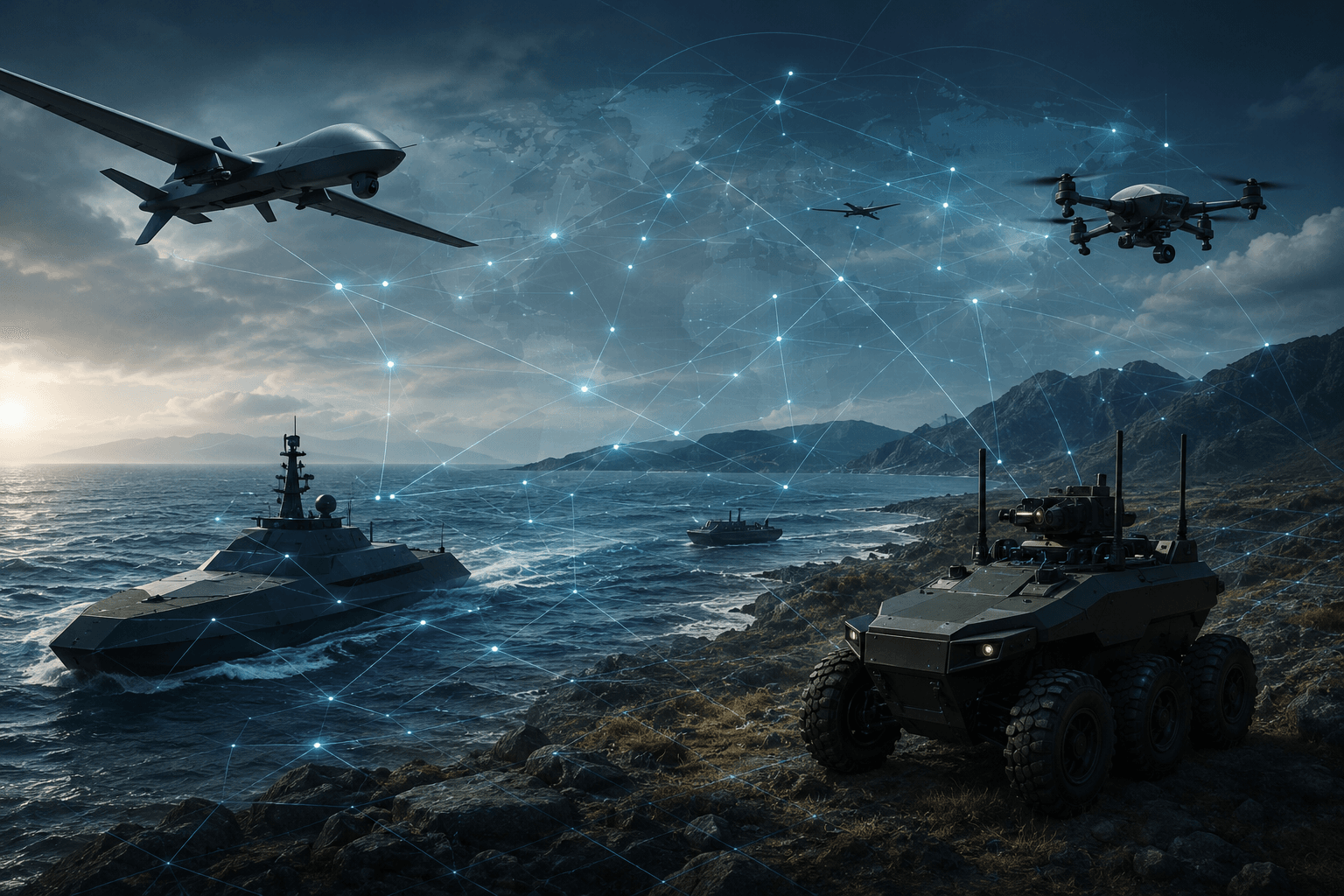
FUTURE WARFARE | Cross-Domain Integration - Integration How Land, Sea, Air and Software Are Converging Into a Single Kill Chain
Cross-domain robotics is reshaping modern warfare as drones, UGVs, AI targeting systems, and autonomous logistics converge into a single networked kill chain across land, sea, air, and software.

GLOBAL ROBOTICS INDUSTRY Comprehensive Sector Overview
A comprehensive global robotics industry overview for 2025, analyzing 14 key market segments — from industrial and humanoid robots to logistics AMRs, military systems, and service robots — with expert market sizing, US case studies, five-year forecasts, and bilingual English-Chinese analysis for executives and investors.
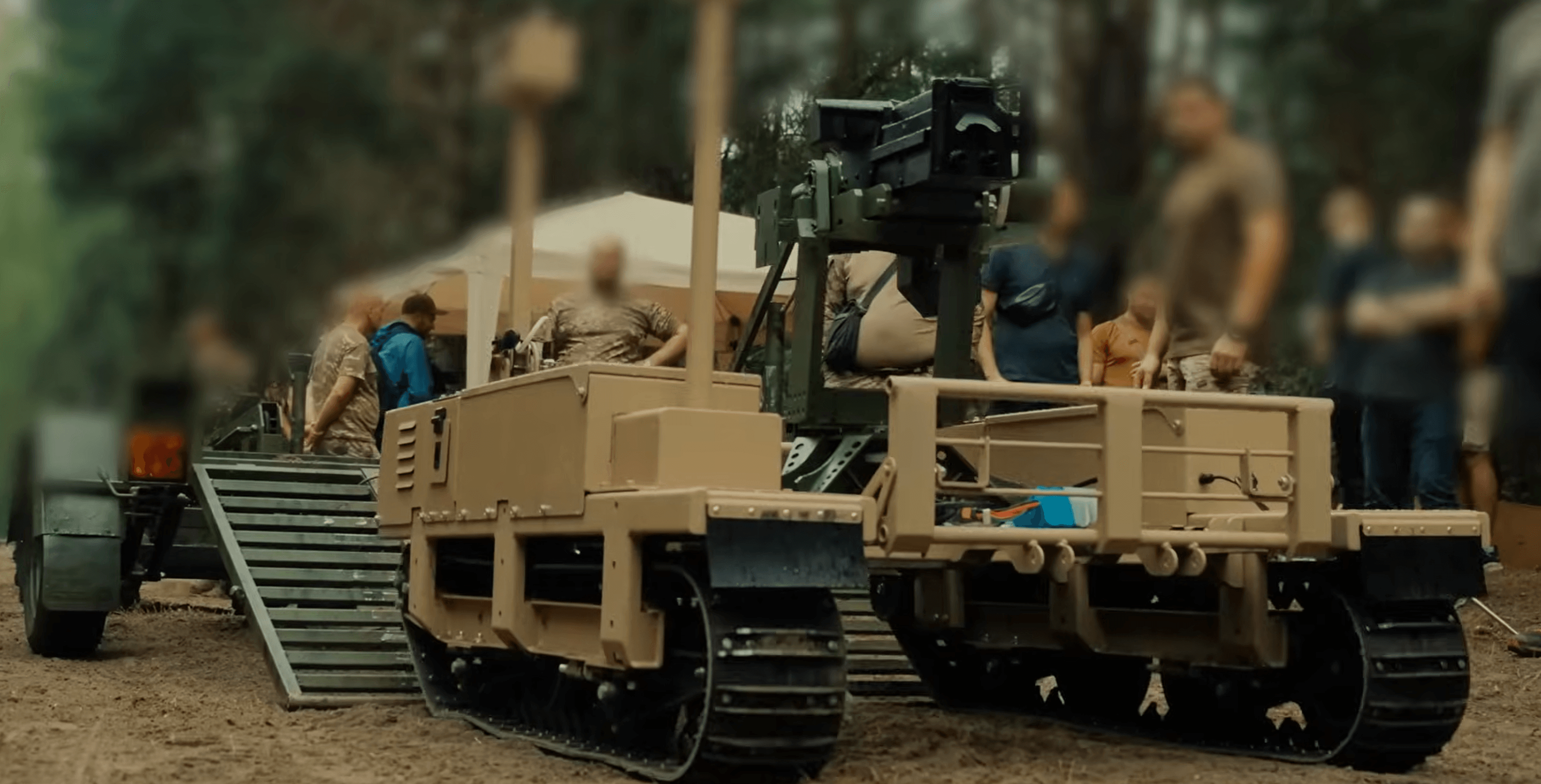
FUTURE WARFARE | Land - Unmanned Ground Vehicles — From Logistics Mules to Front-Line Robots
Ukraine fielded 15,000 unmanned ground vehicles in 2025 — surpassing its own procurement targets by over 100 percent. A single UGV held a front-line position for 45 days. Up to 90 percent of supplies to Pokrovsk now move by robot, not truck. The U.S. Army cancelled its $3 million Robotic Combat Vehicle and is starting over. China is deploying $3,000 robot dogs in PLA urban-warfare exercises. This article maps the emerging UGV battlefield — from Ukraine’s garage-built logistics fleet to the Pentagon’s stalled combat-vehicle ambitions, and from Ghost Robotics’ Vision 60 to the quadruped proliferation problem no treaty has yet addressed.

EU Bets €1.5B on Drones and AI: Inside EDIP's 2026–2027 Defence Industry Programme
The EU's €1.47 billion European Defence Industry Programme (EDIP) 2026–2027 targets drones, counter-UxS systems, AI-enabled autonomy, and loitering munitions across six major funding calls — allocating over €232 million directly to unmanned systems and related electronics supply chains.
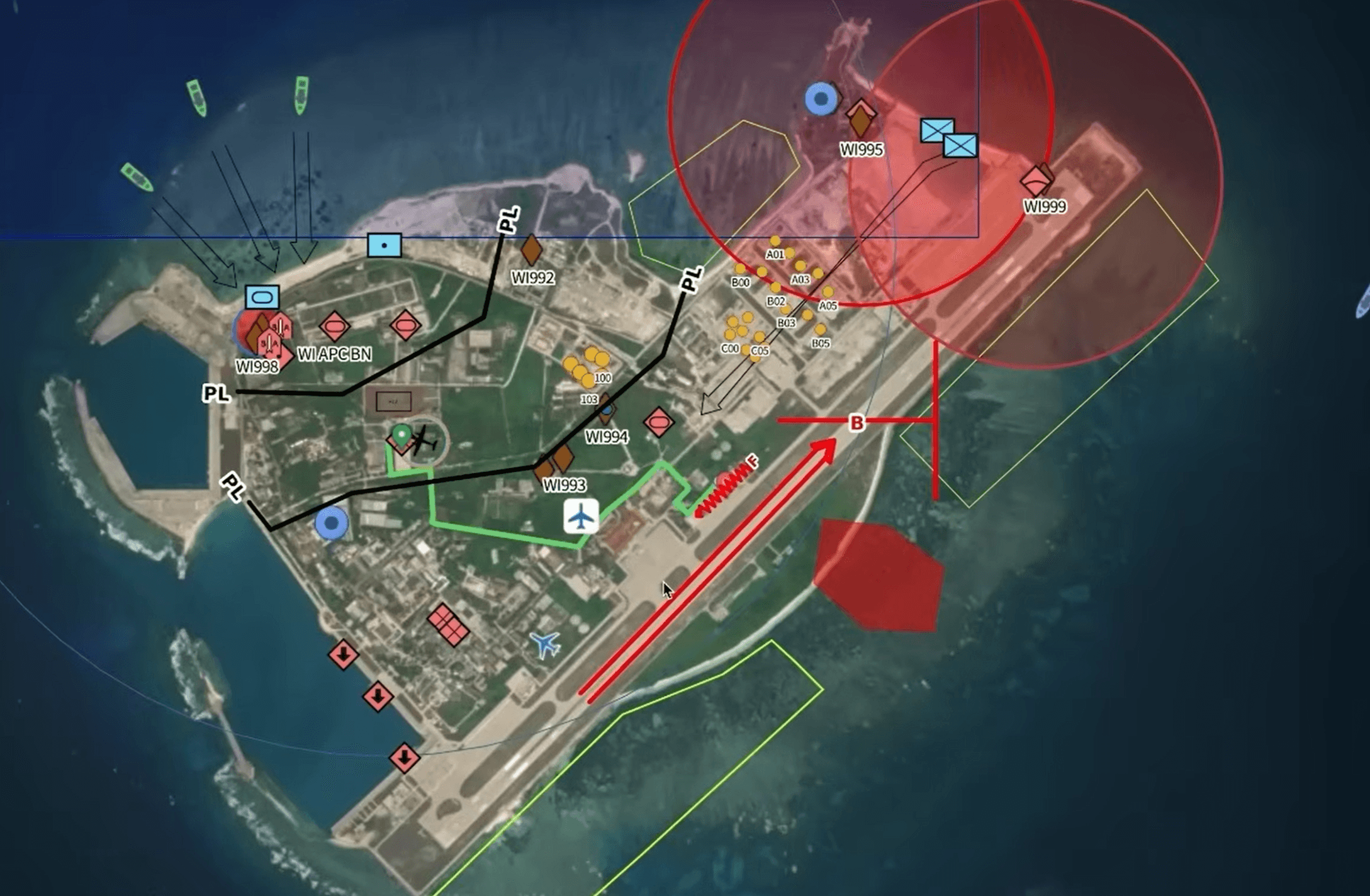
FUTURE WARFARE | The Autonomy Spectrum
How modern weapons shattered the concept of human control — from kill-switch confirmation to AI systems that select targets independently.
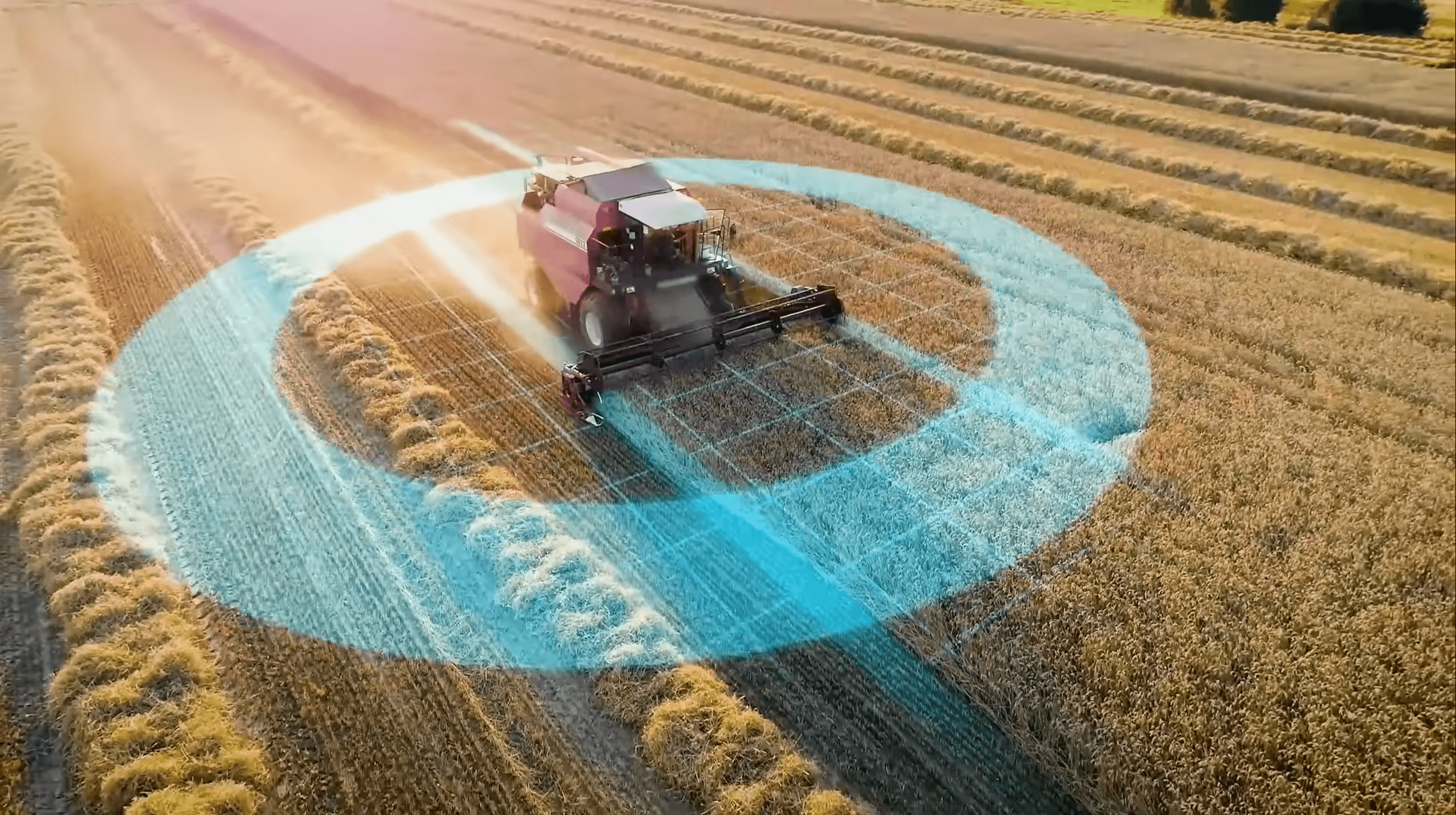
AGRICULTURAL ROBOTICS | Market Leaders, Regional Analysis & Top Countries
John Deere, DJI & 340+ companies compete for the $48–56B Western market and China’s $80–150B parallel ecosystem. Regional analysis across 5 top countries.

EKA Mobility Secures $57 Million from NIIF’s India-Japan Fund to Drive Leadership in Electric Commercial Vehicles
EKA Mobility raises $57 M from the India-Japan Fund (NIIF) to accelerate electric commercial vehicle growth and electrification leadership in key markets.


