


3D Robotics (3DR)
American enterprise drone software company serving construction, engineering, mining, and government sectors.
Contact 3D Robotics (3DR)
WEBSITE
https://www.3dr.comPHONE
+1 424 542 7002HEADQUARTERS
United States

Company Facts
Founded
2009
Primary Role
Manufacturer
Company Size
-
Primary Region
North America
Annual Sales
-
Funding Stage
-
Funding Total
-

RobotToday Weekly September 28 – October 2, 2026
AMD buys World Labs for $8.2 billion, Tesla lines up $30 billion in credit, Boston Dynamics reveals a new Atlas hand, Figure melts its F.02 fleet, and IDC counts 25,000 humanoids shipped in H1.
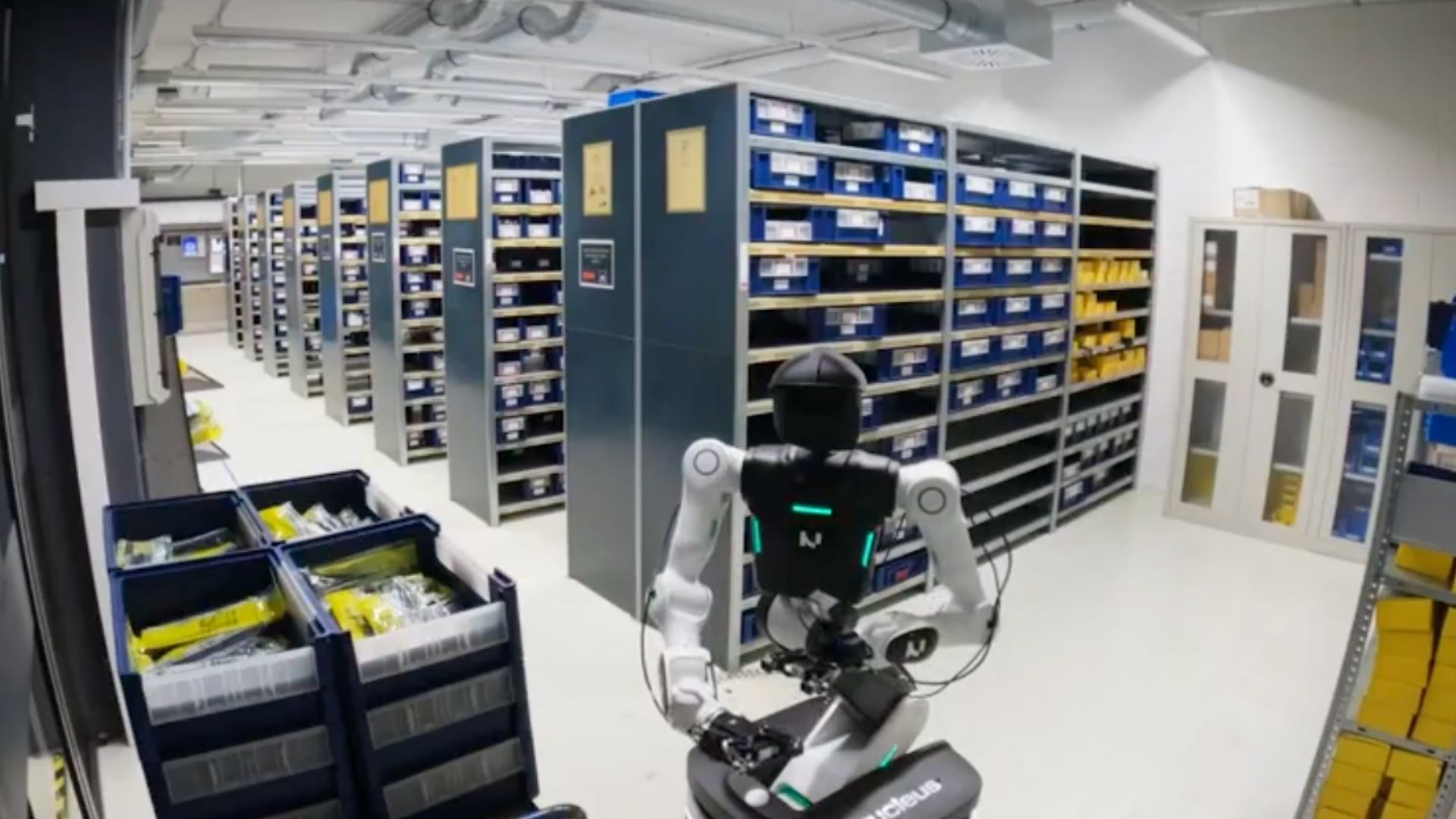
Nucleus Demonstrates Humanoid Robot Performing Factory Tasks with 60% Autonomy
Nucleus has released nearly two hours of uncut footage showcasing its humanoid robot performing factory tasks, revealing a reliance on human assistance. The demonstration, shared by CEO Melvin Schwarz on October 1, indicated that the robot operated approximately 60% autonomously and 40% through teleoperation, although the method for calculating these percentages was not disclosed. This demonstration is significant as it highlights the ongoing challenge of maintaining useful robotic work over extended periods. Nucleus aims to prove that its robots can effectively integrate into industrial workflows, running shifts of four to six hours while completing tasks from start to finish, albeit with necessary human intervention. Looking ahead, Nucleus is focused on refining its AI systems through real-world applications, capturing data from both successful operations and instances requiring human guidance. This feedback loop is essential for improving the robot's capabilities, particularly in adapting to varying factory conditions and ensuring consistent performance across different tasks.
AI and Robotics
Podcast Discusses Smarter Predictive Asset Management and Its Operational Benefits
In a recent episode of Automation World Gets Your Questions Answered, Chris McNamara interviews Steve Kaminski from Banner Engineering. Kaminski discusses how condition monitoring transforms machine data into actionable insights, enabling manufacturers to maintain efficiency and prevent failures. He emphasizes starting with critical equipment like compressors and pumps for optimal results. This conversation is significant as it underscores the importance of condition monitoring in enhancing operational efficiency. By utilizing Banner’s Snap Signal ecosystem, manufacturers can integrate various sensors into a cohesive data network, which aids in early detection of mechanical issues and optimizes maintenance schedules. This proactive approach can lead to reduced downtime and lower operational costs. Looking forward, Kaminski anticipates advancements in user-friendly systems that will facilitate both basic monitoring and automated maintenance workflows. No further timeline was disclosed at the time of publication.
Sponsored
FMC³ Robotics, Vector Informatik, and PEM Motion Form Joint Venture for Embodied AI Development
At the Humanoid Robots Summit 2026 in Stuttgart, FMC³ Robotics, Vector Informatik, and PEM Motion signed a memorandum of understanding to develop a standardized data infrastructure for industrial embodied AI. This collaboration aims to enhance the collection, processing, training, validation, deployment, and continuous improvement of AI-powered robotic systems in manufacturing environments. The partnership is significant as it combines the strengths of the three companies in production engineering, standardized industrial data technologies, and embodied AI. As robots transition from pilot projects to real production, the need for high-quality data and a robust infrastructure becomes critical for reliable performance in manufacturing settings. Looking ahead, the focus will be on creating a unified data infrastructure based on standardized protocols to support multimodal data collection and processing. No further timeline was disclosed at the time of publication.

Understanding the Concept of 'Open' in Industrial Automation
The term 'Open' has become ubiquitous in industrial automation, but its meaning is often vague. It encompasses various measures, and suppliers may be open in some aspects while closed in others. Buyers should ask specific questions to discern the true openness of a platform or system. Historically, Open Automation 1.0 focused on interoperability, allowing different systems to communicate without custom drivers. With standards like OPC UA and MQTT, this challenge has largely been addressed. Open Automation 2.0 shifts the focus to application freedom, enabling users to run third-party software on devices, which enhances flexibility and reduces costs. As suppliers navigate the balance between openness and security, buyers must recognize that openness involves trade-offs. While opening systems can increase vulnerability, established standards like ISA/IEC 62443 provide frameworks for maintaining security. Understanding these dynamics is crucial for making informed decisions in industrial automation.

Exploring the Impact of Manipulated Inputs on Robot Safety Functions
VicOne LAB R7 investigates how manipulated inputs can affect robot behavior and safety. Mobile robots, collaborative arms, and humanoids rely on accurate environmental data to function safely. When inputs are incorrect, whether due to faults or deliberate manipulation, robots may respond inappropriately, raising concerns about safety protocols. Understanding the implications of these findings is crucial for safety and security teams. Research indicates that adversarial inputs can lead to unintended robot actions, as demonstrated in various tests involving vision-language-action models and audio manipulation. These studies highlight the need for robust safety assessments that account for both accidental faults and deliberate cyber threats. Looking ahead, organizations must evaluate their safety measures to ensure they can detect manipulated inputs effectively. The potential for attackers to exploit vulnerabilities in robot systems necessitates a reevaluation of risk assessments and safety protocols. No further timeline was disclosed at the time of publication.
Sponsored Content VicOne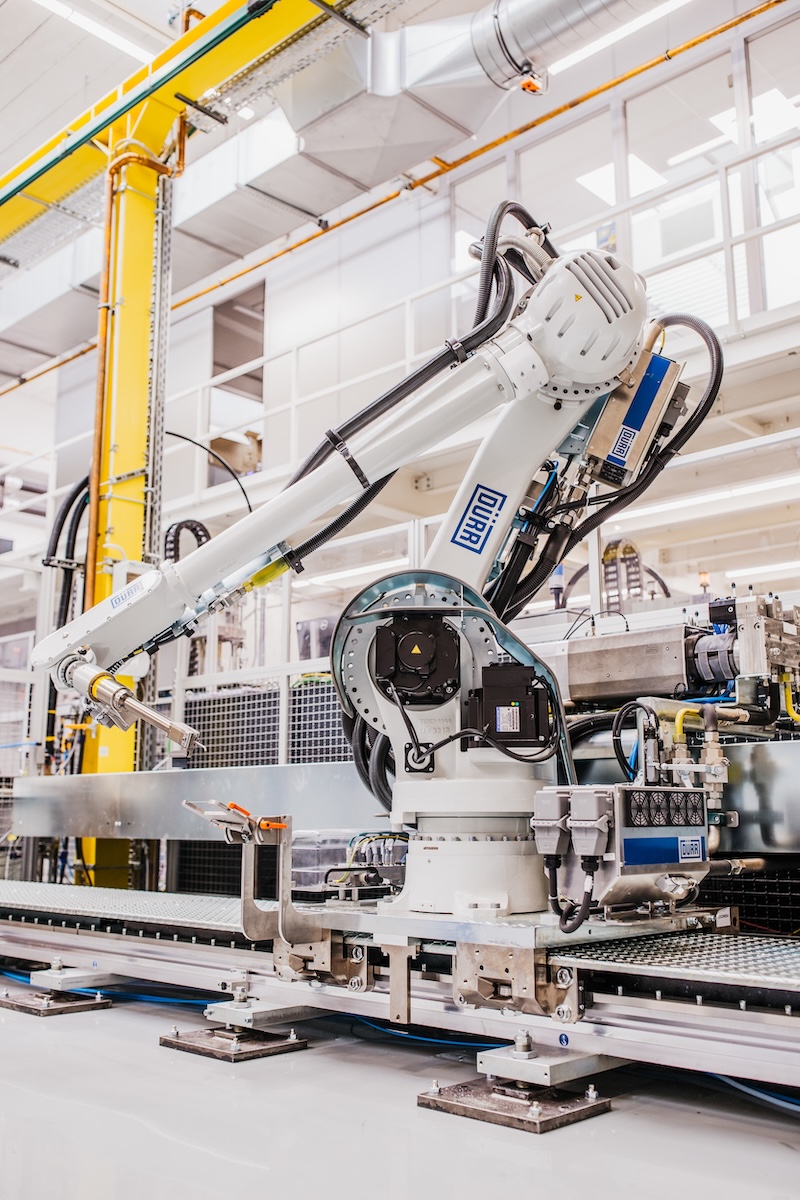
Dürr Introduces Four New EcoRS Generation 2 Robots for Automotive Paint Shops
Dürr has unveiled four new industrial robots tailored for automotive paint shops, with payload capacities ranging from 20 kg to 150 kg. The EcoRS Generation 2 series is designed for various applications, including sealing, cleaning, and material handling, and features a reach of up to 3,100 mm. This standardized platform aims to streamline paint-shop automation planning and maintenance. The introduction of the EcoRS Generation 2 robots is significant as it establishes a standardized solution for sealing applications, enhancing process quality and availability while reducing complexity throughout the equipment's lifecycle. Martin Wurst, product manager at Dürr, emphasized the benefits of this new platform for customers, particularly in achieving consistent seams across vehicle bodies. Looking ahead, Dürr's focus on integrating robot mechanics, control systems, and application technology is expected to improve path accuracy and operational flexibility. The redesigned EcoRS platform, with its internal component relocation, not only minimizes interference but also simplifies cleaning and reduces space requirements. No further timeline was disclosed at the time of publication.

Physical AI Requires a Fourth Verb: Verification for Production Accuracy
Physical AI is commonly defined as machines that perceive, reason, and act in the physical world. However, this definition lacks a crucial fourth verb: verify. In production environments, acting does not equate to producing conforming parts, as demonstrated by a humanoid robot at BMW's Spartanburg plant, which successfully placed over 90,000 components with a 99% success rate per shift. The importance of verification lies in ensuring that produced parts meet specified tolerances. While the robot's execution rate is impressive, it does not guarantee that the assemblies are within acceptable limits due to various factors such as fixture wear and thermal drift. The introduction of in-line dimensional inspection has made it feasible to measure critical characteristics and compare conformance rates against reported success rates, highlighting the need for this fourth verb in the definition of Physical AI. Going forward, the industry must focus on integrating verification into the acceptance criteria for Physical AI systems. This shift will enhance the reliability of production processes, ensuring that machines not only report their actions but also the quality of their outputs. No further timeline was disclosed at the time of publication.
Factory / Digital Transformation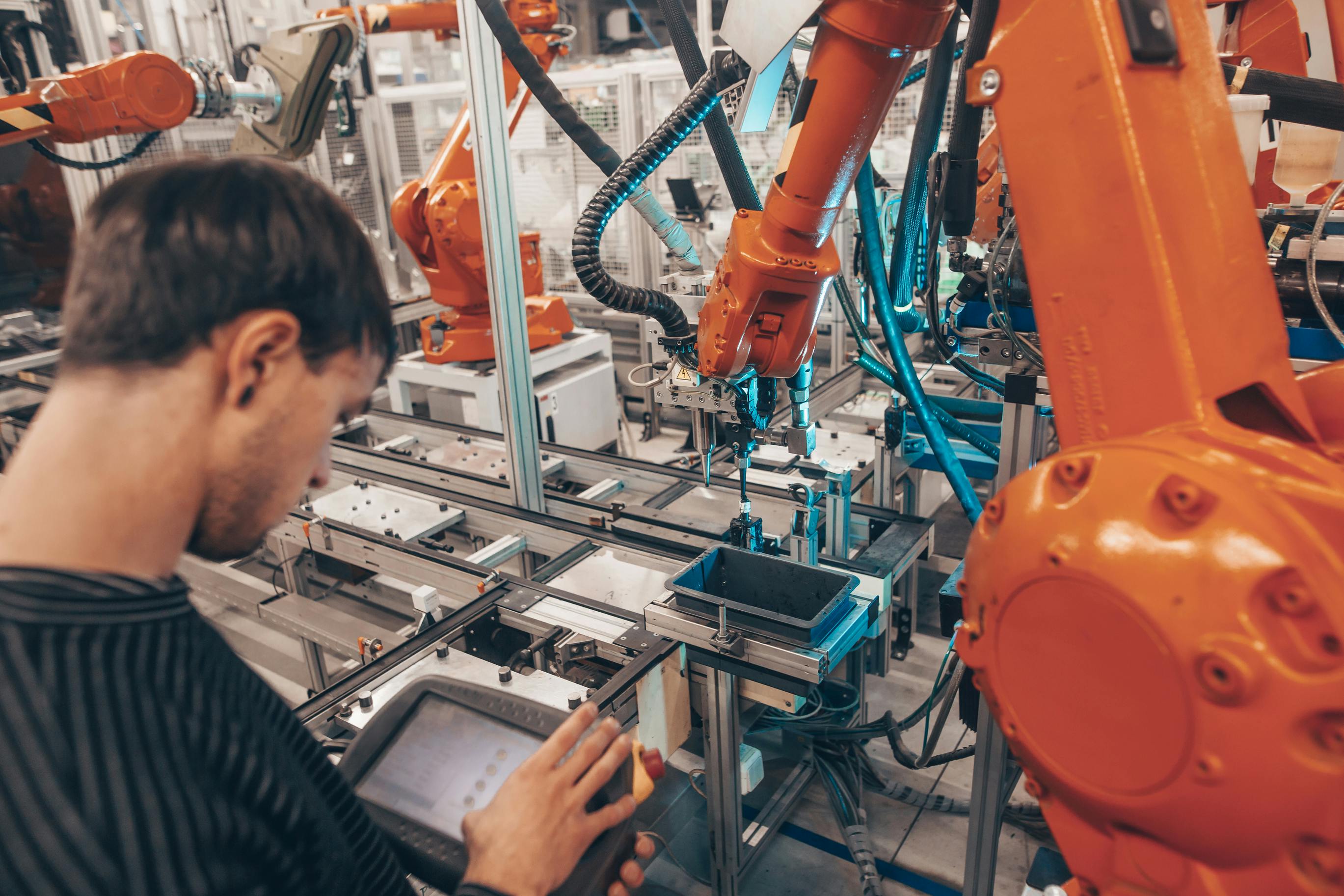
The Challenge of Implementing Spatial and Agentic AI in Smart Factories
Smart factories are equipped with advanced technologies like artificial intelligence, spatial computing, and autonomous robotics, yet many manufacturers are not fully leveraging these capabilities. A 2025 State of AI in Manufacturing Survey reveals that while over 77% of manufacturers have adopted AI, 56% are uncertain about their systems' readiness for complete integration. This indicates that the gap between technology adoption and operational value stems from implementation challenges rather than technological limitations. Spatial AI enables machines to understand and act within three-dimensional environments, while agentic AI allows systems to autonomously pursue goals across workflows. This combination could transform factory operations into dynamic, self-correcting systems. However, the effectiveness of these technologies is hindered by fragmented data ecosystems, where inconsistent and poorly contextualized data leads to misleading AI outputs. The need for a unified data layer is critical for effective smart factory operations. Looking ahead, manufacturers must prioritize the integration of legacy systems and establish shared data standards to fully realize the potential of smart factories. A Deloitte survey indicates that 41% of manufacturing executives plan to invest in automation hardware in the next two years, but these investments will only yield benefits if the underlying data infrastructure is robust enough to support them. No further timeline was disclosed at the time of publication.
Factory / Analytics
U.S. Army Trials Military Humanoids Amid Diverse Development Stages and Ambitions
The U.S. Army has concluded a competition showcasing military humanoid robotics, with various developers from the U.S. and Poland presenting their innovations. IHMC's Alex emerged as a winner, demonstrating advanced capabilities in resilience and autonomy. However, the competition revealed a wide gap in development stages among entrants, highlighting the challenges in transitioning from ambitious concepts to practical deployment. This competition, known as xTechHumanoid, received 103 submissions, with ten finalists demonstrating their technologies at Marine Corps Base Quantico. While IHMC's Alex was recognized for its hybrid autonomy and robust design, other entrants like Vision One and Si Robotics are still refining their products. The varying stages of development underscore the complexities of integrating humanoid robots into military operations, where energy, sensing, and control technologies are crucial. Looking ahead, the focus will be on how these technologies evolve and whether they can meet military needs effectively. IHMC's ongoing development contract with the Office of Naval Research and the ambitions of other companies like Vision One and Si Robotics will be critical in shaping the future of military humanoids. No further timeline was disclosed at the time of publication.
Skylark Labs Foundation IHMC
Igus Introduces New DeviceNet Cable for Dynamic Robotics with Enhanced Durability
Igus has launched a new DeviceNet cable as part of its CFROBOT8.PLUS robot cable family, designed to endure up to ±360°/m of torsion and 10 million torsional cycles. This innovation is particularly beneficial for dynamic robotic applications where space is limited, thanks to its reduced diameter. The introduction of this DeviceNet cable is significant as it addresses the growing demand for robust and flexible solutions in robotics. With the ability to withstand extensive torsion, it enhances the reliability and performance of robotic systems, making it a vital component for engineers and manufacturers in the field. Looking ahead, the focus will be on how this new cable performs in real-world applications and its adoption across various industries. No further timeline was disclosed at the time of publication.

Innovation Works Venture Expo 2026: 58 Pittsburgh Startups Pitch to Investors
58 health, deep tech and robotics startups pitched at Innovation Works Venture Expo 2026 in Pittsburgh. Full company list, program and 2025 funding data.

Stratasys at IMTS 2026: GM Scales Additive to 20+ Plants
Stratasys is rolling additive out across 20+ GM plants while Toyota prints robot grippers. Booth build data, the F870, and where the cost case breaks.

IMTS 2026 Preview: Record Orders and the Automation Story
IMTS 2026 opens in Chicago with 1,788 exhibitors and record H1 machine tool orders. What the USMTO data says about automation, and the booths to see.

China’s Dexterous Hand Industry, 2026 Part 3 — The Players
Five vendor archetypes, MIR’s composite top ten, eight company profiles and six field deployments — every firm linked to the RobotToday supplier directory.

China’s Dexterous Hand Industry, 2026 Part 2 — The Technology
Linkage, tendon, direct drive or hybrid — and why hardware is converging while the DL1–DL5 manipulation scale decides who wins. Part 2 of 3.

China’s Dexterous Hand Industry, 2026 Part 1 — The Demand Picture
MIR Databank puts China dexterous hand shipments above 30,000 units in 2026, yet only 3.5% of 2025 demand came from factory production. Part 1 of 3.
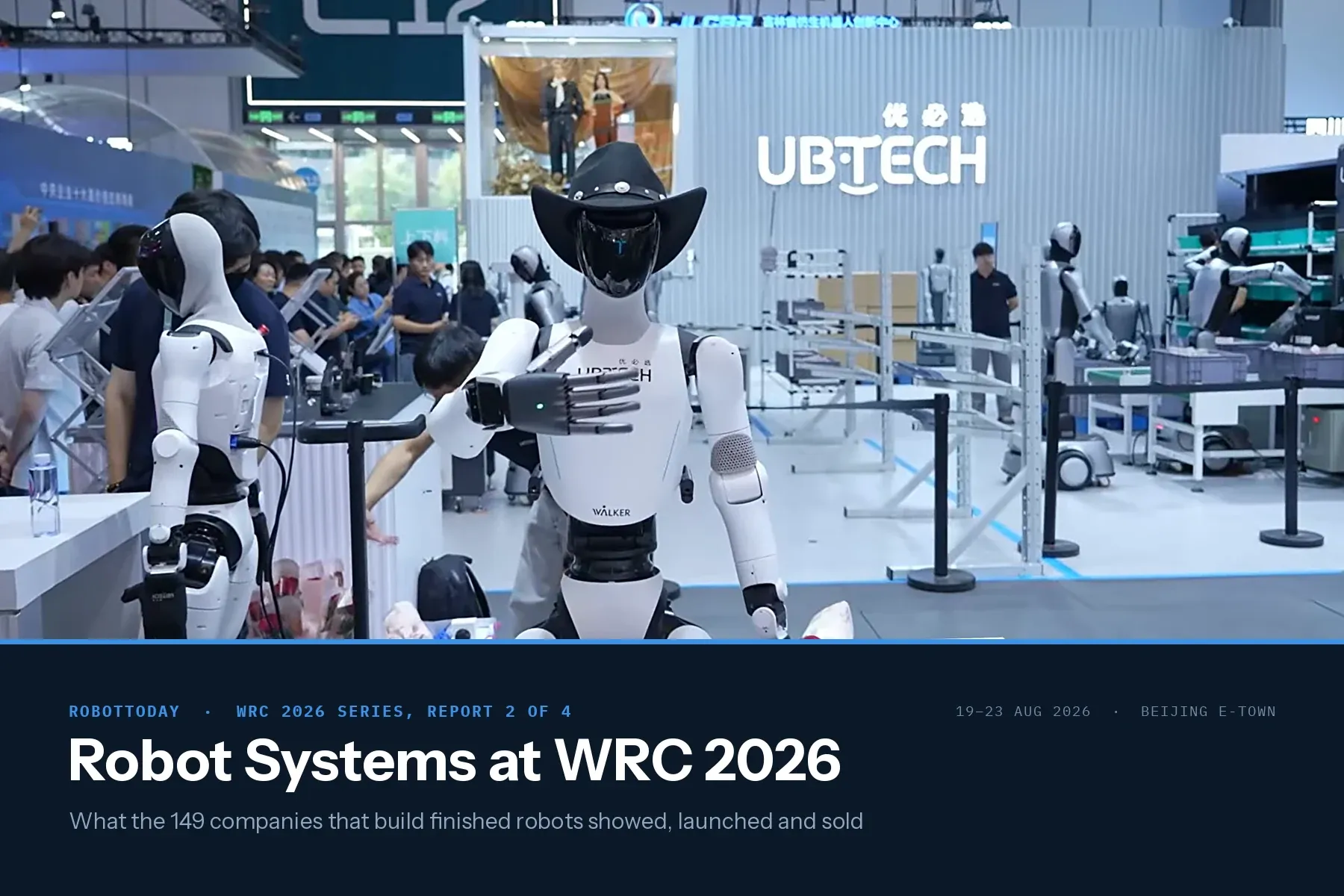
WRC 2026 Robot Systems: 149 Companies That Build Robots
149 of the 248 classified WRC 2026 exhibitors build finished robots. 93 build humanoid or legged machines. The audited humanoid sales number is one unit.

WRC 2026 Exhibitor Map: 248 Robotics Companies Mapped
We classified 248 WRC 2026 exhibitors with the RobotToday taxonomy. Motion & Actuation leads at 75 companies, Humanoid at 72, and compute stays thin at 12. (Modified 2026-08-27)

WAIC 2026: Embodied Intelligence Enters Industrial Deployment Era
WAIC 2026 in Shanghai (July 17–20) saw 200+ embodied intelligence companies, 300+ live robots, and first confirmed humanoid deployments in logistics and pharmacy. RobotToday engineering analysis.


