Industry Briefing
A single destination for timely, editor-curated robotics news from around the world.
Global Nanorobotics Market Expected to Reach $31.44 Billion by 2034
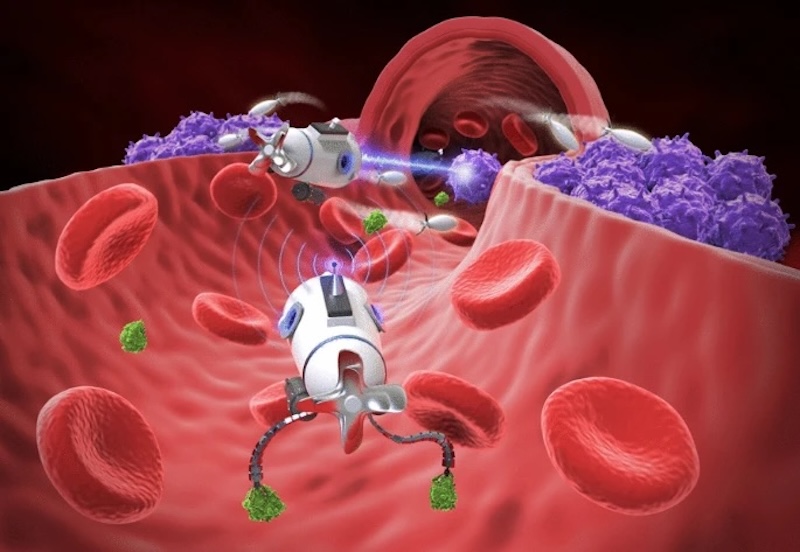
The global nanorobotics market is projected to grow to $31.44 billion by 2034, driven by advancements in targeted drug delivery and regenerative medicine, as reported by Polaris Market Research. The market is estimated at around $9 billion in 2025, with a compound annual growth rate of 14.9 percent anticipated through 2034. Drug delivery remains the largest application, with significant research focused on nanoscale systems that target specific cells while minimizing effects on healthy tissue. Recent research highlights the potential of nanorobotics, including a DNA-based nanorobot from Sweden’s Karolinska Institute that reduced tumor growth by 70 percent in preclinical models. Additionally, autonomous therapeutic nanorobots from the Institute for Bioengineering of Catalonia demonstrated up to 90 percent reduction in bladder tumors, while a modular nanorobot from the University of Basel decreased cancer cell viability to 16 percent. The fastest-growing category is cell-repair nanorobots, with regenerative medicine applications expected to drive demand further. North America currently holds about 41 percent of the market, bolstered by research funding and healthcare infrastructure, while Asia Pacific is set for the fastest growth at nearly 19 percent annually. This growth is attributed to increased investments in biotechnology and precision medicine across China, Japan, South Korea, and India. Collaborative research initiatives in Europe, like the EU-backed i-NANOSWARMS project, are also contributing to the sector's expansion.
News Research biotechnology cancer treatment cell repair drug deliveryRobotics needs a service framework.
RSF defines a common language for robot service capability, lifecycle operations, certification pathways, and service-provider networks.
Join the RobotToday community on LinkedIn
Daily robotics news, in-depth analysis, conference highlights, and discussions with professionals worldwide.