Industry Briefing
A single destination for timely, editor-curated robotics news from around the world.
Logic Robotics Introduces Intelligent Transloading Solution for Rail-to-Road Logistics
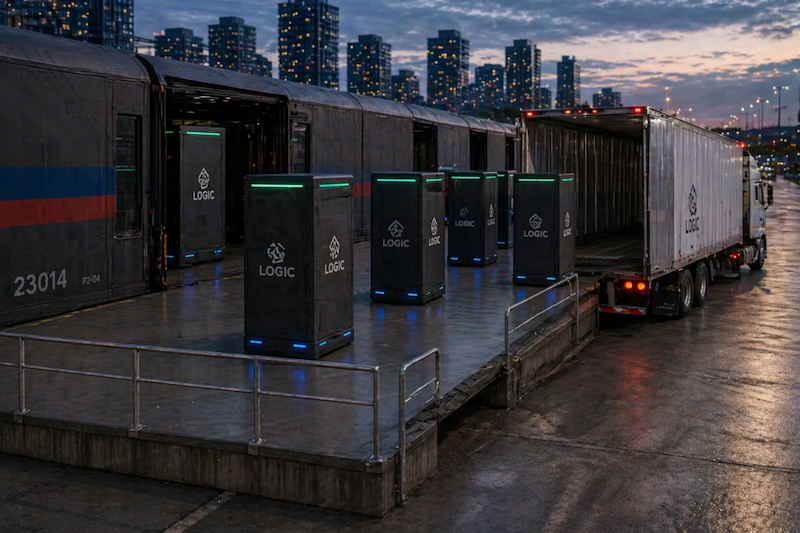
Logic Robotics has launched an innovative autonomous transloading solution designed for rail-to-road operations. This system integrates the Logic Pallet's autonomous mobility with real-time digital twin visualization, significantly reducing inefficiencies associated with manual handling and forklift processes. The introduction of this technology is crucial as it redefines transloading by autonomously transferring goods between railcars and trucks. This advancement leads to faster throughput, enhanced safety, and minimized operational downtime at intermodal terminals, marking a significant step in logistics automation. Looking ahead, the intelligent transloading solution positions Logic Robotics at the forefront of creating a fully autonomous logistics network. No further timeline was disclosed at the time of publication.
Logistics News Transportation 3pl autonomous logistics autonomous pallet
Muka Robotics' LJM Model Secures Global Second Place at WorldArena Using 32 GPUs
Muka Robotics has achieved a remarkable feat with its LJM Latent Joint-conditional Model, securing the second position globally at WorldArena with a motion quality score of 89.17 using only 32 Zhenwu 810E GPUs. This accomplishment highlights the model's innovative dual-expert architecture, which emphasizes physical understanding rather than solely focusing on video generation quality. This achievement is significant as it showcases Muka Robotics' commitment to advancing the field of robotics by prioritizing physical logic in its models. The successful integration of a limited number of GPUs to achieve high motion quality demonstrates the potential for efficiency in computational resources while maintaining performance standards in robotics applications. Looking ahead, it will be important to monitor how Muka Robotics continues to develop its technologies and whether this dual-expert architecture will influence future models in the industry. No further timeline was disclosed at the time of publication.
Technology
Multimodal Robotics Inspired by Biological Systems Explored in Science Robotics
The latest issue of Science Robotics, Volume 11, Issue 116, published in July 2026, delves into the advancements in bioinspired multimodal robotics. This research highlights how biological systems can inform the design and functionality of robotic systems, leading to more versatile and adaptive technologies. The significance of this research lies in its potential to enhance robotic capabilities by mimicking the diverse modalities found in nature. By studying biological organisms, engineers can develop robots that are not only more efficient but also capable of performing complex tasks across various environments, which is crucial for applications in fields such as search and rescue, agriculture, and environmental monitoring. Looking ahead, the ongoing exploration of bioinspired designs in robotics will likely lead to innovative solutions that address current limitations in robotic performance. No further timeline was disclosed at the time of publication.
Review
Logic Robotics Unveils Logic Pallet: A Breakthrough in Autonomous Mobile Logistics
Logic Robotics has introduced the Logic Pallet, the first mobile robot designed for multifacility logistics automation. This innovative solution aims to enhance the efficiency of logistics and material handling across various industries. The Logic Pallet is engineered to automate the movement of goods both between and within facilities, providing a comprehensive end-to-end automation solution. This advancement supports a fully autonomous, data-driven, and sustainable global supply chain, marking a significant step forward in logistics technology. As the logistics industry continues to evolve, the introduction of the Logic Pallet sets a new standard for automation. Stakeholders should monitor its deployment and impact on supply chain efficiency, as well as its potential to reshape logistics operations in the future. No further timeline was disclosed at the time of publication.

Maven Robotics Secures $100 Million in Series A Funding to Innovate Industrial Automation
Maven Robotics has officially launched with $100 million in Series A funding, taking a unique technological approach by utilizing a wheeled chassis combined with dual arms to tackle monotonous palletizing tasks in warehouse logistics. CEO Hamza Derbas stated that bipedal robots are 'meaningless' in industrial scenarios due to their complexity, unreliability, and added costs. The company's wheeled robots can achieve a speed of 10 miles per hour and lift loads of up to 30 kilograms, maintaining a 99% operational rate for 16 hours a day in customer warehouses. This design prioritizes stability, efficiency, and maintainability over biomimetic forms, aligning with the core demands of industrial environments. Maven's understanding of 'task closure' positions it not merely as a robot supplier but as a provider of end-to-end automation solutions. Looking ahead, Maven aims to accumulate over 100,000 hours of autonomous operation data by the end of the year, with a goal of surpassing 1 million hours by 2027. This pragmatic approach underscores the belief that the evolution of industrial intelligence relies on consistent performance in real production lines rather than the allure of impressive demonstration videos.
Warehouse Automation Robotics Industrial Automation Logistics Technology
Robotics Must Address Major Ecological and Societal Challenges, Says Catherine Simon
Catherine Simon, an Industrial Digital Advisor at the General Secretariat for Investment, discusses the significant transformations in the robotics industry, from the era of Innorobo to the rise of Physical AI. She emphasizes the potential of service robotics across various sectors, including healthcare, logistics, and agriculture, highlighting its evolution from specialized industrial tools to a General Purpose Technology. The rapid advancement of generative AI and Physical AI is fundamentally changing robotics, moving it beyond niche applications and technological demonstrations. Simon argues that France and Europe have the potential to become global leaders in robotics by adopting a demand-driven strategy that focuses on addressing urgent economic and environmental needs, rather than merely pushing technological advancements. Looking ahead, Simon suggests that identifying promising markets where the demand for robotics is both urgent and substantial will be crucial. France and Europe can leverage a robust industrial ecosystem that includes international corporations, innovative SMEs, and top-tier research laboratories to ensure a seamless transition from innovation to practical applications in the robotics sector.
À la une Humanoide IA Interview Robotique Santé
AgiBot Transforms from Robotics to AI Company, Redefining Competition Landscape by 2026
AgiBot is evolving from a traditional robotics company into an AI-focused entity, redefining competition in the industry by 2026. The company has advanced its products, including the Expedition A3 and the newly released GO-2 embodied foundation model, which enhances robots' task execution capabilities. Additionally, AgiBot's Genie Sim 3.0 generates extensive training data through simulation, further integrating data, models, and hardware. This shift in focus from hardware to intelligent systems highlights the growing importance of data in robotics. As companies like AgiBot accumulate vast amounts of real-world and simulated data, the competition is increasingly centered on learning capabilities rather than manufacturing prowess. AgiBot's Hive Data Co-Creation Initiative aims to scale data production to tens of millions of hours, establishing a complete data loop that enhances model iteration and robot performance. Looking ahead, the competition among robotics companies will pivot from hardware specifications to the quality and volume of data, the robustness of AI models, and the speed of innovation. AgiBot's developments signal a significant transformation in the robotics landscape, emphasizing the need for companies to adapt to these emerging challenges and opportunities. No further timeline was disclosed at the time of publication.
On the Cusp AI Highlight News Robotics
Xianglu Robotics and Haier Collaborate to Launch CR3, a Fully Automated Home AI Cooking Robot
On July 29, 2026, Xianglu Robotics and Haier Robotics signed a strategic cooperation agreement to jointly launch the CR3, the world's first fully automated home AI cooking robot. This collaboration marks a significant step into the consumer market for AI cooking robots, transitioning from commercial kitchens to home kitchens. The introduction of the CR3 is crucial as it addresses the long-standing barriers that have kept AI cooking robots confined to commercial settings. These barriers include technological advancements, user perception, and cost control. With rapid breakthroughs in AI technology and the robotics industry, Xianglu Robotics aims to evolve the role of cooking robots from assistants to replacements in home kitchens. Looking ahead, the partnership between Xianglu and Haier will focus on enhancing the cooking robot ecosystem, leveraging their respective strengths in technology and market reach. As consumer awareness grows and production costs decrease, the CR3 could become a leading product in the home appliance market, potentially transforming how cooking is approached in households across China.
AI Cooking Robots Home Appliances Robotics Automation Technology
Japanese Engineers Analyze China's YuShu G1 Humanoid Robot, Acknowledge Technological Advancements
On July 23, Japanese media Nikkei xTECH released a video documenting engineers disassembling China's YuShu G1 humanoid robot. The team examined various components, including the joint modules and battery system, revealing insights into China's rapid advancements in robotics. Japanese engineers noted the smoothness of the screws, highlighting the precision in manufacturing that is often overlooked. The G1 features a 9000mAh quick-release smart battery, providing high output power in a compact size, which impressed the engineers. They also analyzed the ankle joint structure, noting its ability to mimic human movement and adapt to different terrains, showcasing a high level of engineering excellence. The disassembly led to a significant conclusion: Japan's robotics industry faces challenges in closing the gap with China's advancements in humanoid robotics. Data from the International Federation of Robotics indicates that in 2024, China will account for 54% of new industrial robot installations globally. This stark contrast in manufacturing efficiency and technological capability raises questions about Japan's ability to compete in the humanoid robotics sector in the near future. No further timeline was disclosed at the time of publication.
Humanoid Robots Robotics Technology Industrial Automation Battery Systems
Understanding Technological Singularity and Its Impact on Robotics and AI
For decades, technological singularity was more a concept of science fiction than engineering reality. Today, it is a topic of discussion among AI laboratories, industrial giants, investment funds, and robotics companies worldwide. The rapid advancement of generative AI, autonomous robots, foundation models, and AI agents raises a fundamental question: what will happen when machines can enhance their own intelligence faster than humans? The origins of the technological singularity date back to 1965 when British mathematician I.J. Good proposed that an 'ultra-intelligent machine' could trigger an intelligence explosion. In the 1990s, mathematician Vernor Vinge expanded on this idea, suggesting that once a certain level of AI is reached, technological evolution would become unpredictable for humans. Ray Kurzweil later popularized the concept, predicting that artificial general intelligence (AGI) could emerge in the coming decades, leading to continuous self-improvement of systems. Currently, the landscape is shifting rapidly, with large language models, vision-language-action models, and autonomous agents enabling robots to understand natural language instructions, interpret their environment, and learn new tasks without specific programming. Companies like NVIDIA, Google DeepMind, and Tesla are investing billions in developing this new generation of intelligent robots.
À la une IA Industrie Robotique agents autonomes agents IA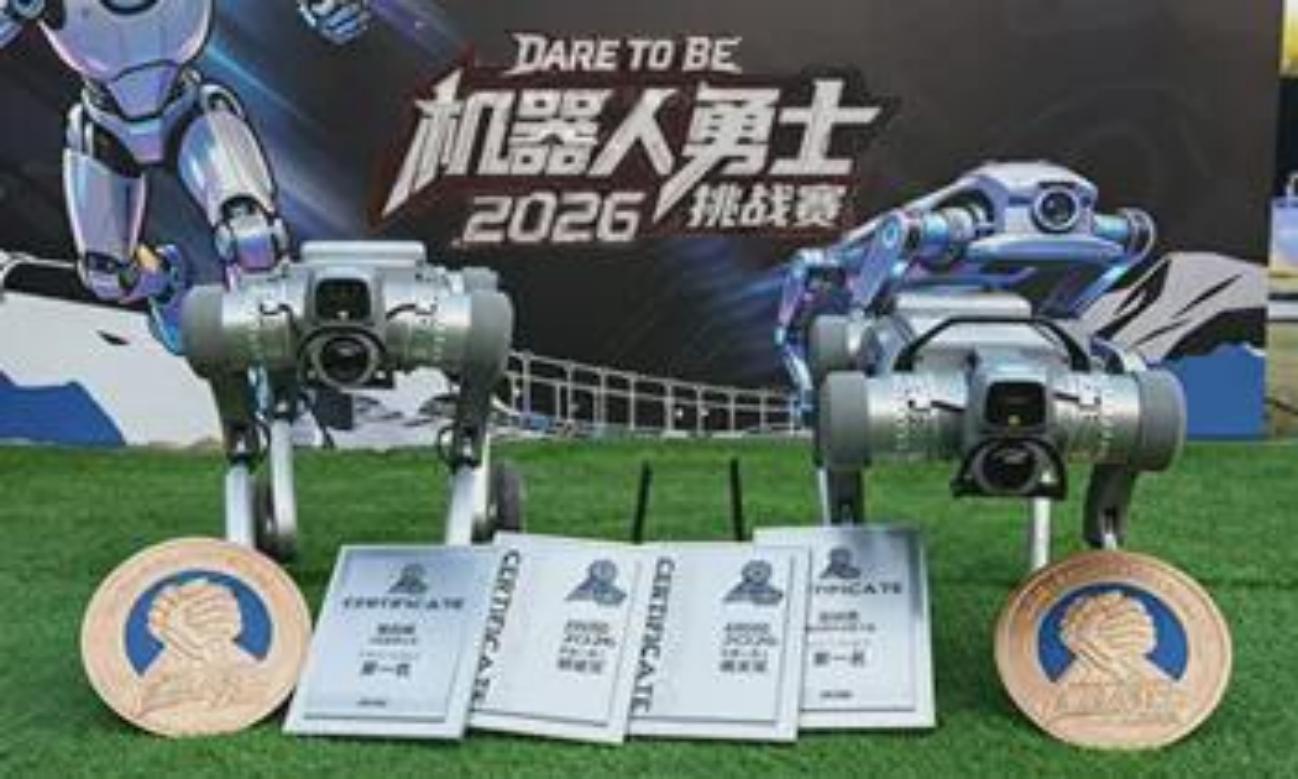
Technological Domination! Galileo Robotics Wins Double Championship and Four Awards at the 2026 Robot Challenge
Galileo Robotics, a company based in Tianjin, celebrated a significant achievement at the 2026 Robot Warrior Challenge by securing victories in both the quadruped and wheeled robot categories. The event, which focused on testing robotic capabilities in simulated disaster rescue scenarios, took place recently and drew attention to the advancements in robotic technology. In addition to their category wins, Galileo Robotics also earned the Speed Award and the Zero Error Award, underscoring the precision and efficiency of their designs. This success not only highlights the company's innovative approach but also demonstrates their readiness to meet industry demands in emergency response situations.
Robotics Disaster Response AI Technology Industrial AutomationRobotics needs a service framework.
RSF defines a common language for robot service capability, lifecycle operations, certification pathways, and service-provider networks.
Join the RobotToday community on LinkedIn
Daily robotics news, in-depth analysis, conference highlights, and discussions with professionals worldwide.