Industry Briefing
A single destination for timely, editor-curated robotics news from around the world.

Quick Take: Why Mobility Use Cases (AMRs, AGVs, etc.) Deliver Faster Payback than Stationary Applications
Private networks are increasingly being recognized for their potential in various sectors, with mobility emerging as a key entry point. This focus on mobility is seen as a strategic move, offering quick returns on investment for businesses looking to enhance their operational efficiency. As companies explore the benefits of private networks, the ability to leverage mobility solutions is becoming a critical factor in their decision-making processes. This trend highlights the growing importance of tailored network solutions in meeting the specific needs of organizations across different industries.
Factory / Mobility
NVIDIA and LG Group Build an AI Factory to Advance Physical AI, Mobility and AI Infrastructure
NVIDIA and LG Group have announced plans to establish an AI factory aimed at enhancing LG's upcoming AI-driven initiatives, which include advancements in robotics, autonomous driving, data center technologies, and GPU cloud services. This collaboration is set to significantly accelerate the development of these technologies, positioning LG Group at the forefront of the AI industry. The factory's establishment reflects both companies' commitment to innovation and their strategic focus on harnessing artificial intelligence to drive future business growth. The partnership is expected to leverage NVIDIA's expertise in AI and GPU technology, facilitating the creation of cutting-edge solutions that will benefit various sectors.
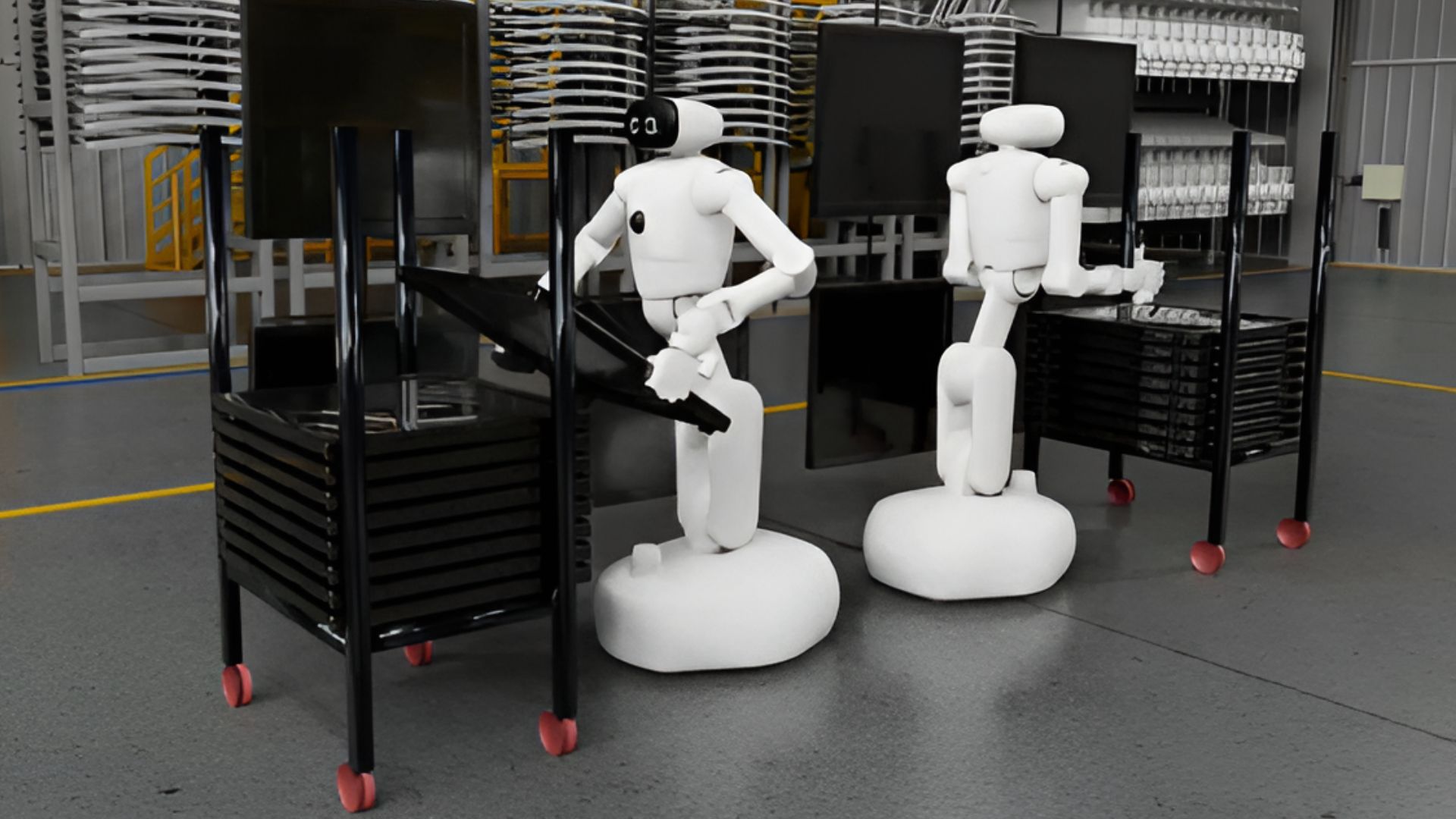
NVIDIA and LG Group build AI factory to train robots and power future mobility
Researchers and engineers are advancing the next frontier of artificial intelligence, focusing on the development of machines capable of movement, visual perception, and autonomous decision-making. This initiative, which has gained momentum in recent months, aims to enhance the functionality and adaptability of AI systems across various sectors, including healthcare, transportation, and robotics. The push for these advancements is driven by the increasing demand for intelligent systems that can operate in dynamic environments and perform complex tasks without human intervention. By integrating advanced sensors and machine learning algorithms, developers are working to create AI that not only processes information but also interacts with the physical world in real-time. This evolution in AI technology is taking place in research laboratories and tech hubs around the globe, with significant contributions from universities, private companies, and government agencies. As these entities collaborate, they are exploring innovative applications that could revolutionize industries and improve everyday life. The ongoing research is expected to culminate in prototypes and pilot programs by early 2024, showcasing the potential of these intelligent machines. As the field progresses, ethical considerations and safety measures are also being prioritized to ensure responsible deployment and integration into society. The ultimate goal is to create AI systems that enhance human capabilities and contribute positively to various aspects of life.
'Dark factory' pioneer Xiangrui Zeng to speak at FAMS 2026
Xiangrui Zeng, a prominent Chinese authority in AI-driven autonomous manufacturing and robotics, is set to deliver a keynote address at the Future AI Mobility Summit 2026, scheduled for later this month in Seoul. The organizing committee announced his participation on Monday. As a professor at the School of Mechanical Science and Engineering at Huazhong University of Science and Technology, Zeng has earned recognition for his pioneering contributions to smart manufacturing and autonomous systems. During the summit, he will present his insights on the future of embodied AI and the development of fully autonomous factories, highlighting the potential advancements in the industry.
All News
YPF Sociedad Anónima (YPF) to Collaborate With Tesla on Energy Storage Infrastructure and Fast-Charging Networks
YPF Sociedad Anónima, the Argentine national energy provider, has entered into a letter of intent with Tesla Inc. to collaborate on developing energy storage infrastructure and fast-charging networks. This partnership was announced on June 16, 2026, following a visit by YPF CEO Horacio Marin to Tesla's Gigafactory in Texas, where discussions focused on technological advancements and electric mobility. The collaboration aims to enhance YPF's capabilities in energy infrastructure development, aligning with the growing demand for electric vehicle support. In related news, YPF's stock has garnered positive attention from analysts, with UBS analyst Tasso Vasconcellos recently raising the target price from $45 to $48, while maintaining a Neutral rating. The overall market sentiment remains bullish, with three out of four analysts recommending a Buy, contributing to a median one-year target price of $57.38, indicating a potential upside of nearly 27%. YPF is recognized for its extensive operations in oil and gas, including exploration, production, and power generation, positioning itself as a significant player in the evolving energy landscape.

Tesla Optimus Gen 2 vs Gen 1: Full Specs & Comparison (2026)
A comprehensive comparison of specifications between the first and second generation of a robotic model has been released, highlighting key differences in performance and capabilities. The robot, weighing 57 kg, operates at a speed of 8 km/h and features 28 degrees of freedom, showcasing its advanced mobility. It is powered by a 2.3 kWh battery, which enhances its operational efficiency. Additionally, the report includes insights into the upcoming third generation, which is set to receive significant upgrades, further improving its functionality. The deployment of the new factory, scheduled for 2026, marks a pivotal step in the production and advancement of these robotic technologies. This analysis, based on data available until October 2023, aims to inform stakeholders about the evolution of robotic capabilities and the strategic plans for future developments in the industry.
Video Friday: Bipedal Robot Stops Itself From Falling
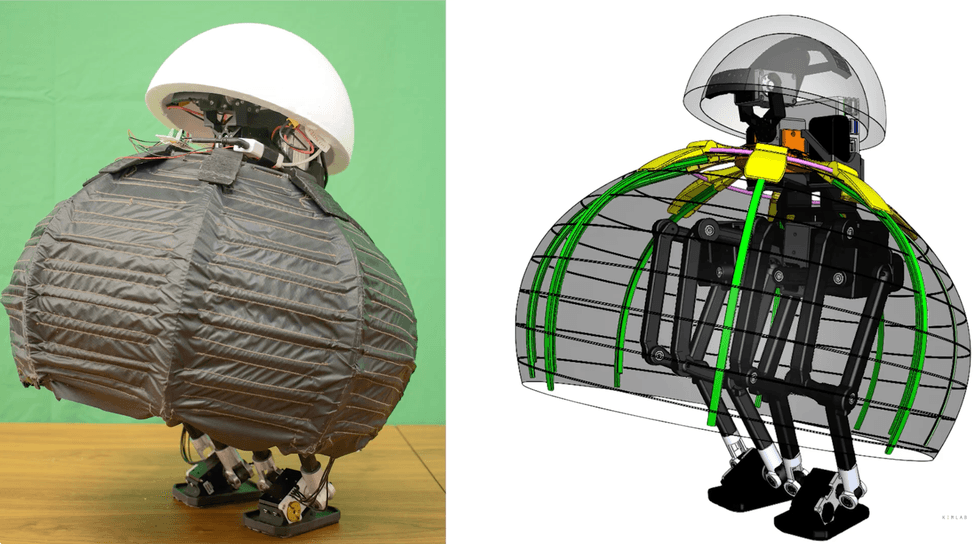
IEEE Spectrum robotics has released its latest edition of Video Friday, showcasing a variety of innovative robotics videos and announcing upcoming events in the field. Among the highlights is the Robotic Autonomy in Complex Environments with Resiliency (RACER) program, which is nearing completion after extensive collaboration with the U.S. Army and Marine Corps. This program is expected to leave a lasting impact on military operations and stimulate private-sector investment in autonomous technologies. Notable advancements include the introduction of COSA, a cognitive operating system that enhances humanoid robots' capabilities for high-level cognition and motion control. Meanwhile, the 1X World Model has made significant strides in robot learning, allowing its NEO model to perform tasks autonomously based on voice or text prompts, even for unfamiliar objects. In assistive technology, the GuideData Dataset has been launched to improve interactions between guide dog trainers and visually impaired individuals, aiming to enhance mobility and safety. Additionally, Fourier's Care-Bot prototype is gaining attention for its interactive features at CES 2026. In environmental monitoring, ETH Zurich has developed an autonomous quadruped robot for volcanic gas measurements, successfully tested on Mount Etna. Humanoid robots have also made progress in industrial logistics, completing proof-of-concept testing at Siemens's factory in Erlangen. Columbia Engineers have created a robot capable of learning facial lip motions for speech and singing through observational learning, marking a significant milestone in robotics. Lastly, DEEP Robotics showcased its quadruped robots' capabilities in complex firefighting scenarios, while Synapticon introduced its POSITRON platform to enhance safety in humanoid robots for real-world applications.
Robotics Video-friday Bipedal-robots Humanoid-robots Quadruped-robots Industrial-robots
Alibaba’s Amap and XPeng team up to build world’s largest Robotaxi aggregation platform
Alibaba’s mapping and mobility unit, Amap, has announced a groundbreaking partnership with Chinese electric vehicle manufacturer XPeng to integrate XPeng’s Level 4 Robotaxi fleet into Amap’s platform. This collaboration, which represents the first instance of a mobility platform merging with factory-built Robotaxis, highlights Amap’s commitment to leveraging its advanced “spatial intelligence” AI framework to enhance real-world applications. The initiative aims to revolutionize urban transportation by providing a seamless and efficient mobility solution.
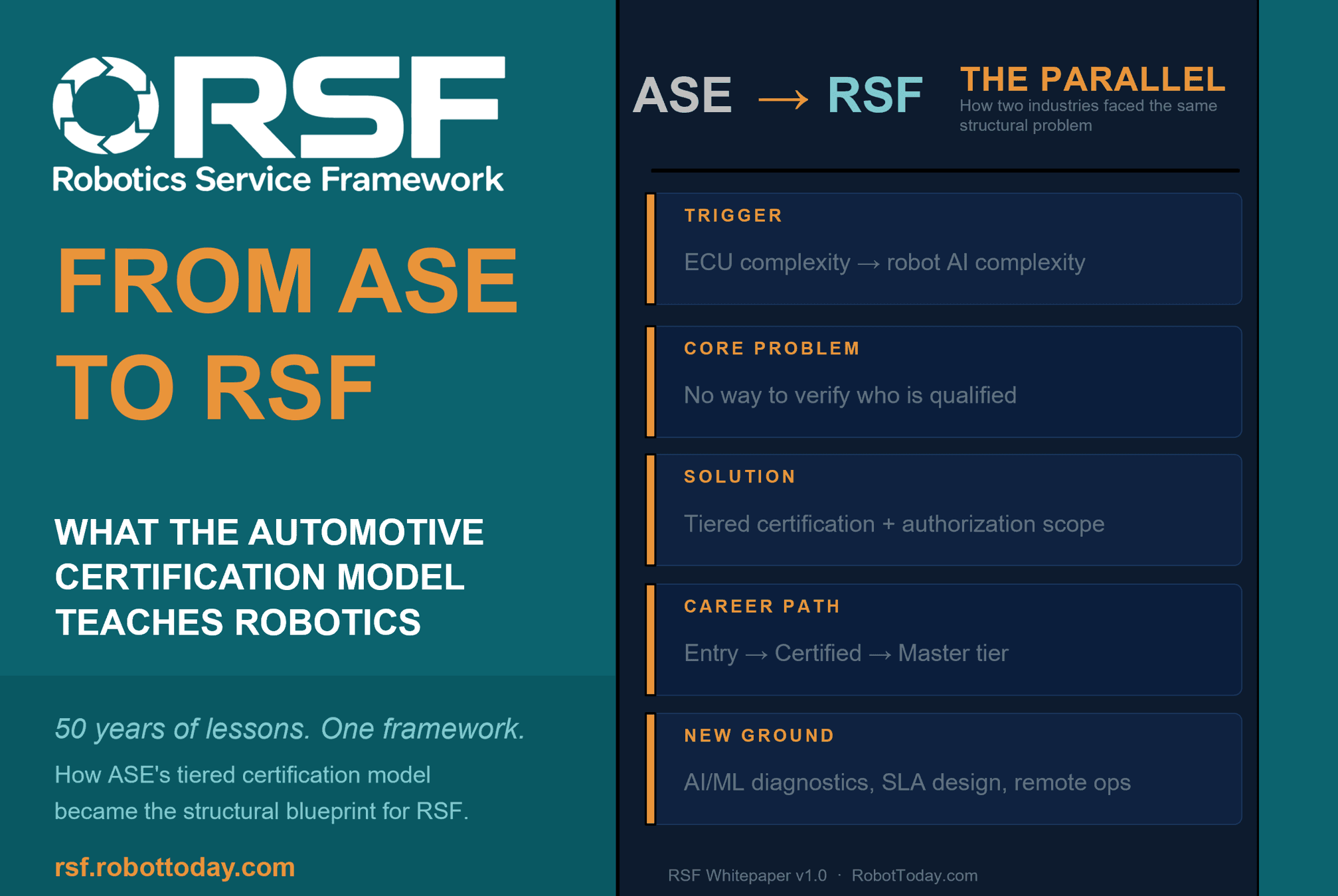
News FeedRobotics needs a service framework.
RSF defines a common language for robot service capability, lifecycle operations, certification pathways, and service-provider networks.