

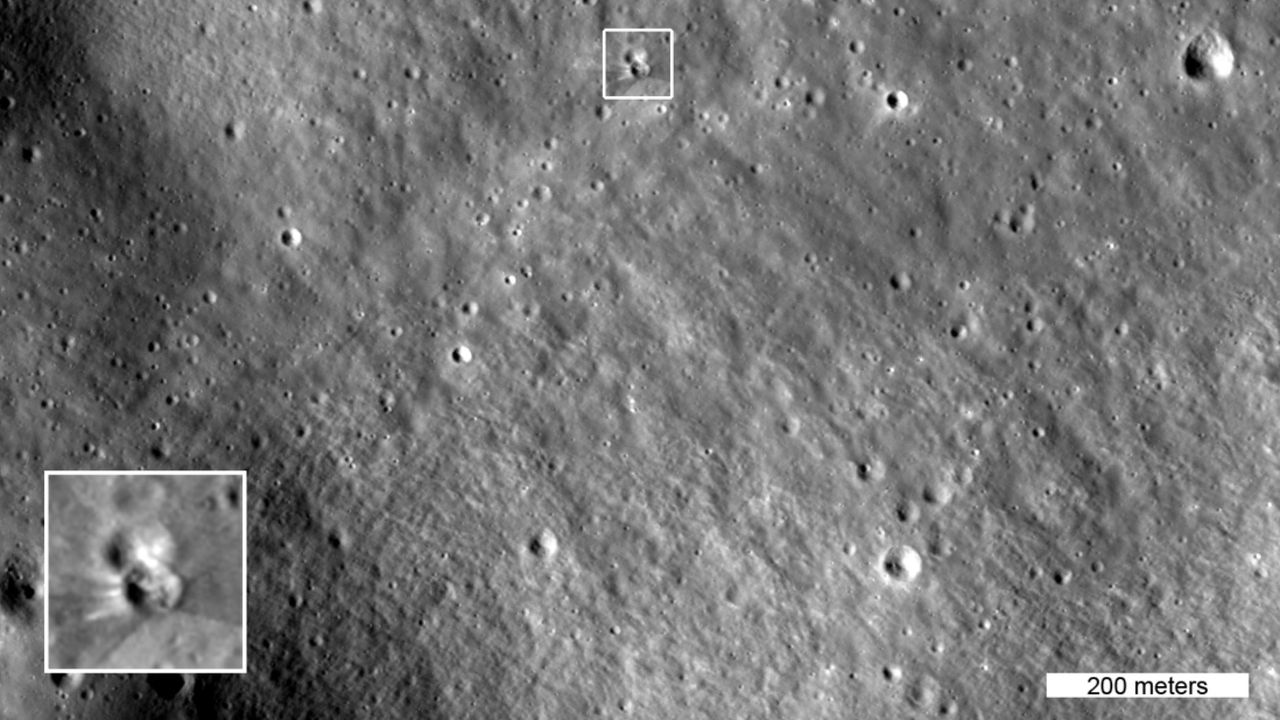
NASA's Lunar Reconnaissance Orbiter (LRO) has successfully imaged the impact site of the Falcon 9 upper stage that collided with the moon on August 5. The spacecraft captured detailed photos of the newly formed crater near Einstein Crater, measuring approximately 60 feet wide and less than 10 feet deep, shortly after the incident.
This event is significant as it highlights the ongoing interactions between space debris and celestial bodies, as well as the capabilities of lunar observation technology. The LRO's high-resolution camera system, LROC, provided various angles of the impact site, revealing distinct ejecta patterns and surface alterations caused by the collision.
Looking ahead, researchers will continue to analyze the crater and its features, with insights potentially informing future lunar missions. The LRO's imaging efforts were complemented by data from the Korea Pathfinder Lunar Orbiter, which previously identified the impact site, showcasing international collaboration in lunar exploration. No further timeline was disclosed at the time of publication.
Editor's Note
The collision of the Falcon 9 upper stage with the moon underscores the growing concern over space debris and its potential impact on lunar exploration. As more private companies engage in space activities, understanding the implications of such incidents becomes crucial for future missions and the sustainability of space operations.
Copyright Notice
This briefing is an independently written summary based on publicly available reporting and is provided for industry information and news discovery. The original report and source publication are credited and linked where applicable. RobotToday does not claim ownership of third-party source material.
Rights concerns? If you believe any material in this briefing infringes your copyright or other rights, please contact [email protected] with the relevant URL and details. We will review the matter and take appropriate action where warranted.










Leave a comment