

ChipMing Launches Advanced 3D Vision AI Modules at WAIC 2026 in Shanghai
- Published
- Source
- leaderobot.com
On July 17, 2026, the World Artificial Intelligence Conference (WAIC) commenced in Shanghai, where ChipMing unveiled its series of 3D vision AI modules designed for embodied intelligence and physical AI scenarios. The modules demonstrated core functionalities such as pose estimation and instance segmentation using the self-developed spatial intelligent chip running YOLO26, alongside a 3D virtual safety zone application that integrates depth perception and AI recognition technologies.
The significance of these modules lies in their ability to operate reliably in industrial environments, with a temperature range of -10℃ to 50℃. They support USB 3.0 and GMSL 2.0 protocols, ensuring high bandwidth and long-distance transmission capabilities. The built-in spatial intelligent chip allows for local processing of data, enhancing privacy and reliability by keeping sensitive information on-device, which is crucial for applications in security, healthcare, and industrial quality inspection.
Looking ahead, the 3D virtual safety zone demo showcased at WAIC attracted considerable attention, highlighting the modules' capabilities in object classification and selective alarm systems. Users can choose from various module models based on specific use cases, ensuring ease of installation and strong feasibility for engineering applications. No further timeline was disclosed at the time of publication.
Original report
ChipMing Unveils 3D Vision AI Modules at WAIC 2026
leaderobot.com · LeaderobotThis briefing is an independently written summary based on publicly available reporting and is provided for industry information and news discovery. The original report and source publication are credited and linked where applicable. RobotToday does not claim ownership of third-party source material.
Rights concerns? Contact [email protected] with the relevant URL and details. We will review the matter and take appropriate action where warranted.
More related news
- 1
- 2
- 3
- 4
- 5
- 6
- 7
- 8
- 9
-
10
RobotToday Weekly October 12 – 16, 2026 RobotToday · 4 days ago
- 11
- 12
Related Suppliers
Beijing Aqiu Technology (Aqrose) 北京阿丘科技有限公司
China
Chinese AI machine vision company providing industrial defect detection software, 3D cameras and robot vision systems for quality control in manufacturing.

robominds GmbH
Germany
Munich AI robotics startup (2016); robobrain® platform adds vision-based AI skills to standard robots; ISO 9001 certified.

Ultralytics
United States
Frederick, Maryland computer vision company founded by Glenn Jocher; creator of the YOLO object detection model family and a cloud training platform.
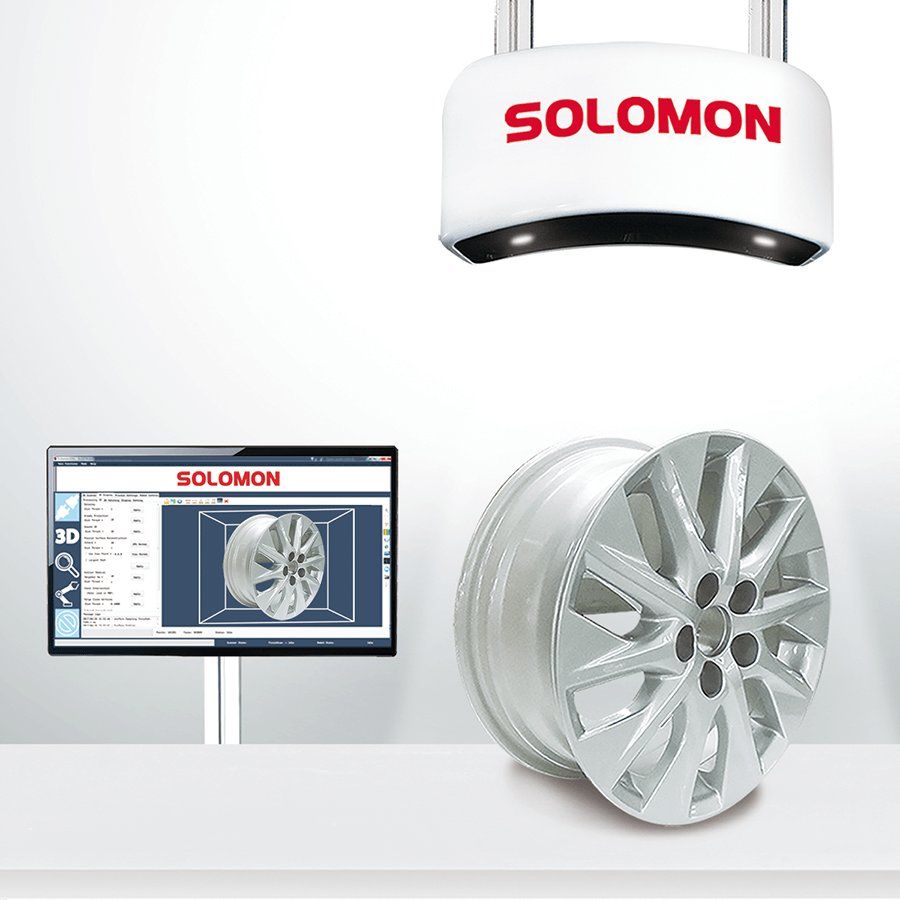
Solomon AI and 3D Vision
Taiwan
Taipei, Taiwan vision-technology company founded 1973, listed on the Taiwan Stock Exchange (2359); makes SolVision inspection and SolMotion robot software.
AIRY3D
Canada
Canadian deep-tech company enabling single-sensor 3D depth perception via patented Transmissive Diffraction Mask tech for robotics and industrial vision.
Hubei Optics Valley Dongzhi Embodied Intelligence Technology Co., Ltd. 湖北光谷东智具身智能技术有限公司
China
Wuhan, China embodied-intelligence firm founded 2025, backed by HEC Group, Zhiyuan Robotics, and Peking University; makes Lumen humanoid and service robots.
Insight Intelligence 具识智能
China
Shanghai developer of insightOS, an embodied-AI robot operating system spanning dev, runtime and fleet ops; HIT spin-out with deployments at BYD.
Fennec Engineering
United States
US functional-safety company providing consulting and the ASAP platform to certify robotics, autonomy and physical-AI systems for deployment.

Stonehouse Process Safety
United States
US process safety consulting, testing, and training firm operating an ISO/IEC 17025:2017 accredited laboratory in Princeton, NJ since 2018.
Cambrian Inc.
United States
AI 3D-vision system that gives robot arms 6D pose estimation and path planning for bin picking, assembly and cable handling.
Apera AI
Canada
Apera AI develops 4D Vision software (Vue) that uses AI to give industrial robots human-like sight for bin picking, assembly, machine tending and sorting.

Symage AI (by Geisel Software)
United States
Physics-based synthetic image data platform accelerating AI vision model training for robotics and industrial automation.
Robotics needs a service framework.
RSF defines a common language for robot service capability, lifecycle operations, certification pathways, and service-provider networks.
Join the RobotToday community on LinkedIn
Daily robotics news, in-depth analysis, conference highlights, and discussions with professionals worldwide.


