Search Result for: wro-2026

Children nationwide compete in the WRO 2026 international robotics competition, with qualifying rounds starting July 11 in 31 regions.
NPO法人WRO Japan has announced the official qualifying rounds for the World Robot Olympiad (WRO), an international robotics competition featuring participation from over 100 countries and regions. These qualifying events will take place across 31 locations nationwide, starting on July 11. The initiative aims to foster interest and innovation in robotics among students and young engineers in Japan, providing them with an opportunity to showcase their skills and creativity in a competitive environment.

World Robot Olympiad (WRO) 2026
World Robot Olympiad (WRO) 2026 Season: Global student robotics competition exploring “Robots Meet Culture,” culminating in the International Final, Dec 8–10 2026 in San Juan, Puerto Rico. Develop creativity, design, engineering and problem-solving skills through hands-on robotics
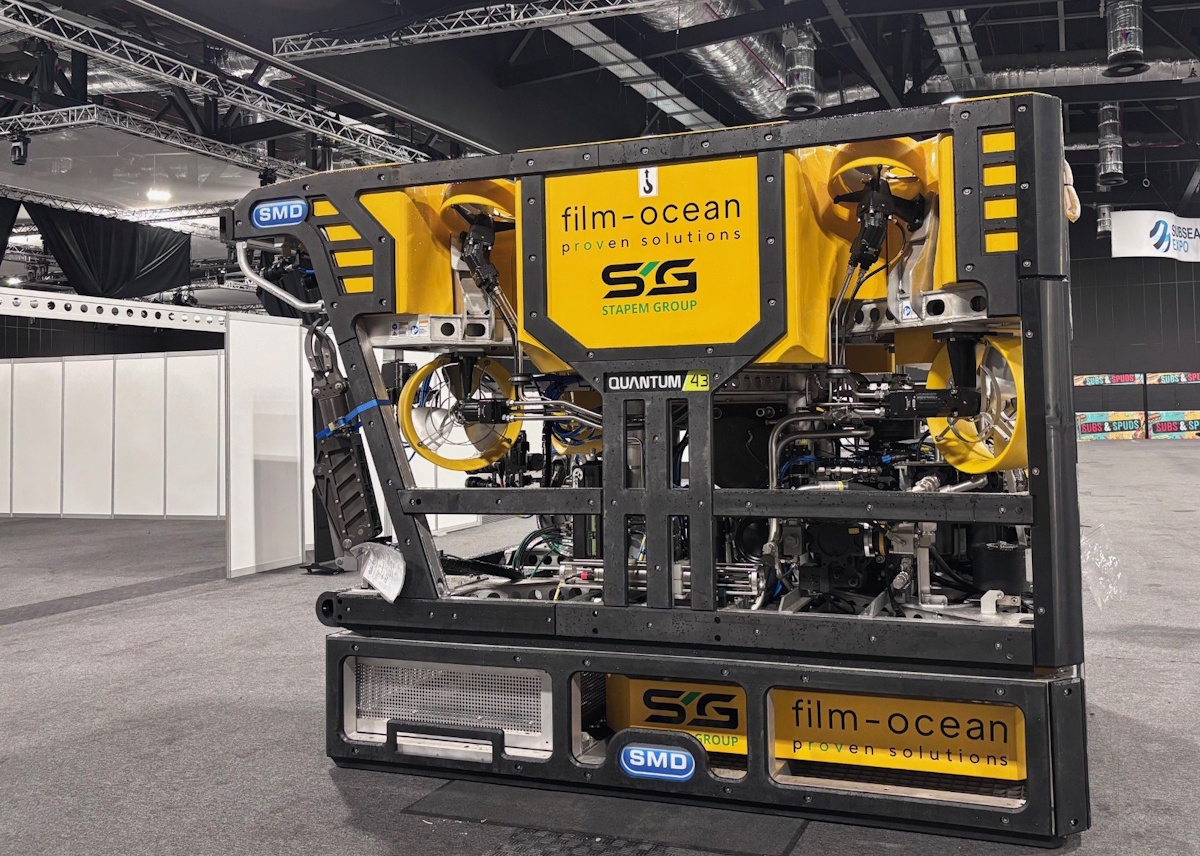
Film-Ocean Showcases New Work Class ROV and Remote Operations Centre at Subsea Expo 2026
Film-Ocean, a leading global subsea services provider and a member of the Stapem Group, is set to unveil its latest Work Class Remotely Operated Vehicle (WROV) and demonstrate its advanced Remote Operations Centre (ROC) at the upcoming Subsea Expo 2026. The event will be held on February 4 and 5, 2026. This showcase aims to highlight the company's innovative technologies and capabilities in subsea operations, reflecting its commitment to enhancing efficiency and safety in the industry. By presenting these cutting-edge solutions, Film-Ocean seeks to engage with industry professionals and stakeholders, emphasizing its role in advancing subsea service offerings.
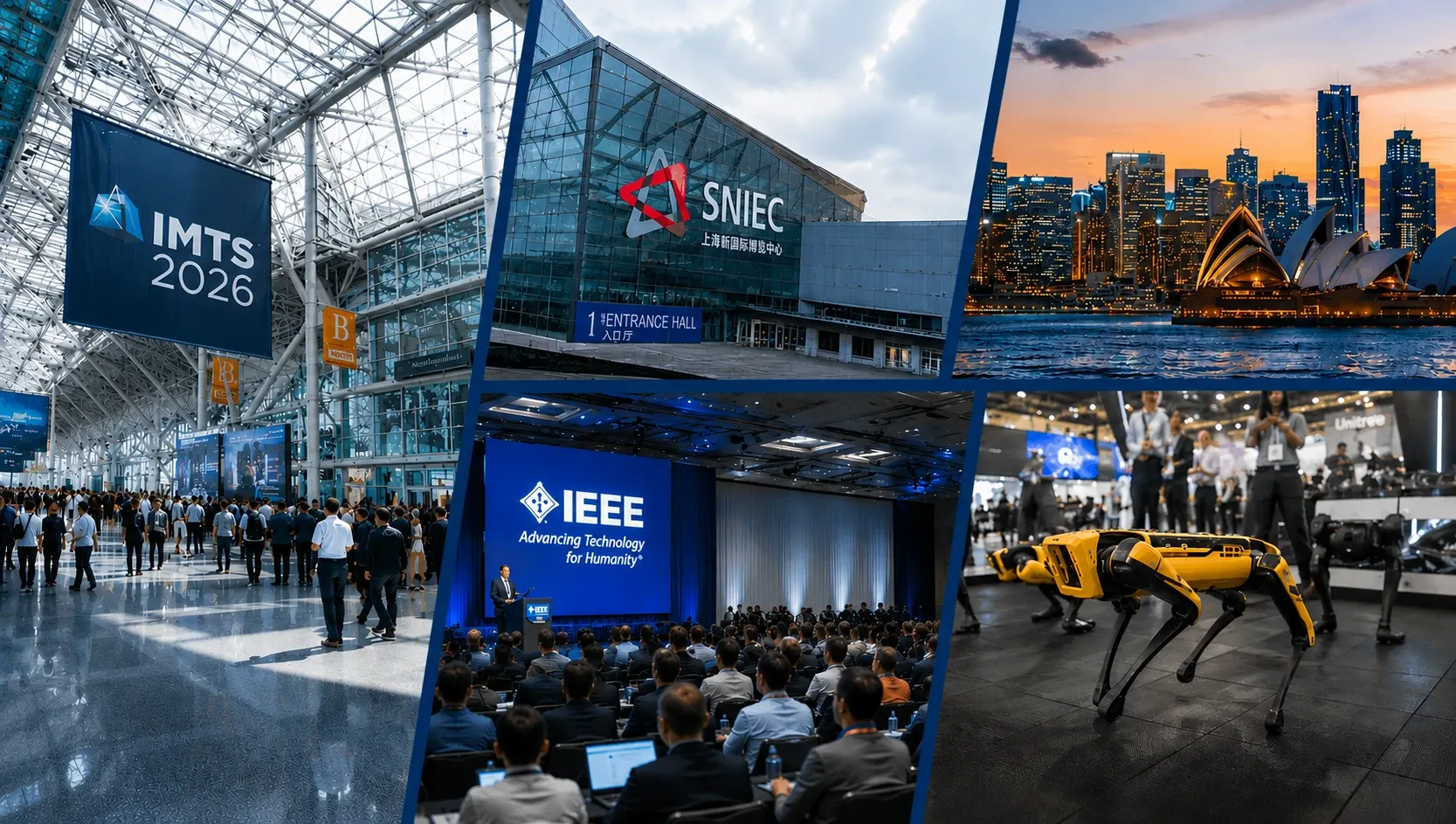
2026H2 Robotics Events Briefing: Tailored Recommendations for Robotics Readers
Discover the ultimate directory of global robotics events in 2026. Tailored briefings for engineers, investors, and founders on humanoid robots, AI, and industrial automation by RobotToday.

2026 Robotics Events Briefing: Tailored Recommendations for Robotics Readers
A curated briefing of major global robotics events in 2026, offering tailored recommendations for researchers, industry professionals, startups, and the broader robotics ecosystem.

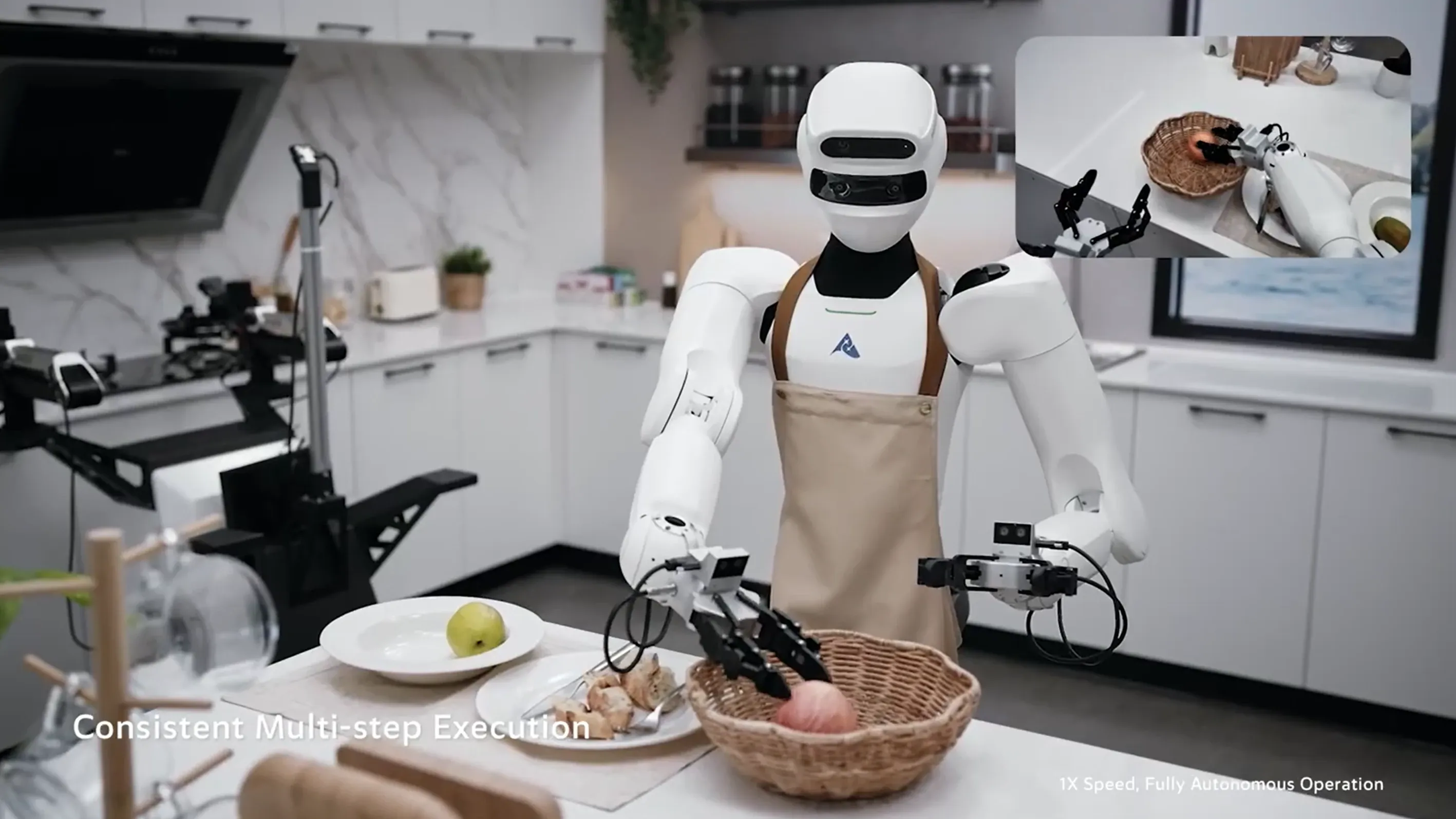
XPeng IRON Humanoid Robot Enters Mass Production Sprint, Set to Hit Showrooms in 2027
XPeng has announced the commencement of mass production for its IRON humanoid robot, with plans to manufacture thousands of units each month by the end of 2026. The company aims to deploy these robots in its retail stores starting in the first quarter of 2027. This initiative reflects XPeng's commitment to integrating advanced robotics into its operations, enhancing customer service and operational efficiency. The development of the IRON robot is part of XPeng's broader strategy to innovate within the automotive and technology sectors, leveraging cutting-edge technology to improve user experience and streamline business processes.

AI Models Overthink Problems—and It’s a Security Risk
Large language models (LLMs) that can think through problems step-by-step have significantly increased the scope of tasks that AI can tackle. But new research suggests these reasoning capabilities also introduce a critical vulnerability that could allow attackers to slow these systems to a crawl.While earlier generations of LLMs would immediately produce a response to a user’s request, today’s most advanced models generate an internal monologue where they break down the problem into steps and reason about the best way to tackle it before providing an answer. This has allowed AI to tackle increasingly complex problems, particularly in areas like coding and math.However, previous research has shown that these models are susceptible to sometimes producing excessively long streams of reasoning that do little to boost performance, a phenomenon known as “overthinking.” In research presented this week at the International Conference on Machine Learning 2026 in Seoul, researchers from Zhejiang University and e-commerce giant Alibaba in China demonstrate that they can deliberately induce overthinking by subjecting models to logically inconsistent prompts. The result is a form of denial-of-service attack on commercial AI models.Evolutionary Prompt Attack on LLMsThe team has developed an evolutionary algorithm that corrupts the logical structure of prompts, causing models to spiral into overthinking as they attempt to reason through fundamentally unsolvable problems. Generating longer responses costs more and increases the load on a model provider’s servers, so if done at scale, the researchers say, this could significantly degrade the experience of legitimate users. The attack was effective against reasoning models from leading AI companies including DeepSeek-R1, Alibaba’s Qwen3-Thinking, OpenAI’s GPT-o3, and Google’s Gemini 2.5 Flash and resulted in outputs up to 26 times as long as standard responses on a standard math benchmark.“Across multiple datasets and reasoning models, our method substantially amplifies the output length,” Wei Cao, a masters student at Zhejiang University, wrote in an email to IEEE Spectrum. “Our results suggest that overthinking is not an isolated phenomenon specific to individual models, but rather a shared vulnerability among modern reasoning models.”The team’s approach builds on previous research from another group of researchers that showed reasoning models tend to overthink when faced with a question in which a key premise has been removed—such as asking how far someone who walks ten miles a day covers in total without specifying how many days they walked for. Rather than identifying that the problem is unsolvable, models often engage in extended but ultimately fruitless reasoning loops in an attempt to answer the question.Taking the idea a step further, the authors took 940 problems from three math benchmark datasets and used an LLM to break down their logical structure into a set of premises and a final question. The genetic algorithm then jumbled these up using a variety of “mutations,” including swapping premises between problems, adding extra premises to problems, deleting existing premises from problems, and swapping the final questions between two sets of premises.After each round of mutations, the problems are scored on how many words they cause a target model to output and also whether they increase the frequency of specific linguistic markers of overthinking—words like “but,” “wait,” “maybe,” or “alternatively.” The problems that scored highest on both measures are retained and the remaining ones are jumbled up again, and this process is repeated for five generations. Crucially, the approach doesn’t require access to the internals of a model and can generate malicious prompts by simply querying the target, which makes it possible to attack closed-source commercial services, says Cao.Overthinking Vulnerability in AI ModelsThe researchers found that the approach consistently led to outputs several times longer than those generated by the unmodified questions for the reasoning models they tested it on. The biggest jump came from DeepSeek-R1 on the MATH dataset, which is made up of problems from high school math competitions, where the maximum output was 26.1 times as long as the longest response the model provided to unaltered questions. While the main thrust of the research was focused on math problems, the authors also tested it on coding, scientific reasoning, and dialogue challenges, and observed significant jumps in output length in all three.One challenge for the approach is that developing the malicious prompts requires repeated queries to expensive reasoning models, which Cao admitted could limit its cost-effectiveness. However, the researchers also demonstrated that when they used a smaller, cheaper model to generate the malicious prompts they were still able to induce the target models to produce outputs several times longer than normal. This ability to transfer malicious prompts between models significantly increases the attack’s feasibility, Cao wrote.However, he pointed out that the goal of the research is not to develop a practical DoS attack on reasoning models. Factors like the providers’ pricing model, rate limiting policies, context window size, and existing defenses could all impact how effective the approach is. The intention is instead to highlight these models’ vulnerability to logically inconsistent prompts so that providers can attempt to mitigate the problem.“Our objective is not to demonstrate that large-scale attacks can be launched at negligible cost, but rather to establish that this attack surface exists,” he wrote. “Our results indicate that the vulnerability represents a realistic security concern.”

What Makes AI Art Worth Collecting?
In May, an anonymous artist who goes by SHL0MS on X posted that he had used AI to generate an image inspired by Claude Monet and asked people to weigh in on how it missed the mark. More than 600 responses called out issues, saying the colors were off, the depth was all wrong, and that AI didn’t understand how light worked.SHL0MS then revealed that the image was of a real Monet, one of around 250 variations of water lilies the artist had painted in his lifetime. He had simply downloaded a high-resolution image from Wikimedia and cropped out the signature. He minted the exchange as an NFT (a unique digital collectible recording ownership of the work), titled it “Inferior Image,” and sold it for just over US $40,000 after 28 bids.The stunt exposed how charged the conversation around AI art has become, and how quick people are to dismiss anything AI-generated as slop—even when it’s not. Yet even as those arguments continue, a market for AI-generated art has begun to form anyway. It’s fragmented and contested, but bigger than most people realize.Jediwolf, an anonymous collector who says he has spent more than 20 years acquiring digital and AI art, was watching the experiment unfold in real time on X. He had never interacted with SHL0MS before, but when the NFT went up for auction he made a bid and won. “I was buying a unique moment in time,” he says, “captured by an artist and preserved as a token.”The Monet was not AI art, but most of what Jediwolf buys is. One of Jediwolf’s digital collections, which he calls UnderTheGAN—a play on GANs, or generative adversarial networks, the AI technology that preceded today’s diffusion models—comprises roughly 100 works valued at around $72,000, focused on early AI art from 2015 to 2020, before the medium went mainstream. He describes his role as part collector, part researcher, part curator, trying to document a fast-moving field.“A decade ago, digital art was often treated as peripheral to the ‘serious’ art world,” he says. “Today, it is increasingly difficult to separate contemporary culture from the internet.”AI Art Moves Into MuseumsThe market for AI art extends beyond NFTs: AI-generated pieces are also finding their way into physical installations. Last month saw the opening of Dataland, the world’s first generative AI museum, in downtown Los Angeles. It was spearheaded by Refik Anadol, a digital artist who has built a career out of transforming data into large-scale immersive experiences. The opening exhibition has pieces that use data that Anadol collected from rainforests around the world, with real-time weather information from 16 rainforests feeding into all five galleries. In three of the rooms, the imagery also shifts in response to visitors’ own biometric data, tracked by bracelets they wear. Like any museum it sells tickets, ranging from $49 to $79, and has a gift shop. This shop, however, uses visitors’ biometric data collected during their visit to generate a unique design printed on a T-shirt. For $15,000, a robotic painting system called Qualia creates a one-of-a-kind canvas from that same data, painted once a day, with a waiting list already forming. A founding collection of 1,000 AI data sculptures that evolve based on environmental data from global rainforests sold out in 34 minutes at $5,000 each.The system running it all, which Anadol calls the Large Nature Model, was trained on more than 500 million nature images representing 2.2 million species, gathered through field expeditions to 16 rainforests and partnerships with institutions including the Smithsonian and the Cornell Lab of Ornithology.For Anadol, AI art requires a different kind of transparency than any medium that came before it. Because commercial AI tools have shaped how most people understand the technology, artists working with it seriously have to be more open about their process than painters or photographers ever did.“For AI art, we have to know where the data comes from, we have to know which model is trained and how it’s trained,” he says. “We can’t just think about authenticity and uniqueness if a service and product is the fundamental layer of the artwork.”The reviews for Dataland have mostly been positive, with one critic calling it the Citizen Kane of immersive experiences. But Anadol is used to a more divided reception. His 2022 installation at MoMA—a 7-by-7-meter screen of AI-generated fluid forms with shifting colors and sounds—drew 3 million visitors and entered the permanent collection, even as New York Magazine called it “a massive techno lava lamp.” Anadol sees the skepticism as nothing new, just the latest version of a resistance that has greeted all new media. “Every art form has gone through similar cycles of denial,” he says. “We are living in a renaissance that started 10 years ago, and I just don’t think everyone is aware of it yet.”Who Is Buying AI Art?The broader market data points in multiple directions at once. According to the Art Basel and UBS Art Market Report 2026, digital art’s share of sales nearly tripled between 2024 and 2025, and just over half of all fine art collectors surveyed had purchased a digital artwork in 2025, making it the third most popular category after painting and sculpture (the report does not break out AI art specifically).Meanwhile, Christie’s shuttered its pioneering digital art department in September, folding digital works back into its broader contemporary sales after none of its dedicated auctions broke $400,000.The most data-rich window into buyer behavior comes from a less glamorous corner of the market. After one major stock image platform allowed AI-generated images, monthly sales jumped 80 percent, according to Samuel Goldberg, an economist at Stanford Graduate School of Business who published a research paper about the shift. Traditional contributors began leaving the platform as generative images flooded in, and creators using AI tools rushed to fill the gap. “It looks like consumers like generative AI,” Goldberg says, “and it seems like nongenerative artists could be getting crowded out of the market.” Stock images are essentially a commodity version of art, according to Goldberg, and because image-generating models are already very good at producing them, what’s happening there may be a preview of what’s coming for other creative goods markets—including fine arts—as the technology improves.Artists are typically among the first to test the limits of a new technology; early adopters have created AI art since the 1970s. What’s new now is the ability for anyone to generate an image in seconds with a text prompt. That, according to Christiane Paul, curator of digital art at the Whitney Museum of American Art, is not the same thing at all. What fills those stock-image platforms, and what most people encounter when they think of AI art, does not qualify as art.True AI art, Paul says, is a subcategory of digital art that uses artificial intelligence as both a tool and a medium, engaging with it practically and conceptually, doing things like training custom models, building extensions, and layering control systems. “A visual created by a prompt is not art,” she says. What serious AI artists are actually doing is much more than typing a few words into DALL-E.Far from the shortcut most people assume, working seriously with AI as an artistic medium is, by her account, brutally hard. Every artist she talks to says the same thing. “It is much, much harder than a paintbrush to handle,” she says. “You are literally communicating with a system with a completely different logic.”Thanks to bubblemaps.io for its research assistance on the NFT market.

Intelligent indoor/outdoor automation company MyBull Robotics opens new US headquarters
MyBull Robotics U.S. has officially opened its new headquarters in Farmington Hills, Michigan, on May 14, 2026, marking a significant step in the company's expansion into the North American market. The facility aims to enhance the supply of the company's innovative indoor and outdoor automated logistics solutions, which utilize advanced technologies such as lidar and vision cameras for efficient material handling. This strategic move is designed to support local investment and job creation, with plans to grow the current team of 12 employees, focusing on engineering and technical roles. The grand opening event attracted business leaders, partners, and customers, featuring structured sessions that included product demonstrations and a Q&A with the MyBull Robotics team. The new headquarters, located at 37735 Enterprise Ct., includes a showroom and a warehouse for proof-of-concept demonstrations, showcasing the capabilities of MyBull Robotics' autonomous machines in real-world industrial settings. Vinh Tran, Managing Director of MyBull Robotics U.S., emphasized the company's commitment to contributing to the advanced manufacturing and supply chain ecosystem in Michigan and across the U.S. With a focus on improving efficiency and performance for various industrial sectors, MyBull Robotics aims to leverage its technology and customer support to drive innovation in the automation and robotics market.

World Robot Olympiad 2025: Singapore Hosts the Biggest Global Youth Robotics Competition
World Robot Olympiad 2025 kicks off in Singapore, bringing together youth teams worldwide to compete in innovation, engineering challenges, and creative robot design.