


SoftBank’s planned robotics and AI infrastructure spinoff — reportedly branded Roze or Roze AI — may become one of the most consequential strategic restructurings in the global robotics industry since the launch of the Vision Fund.
At first glance, the move appears to be another ambitious Masayoshi Son capital markets play: bundle AI, robotics, chips, energy, and infrastructure assets into a standalone U.S.-listed entity targeting a ~$100 billion valuation. But structurally, the strategy is far more significant.
Roze represents SoftBank’s attempt to vertically integrate the entire “Physical AI” supply chain — from semiconductors and embodied AI models to industrial robots and AI data center construction.
Why spin off robotics now? Why does SoftBank believe robotics has suddenly become infrastructure?
From Telecom Conglomerate to Physical AI Platform
SoftBank’s evolution has followed three distinct phases:
| Era | Strategic Focus | Key Assets |
|---|---|---|
| 1990s–2000s | Internet & Telecom | Yahoo! BB, Vodafone Japan, Sprint |
| 2010s | Platform & AI Investing | Alibaba, Vision Fund, Arm |
| 2020s–2030s | AI Infrastructure & Physical AI | Arm, Ampere, Graphcore, Robotics, Data Centers |
Masayoshi Son has consistently framed technology waves as infrastructure revolutions. Broadband enabled the internet era. Smartphones enabled the mobile era. AI compute infrastructure now enables the ASI (Artificial Super Intelligence) era. What changed in 2025–2026 is SoftBank’s conclusion that AI scaling is no longer limited primarily by software models — but by physical deployment capacity:
Data center construction speed
Power infrastructure
Skilled labor shortages
Cooling deployment
Robotics automation
Industrial manufacturing capacity
In this thesis, robotics becomes a core enabler of AI scaling itself. That is the strategic logic behind Roze.
Why the Spinoff Matters
The proposed structure is unusual because Roze is reportedly not being designed as a traditional robotics OEM.
Instead, it resembles a hybrid of:
AI infrastructure developer
robotics systems integrator
industrial automation platform
embodied AI operator
energy + compute deployment company
SoftBank appears to be combining multiple layers:
| Layer | Strategic Assets |
|---|---|
| AI Chips | Arm, Ampere, Graphcore |
| Robotics Hardware | ABB Robotics, SoftBank Robotics |
| Dynamic Robotics | Boston Dynamics stake |
| Warehouse / Logistics AI | Berkshire Grey, AutoStore |
| AI Infra / Data Centers | DigitalBridge-related assets |
| Energy & Land | bundled infrastructure holdings |
| Embodied AI | Skild AI and related investments |
The core thesis is straightforward: AI demand is exploding faster than humans can physically build AI infrastructure. SoftBank’s answer is to industrialize AI infrastructure deployment using robots.
Why Spin Off Instead of Keeping It Inside SoftBank?
1. Unlocking Valuation Multiples
SoftBank has long suffered from a “conglomerate discount.” Investors often value the group below the combined worth of its holdings due to complexity, leverage, and legacy telecom exposure. A standalone U.S.-listed “Physical AI Infrastructure” company could potentially command dramatically higher valuation multiples than being buried inside SoftBank Group.
This mirrors earlier SoftBank financial engineering strategies:
Vision Fund structure
Arm IPO separation
Sprint/T-Mobile monetization
Alibaba stake optimization
Roze may effectively become the market’s first large-scale “robotics infrastructure pure play.”
2. Strategic Positioning Around U.S. AI Industrial Policy
The decision to structure Roze as a U.S.-based entity is likely highly intentional. The United States has become the center of:
AI compute demand
hyperscale data center expansion
AI semiconductor deployment
industrial reshoring initiatives
robotics manufacturing incentives
A U.S.-listed robotics infrastructure company may gain significantly better access to:
institutional capital
government partnerships
AI ecosystem credibility
strategic industrial policy alignment
This also distances the entity from some of the geopolitical sensitivities tied to SoftBank’s Japanese telecom identity.
Why Now?
The Timing Is Not Accidental
Several major pieces only aligned recently.
ABB Robotics Acquisition
The reported acquisition of ABB Robotics is arguably the missing industrial-scale component.
Historically, SoftBank’s robotics assets were fragmented:
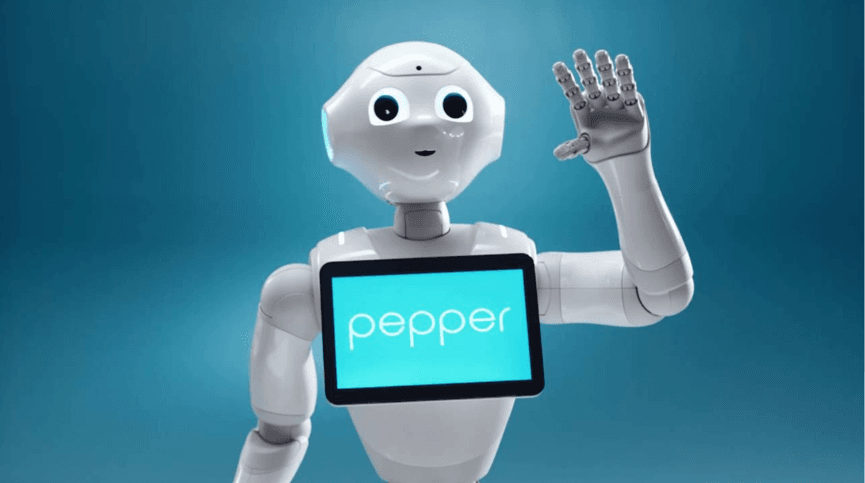
Pepper → consumer/service robotics
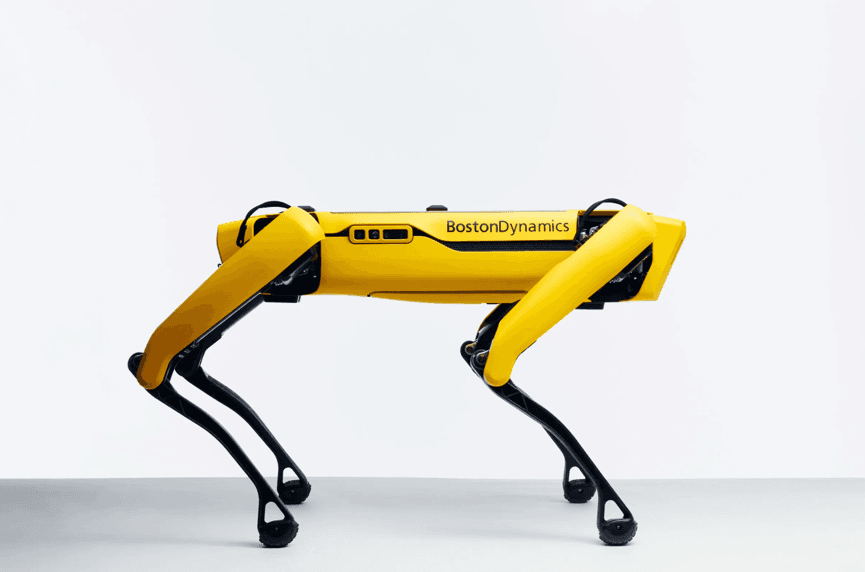
Boston Dynamics → advanced mobility
Vision Fund portfolio → scattered automation bets
ABB changes the equation because it provides:
industrial robot installed base
manufacturing credibility
factory automation software
systems integration channels
enterprise relationships
This transforms SoftBank from an investor into a potential industrial operator.
Physical AI Is Becoming Investable
In prior robotics cycles, investors often viewed robotics as:
hardware-heavy
slow-margin
difficult to scale
The rise of foundation models and embodied AI changed sentiment.
Now, markets increasingly view robotics as:
AI deployment infrastructure
autonomous labor platforms
physical-world inference systems
industrial AI endpoints
The narrative has shifted from “robots replacing workers” to:
“robots enabling AI economic expansion.”
That framing materially improves capital market appetite.
Strategic Takeaway
Roze is likely best understood not as a robotics startup, but as an attempt to create the first vertically integrated “Physical AI Infrastructure Company.”
Masayoshi Son appears to believe the next trillion-dollar AI opportunity will not belong solely to model providers. Instead, it may belong to companies that can physically build, operate, automate, and power the AI economy itself. That would represent a major shift in how robotics is positioned globally:
From: industrial automation tool To: foundational AI infrastructure layer.
If successful, Roze could redefine robotics from a manufacturing sector into a core component of global AI infrastructure strategy. For the robotics industry, that may be the most important implication of all.










Leave a comment