


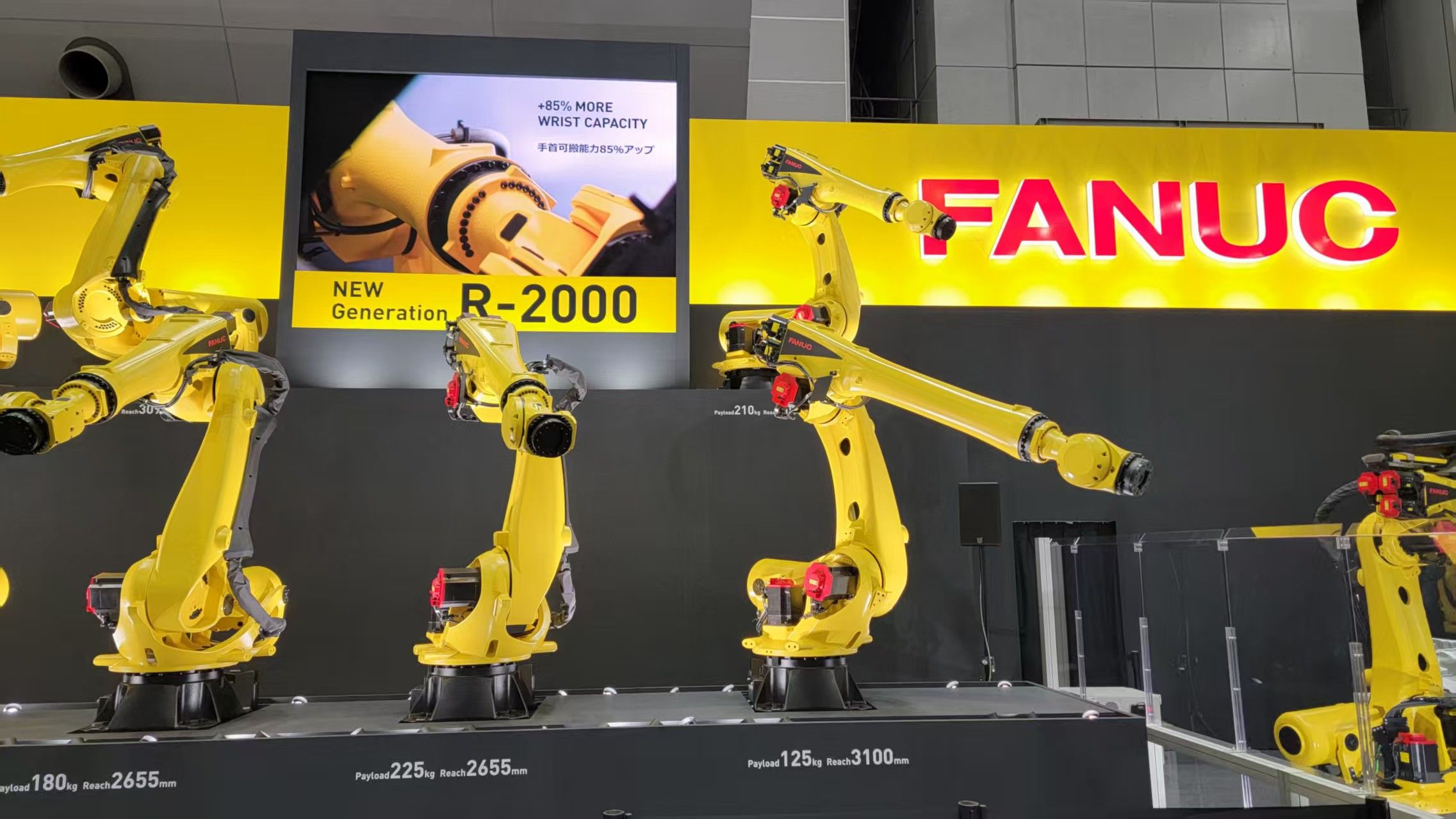
Over the past week, the most consequential signals in the global robotics industry did not originate from breakthrough demos or headline-grabbing technical milestones. Instead, they emerged from a quieter but more decisive recalibration around engineering feasibility, robotics supply chain stability, and capital allocation discipline. Across the U.S., Europe, and Japan, market behavior increasingly reflects a shared reassessment: robots are being reclassified as industrial automation assets, rather than speculative technology narratives.
This shift does not signal stagnation. It signals a return to first principles—what can be engineered, delivered, serviced, and financed at scale.
The U.S. and Europe: Industrial Automation Over Narrative Innovation
In the U.S. and European markets, robotics discussions are now more frequently anchored in manufacturing investment cycles, capital expenditure efficiency, and productivity gains. Industrial automation leaders are repeatedly framed as defensive assets, not because they promise radical new form factors, but because they offer predictable delivery, lifecycle support, and engineering reliability.
By contrast, humanoid robots are increasingly positioned within long-term research programs or policy-level roadmaps. Engineering constraints—cost structure, reliability, maintainability—are no longer deferred; they are explicitly acknowledged upfront. The result is a more sober evaluation of robotics ROI, where technical ambition is increasingly subordinated to deployability.
Japan: Robotics as a System of Long-Term Trust
Japan’s robotics market continues to demonstrate a characteristically restrained posture. Over the past week, coverage focused primarily on orders, overseas deliveries, and manufacturing cycles, with minimal emphasis on experimental robot forms.
This narrative reinforces a long-standing Japanese industrial principle: a robot is not a product category, but a long-lifecycle industrial system. In this context, reliability, service continuity, and integration stability outweigh novelty. Robotics innovation in Japan proceeds deliberately—not because of conservatism, but because industrial trust is accumulated over decades, not product launches.
China’s Robotics Supply Chain: Structural Clarity Without Disruption
China’s robotics supply chain did not experience a decisive cross-layer breakthrough this week. However, as global narratives return to engineering fundamentals, China’s structural positioning within the global robotics ecosystem has become clearer.
System integration and end-to-end execution layers remain closest to engineering acceptance and commercialization pathways. Precision mechanical manufacturing and delivery capacity continue to function as scale amplifiers. Meanwhile, motion control, sensing, and perception technologies, despite steady technical progress, have not yet been systematically elevated into front-loaded selection criteria within global engineering workflows.
This differentiation is not a reflection of capability gaps. It reflects whether a technology layer has been embedded into standardized engineering processes and platform rules. Short-term order fluctuations are insufficient to alter this structure.
Humanoid Robots: A Supply Chain Stress Test, Not a Commercial Breakthrough
No material engineering breakthroughs were observed among humanoid robotics companies over the past week. Core domains—body architecture, key actuators, and dexterous hands—remain characterized by high complexity and low replicability. More importantly, there is still limited evidence of robot designs being constrained backward from clearly defined, scalable application scenarios.
At this stage, humanoid robots function less as an independent industrial track approaching commercialization, and more as a stress test for existing supply chains, engineering systems, and cost tolerances. The gap between demonstration and deployability remains wide.
Consumer Robotics After iRobot: Control, Not Technology, Is the Core Lesson
Within the consumer robotics market, the bankruptcy and restructuring of iRobot remains the most structurally significant event. Its importance lies not in the fate of a single brand, but in what it reveals about engineering ownership, supply chain control, and ecosystem power dynamics.
The iRobot case is increasingly interpreted as a cautionary example: brand strength alone cannot compensate for weakened control over manufacturing, cost structure, and supplier leverage. Its ripple effects are likely to shape entry strategies, partnership models, and risk perceptions across the consumer robotics sector for years to come.
Conclusion: Convergence Over Expansion
The defining keyword for the robotics industry over the past week is convergence, not expansion. Across markets, engineering reproducibility, supply chain resilience, and capital return cycles are systematically outweighing conceptual novelty and form-factor storytelling. This shift favors stable, platform-oriented robotics companies while raising the threshold for new paths that have yet to clear industrialization barriers.
As one senior automation executive recently summarized:
“Robotics doesn’t fail because ideas are weak—it fails when systems can’t be delivered, serviced, and financed at scale.”
The robotics industry is not slowing down. It is returning to a slower, more disciplined, and ultimately more credible engineering-led trajectory.






Leave a comment