


Skeye Aerial Solutions
Dutch drone survey and inspection company founded 2013, acquired by Terra Drone 2018, specialising in oil & gas aerial inspection and geo-data capture.
Contact Skeye Aerial Solutions
WEBSITE
https://www.skeye.comPHONE
+31 186 203 045HEADQUARTERS
Netherlands

Company Facts
Founded
2013
Primary Role
Manufacturer
Company Size
-
Primary Region
Europe
Annual Sales
-
Funding Stage
-
Funding Total
-
Certifications & Memberships

Extend Robotics Secures £2.6M Funding to Enhance Outcome-Based Robotics Services
Extend Robotics has successfully raised £2.6 million in pre-Series A funding to advance its Result-as-a-Service model, enabling manufacturers to pay for robotic work completed rather than purchasing robots outright. This funding, led by Skyworks Venture Capital Fund with participation from Neo Venture Europe and Zip Capital, will facilitate the company's expansion across the U.K. and Europe, as well as the development of a distributed remote-operator network. Extend's AMAS platform integrates immersive teleoperation with AI assistance, currently serving 35 subscription customers across various sectors including agriculture and manufacturing. Looking ahead, Extend Robotics aims to leverage its funding to enhance its service offerings and expand its customer base. The company is focused on addressing manufacturing challenges that are difficult to automate with traditional systems, particularly in high-mix production and hazardous environments. No further timeline was disclosed at the time of publication.
AI Funding & Investment Physical AI AI Extend Robotics industrial robotics Pre-A financing
XAG Advances Autonomous Farming with New Agricultural Robot System
XAG is enhancing agricultural automation by developing a new X Series robot system that integrates drones and automated liquid-handling equipment. This system aims to streamline the processes of charging, refilling, and cleaning drones, reducing the need for human intervention. The recent demonstration at XAG’s SuperX Farm in Guangzhou showcased the efficiency of this system, with drones being recharged and refilled in approximately three minutes. The significance of XAG's advancements lies in its potential to transform farming practices, particularly in regions with fragmented farmland and an aging rural workforce. By automating labor-intensive tasks such as pesticide spraying, XAG is addressing the challenges faced by farmers in China and other markets. The company’s approach aligns with global trends in agricultural technology, where efficiency and productivity are paramount. Looking ahead, XAG's focus on automating the turnaround processes for drones could lead to further innovations in agricultural robotics. As the company continues to expand its international presence, it will be important to monitor how its technology adapts to different farming environments and regulatory landscapes. No further timeline was disclosed at the time of publication.
Heavy Hitters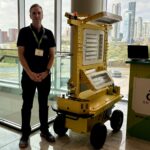
Antobot Plans 300 Deployments of UV-C Robots in Strawberry Crops by 2027
UK-based startup Antobot is targeting the deployment of 300 autonomous robots in strawberry crops by 2027. These robots utilize UV-C light to combat powdery mildew and other fungal pathogens, offering a chemical-free alternative to traditional fungicides. According to VP Marc Jones, this technology not only reduces chemical usage but also contributes to healthier crop yields. The significance of Antobot's initiative lies in its potential to transform agricultural practices by minimizing reliance on chemical treatments. As growers increasingly adopt UV-C technology, the company aims to expand its distributor network, having already signed agreements in the UK and Spain. The shift towards a more sustainable approach is driven by consumer concerns over pesticide residues and the need for effective disease control in various markets. Looking ahead, Antobot plans to transition from a robots-as-a-service model to a direct sales approach, allowing customers to purchase and operate the machines themselves. This change is expected to enhance operational efficiency as the company scales its deployments. No further timeline was disclosed at the time of publication.
Agtech APAC Artificial intelligence Deeptech EMEA Startups & funding
Industrial Companies Embrace Smart Systems for Bee Conservation Efforts
An increasing number of industrial companies are engaging in bee conservation, driven by ecological responsibility and sustainability strategies. These companies do not need to be high-tech firms to contribute; the technological range includes industrial robotic systems and affordable open-source solutions for workplace training. The involvement of various industries in bee protection highlights a growing awareness of environmental issues and the importance of biodiversity. By integrating smart systems, companies can enhance their sustainability efforts while also potentially benefiting from improved workplace environments. Looking ahead, it will be interesting to see how these initiatives evolve and whether more companies will adopt similar strategies. No further timeline was disclosed at the time of publication.
Allgemein Anwendungen & Lösungen
Industrial Companies Embrace Smart Systems for Bee Conservation Efforts
An increasing number of industrial companies are engaging in bee conservation, driven by ecological responsibility and sustainability strategies. These efforts are not limited to high-tech firms; a range of technological solutions is available, from industrial robotic systems to affordable open-source options for workplace training. The significance of this trend lies in the growing recognition of the role bees play in ecosystems and agriculture. By integrating bee conservation into their operations, companies can enhance their sustainability profiles while contributing positively to environmental health. Looking ahead, it will be important to monitor how these initiatives evolve and whether more companies adopt similar practices. No further timeline was disclosed at the time of publication.
Allgemein Anwendungen & Lösungen
Ecorobotix Achieves 84% Reduction in Spray Volume with ARA Spot Sprayer in Field Trial
Ecorobotix has announced significant results from a field trial of its ARA spot sprayer conducted at Oregon State University’s Hyslop Research Farm. The trial demonstrated an impressive 84% reduction in spray volume compared to traditional broadcast applications, utilizing glyphosate specifically on detected weeds in a tall fescue crop grown for seed. This reduction is particularly crucial for grass seed growers, as the challenge of maintaining varietal purity is heightened by the similarity between crop and unwanted grass species. The ARA effectively targeted 88% of the weeds, achieving an average control rate of 87%, showcasing the potential of precision agriculture in enhancing efficiency and sustainability in weed management. Looking ahead, the performance of the ARA spot sprayer under varying weed densities will be important to monitor, as its effectiveness diminishes with higher weed pressure. No further timeline was disclosed at the time of publication.
Smart farming glyphosate spot spraying weed control systems
Kilter's AX-1 Robots Save Over 1 Million Liters of Herbicide in 8 Months
Kilter's AX-1 robots have successfully helped farmers avoid using more than 1 million liters of herbicide mixture in under eight months across five countries. This achievement is attributed to the robot's precise application of herbicide in micro-droplets, which significantly reduces waste compared to conventional broadcast spraying. The importance of this technology lies in its ability to enhance crop yields by up to 40% while reducing labor costs. The AX-1 operates autonomously, allowing farmers to focus on other critical tasks, especially in a labor-scarce environment. The robot's design is particularly beneficial for high-value crops like root vegetables and leafy greens, where weed control is crucial for maximizing harvest quality. Looking ahead, Kilter anticipates further advancements in the AX-1's capabilities over the next five years. As the technology continues to evolve, growers are encouraged to consider how the AX-1 can fit into their existing operations and improve their overall efficiency. No further timeline was disclosed at the time of publication.
Smart farming autonomous farm equipment herbicide precision agriculture weed control
The Importance of AI Security in Food and Beverage Manufacturing Processes
The integration of AI in food and beverage manufacturing presents both opportunities and risks, particularly concerning cybersecurity. As AI enhances connectivity on the factory floor, it simultaneously exposes sensitive data to potential cyberattacks, which can have severe financial and reputational consequences. Scott Alldridge, a board advisor at the Cybersecurity Association of the Food Industry, emphasizes that any alteration to systems can compromise food safety, regardless of data theft. With the increasing complexity of manufacturing facilities, traditional systems are inadequate to combat modern cyber threats. AI technologies, while improving efficiency through applications like drones and data collection, necessitate stringent cybersecurity measures to protect sensitive information. Food and beverage companies must ensure that customer data is not shared with external AI providers and that all data processing occurs within secure environments to maintain compliance and data sovereignty. Looking ahead, manufacturers must prioritize AI governance to ensure safety and accuracy in outputs. This includes implementing robust validation controls and technical guardrails to prevent unsafe AI responses. As the reliance on AI grows, the responsibility for security and data integrity will increasingly fall on both manufacturers and SaaS providers, necessitating rigorous audits and adherence to best practices.
Process / Analytics
Saga Robotics Develops Thorvald to Combat Mildew with AI and UVC Light
Saga Robotics was established to address two significant challenges faced by farmers: achieving greater sustainability and coping with labor shortages. The solution is Thorvald, an autonomous robot that employs UVC light and artificial intelligence to tackle these issues. The development of Thorvald is crucial as it represents a technological advancement in agricultural practices, particularly in the fight against mildew. By utilizing UVC light, the robot offers a sustainable method to manage crop health while reducing reliance on chemical treatments. Looking ahead, the agricultural sector will likely see increased adoption of autonomous solutions like Thorvald. No further timeline was disclosed at the time of publication.
Allgemein Anwendungen & Lösungen Automation Lebensmittel & Verpackung Mobile Robotik
Greenfield Robotics Launches Public Share Offering to Raise $18.6 Million
Greenfield Robotics, based in Kansas, has initiated a public share offering aiming to raise up to $18.6 million through a Regulation A+ offering on StartEngine. The company currently operates 82 autonomous robots across 16 states, which mechanically cut weeds to replace herbicides. As of now, over $428,000 has been raised from investors. This offering is significant as it comes amid increasing legal and regulatory pressures on traditional herbicides, which Greenfield's robots are designed to replace. The company has sold out its 2026 season, generating over $1 million in robot sales. With a growing number of shareholders, Greenfield is positioned to expand its autonomous platform to include additional agricultural tasks in the future. Looking ahead, Greenfield plans to enhance its robots' capabilities by adding tasks such as feeding crops at night, seeding, and planting cash crops. The company has also shifted its commercial model from pay-per-use to outright sales, with a lease option expected to be announced soon. No further timeline was disclosed at the time of publication.
Field robots automation autonomous farm equipment investment mechanical weeder robotic harvesting
IMTS 2026 Preview: Record Orders and the Automation Story
IMTS 2026 opens in Chicago with 1,788 exhibitors and record H1 machine tool orders. What the USMTO data says about automation, and the booths to see.
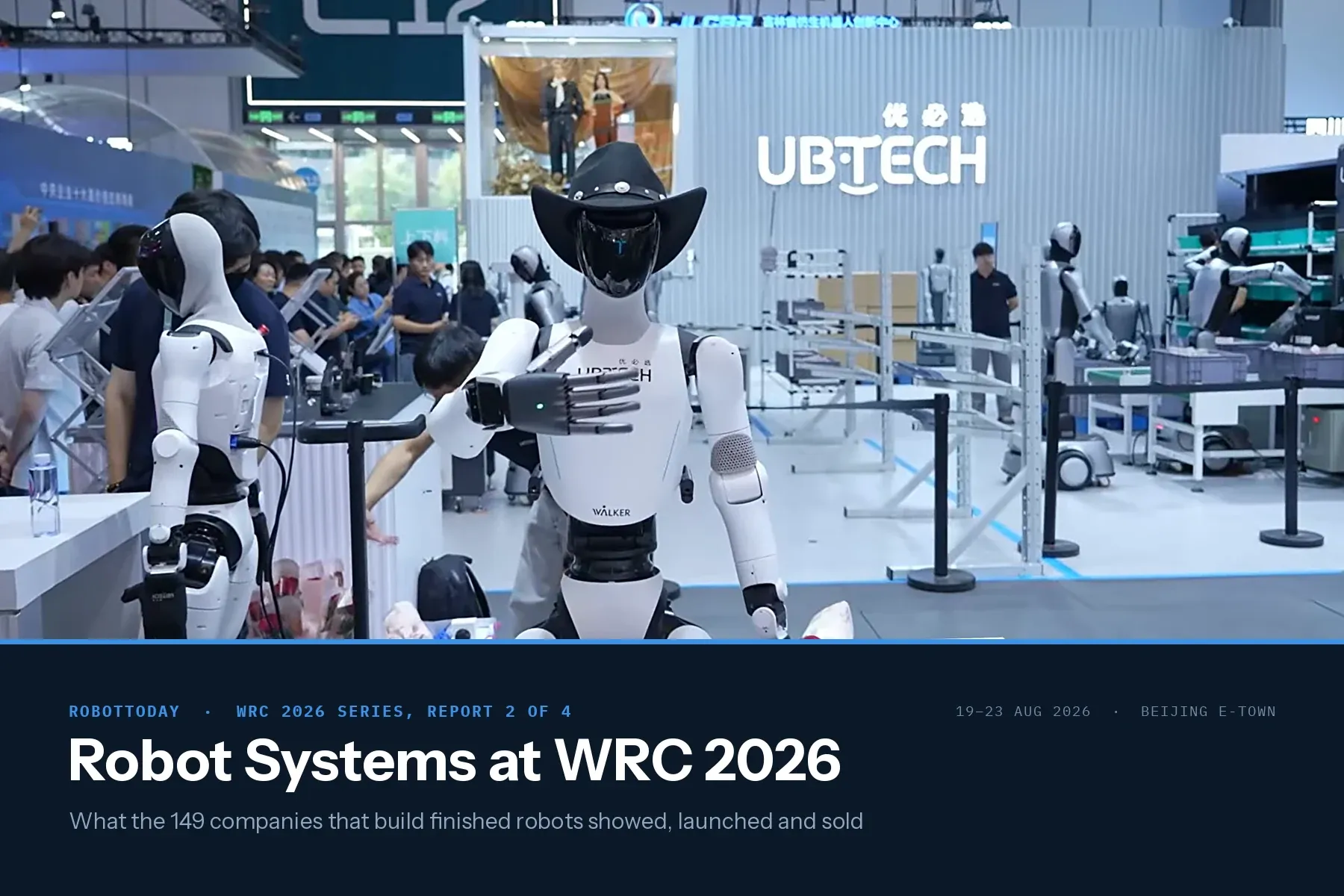
WRC 2026 Robot Systems: 149 Companies That Build Robots
149 of the 248 classified WRC 2026 exhibitors build finished robots. 93 build humanoid or legged machines. The audited humanoid sales number is one unit.

WRC 2026 Exhibitor Map: 248 Robotics Companies Mapped
We classified 248 WRC 2026 exhibitors with the RobotToday taxonomy. Motion & Actuation leads at 75 companies, Humanoid at 72, and compute stays thin at 12. (Modified 2026-08-27)

ROBOTTODAY Weekly July 13 – 17, 2026
This week in robotics: Hyundai takes full ownership of Boston Dynamics, Xpeng targets 1,000 Iron humanoids a month, LimX Dynamics raises $200M pre-IPO, and Agility opens a Silicon Valley physical-AI hub. July 13–17, 2026.

Physical AI Landscape: From Digital Intelligence to the Embodied Physical World
A comprehensive industry analysis of Physical AI — covering Embodied AI, Field AI, Factory AI, VLM, World Model, VLA, and the VLA vs WAM architecture debate. Includes 20+ companies, 28 references, and the RobotToday Physical AI Landscape diagram. July 2026.
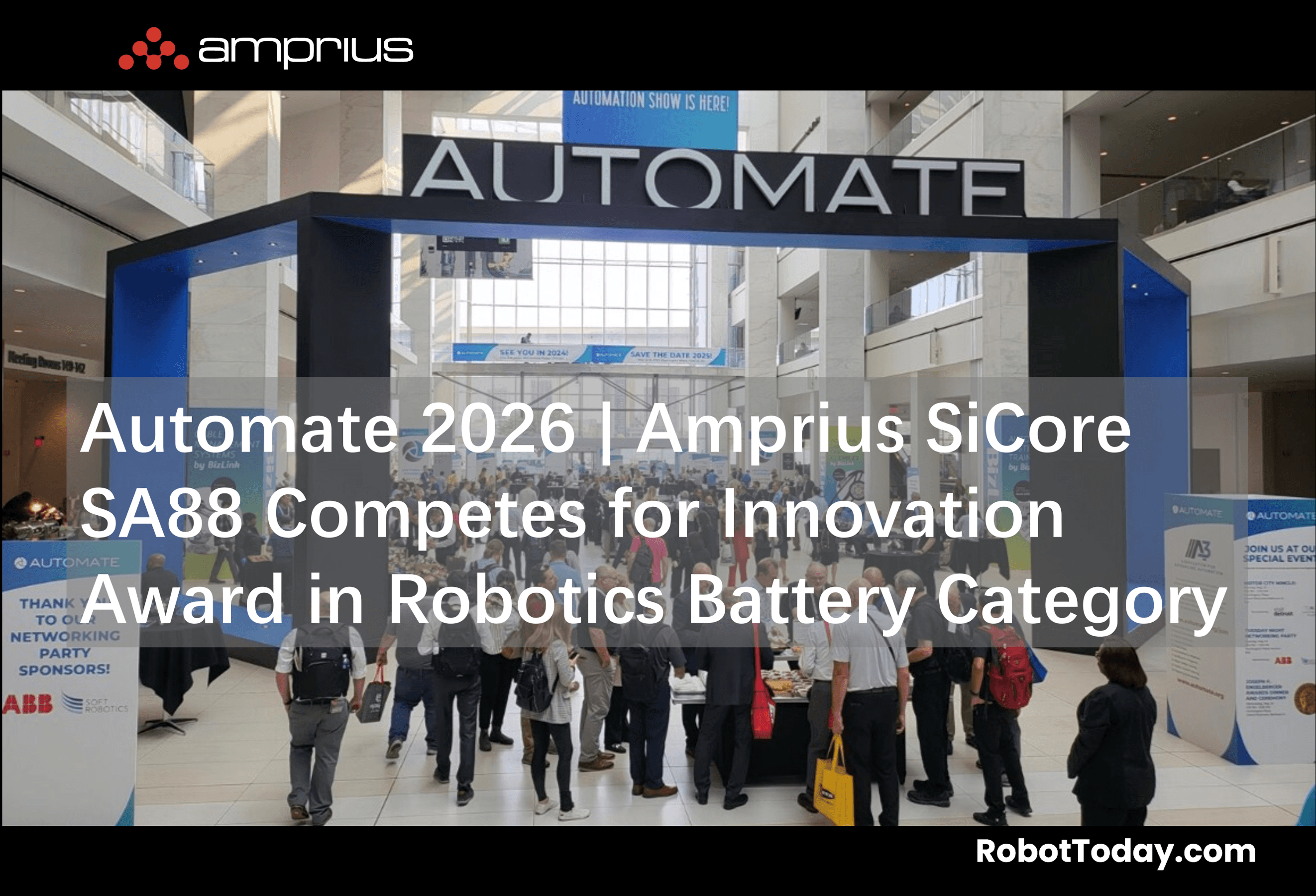
Automate 2026 | Amprius SiCore SA88 Competes for Innovation Award in Robotics Battery Category
At Automate 2026 in Chicago, Amprius Technologies exhibited its SiCore SA88 silicon-anode pouch cell — 358 Wh/kg, 750 Wh/L — as a finalist in the Components, Hardware & Enabling Technologies category. Analysis of implications for AMR, UAV, and aerial mobility platforms.

Vietnam Robotics Industry Report 2026
Comprehensive analysis of Vietnam's robotics industry: market size, industrial policy, key companies (Vingroup, Apicoo, Phenikaa-X), geopolitical dynamics, and 2030 growth opportunities.

FUTURE WARFARE | Cross-Domain Integration - Integration How Land, Sea, Air and Software Are Converging Into a Single Kill Chain
Cross-domain robotics is reshaping modern warfare as drones, UGVs, AI targeting systems, and autonomous logistics converge into a single networked kill chain across land, sea, air, and software.

RobotToday Weekly Industry Briefing: Feb 2 – 6, 2026
Robotics shifted from demos to deployment post-CES 2026, led by China’s humanoid scale, AI robot brains, and accelerating industrial adoption.
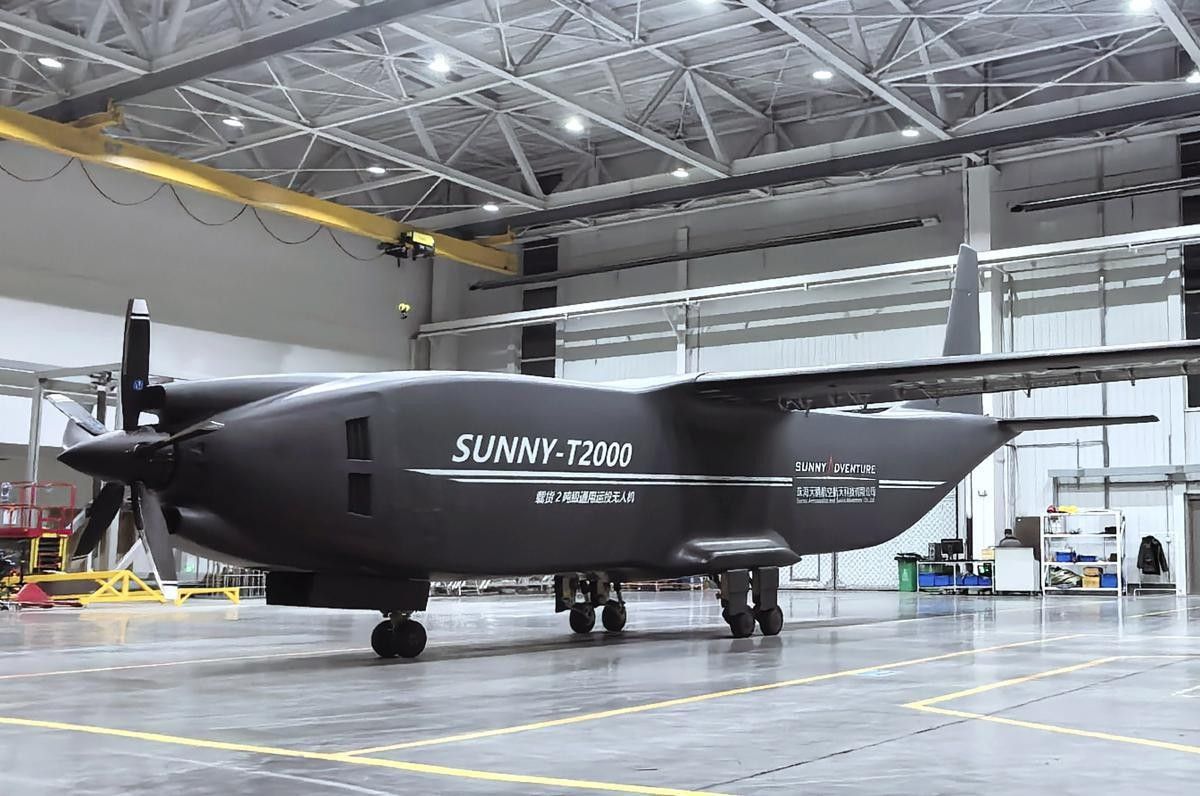
Sunny t2000 china s first 2 ton turboprop cargo uav signals a new era for heavy unmanned logistics
The SUNNY-T2000 signals a shift in heavy cargo UAVs, showing how two-ton unmanned aircraft are reshaping regional and industrial air logistics.


