

RoBotany (Pure Sky Farms)
Robotany is a Swedish automated plant watering system providing smart, IoT-connected irrigation for indoor and outdoor cultivation. Soil sensors monitor plant hydration and communicate wirelessly with a central hub, enabling automated or app-controlled watering without manual intervention.

RobotToday Initiative
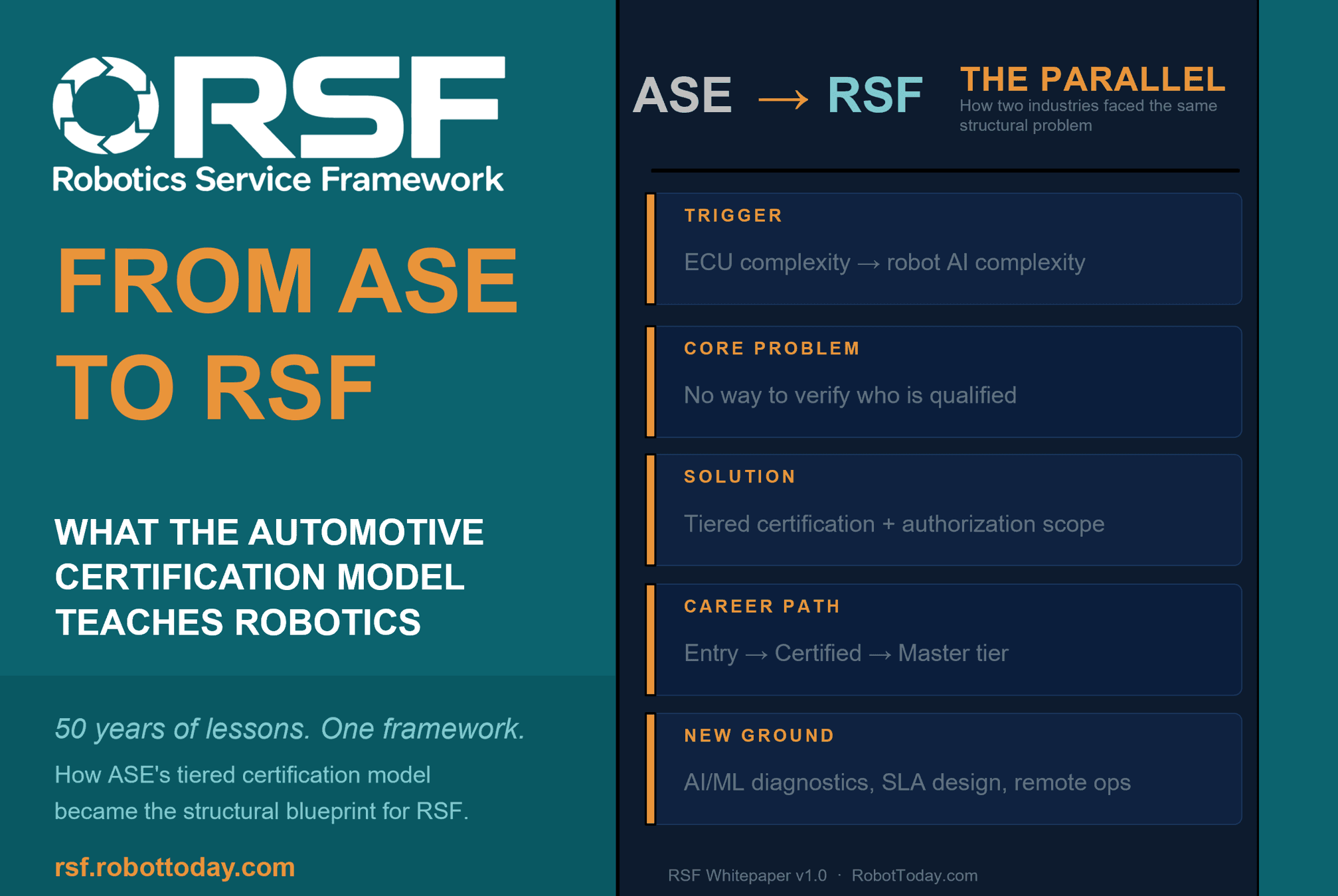
Robotics needs a service framework.
RSF defines a common language for robot service capability, lifecycle operations, certification pathways, and service-provider networks.
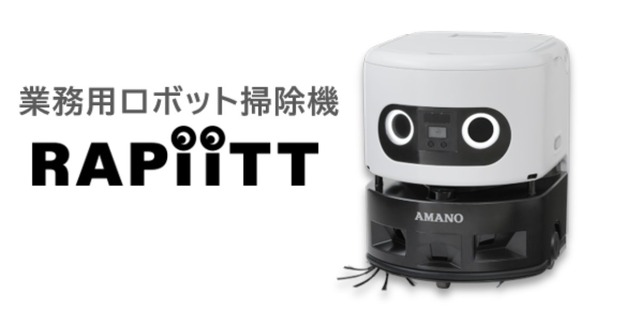
Amano Launches RAPiiTT, a New Commercial Robot Vacuum for Enhanced Cleaning Automation
Amano Corporation launched the RAPiiTT commercial robot vacuum on July 16, 2026, aimed at enhancing cleaning efficiency in various facilities such as offices, commercial spaces, hospitals, and airports. This product leverages Amano's extensive experience in cleaning robot deployment since 2014, integrating advanced AI and autonomous navigation technologies developed by Preferred Robotics. The RAPiiTT is designed to automate cleaning tasks across multiple floors, reducing the need for manual labor in transporting equipment between floors. It features LiDAR for obstacle detection, ensuring safe navigation around people and objects. With a cleaning width of 500mm and a noise reduction design, it operates effectively in noise-sensitive environments, making it suitable for offices and commercial facilities. Looking ahead, the RAPiiTT's integration with the AMANO Robot Cloud allows for real-time management of multiple units, streamlining operations for facility managers. No further timeline was disclosed at the time of publication.

LG Electronics Reviews H2 Strategy Focused on AI, Robotics, and Future Growth
LG Electronics held a significant meeting with around 300 executives to discuss its strategy for the second half of the year, emphasizing growth in robotics and AI data center cooling. The meeting, chaired by CEO Lyu Jae-cheol, followed a record first half, with preliminary second-quarter revenue reaching 23.8 trillion won ($16 billion) and an operating profit of 1.58 trillion won. The focus on robotics is particularly notable as LG has established a Robotics Business Center and initiated production of its proprietary Axium robot actuator. The company aims to leverage synergies in robotics, AI data center cooling, smart factories, and AI-powered homes, which Lyu identified as key growth areas that align with the rise of artificial intelligence. Looking ahead, analysts predict that LG's cooling systems for AI data centers could start contributing to earnings within six to nine months. The collaboration with Nvidia is expected to enhance LG's robotics platform, while advancements in robotics may positively impact earnings estimates for 2027. No further timeline was disclosed at the time of publication.
All News
GS Caltex Completes $135 Million Overhaul at Yeosu Refinery Using Robots and AI
GS Caltex announced the completion of a 200 billion won ($135 million) turnaround at its Yeosu refinery, utilizing robots, artificial intelligence, and digital tools to enhance safety and operational efficiency. This large-scale maintenance operation involved halting production for intensive inspections and replacing aged components, laying the groundwork for safer and more efficient plant operations. The significance of this turnaround lies in GS Caltex's integration of digital and AI solutions, which are part of the company's broader digital transformation strategy. By digitalizing core operational systems, the refinery aims to improve workplace practices and boost overall competitiveness. The deployment of technologies like MOVision and tube-cleaning robots addresses specific operational challenges, such as locating electric motor-operated valves and enhancing thermal efficiency. Looking ahead, GS Caltex plans to continue innovating within the manufacturing sector by leveraging its DAX strategies. The company's commitment to integrating on-site expertise with advanced technologies is expected to further enhance efficiency and safety in future operations. No further timeline was disclosed at the time of publication.
All News
RSS2026: Development of Consensus and China's Role in Embodied Intelligence
The Robotics: Science and Systems (RSS) conference is set to commence in St. Louis this June, marking a significant event in the robotics academic community. Since its inception in 2006, RSS has been known for its selective approach, accepting only about 60 papers annually, and is regarded as a leading indicator in the field of robotics. The 2026 conference will introduce a new focus on embodied intelligence alongside traditional motion planning and operational algorithms. Embodied intelligence has rapidly transitioned from a laboratory concept to an industrial hotspot over the past two years. The integration of large language models with visual models has led to the development of the Vision-Language-Action (VLA) framework, enabling robots to comprehend natural language commands and execute multi-step tasks. This technological pathway has sparked extensive academic debate regarding the reliability of end-to-end Transformer-based strategies in real-world applications versus potential overfitting in datasets. The positioning of embodied intelligence at RSS2026 will be symbolically significant for China. In recent years, international conferences have often viewed Chinese teams as representatives of engineering implementation rather than contributors of original theory. An increase in Chinese academic contributions at RSS this year could indicate a subtle shift in the international academic community's perception of the landscape of embodied intelligence research, highlighting the importance of high-quality theoretical innovation.
Embodied Intelligence Robotics Research Vision-Language-Action AI Robotics Algorithms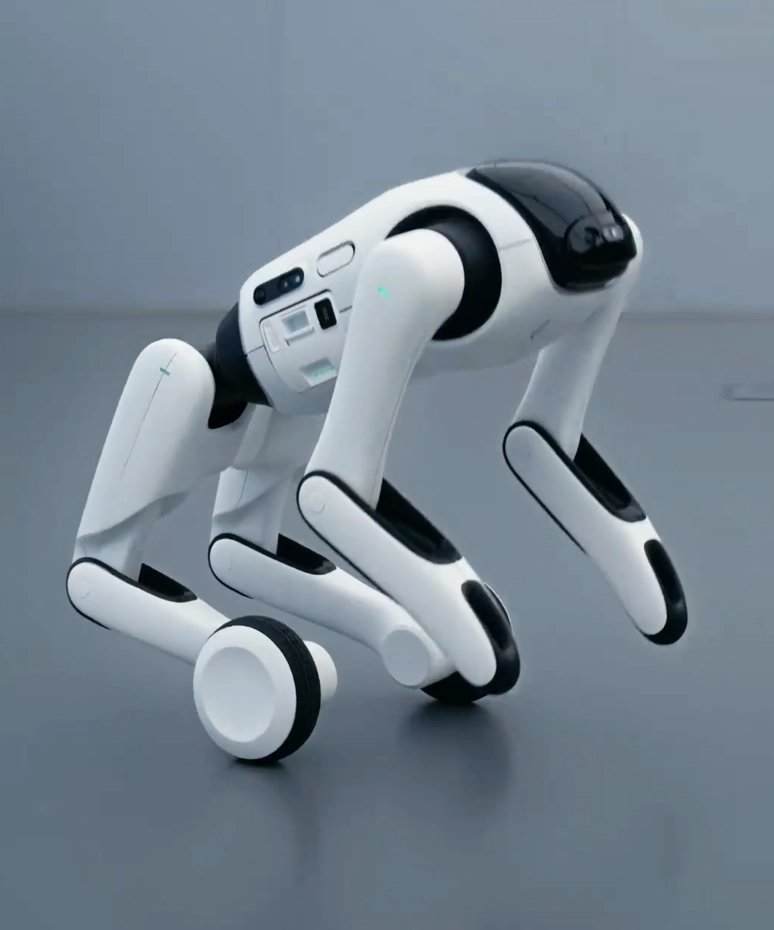
Swancor Qiyuan T1 to Showcase Transformative Personal Robot at WAIC 2026
Swancor Qiyuan's T1, touted as the world's first 'transformable personal robot,' will be publicly demonstrated on July 17, 2026, at the World Artificial Intelligence Conference (WAIC 2026). This robot features a unique Transformer architecture that allows seamless switching between humanoid and quadruped modes, enhancing its interaction and mobility capabilities in various home environments. The significance of the T1 lies in its ability to autonomously select its form based on terrain and tasks, moving beyond traditional manual controls. This innovation is expected to expand the scenarios in which personal robots can operate, addressing common household obstacles while reducing the overall ownership cost for users by eliminating the need for multiple devices. Looking ahead, Swancor's strategy focuses on content creation, education, and companionship rather than general household chores. With offline experience stores already established in major Chinese cities, the T1's success will depend on its pricing and acceptance in the market, potentially proving that adaptable robots hold greater commercial value than those merely mimicking human form.
Transformable Robots Home Robotics AI Technology Robotic Innovation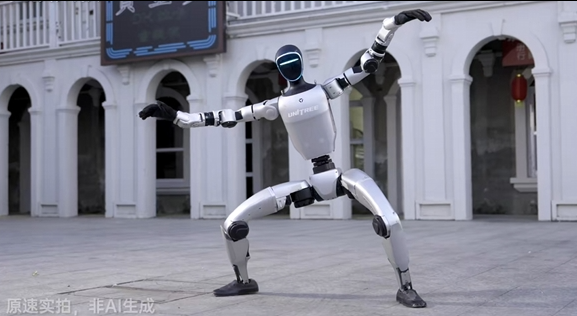
Obayashi Corporation Launches 18-Month Project with Humanoid Robots in Construction
Obayashi Corporation has initiated an 18-month joint verification project utilizing humanoid robots at a construction site near Tokyo. The project aims to address the critical labor shortage in Japan's construction industry, where over one-third of workers are aged 65 and older, while less than 10% are under 30. The introduction of humanoid robots is seen as a survival strategy rather than a gimmick. The selected humanoid robot, UTree H1, features 19 degrees of freedom and is designed for repetitive material handling tasks in uneven environments. Obayashi's technology lead emphasized that the project's core metric is not replacement rate but rather the enhancement of human-robot collaboration efficiency, indicating that the initial role of the robots will be to assist rather than fully replace human workers. The project also highlights the cost advantages of UTree's supply chain, which is over 40% lower than similar products from Europe and the U.S. This affordability makes the UTree H1 accessible to large rental companies in Japan. Experts note that successful integration of humanoid robots into existing construction workflows will be crucial for scaling up their use in the industry. No further timeline was disclosed at the time of publication.
Humanoid Robots Construction Automation Robotics AI Building Technology
Robots Face Challenges in Basic Tasks Despite Advances in Embodied Intelligence
Over the past year, the robotics industry has engaged in a competitive race focused on enhancing the computational power, parameters, and algorithms of robotic 'brains.' While advancements in reasoning capabilities are evident, robots still struggle with basic tasks such as grasping objects or performing precise manipulations. This discrepancy raises questions about the effectiveness of current sensory technologies. The core issue lies in the limitations of robotic perception, which relies heavily on either pure vision or multi-sensor fusion approaches. Multi-sensor fusion, favored by many embodied intelligence manufacturers, combines various sensors to improve robustness and accuracy. However, this method introduces challenges related to data synchronization and processing overhead, hindering the scalability of embodied intelligence. Conversely, pure vision systems, exemplified by Tesla's approach, depend on 2D RGB cameras to reconstruct 3D environments. This method lacks depth information and can falter in challenging visual conditions. Both approaches suffer from the loss of information during data transmission and processing, resulting in robots receiving 'second-hand data' rather than real-time, unified information from the physical world. No further timeline was disclosed at the time of publication.
Robotic Vision Embodied Intelligence Sensor Technology AI Automation
Drone as First Responder Programs Transform Police Situational Awareness and Response
Drone as First Responder (DFR) programs are revolutionizing how law enforcement agencies collect information and respond to emergencies. Former police chief Mike Moulton emphasizes that DFR represents a significant advancement in police situational awareness, akin to the introduction of the police radio. DFR allows for real-time aerial insights, enabling officers to arrive at scenes with a clearer understanding of the situation. The importance of DFR lies in its ability to enhance situational awareness and improve response outcomes. Unlike traditional methods that rely on limited information from callers, DFR provides live video feeds, allowing officers to assess situations more accurately before arriving on the scene. This capability has led to a reduction in unnecessary officer deployments, as evidenced by the Chula Vista model, which has resolved a quarter of its drone missions without dispatching officers. Looking ahead, the continued adoption of DFR programs will likely reshape police operations, particularly for agencies that previously lacked access to aerial support. However, challenges remain, such as operational limitations in terms of launch radius and weather conditions. No further timeline was disclosed at the time of publication.
Applications Drone News Drone News Feeds emergency response Featured – Safety and Security News
Nvidia Launches Cosmos 3 Edge AI Model and Expands Physical AI Ecosystem in Japan
Nvidia has introduced its new AI model, Cosmos 3 Edge, aimed at enhancing physical AI applications in Japan. This model is designed to help systems perceive and navigate real-world environments, marking a significant step in Nvidia's strategy to penetrate the physical AI market. The expansion is part of CEO Jensen Huang's visit to Japan, where Nvidia is forming partnerships with local industrial leaders such as Fujitsu, Hitachi, and Kawasaki Heavy Industries. Huang emphasized the potential for Japan to reinvent its manufacturing sector for intelligent industries, highlighting the country's historical significance in modern manufacturing. Looking ahead, Nvidia is also targeting Japan's healthcare and biotechnology sectors, collaborating on initiatives like the Tokyo-1 AI drug discovery consortium. With Japan's AI market projected to reach $27.9 billion by 2029, Nvidia's efforts could significantly influence the landscape of AI adoption in the region. No further timeline was disclosed at the time of publication.
China's Robots Learning Human Skills Through Real-World Simulations
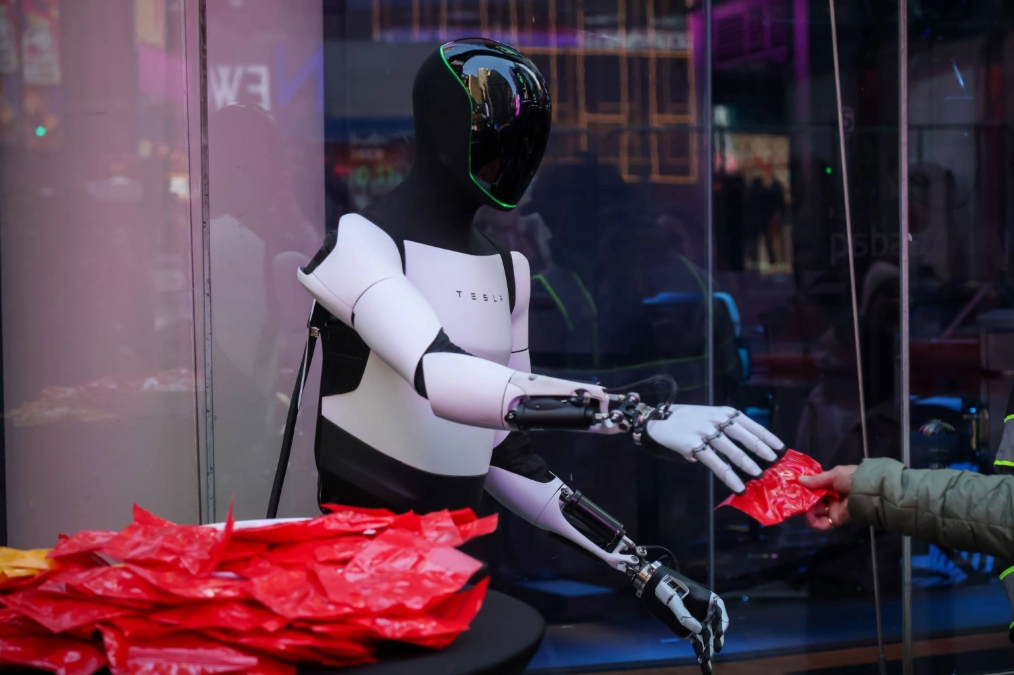
In a discreet industrial park in suburban Beijing, a humanoid robot is meticulously stacking bags of chips on a shelf. Nearby, workers are filming their actions of folding sheets and handling cushions, which will serve as 'textbooks' for the robots. China is undertaking a significant initiative to transition robots from laboratories to simulated environments like supermarkets, factories, and homes to learn human skills, and the scale of this 'internship' is rapidly expanding. This initiative is crucial as robots need to understand the physical world's rules, such as how to hold an egg without breaking it or catch a cup of water before it slips off a tray. Unlike the U.S., which relies on data purchasing and low-cost data collection in countries like India and Vietnam, China has established at least 64 data collection and training centers nationwide, with over 20 more under construction. At the Beijing Humanoid Robot Innovation Center, more than 120 robots are being trained across 30 scenarios in six major sectors, forming a comprehensive 'robot training network' across the country. As hardware advancements continue, Chinese robotics companies are focusing on enhancing their AI capabilities. Yushu Technology is preparing for an IPO, pledging nearly half of its $610 million fundraising to AI model development. By mid-2026, funding in China's embodied intelligence sector has already exceeded 90 billion yuan, five times that of the previous year. With plans to deploy over 1,000 humanoid robots in factories this year and more than 10,000 by 2027, China is leveraging its organizational capabilities to collect data at scale, positioning itself advantageously in the race towards general intelligence.
Humanoid Robots AI Robotics Training Data Collection Automation




Leave a comment