


RobCo
"Zero Upfront"
Munich-based industrial robotics company offering a modular, AI-driven autonomous manufacturing platform delivered as robotics-as-a-service, founded 2020.
Contact RobCo
WEBSITE
https://www.rob.coHEADQUARTERS
Germany

Company Facts
Founded
2020
Primary Role
Manufacturer
Company Size
-
Primary Region
Europe
Annual Sales
-
Funding Stage
-
Funding Total
-
Keywords
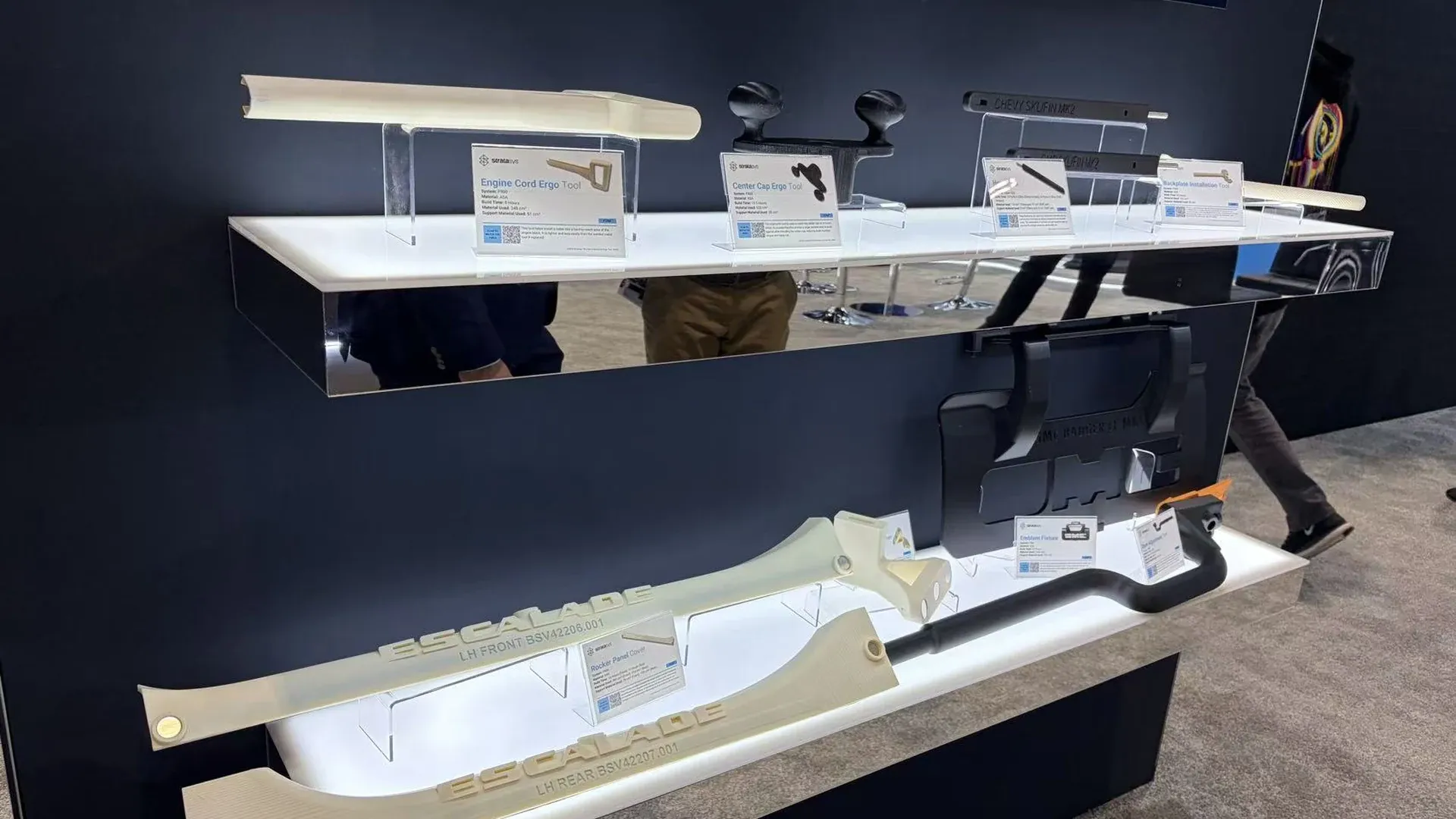
Stratasys at IMTS 2026: GM Scales Additive to 20+ Plants
Stratasys is rolling additive out across 20+ GM plants while Toyota prints robot grippers. Booth build data, the F870, and where the cost case breaks.

IMTS 2026 Preview: Record Orders and the Automation Story
IMTS 2026 opens in Chicago with 1,788 exhibitors and record H1 machine tool orders. What the USMTO data says about automation, and the booths to see.

Foxconn and Alt Establish Joint Venture in Robotics with Equal Ownership Stakes
Foxconn Technology Group and Alt Automotive Technology have jointly established a new company, Beijing Futekang Intelligent Robotics Technology Co., Ltd., with equal stakes of 45% each. This unusual ownership structure suggests a collaborative decision-making process, as both companies bring unique resources to the table. The company focuses on manufacturing and selling intelligent and industrial robots, indicating a strong emphasis on production capabilities rather than research and development. The partnership is significant as it reflects the automotive supply chain's shift towards robotics, particularly in humanoid robots, where both companies have overlapping expertise. Foxconn contributes its precision manufacturing and mass production experience, while Alt brings automotive engineering and system integration knowledge. This collaboration aims to leverage existing supply chain resources to create a competitive edge in the robotics market. Future product offerings and target applications remain undisclosed, but the company's operational scope suggests flexibility in both industrial and consumer robotics. The initial products are likely to be tested within the existing ecosystems of Foxconn and Alt, utilizing their established customer bases and operational needs for automation.
Robotics Manufacturing Automotive Engineering Humanoid Robots
Q1 and T1 Robots from Qiyuan Robotics Set to Transform Home Interaction
Qiyuan Robotics is preparing to deliver its Q1 robot, which stands 88 cm tall and weighs 15 kg, designed for companionship and entertainment. The company, part of the Upwind New Materials group, is also launching the T1, a transformable robot. CEO Tian Hua emphasizes that personal robots should not merely replicate industrial robots but instead create a new form of human-robot interaction. The significance of these developments lies in the potential for personal robots to become a primary interface in homes, connecting AI, digital services, and everyday life. Unlike structured factory environments, homes present unpredictable challenges, which is why Qiyuan has opted for a smaller, safer design for the Q1. The T1, standing about one meter tall, can switch between wheeled and quadrupedal forms, indicating a shift in the industry towards robots that better fit human lifestyles. Looking ahead, Qiyuan Robotics faces the challenge of moving from prototypes to mass production, with plans for a production line capable of handling thousands of units. The company has secured 210 million yuan in prepayments for its consumer-grade robots and is investing significantly in R&D. Analysts remain cautious, noting that while the home market is promising, it may take longer to reach commercialization compared to industrial applications. The real test will be whether users will keep these robots in their homes after initial trials.
Personal Robots Home Automation AI Consumer Robotics
Finalists for the CIIF Robotics Award Showcased at the 26th China International Industry Fair
On September 9, the 26th China International Industry Fair (CIIF) hosted the presentation of finalists for the CIIF Robotics Award. This event was organized by the CIIF Robotics Exhibition Department in collaboration with the Shanghai Robotics Industry Association, ensuring a thorough evaluation process to select benchmark products in the industry. A total of 36 products from 36 companies across the country were nominated for the award. The significance of this event lies in its role in promoting innovation and excellence in robotics. Among the finalists is FANUC's new generation of heavy-duty industrial robots, designed for automation scenarios with a load capacity ranging from 120kg to 300kg. This series emphasizes performance upgrades, energy efficiency, and reduced operational costs, aiming to enhance production efficiency and support the transition to high stability and intelligent automation in industrial production. Looking ahead, the competition highlights the advancements in robotics technology, including the MOTOMAN NEXT from Yaskawa, which integrates AI capabilities for improved operational efficiency. No further timeline was disclosed at the time of publication, but the ongoing developments in robotics are expected to drive significant changes in manufacturing processes and automation solutions in the near future.
Industrial Robotics Automation Technology AI Robotics Collaborative Robots
ROBOTTODAY WEEKLY September 7 – 11, 2026
This week in robotics: JD.com plans to deploy three million robots across its logistics network, XPeng commissions its IRON humanoid production line, FANUC and Google launch an AI arc-welding agent, and Unitree shares fall 53% from their post-IPO high. September 7–11, 2026.

AI Enhancements in Robotics: Balancing Power and Risks 25 Years After 9/11
The integration of AI in robotics has significantly enhanced surveillance capabilities, raising concerns about potential risks. Experts warn that the rapid development of AI technologies, particularly in industrial robots and drones, could lead to misuse in sensitive applications, such as monitoring and security. As companies race to innovate, the implications for privacy and ethical considerations become increasingly critical. The advancements in robotics, including the MOFU's adjustable height and AEON's task validation, demonstrate the potential for improved efficiency and precision in industrial settings. However, the unchecked corporate competition in AI development poses unprecedented risks to society, as highlighted by researchers. The ability of systems like UnifoLM-X2-1.0 to predict and adapt in real-time further emphasizes the need for responsible deployment of these technologies. Looking ahead, the industry must address the ethical implications of AI in robotics, particularly in surveillance applications. With over 80 percent of production processes automated, the focus will be on ensuring that these technologies are used responsibly. No further timeline was disclosed at the time of publication.
AI and Robotics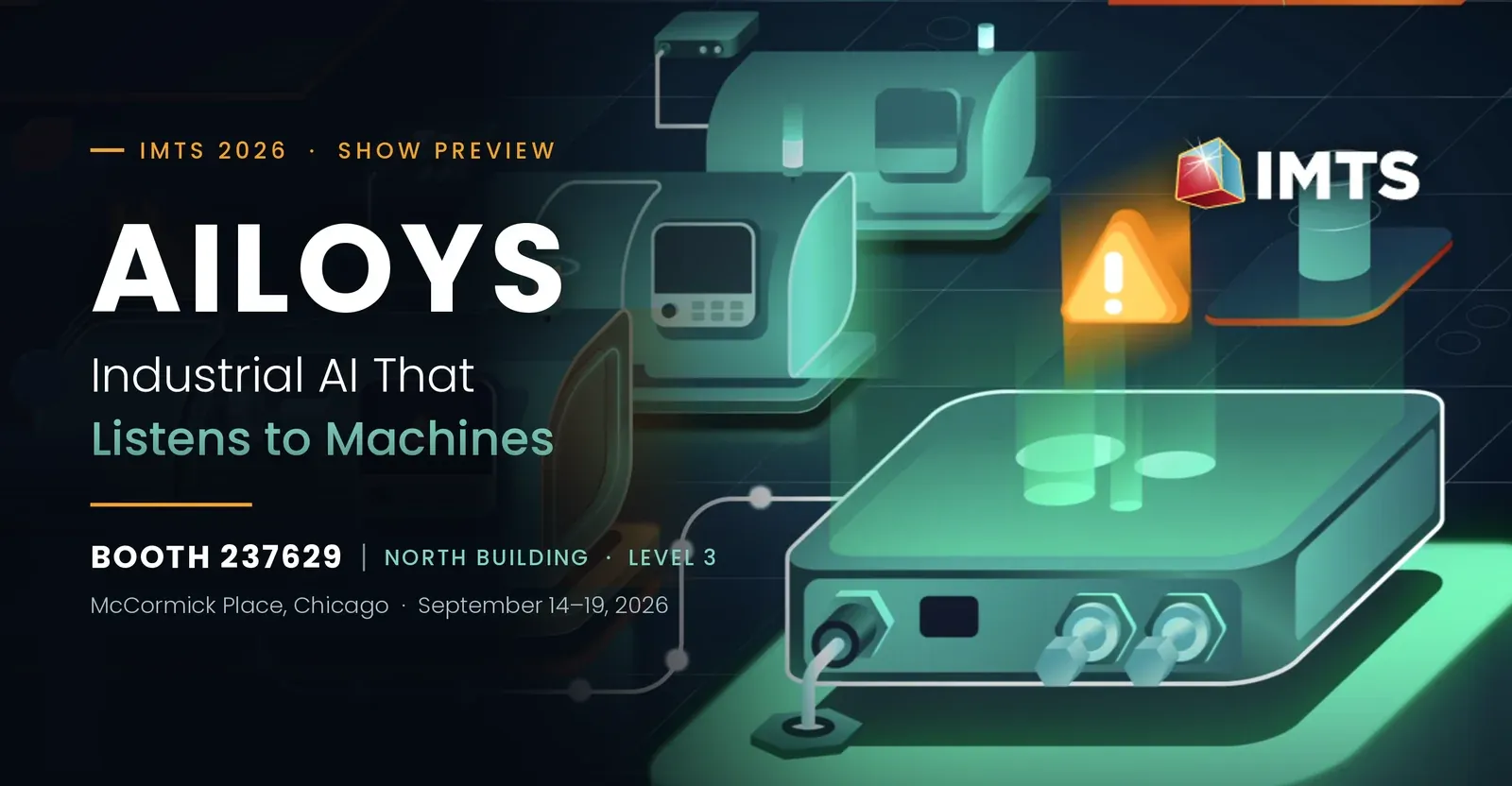
Ailoys Brings Acoustic Industrial AI to IMTS 2026
Berlin's Ailoys brings acoustic industrial AI to IMTS 2026, Booth 237629. Edge sensors catch process drift on existing machines before scrap appears.

Maven Robotics Secures $100 Million Series A Funding for Industrial Robotics Development
Maven Robotics has successfully raised $100 million in Series A funding to enhance its industrial robotics platform aimed at logistics and manufacturing. The funding round included participation from RoboStrategy, LocalGlobe, Vine Ventures, and XTX Ventures. Maven is focused on developing a general-purpose robotics system that will expand its applications beyond palletizing and tote handling into more complex material handling and assembly tasks. This funding is particularly significant as it addresses the growing U.S. labor shortages in industrial sectors. Maven's platform integrates hardware, software, and AI, allowing for reliable operation across multiple shifts. The company has already deployed its robots with a Fortune 250 consumer packaged goods company, where they are expected to achieve over 100,000 hours of autonomous operation by the end of 2026. Looking ahead, Maven Robotics aims to surpass 1 million hours of autonomous operation by the end of 2027. The company is entering a robust market, with over $18.8 billion in global venture capital investment in robotics reported in the first half of 2026. This positions Maven to capitalize on the increasing demand for intelligent industrial automation solutions.
AI AI Funding & Investment Robotics funding industrial robotics LocalGlobe
Maven Robotics Secures $100 Million Series A for Innovative General-Purpose Industrial Robotics System
Maven Robotics, an intelligent industrial robotics company, has announced the completion of a $100 million Series A funding round. This funding was secured from notable investors including RoboStrategy, LocalGlobe, Vine Ventures, and XTX Ventures. The company aims to revolutionize material handling and assembly tasks with its innovative robotics solutions. The significance of this funding lies in Maven Robotics' ambition to achieve 1 million hours of autonomous real-world operations. As the creator of the world's first general-purpose robotics system for industrial work, Maven is poised to make a substantial impact on logistics and manufacturing sectors. This investment will support the development and deployment of their intelligent robotics technology. Looking ahead, industry observers should monitor Maven Robotics' progress in scaling its operations and the adoption of its robotics systems in various industrial applications. No further timeline was disclosed at the time of publication.
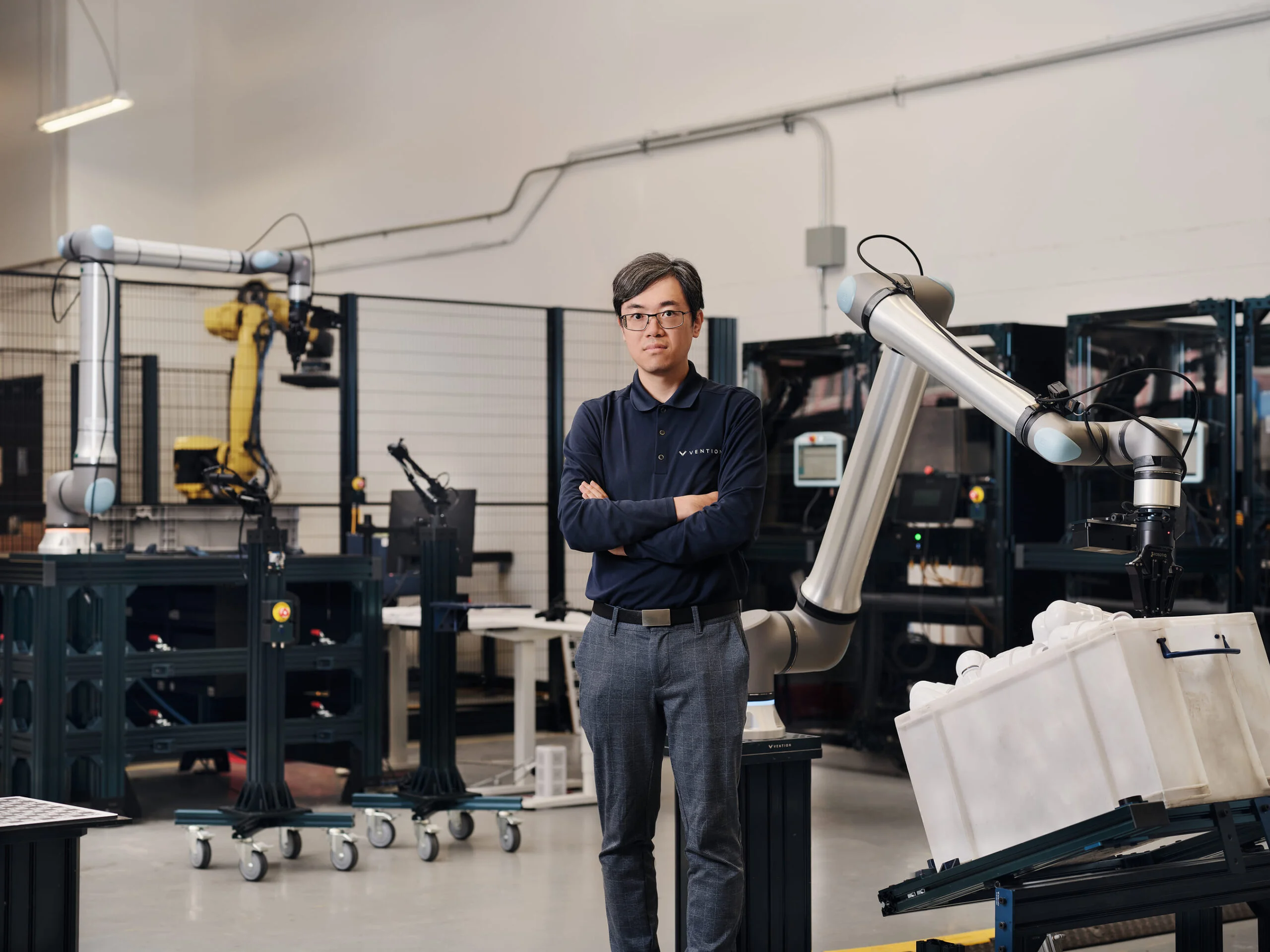
Vention Launches Montreal AI Lab to Enhance Industrial Robotics Capabilities
Vention has inaugurated a physical AI research lab in Montreal aimed at advancing robotic manipulation for manufacturing applications. The lab, directed by Jimmy Li and advised by Joelle Pineau, will leverage industrial data and customer insights to develop scalable robotic systems. With a focus on real-world production challenges, the lab aims to create technologies that enhance reliability and reduce costs in automation. This initiative is significant as Vention's physical AI segment has seen a remarkable 400% revenue increase over the past year, indicating a growing demand for advanced automation solutions. The lab's unique approach integrates academic research with practical production feedback, allowing for rapid development and testing of new robotic systems. This model positions Vention to address complex manufacturing tasks that have traditionally been difficult to automate. Looking ahead, Vention's Montreal lab is expected to expand its team and generate new intellectual property. The company plans to release a public software development kit for its GRIIP manipulation pipeline, which breaks down robotic tasks into manageable stages. No further timeline was disclosed at the time of publication.
AI AI Funding & Investment Robotics Canada.Montreal computer vision industrial robotics
Xpeng Motors Launches Automated Production Line for Humanoid Robot IRON in Guangzhou
In September 2026, Xpeng Motors officially launched the automated production line for its humanoid robot IRON in Guangzhou, aiming for mass production by the end of the year. This initiative signifies the transfer of quality management systems from automotive manufacturing to the robotics sector, as stated by Xpeng CEO He Xiaopeng during the launch ceremony. This move is part of a broader trend, with over 140 humanoid robot manufacturers in China, which released more than 330 humanoid robot products in the past year. According to Omdia, Chinese companies accounted for nearly 80% of the global humanoid robot shipment volume in 2025, with ZhiYuan Robotics leading in deliveries. The rapid integration of advanced algorithms into hardware by Chinese manufacturers has given them a competitive edge in this emerging market. Despite the excitement, concerns remain about the sustainability of the industry, as many companies are startups focusing on basic functionalities. The launch of Xpeng's production line may serve as a model for integrating established automotive manufacturing practices into robotics, but significant challenges remain before achieving true commercial viability in the humanoid robot sector.
Humanoid Robots Robot Manufacturing Automation AI Industrial Robotics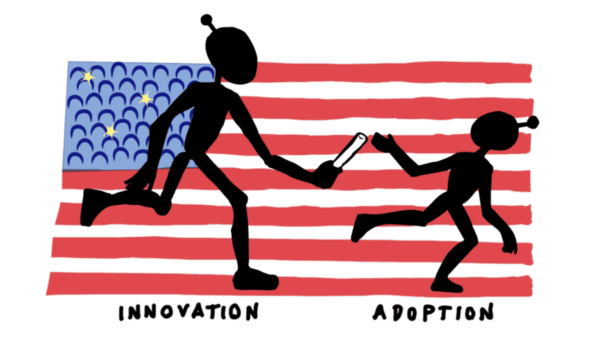
U.S. Robotics Sector Seeks National Strategy for Innovation and Manufacturing
U.S. robotics researchers and industry leaders are advocating for a cohesive national strategy to enhance basic research and boost domestic production of robots. Recent advancements, such as Boston Dynamics' Atlas performing complex movements, underscore the U.S.'s role as a leader in technological innovation. However, critics warn that without a focus on manufacturing robotic hardware domestically, the U.S. risks losing economic benefits from its innovations. The U.S. has historically relied on a free-market approach to drive technological advancements, significantly contributing to its GDP and leadership in artificial intelligence. The Department of Defense has emerged as a key player in funding robotics, with a proposed $13.4 billion budget for autonomous systems in 2026, reflecting the growing importance of robotics in military applications. Despite these investments, the U.S. faces challenges in competing in physical manufacturing, which requires substantial capital and long-term commitment. As the U.S. ranks third in industrial robotics consumption, the reliance on foreign imports for manufacturing poses a risk to national security. The lack of domestic infrastructure for robotic production contrasts sharply with countries like Japan, which has a minimal dependency on imports. Moving forward, the U.S. must address these vulnerabilities to maintain its competitive edge in the global robotics landscape. No further timeline was disclosed at the time of publication.

China’s Dexterous Hand Industry, 2026 Part 3 — The Players
Five vendor archetypes, MIR’s composite top ten, eight company profiles and six field deployments — every firm linked to the RobotToday supplier directory.

RobotToday Weekly Briefing August 31 – September 4, 2026
This week in robotics: NVIDIA agrees to buy Hugging Face for $12.93 billion, Figure signs a $3.5 billion compute deal with Nscale for up to 100,000 GPUs, Tesla launches steering-wheel-free Cybercabs in Austin under NHTSA scrutiny, and Uber and Wayve bring the UK its first autonomous rides. August 31 – September 4, 2026.

Why Pittsburgh Compressed 12 Events Into One Week | StartUP PGH 2026
Pittsburgh companies raised $2.29 billion last year, but the region's own investors have just $23.2 million left to deploy, less than one average deal. StartUP PGH 2026, opening September 14 with 250-plus robotics exhibitors and 65-plus pitching startups, is built to bring outside investors to town.

Teradyne’s IP Offensive and the Next Phase of Cobot Competition
Teradyne Robotics filed two European IP actions against Chinese cobot makers Elite Robots and JAKA within six months of 2026. This briefing maps the timeline, the differences between the cases, each side’s position, and what it signals about collaborative robot market competition.
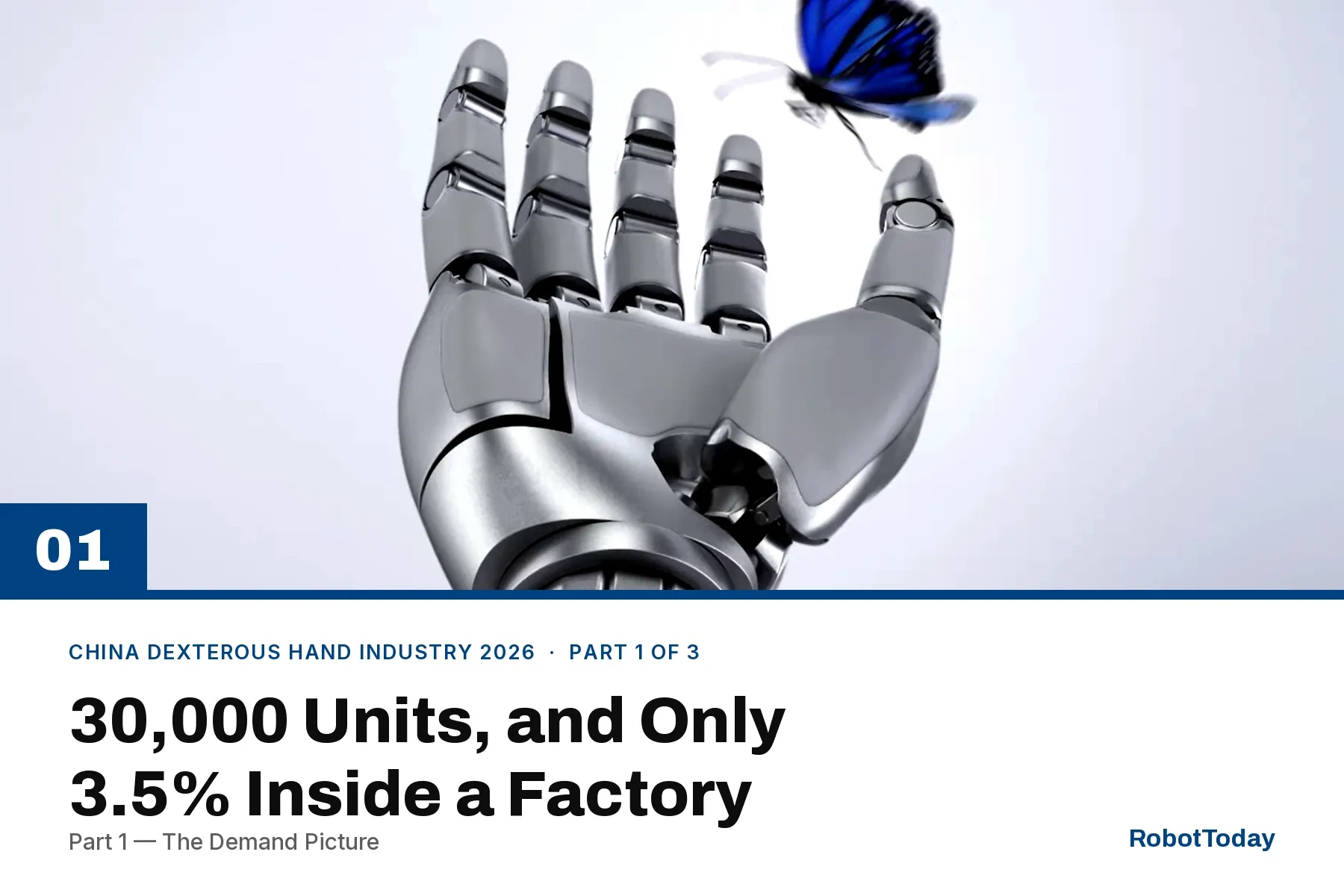
China’s Dexterous Hand Industry, 2026 Part 1 — The Demand Picture
MIR Databank puts China dexterous hand shipments above 30,000 units in 2026, yet only 3.5% of 2025 demand came from factory production. Part 1 of 3.
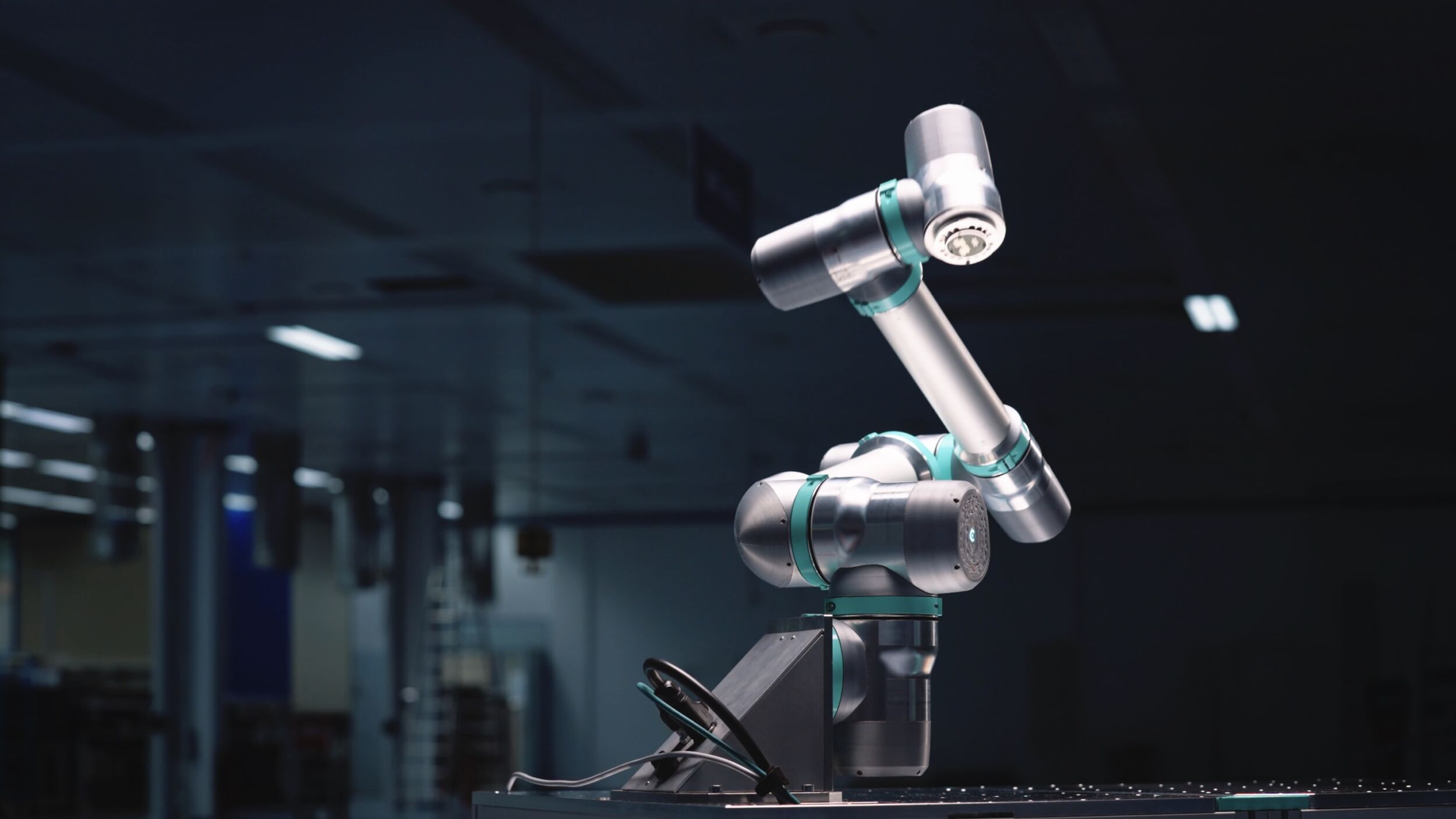
Partnership: Koenig & Bauer and RobCo
Koenig & Bauer, a leading manufacturer of printing presses, has announced a strategic partnership with Munich-based robotics scale-up RobCo. This collaboration aims to enhance the integration of robotics within the printing industry, leveraging RobCo's innovative technology to improve efficiency and productivity. The partnership reflects Koenig & Bauer's commitment to advancing automation in its operations and adapting to the evolving demands of the market. The announcement comes as both companies seek to capitalize on the growing trend of automation in manufacturing, positioning themselves at the forefront of industry advancements.
Allgemein
RobotToday Weekly Industry Briefing: Feb 2 – 6, 2026
Robotics shifted from demos to deployment post-CES 2026, led by China’s humanoid scale, AI robot brains, and accelerating industrial adoption.


