


MESH Automation, Inc.
US-based robotic automation system integrator specializing in welding, palletizing, machine tending, and custom flexible automation system design and build.
Contact MESH Automation, Inc.
WEBSITE
https://www.meshautomationinc.comPHONE
+90 212 485 03 55HEADQUARTERS
United States

Company Facts
Founded
1999
Primary Role
System Integrator
Company Size
-
Primary Region
North America
Annual Sales
-
Funding Stage
-
Funding Total
-

Universal Robots Introduces Gen 7 Platform for Enhanced Industrial Automation and AI
Universal Robots, a Teradyne Robotics company, has launched its seventh-generation industrial robot platform, Gen 7, aimed at advancing industrial automation and physical AI applications. This new platform was introduced at the IMTS trade show and features an innovative design that includes new robot arms, a controller, a teach pendant, and a tool flange, all centered around the PolyScope X robot technology. The introduction of Gen 7 is significant as it represents a major step forward in the capabilities of industrial robots, enhancing their functionality in automation processes and AI integration. This development is expected to improve operational efficiency and flexibility in various industrial settings, making it a crucial advancement for manufacturers looking to optimize their production lines. Looking ahead, industry professionals should monitor the adoption of the Gen 7 platform and its impact on the market for industrial automation solutions. No further timeline was disclosed at the time of publication.
Industrial robots News cobots collaborative robots g-series gen 7
Domestic Brands Capture 55% of China's Industrial Robot Shipments Led by Estun
Domestic brands in China have now secured approximately 55% of the industrial robot shipments, indicating a significant shift towards local capabilities. Estun has emerged as the leader in volume, while Inovance has made notable advancements in SCARA robots and servo systems. However, the high-end automotive and semiconductor process software sectors continue to pose challenges for these domestic brands. This shift is crucial as it reflects China's growing emphasis on self-reliance in technology and manufacturing. The dominance of local brands like Estun and Inovance highlights the potential for innovation and competitiveness within the domestic market. Despite these advancements, the difficulty in replacing high-end software solutions indicates that there is still a reliance on foreign technology in certain critical areas. Looking ahead, it will be important to monitor how domestic brands continue to evolve and address the challenges posed by high-end software in the automotive and semiconductor industries. No further timeline was disclosed at the time of publication.

A3 Enhances Industrial Robotics Course with New Business Case for Automation Module
The Association for Advancing Automation (A3) has enhanced its Introduction to Industrial Robotics course by adding a new module that focuses on the business case for automation. This addition aims to assist learners in assessing the value and return on investment (ROI) that automation can provide in various scenarios. This expansion is significant as it allows participants to not only learn about the technical aspects of robotics but also to understand the strategic implications of implementing automation in their operations. By evaluating when and where automation is beneficial, businesses can make informed decisions that align with their financial goals. Looking ahead, it will be important to monitor how this new module influences the adoption of automation technologies in various industries. A3's initiative could lead to increased interest in robotics training and a greater understanding of the economic benefits of automation. No further timeline was disclosed at the time of publication.

SimScale Engineering AI Moves Physics Simulation to the Exact Moment a Design Decision Gets Made, Inside Onshape
SimScale’s Engineering AI Agent runs CFD, thermal, EMag and FEA from one prompt inside PTC’s Onshape, starting from CAD that isn’t simulation-ready.
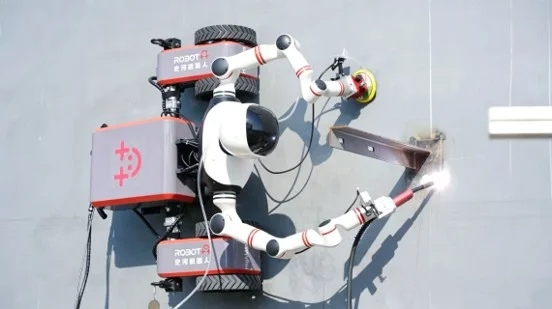
RobotPlusPlus Secures Series C Funding to Enhance Global Industrial Robotics Operations
RobotPlusPlus has successfully raised hundreds of millions of yuan in Series C funding to broaden its industrial robotics business on a global scale. The funding round was led by Qianggang Capital Fund, with contributions from GIG Capital Group, Sealand Innovation, and Juntong Capital, while existing investor Fosun RZ Capital increased its stake. This funding is crucial as RobotPlusPlus aims to develop embodied AI systems for hazardous work environments, enhancing safety and efficiency in industrial operations. The company has reported over 2 million operating hours for its robots and has completed hull derusting on more than 10,000 cargo vessels across 100 shipyards, demonstrating its significant market presence. Looking ahead, RobotPlusPlus plans to expand its robotic systems beyond specialized machines to cater to various industrial operations. The Series C funding will support the development of AI models tailored for specific environments, furthering automation in high-risk settings. No further timeline was disclosed at the time of publication.
AI AI Funding & Investment Robotics China funding industrial robotics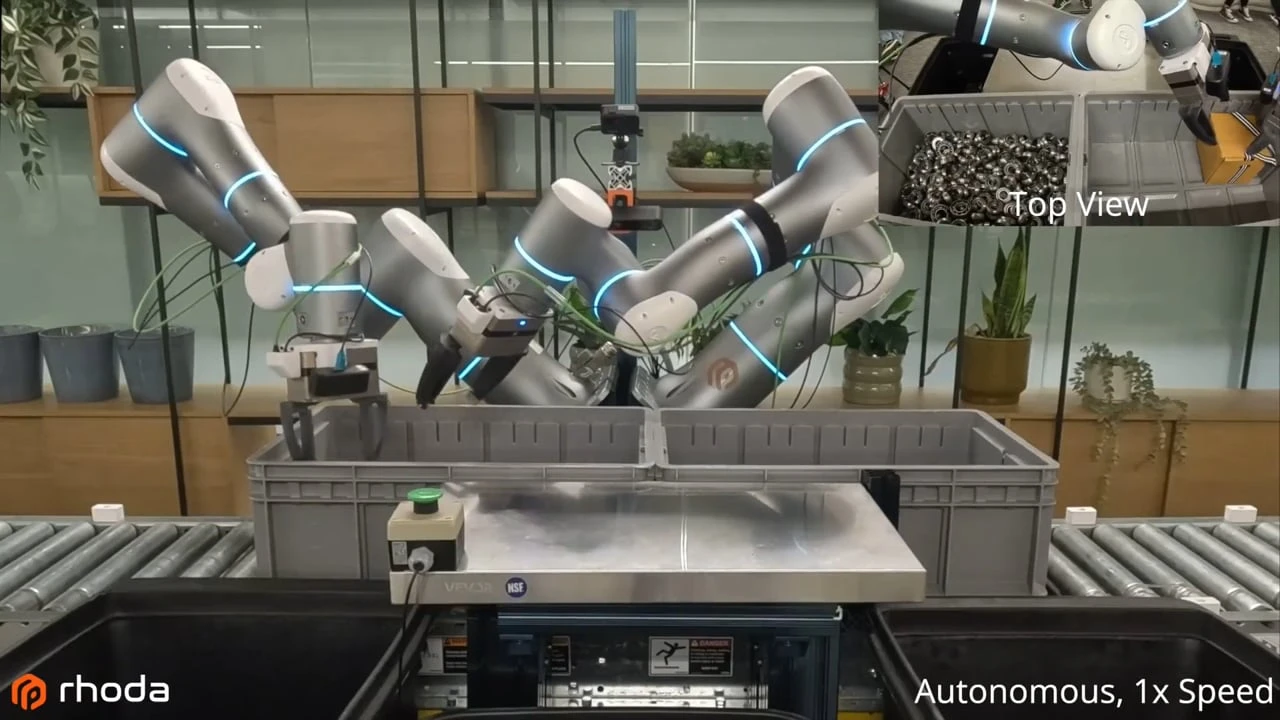
Rhoda AI Evaluates Impact of Web-Video Pretraining on Industrial Robot Performance
Rhoda AI has reported enhancements in industrial manipulation capabilities through scaled web-video pretraining, as detailed in a study released on September 10. The research tested various model sizes, achieving completion rates of 3.7%, 65.0%, 75.3%, and 84.7% in under 100 seconds for tasks like unpacking bearings and sorting waste, with the largest model scoring 94 out of 111. This study is significant as it explores a fundamental aspect of physical AI, demonstrating that larger models, while requiring more computational resources, can lead to improved performance. A separate fixed-size experiment indicated that increasing pretraining compute raised performance from 57.8% to 75.3%, suggesting that the amount of pretraining data and compute plays a crucial role in task execution efficiency. Looking ahead, Rhoda's approach, which utilizes the Direct Video-Action architecture, emphasizes the importance of causal video modeling in robot training. The company’s ongoing evaluations and adaptations of its models will be critical to understanding the future applications of video pretraining in robotics. No further timeline was disclosed at the time of publication.
US rhoda-ai
Boston Dynamics Introduces Industrial-Style Head for Atlas Robot Design
Boston Dynamics has redesigned its Atlas robot, incorporating an industrial-style head instead of human-like features. Mechanical engineer Taylor Frey-Baker emphasized that Atlas is intended for industrial environments, thus its appearance should reflect that purpose. The head lacks facial features and includes light rings that communicate the robot's operational status and intentions to nearby workers. This design choice is significant as it prioritizes safety and efficiency in shared workspaces. The head's lighting interface provides immediate visual cues about Atlas's actions, reducing ambiguity in industrial settings. The robot is equipped with HDR stereo cameras that enhance environmental perception, allowing operators to navigate challenging lighting conditions effectively. Looking ahead, the integration of the head as a sensor carrier and status indicator positions Atlas to work safely and predictably alongside human workers in factories and warehouses. No further timeline was disclosed at the time of publication.
Industrial Robots Robot Design Automation Technology Safety Systems
PrimeLite Robot Enhances Classroom Learning Through Embodied Intelligence
A small robot named PrimeLite, developed by Deep Intelligence, is designed for educational settings, allowing students to build their own robots from 3D-printed parts. This initiative aims to make embodied intelligence accessible in classrooms by addressing cost and safety concerns associated with traditional industrial robots. The significance of PrimeLite lies in its innovative design and educational approach, which enables hands-on learning. By allowing students to assemble the robot from components, they gain insights into the engineering principles behind robotics. The robot's lightweight, 3D-printed shell ensures safety, while its open-source software facilitates interaction and learning. Looking ahead, PrimeLite has been adopted as the official development platform for the International AI Safety Olympic Competition (ICOA2026). The program is expanding to various educational institutions, including partnerships with Beijing 11th School and Renmin University Affiliated High School, to integrate embodied intelligence into research-based learning. No further timeline was disclosed at the time of publication.
Educational Robotics Embodied Intelligence 3D Printing AI in Education
Maven Robotics Secures $100 Million Funding to Expand General-Purpose Industrial Robots
Maven Robotics has officially launched, announcing $100 million in Series A funding from investors including RoboStrategy, LocalGlobe, Vine Ventures, and XTX Ventures. The company specializes in designing, building, and deploying intelligent robotics tailored for logistics and manufacturing applications. This funding is significant as it positions Maven Robotics to scale its operations and enhance its innovative general-purpose robotics systems. Founded in 2024, the company aims to revolutionize the industrial sector by providing versatile robotic solutions that can adapt to various tasks within logistics and manufacturing environments. Looking ahead, industry observers will be keen to see how Maven Robotics utilizes this funding to accelerate product development and market penetration. No further timeline was disclosed at the time of publication.
Industry News Robotics Autonomous robots general purpose robots industrial robotics
Foxconn and Alt Establish Joint Venture in Robotics with Equal Ownership Stakes
Foxconn Technology Group and Alt Automotive Technology have jointly established a new company, Beijing Futekang Intelligent Robotics Technology Co., Ltd., with equal stakes of 45% each. This unusual ownership structure suggests a collaborative decision-making process, as both companies bring unique resources to the table. The company focuses on manufacturing and selling intelligent and industrial robots, indicating a strong emphasis on production capabilities rather than research and development. The partnership is significant as it reflects the automotive supply chain's shift towards robotics, particularly in humanoid robots, where both companies have overlapping expertise. Foxconn contributes its precision manufacturing and mass production experience, while Alt brings automotive engineering and system integration knowledge. This collaboration aims to leverage existing supply chain resources to create a competitive edge in the robotics market. Future product offerings and target applications remain undisclosed, but the company's operational scope suggests flexibility in both industrial and consumer robotics. The initial products are likely to be tested within the existing ecosystems of Foxconn and Alt, utilizing their established customer bases and operational needs for automation.
Robotics Manufacturing Automotive Engineering Humanoid Robots
Q1 and T1 Robots from Qiyuan Robotics Set to Transform Home Interaction
Qiyuan Robotics is preparing to deliver its Q1 robot, which stands 88 cm tall and weighs 15 kg, designed for companionship and entertainment. The company, part of the Upwind New Materials group, is also launching the T1, a transformable robot. CEO Tian Hua emphasizes that personal robots should not merely replicate industrial robots but instead create a new form of human-robot interaction. The significance of these developments lies in the potential for personal robots to become a primary interface in homes, connecting AI, digital services, and everyday life. Unlike structured factory environments, homes present unpredictable challenges, which is why Qiyuan has opted for a smaller, safer design for the Q1. The T1, standing about one meter tall, can switch between wheeled and quadrupedal forms, indicating a shift in the industry towards robots that better fit human lifestyles. Looking ahead, Qiyuan Robotics faces the challenge of moving from prototypes to mass production, with plans for a production line capable of handling thousands of units. The company has secured 210 million yuan in prepayments for its consumer-grade robots and is investing significantly in R&D. Analysts remain cautious, noting that while the home market is promising, it may take longer to reach commercialization compared to industrial applications. The real test will be whether users will keep these robots in their homes after initial trials.
Personal Robots Home Automation AI Consumer Robotics
Your Three-Shift Robot Is on a One-Shift Maintenance Plan: Phase 3 and the PM System
A three-shift robot on a one-shift maintenance plan ages at triple speed. RSF Phase 3: three PM tiers, three trigger models, environmental corrections.
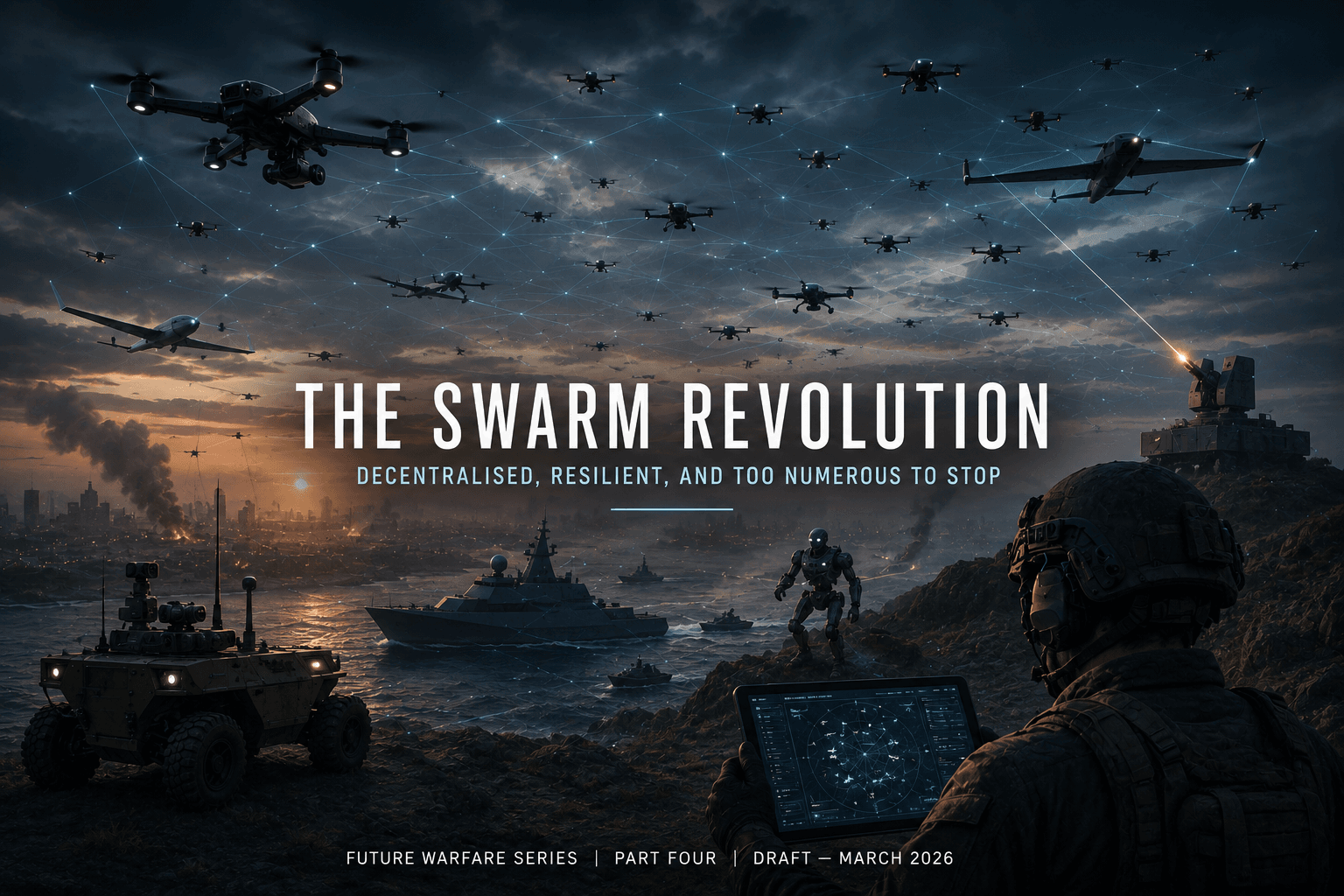
FUTURE WARFARE | The Swarm Revolution - Decentralised, Resilient, and Too Numerous to Stop
Inside the drone swarm revolution: Discover how Ukraine’s Swarmer tech, China’s AI formations, and the Pentagon's Orchestrator Prize are reshaping warfare.
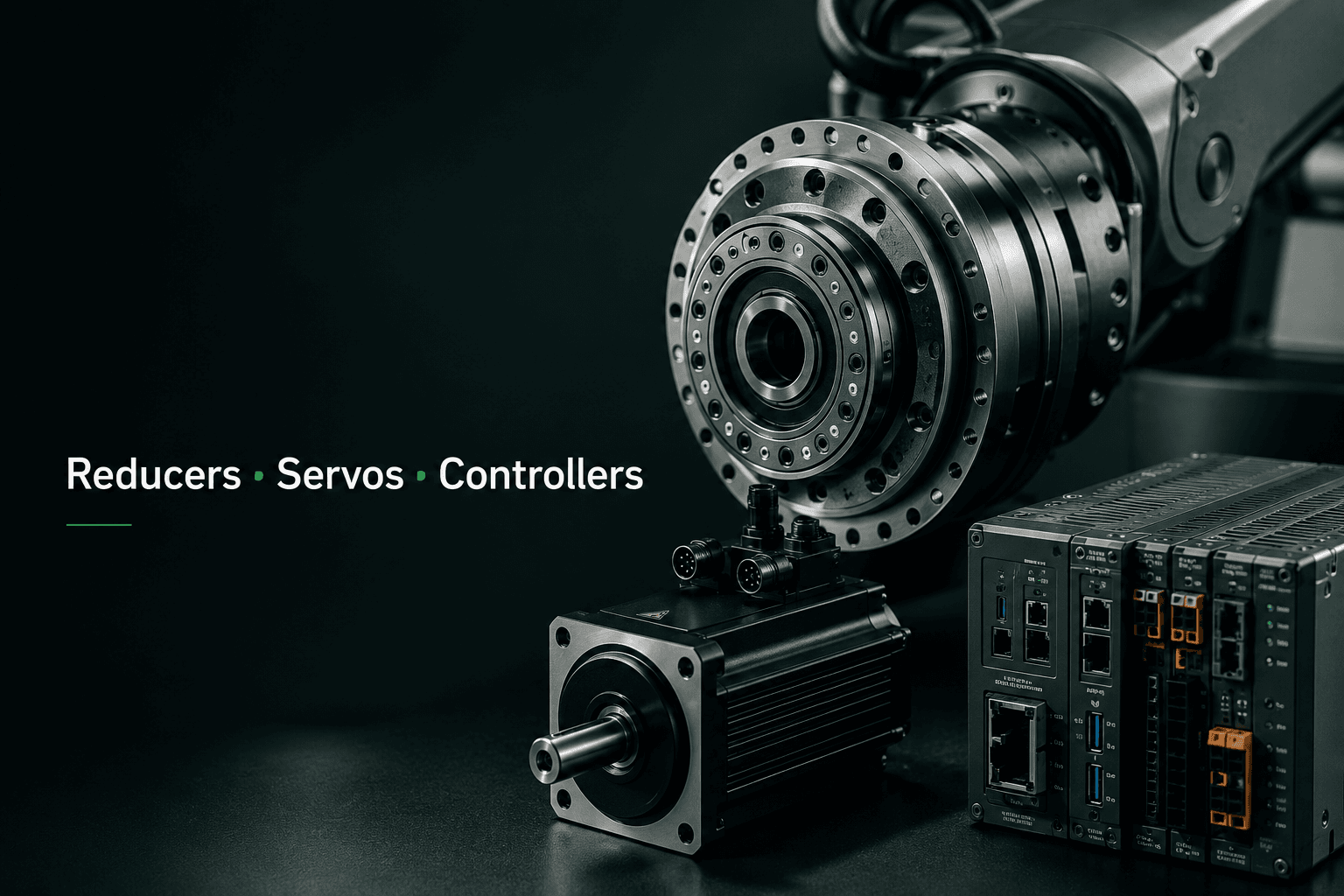
The Core Components Battle of Indutrial Robot, Reducers, Servo Systems & Controllers
A technology-first analysis of the three pillars driving industrial robot capability: precision reducers, servo systems, and motion controllers. Maps the full global supplier ecosystem — Japan, Europe, and China — from component specs to product generations and integration architectures.
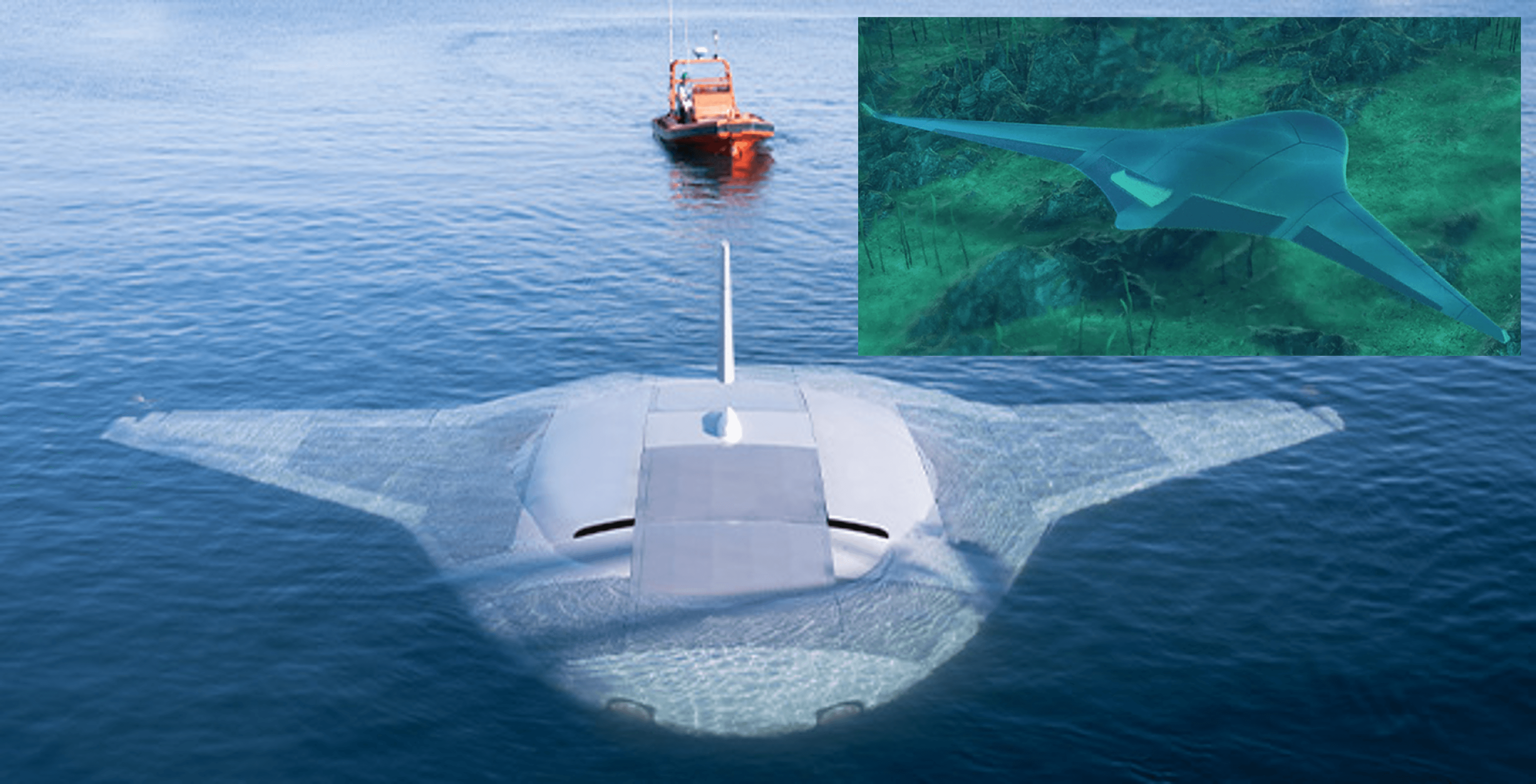
FUTURE WARFARE | Sea - Autonomous Surface Vessels & Unmanned Underwater Vehicles — The Hybrid Fleet Takes Shape
Ukraine’s ‘Sub Sea Baby’ autonomous torpedo struck a Russian Kilo-class submarine inside Novorossiysk harbour in December 2025 — the first confirmed underwater drone attack on a submarine in history. The U.S. Navy is requesting $5.3 billion for unmanned maritime systems in FY2026, a 70 percent year-on-year increase. Saronic Technologies went from prototype to $392 million production contract in under 12 months. And DARPA’s Manta Ray XL-UUV completed full-scale sea trials. This article maps the maritime autonomous systems revolution — from Ukraine’s improvised Black Sea fleet to the Pentagon’s hybrid manned–unmanned force of the 2030s, and from Saronic’s Franklin, Louisiana shipyard to Boeing’s 85-tonne robot submarine.
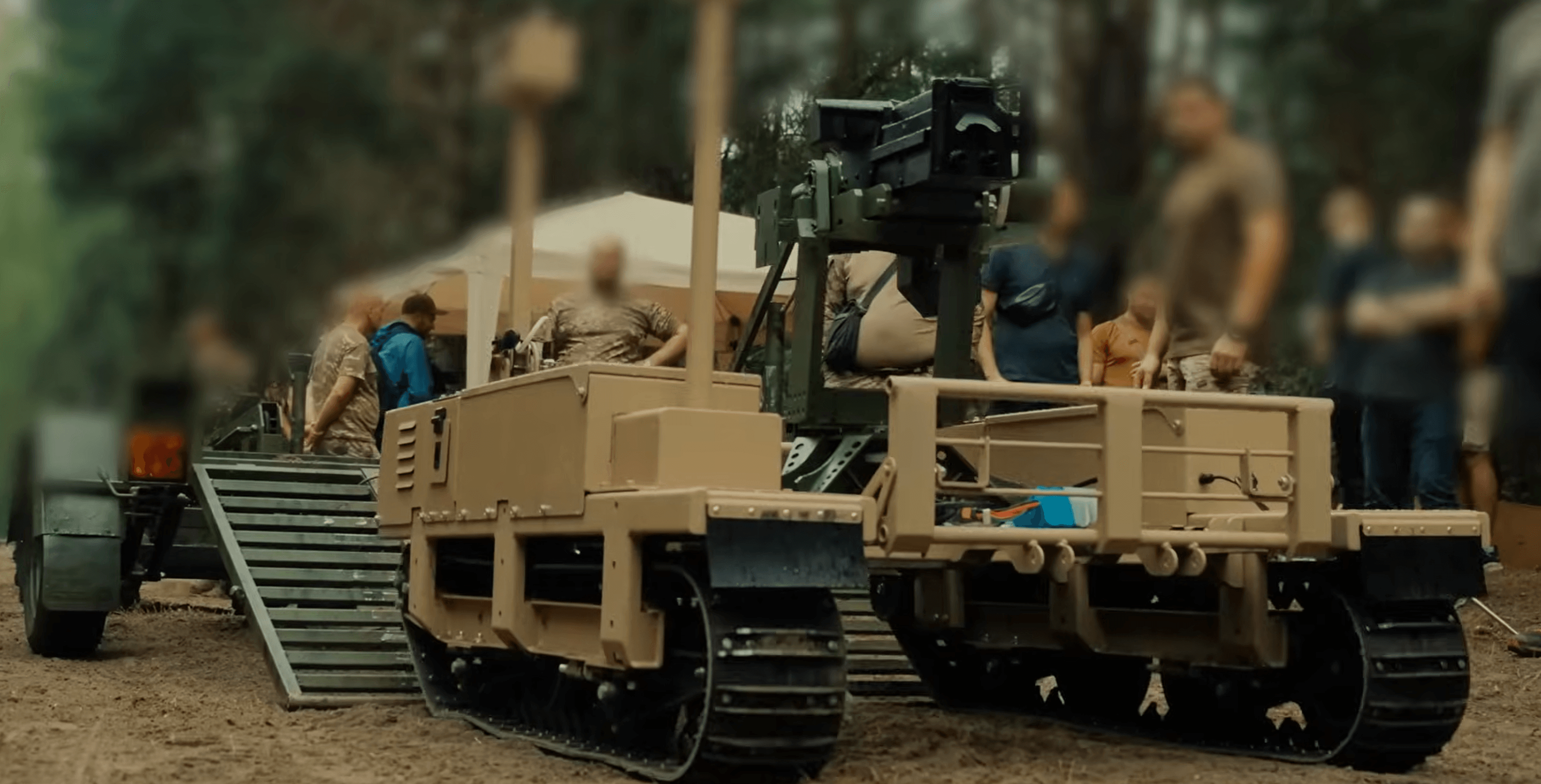
FUTURE WARFARE | Land - Unmanned Ground Vehicles — From Logistics Mules to Front-Line Robots
Ukraine fielded 15,000 unmanned ground vehicles in 2025 — surpassing its own procurement targets by over 100 percent. A single UGV held a front-line position for 45 days. Up to 90 percent of supplies to Pokrovsk now move by robot, not truck. The U.S. Army cancelled its $3 million Robotic Combat Vehicle and is starting over. China is deploying $3,000 robot dogs in PLA urban-warfare exercises. This article maps the emerging UGV battlefield — from Ukraine’s garage-built logistics fleet to the Pentagon’s stalled combat-vehicle ambitions, and from Ghost Robotics’ Vision 60 to the quadruped proliferation problem no treaty has yet addressed.

FUTURE WARFARE | The Autonomy Spectrum
How modern weapons shattered the concept of human control — from kill-switch confirmation to AI systems that select targets independently.

Space Robot- Lunar Rovers: Building Infrastructure on the Moon
Lunar rovers face -180°C nights and glass-sharp dust while building moon infrastructure. Inside the engineering challenges, commercial strategies, and international competition shaping planetary robotics.

Space Robot - Killer App: The $30B Satellite Servicing Market
Orbital servicing is transforming space economics: $2B wasted annually on premature satellite deaths. Market growing from $500M to $20-30B by 2040. Deep dive into Astroscale, Northrop Grumman MEV, and the business of satellite refueling and debris removal.
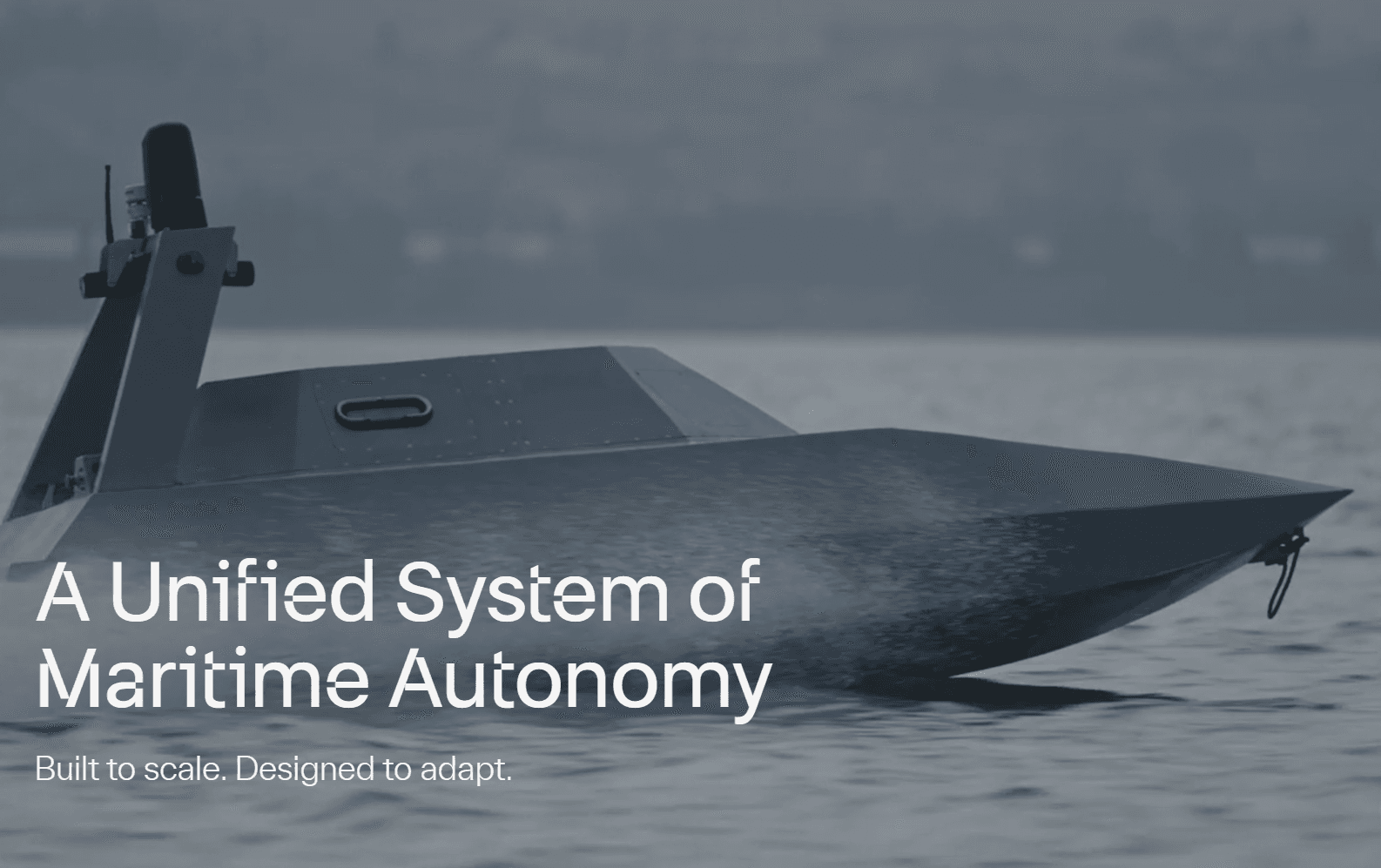
Skana Robotics: A Software-Defined Maritime Autonomy Stack for Distributed Naval Operations
Skana Robotics is building a unified, software-defined autonomy stack for naval surface, subsea, and amphibious fleets, enabling coordinated ISR, ASW, and littoral operations.

