


Interstellar Lab
"Building the Future of Farming in Space"
French biotech company developing AI-controlled closed-loop farming pods for Earth and space, including BioPod autonomous greenhouses and life support systems.
Contact Interstellar Lab
WEBSITE
https://interstellarlab.comPHONE
+33 6 75 31 83 21HEADQUARTERS
France

Company Facts
Founded
2018
Primary Role
Manufacturer
Company Size
-
Primary Region
Europe
Annual Sales
-
Funding Stage
-
Funding Total
-

Lucid Bots Introduces Sherpa HighLine for Enhanced Cleaning Drone Performance
Lucid Bots has launched the Sherpa HighLine, a motorized rooftop pulley system designed to assist its Sherpa cleaning drone in tackling tall buildings. This innovative system was demonstrated at the Monarch Casino Resort Spa in Black Hawk, Colorado, where the drone successfully cleaned the exterior of a 23-story hotel tower, reaching an impressive height of 280 feet. This marks a significant achievement, as it is reported to be the highest operation of a cleaning drone in the US. The Sherpa HighLine system alleviates the burden on the drone by supporting the weight of the cleaning hose from the rooftop, allowing for the use of larger-diameter hoses that can deliver more water flow. This advancement is crucial for operators aiming to clean taller buildings, as it offers greater flexibility and efficiency. Robert Blank, vice president of research and development at Lucid Bots, emphasized that this support system changes the operational dynamics for cleaning drones. As commercial cleaning companies explore the potential of the Sherpa HighLine, they may find new opportunities in previously challenging structures. The ability to clean taller buildings could enhance job efficiency and value, making it a noteworthy development in the cleaning industry. No further timeline was disclosed at the time of publication.
News
DHS Conducts Testing of Counter-Drone Technology with Local Law Enforcement Agencies
The Department of Homeland Security (DHS) is conducting tests on commercial counter-drone technology in collaboration with state and local law enforcement agencies. Announced on October 1, this initiative by DHS's Science and Technology Directorate involves a week-long assessment at a federal test facility, where first responders evaluated various counter-UAS systems under operational conditions. This testing is significant as it provides law enforcement agencies with hands-on experience with counter-drone technologies before making purchasing decisions. The initiative aligns with the recent expansion of counter-UAS authority to state, local, tribal, and territorial law enforcement agencies, as outlined in the SAFER SKIES Act included in the FY2026 National Defense Authorization Act. Looking ahead, the DHS field testing represents a crucial step for agencies to understand how to utilize their new C-UAS authorities effectively. No further timeline was disclosed at the time of publication.
Applications C-UAS Defense DHS Drone News Drone News Feeds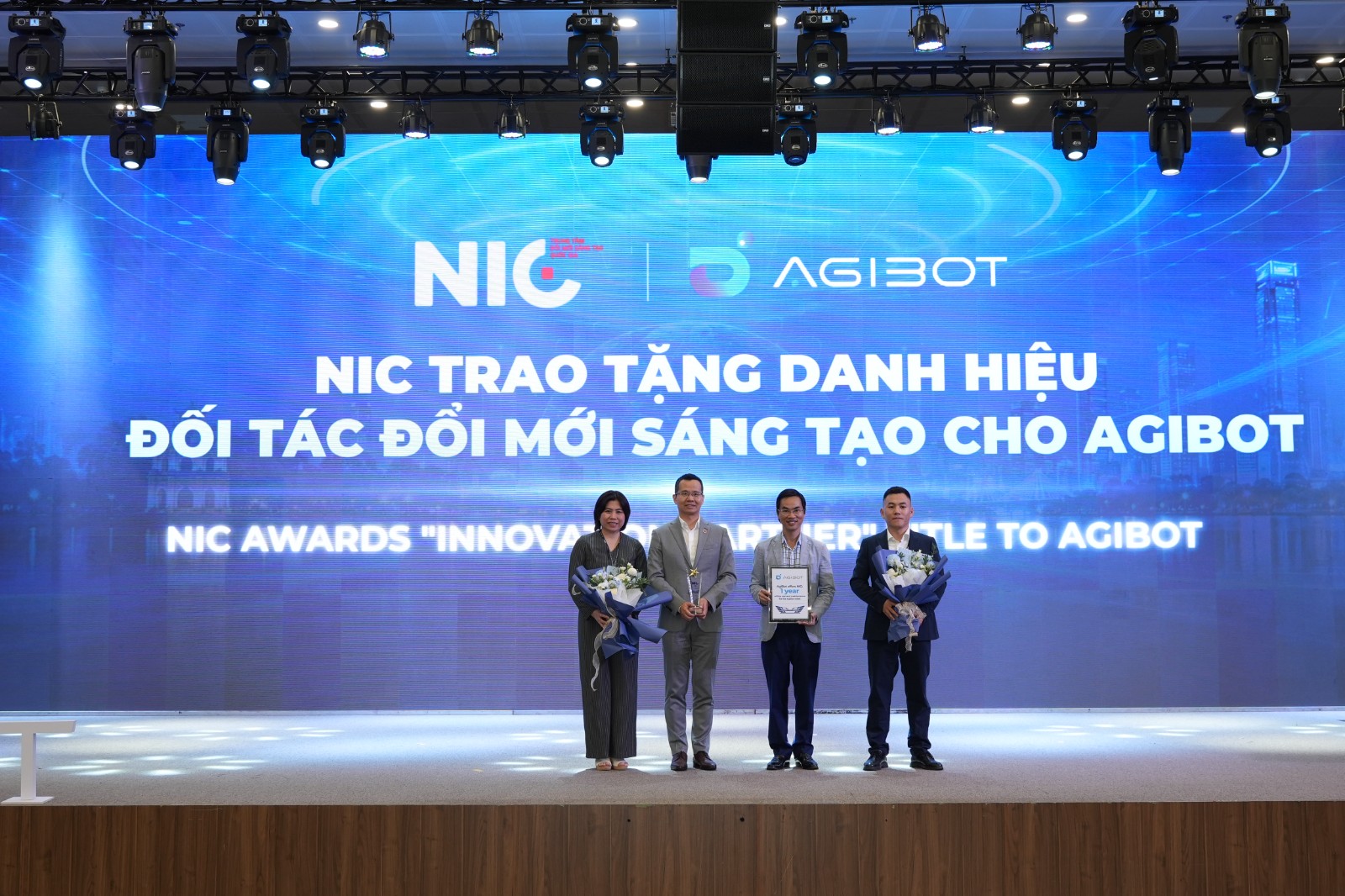
AGIBOT Collaborates with Vietnam National Innovation Center to Boost Embodied AI and Talent Development
AGIBOT has formed a partnership with the Vietnam National Innovation Center (NIC) to promote the embodied AI industry and talent ecosystem in Vietnam. This collaboration was showcased at the inaugural Vietnam Embodied AI Conference, emphasizing the importance of advancing this technology in the region. The partnership is significant as it includes the launch of the 'Yuan Sheng Program,' which aims to incorporate embodied intelligence into educational and research frameworks. Additionally, the introduction of the RaaS (Robot as a Service) model is expected to enhance the flexibility of robotic applications across various sectors, thereby fostering innovation. Looking ahead, stakeholders will be keen to observe the impact of the Yuan Sheng Program on education and research in embodied AI. The effectiveness of the RaaS model in facilitating diverse robotic applications will also be a critical area to watch as AGIBOT and NIC work together to strengthen Vietnam's position in the global AI landscape. No further timeline was disclosed at the time of publication.
Embodied AI Innovation Robotics Education Technology Development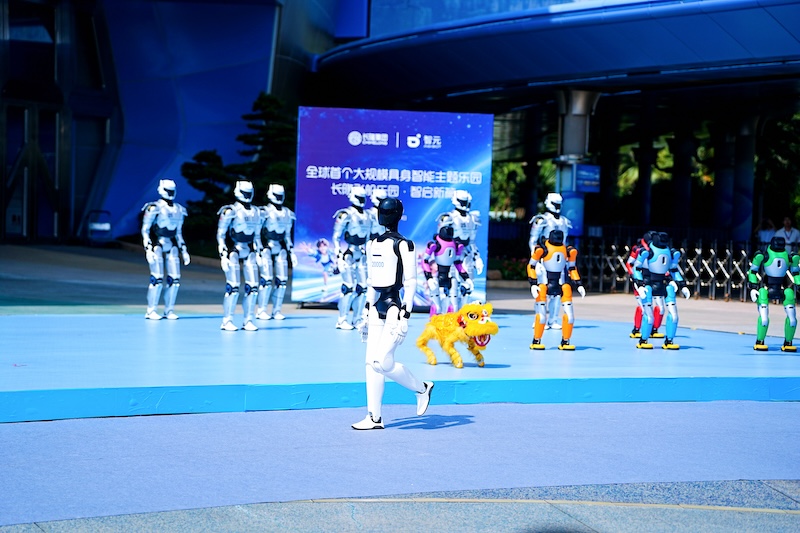
Agibot Leads Global Humanoid Robot Shipments with Over 8,600 Units in H1 2026
In the first half of 2026, global humanoid robot shipments reached nearly 25,000 units, marking a significant increase of 432.1 percent year on year, according to International Data Corporation (IDC). Agibot emerged as the leader in this market, shipping over 8,600 humanoid robots, which accounted for approximately 35 percent of total shipments during this period. This growth highlights the ongoing transition of the humanoid robotics industry from technology validation to broader commercial deployment. IDC noted that the market is expanding into various sectors, including industrial manufacturing, retail, logistics, tourism, and consumer applications. The focus is shifting from hardware specifications to the development of embodied AI capabilities. Looking forward, IDC anticipates that global humanoid robot shipments will surpass 750,000 units by 2030, driven by advancements in industrial, commercial service, and consumer applications. No further timeline was disclosed at the time of publication.
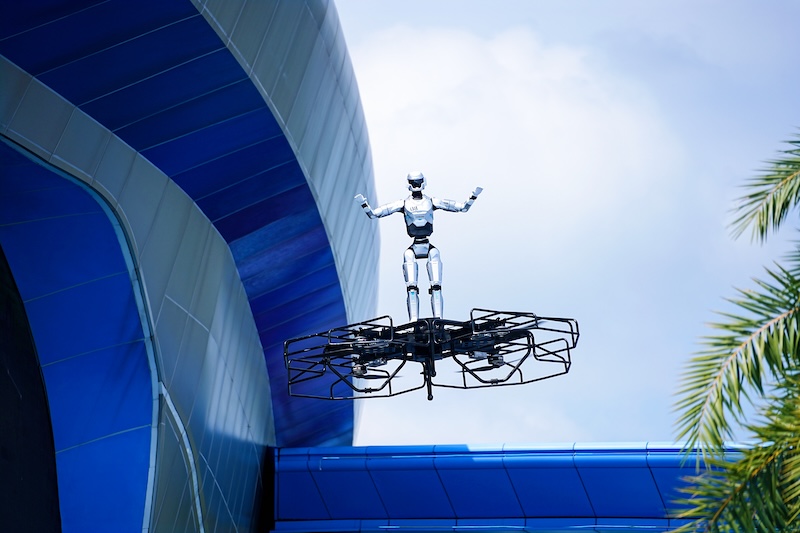
Agibot and Chimelong Unveil Large-Scale Embodied AI Theme Park Featuring Over 300 Robots
Agibot and Chimelong Group have initiated the first phase of a significant embodied AI deployment at Chimelong Spaceship Park, incorporating over 300 robots into various sectors such as entertainment, education, visitor services, and hotel operations. This deployment represents a shift from standalone demonstrations to a fully integrated system, enhancing guest experiences through dedicated connectivity and multi-robot coordination. The significance of this launch is underscored by the delivery of Agibot's 20,000th robot, marking a major manufacturing achievement while simultaneously facilitating one of the largest real-world applications in the tourism industry. Located in Zhuhai, China, Chimelong is recognized as the world's largest indoor amusement park, where robots will engage in live performances, educational activities, and provide assistance in various guest services. Looking ahead, the integration of robots into the visitor experience at Chimelong Spaceship Park is expected to evolve, creating a seamless interaction between guests and technology. No further timeline was disclosed at the time of publication.

Sudu Technology Secures Additional Funding, Targets 1,000 Units by 2028
Sudu Technology has announced a significant capital injection, aiming to deliver 1,000 units of its products by 2028. This funding will support the company's growth and development in the robotics sector. The importance of this funding lies in its potential to enhance Sudu Technology's capabilities in delivering advanced robotic solutions. With the increasing demand for robotics in various applications, achieving the target of 1,000 units will position the company favorably in the competitive landscape. Looking ahead, industry observers will be keen to see how Sudu Technology utilizes this funding to innovate and expand its product offerings. No further timeline was disclosed at the time of publication.
Robotics Automation AI
Echodyne Secures $250 Million Contract for US Domestic Shield Counter-Drone Operations
Echodyne has received a contract valued at up to $250 million to assist in counter-drone operations as part of the Joint Interagency Task Force 401's Domestic Shield programme. This contract is significant as it underscores the growing need for advanced counter-drone technologies in national security operations, particularly in the context of increasing drone threats. Looking ahead, the focus will be on how Echodyne implements its technologies within the Domestic Shield programme. No further timeline was disclosed at the time of publication.
News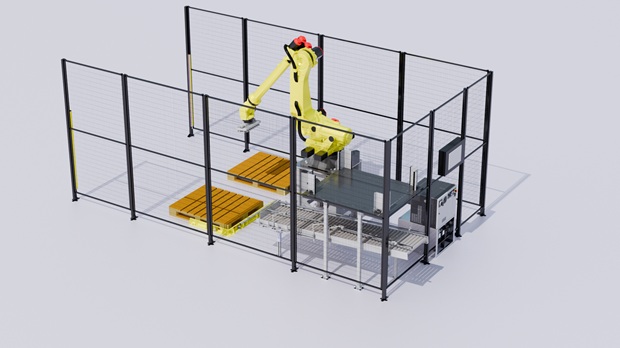
CSi Palletising Introduces Affordable s-Pal Robotic Palletiser for Medium-Sized Businesses
CSi Palletising has launched the s-Pal robotic palletiser, an entry-level solution priced at €95,000. This system features a FANUC industrial robot and is designed for medium-sized businesses in the FMCG and CPG sectors. Pre-orders began on October 1st, with initial deliveries expected in early 2027. The s-Pal offers three variations with options for left-hand, right-hand, or dual infeed, making it a flexible choice for users. Its lean design focuses on essential features for efficient palletising while maintaining high quality and reliability, backed by a standard 3-year warranty. The system is user-friendly, allowing a single operator to manage it effectively. Looking ahead, CSi plans to offer the s-Pal for lease starting mid-2027. As a predefined solution, it promises quick processing of quotations and orders, with guided installation instructions for self-installation. Customers can also opt for professional installation by CSi’s team, ensuring support throughout the process. No further timeline was disclosed at the time of publication.
Industry News
Utopia Compression Expands Defense-Grade Drone Technology into Commercial UAV Sector
Utopia Compression, a technology firm with over 20 years in the defense sector, is entering the commercial UAV and advanced air mobility markets with AI-based software solutions. Their technology, validated by clients like the U.S. Air Force and Navy, enhances situational awareness for drone operators, particularly in BVLOS operations and ISR tasks. The significance of this move lies in the potential applications of Utopia Compression's technology in the commercial sector, where operators are beginning to recognize the advantages of advanced situational awareness and swarm capabilities. The company showcased its innovations at the recent Commercial UAV Expo in Las Vegas, demonstrating solutions for both aerial and maritime domains. Looking ahead, Utopia Compression is in discussions with commercial counter-UAS vendors and public safety agencies to test its software for BVLOS and counter-UAS operations. The introduction of Co-NAVIGATE, a software solution that aids drone navigation in GPS-denied environments, highlights the company's commitment to addressing challenges in the drone delivery industry. No further timeline was disclosed at the time of publication.
Anti-drone technology BVLOS C-UAS DL Exclusive Drone News Drone News Feeds
Humanoid Europe 2026: Advancing from Demonstrations to Practical Applications in Munich
Humanoid Europe 2026 is set to take place in Munich on November 5–6, focusing on the transition from humanoid robot demonstrations to real-world applications. The event will address critical questions about the reliability and safety of humanoid robots, as well as the economic viability for potential customers. The summit will feature discussions on essential technologies such as force control and embodied intelligence, alongside challenges in hardware reliability and manufacturing capacity. Participants will explore the integration of advanced manipulation capabilities and the necessary support for commercial deployment, making it a vital event for developers and suppliers. Attendees can expect a live robot showcase and networking opportunities with industry leaders, including speakers from Generative Bionics and Boston Dynamics. The agenda will cover safety, cybersecurity, and the operational efficiency of robots in unpredictable environments, emphasizing the importance of understanding the cost-effectiveness of robotic solutions in various workflows.
Europe
Innovation Works Venture Expo 2026: 58 Pittsburgh Startups Pitch to Investors
58 health, deep tech and robotics startups pitched at Innovation Works Venture Expo 2026 in Pittsburgh. Full company list, program and 2025 funding data.

The Missing Price: What Non-Disclosure Reveals About the Humanoid Market
Of 131 announced robot models, 33 publish no price. US makers withhold at twice the rate of Chinese ones — and the reason is stage, not strategy.

ROBOTTODAY WEEKLY September 7 – 11, 2026
This week in robotics: JD.com plans to deploy three million robots across its logistics network, XPeng commissions its IRON humanoid production line, FANUC and Google launch an AI arc-welding agent, and Unitree shares fall 53% from their post-IPO high. September 7–11, 2026.

China’s Dexterous Hand Industry, 2026 Part 1 — The Demand Picture
MIR Databank puts China dexterous hand shipments above 30,000 units in 2026, yet only 3.5% of 2025 demand came from factory production. Part 1 of 3.

China’s Dexterous Hand Industry, 2026 Part 2 — The Technology
Linkage, tendon, direct drive or hybrid — and why hardware is converging while the DL1–DL5 manipulation scale decides who wins. Part 2 of 3.
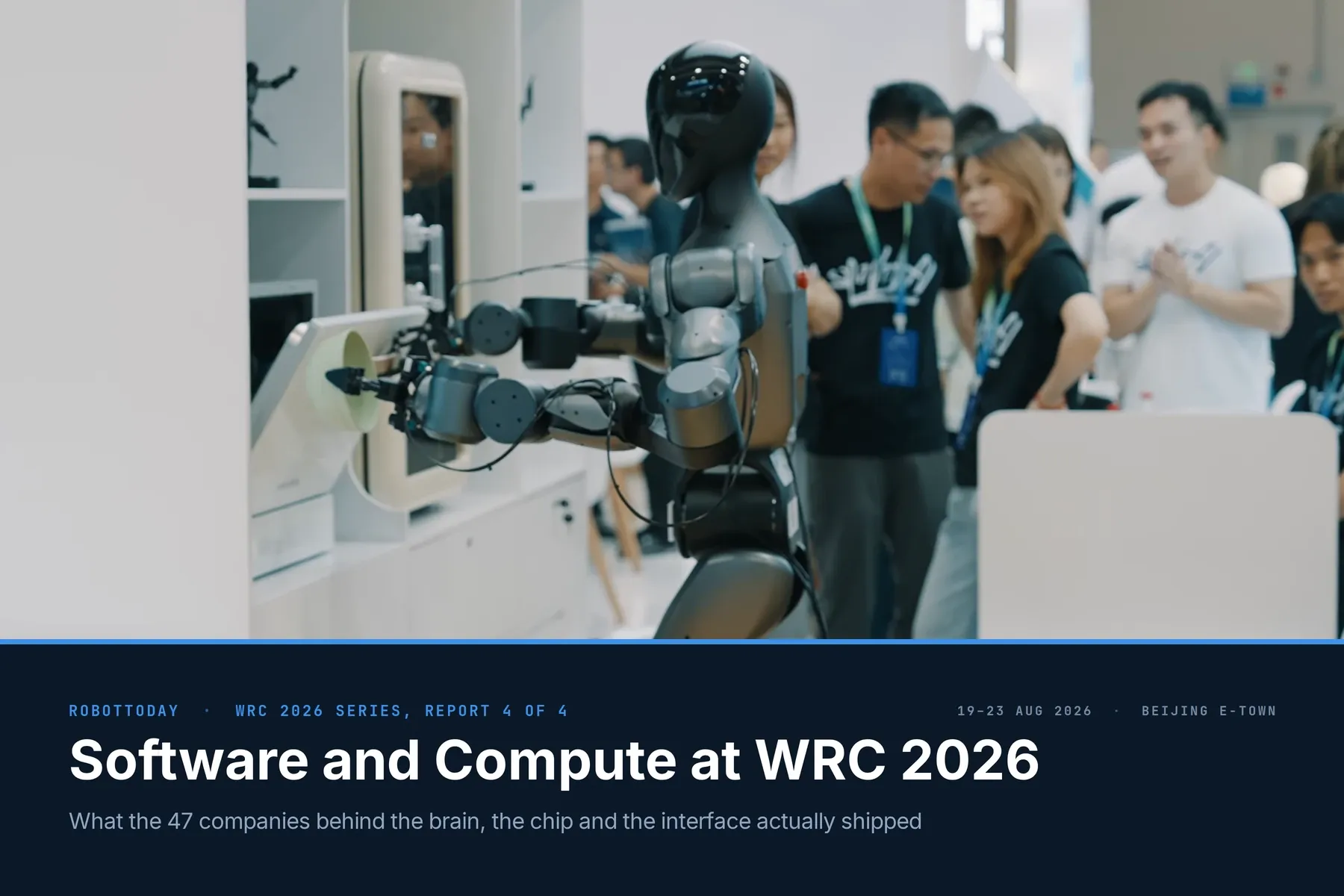
Software, Compute and Interaction at WRC 2026
47 WRC 2026 exhibitors supply robot software, compute or interaction — but only 19 call themselves software companies. Five open artefacts, licence-checked.
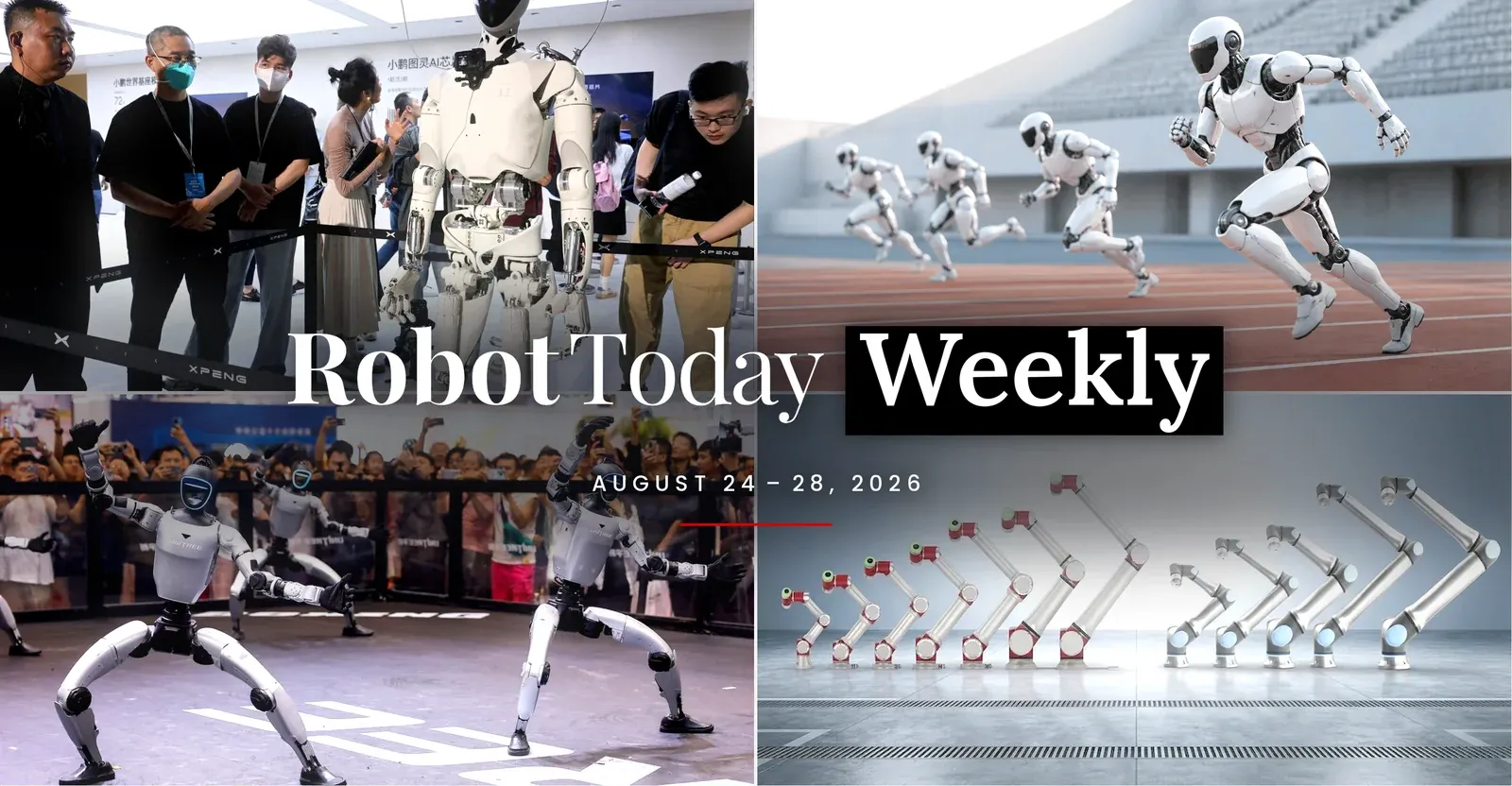
ROBOTTODAY WEEKLY BRIEFING August 24 – 28, 2026
This week in robotics: XPeng's Dogotix raises over $900 million at a $6.3 billion valuation, Unitree's post-IPO slump revives bubble talk, Beijing's World Humanoid Robot Games close with a shift to real-world tasks, and Teradyne sues JAKA at Europe's Unified Patent Court. August 24–28, 2026.
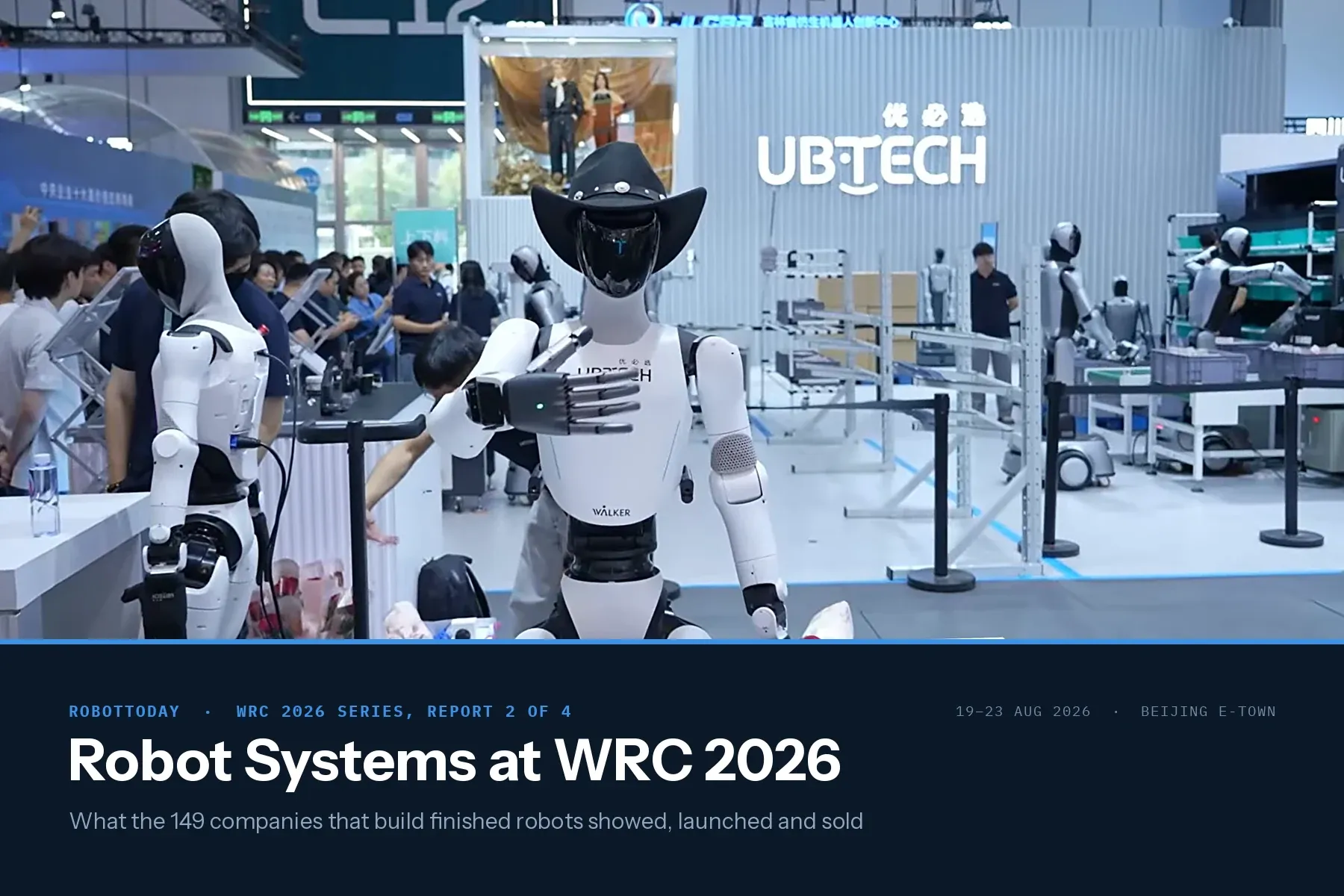
WRC 2026 Robot Systems: 149 Companies That Build Robots
149 of the 248 classified WRC 2026 exhibitors build finished robots. 93 build humanoid or legged machines. The audited humanoid sales number is one unit.

WRC 2026 Exhibitor Map: 248 Robotics Companies Mapped
We classified 248 WRC 2026 exhibitors with the RobotToday taxonomy. Motion & Actuation leads at 75 companies, Humanoid at 72, and compute stays thin at 12. (Modified 2026-08-27)

Inside Saga Robotics: UVC Light vs. Crop Disease
Saga Robotics CPO Damian Flynn on the Thorvald platform's UVC treatment system, its jump from UK strawberries to California wine grapes, and why he's “incredibly bullish” on applying automation and robotics into industries “most chaotic environment.”

