


AXE GROUP
"A global mastery: from engineering to production"
French industrial group specializing in custom robotics, precision machining, and fine sheet metal fabrication.
Contact AXE GROUP
WEBSITE
https://www.axe-group.comPHONE
+33 4 74 62 67 00HEADQUARTERS
France

Company Facts
Founded
1989
Primary Role
Manufacturer
Company Size
-
Primary Region
Europe
Annual Sales
-
Funding Stage
-
Funding Total
-

Ailoys Brings Acoustic Industrial AI to IMTS 2026
Berlin's Ailoys brings acoustic industrial AI to IMTS 2026, Booth 237629. Edge sensors catch process drift on existing machines before scrap appears.
Vention Launches Montreal AI Lab to Enhance Industrial Robotics Capabilities
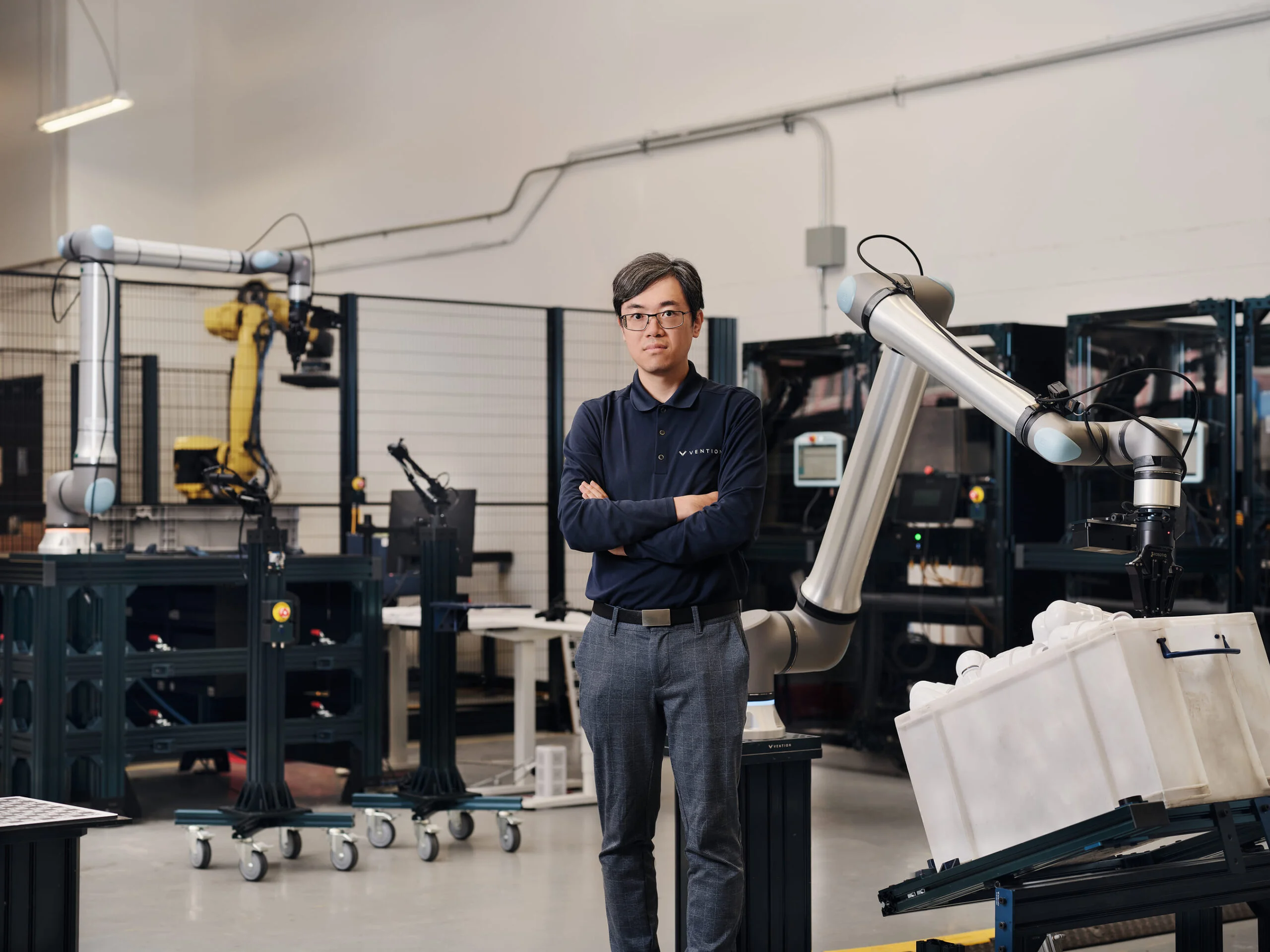
Vention has inaugurated a physical AI research lab in Montreal aimed at advancing robotic manipulation for manufacturing applications. The lab, directed by Jimmy Li and advised by Joelle Pineau, will leverage industrial data and customer insights to develop scalable robotic systems. With a focus on real-world production challenges, the lab aims to create technologies that enhance reliability and reduce costs in automation. This initiative is significant as Vention's physical AI segment has seen a remarkable 400% revenue increase over the past year, indicating a growing demand for advanced automation solutions. The lab's unique approach integrates academic research with practical production feedback, allowing for rapid development and testing of new robotic systems. This model positions Vention to address complex manufacturing tasks that have traditionally been difficult to automate. Looking ahead, Vention's Montreal lab is expected to expand its team and generate new intellectual property. The company plans to release a public software development kit for its GRIIP manipulation pipeline, which breaks down robotic tasks into manageable stages. No further timeline was disclosed at the time of publication.
AI AI Funding & Investment Robotics Canada.Montreal computer vision industrial robotics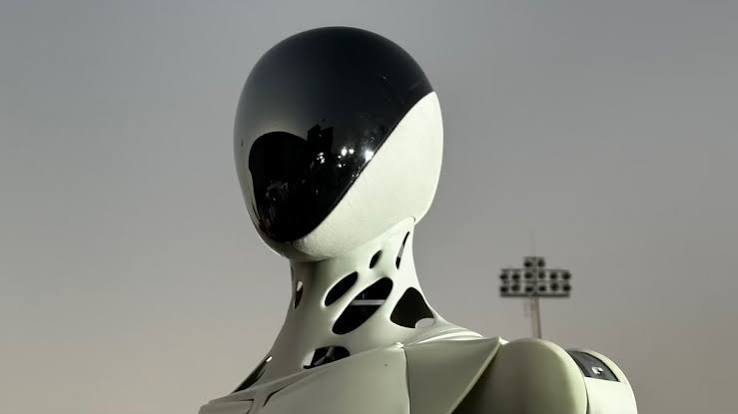
Xpeng Motors Launches Automated Production Line for Humanoid Robot IRON in Guangzhou
In September 2026, Xpeng Motors officially launched the automated production line for its humanoid robot IRON in Guangzhou, aiming for mass production by the end of the year. This initiative signifies the transfer of quality management systems from automotive manufacturing to the robotics sector, as stated by Xpeng CEO He Xiaopeng during the launch ceremony. This move is part of a broader trend, with over 140 humanoid robot manufacturers in China, which released more than 330 humanoid robot products in the past year. According to Omdia, Chinese companies accounted for nearly 80% of the global humanoid robot shipment volume in 2025, with ZhiYuan Robotics leading in deliveries. The rapid integration of advanced algorithms into hardware by Chinese manufacturers has given them a competitive edge in this emerging market. Despite the excitement, concerns remain about the sustainability of the industry, as many companies are startups focusing on basic functionalities. The launch of Xpeng's production line may serve as a model for integrating established automotive manufacturing practices into robotics, but significant challenges remain before achieving true commercial viability in the humanoid robot sector.
Humanoid Robots Robot Manufacturing Automation AI Industrial Robotics
U.S. Robotics Sector Seeks National Strategy for Innovation and Manufacturing
U.S. robotics researchers and industry leaders are advocating for a cohesive national strategy to enhance basic research and boost domestic production of robots. Recent advancements, such as Boston Dynamics' Atlas performing complex movements, underscore the U.S.'s role as a leader in technological innovation. However, critics warn that without a focus on manufacturing robotic hardware domestically, the U.S. risks losing economic benefits from its innovations. The U.S. has historically relied on a free-market approach to drive technological advancements, significantly contributing to its GDP and leadership in artificial intelligence. The Department of Defense has emerged as a key player in funding robotics, with a proposed $13.4 billion budget for autonomous systems in 2026, reflecting the growing importance of robotics in military applications. Despite these investments, the U.S. faces challenges in competing in physical manufacturing, which requires substantial capital and long-term commitment. As the U.S. ranks third in industrial robotics consumption, the reliance on foreign imports for manufacturing poses a risk to national security. The lack of domestic infrastructure for robotic production contrasts sharply with countries like Japan, which has a minimal dependency on imports. Moving forward, the U.S. must address these vulnerabilities to maintain its competitive edge in the global robotics landscape. No further timeline was disclosed at the time of publication.

Vention Launches Leading Physical AI Lab in Montreal for Industrial Robotics Advancement
Vention has inaugurated Canada's premier Physical AI and industrial robotics lab in Montreal, aimed at enhancing robotic manipulation through the integration of advanced AI research into scalable manufacturing solutions. This initiative is significant as it focuses on applied manufacturing use cases, industrial data collection, and the development of post-training foundation models for robotics, leveraging existing intellectual property while generating new innovations. Looking ahead, stakeholders should monitor the lab's progress in bridging AI research with practical manufacturing applications. No further timeline was disclosed at the time of publication.
Power Shift in the Global Robotics Industry as Traditional Leaders Face Challenges
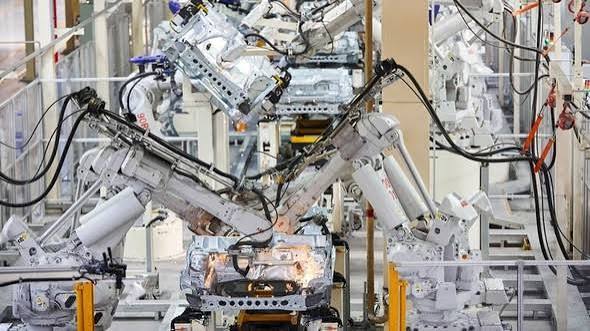
In 2026, a significant power shift is occurring within the global robotics industry, particularly impacting the Chinese market. The four major foreign companies, Fanuc, Yaskawa, ABB, and KUKA, known as the 'Four Families,' are experiencing unprecedented challenges, while domestic brands have gained a market share exceeding 55% in industrial robotics. Fanuc's share has dropped to 9%, highlighting a dramatic change in the competitive landscape. This shift is crucial as it marks the decline of established players who once dominated over 60% of the Chinese industrial robotics market. The rise of domestic brands, particularly in collaborative and welding robots, indicates a growing trend towards local innovation and manufacturing capabilities. ABB's strategic retreat, including the planned sale of its robotics business, underscores the urgency of this transformation. Looking ahead, the robotics industry is witnessing the emergence of new players and innovative technologies. Companies like Tianji Intelligent and Yushu Technology are making strides in capital markets, while cross-industry giants like Xiaomi and Midea are integrating robotics into their operations. The ongoing power transfer suggests that the industry is entering a new phase, with the balance of power shifting towards domestic manufacturers and innovators.
Industrial Robots Vacuum Robots Automation Chinese Robotics Market
Palladyne AI and Fanuc America Collaborate on AI-Enhanced Robotics for Industry
Palladyne AI and Fanuc America have established a strategic partnership to advance AI-driven robotic automation tailored for manufacturing, warehousing, and logistics sectors. This collaboration aims to integrate Fanuc's industrial robots with Palladyne IQ, focusing on enhancing motion planning, adaptive behavior, and human-assisted learning capabilities. The significance of this partnership lies in addressing challenges faced by manufacturers and logistics operators, such as skilled labor shortages and the need for increased productivity. By combining their technologies, the companies aim to create more adaptable robotic systems that can efficiently respond to dynamic environments, ultimately streamlining deployment processes across various operations. Looking ahead, the collaboration will also emphasize joint customer validation and the development of standardized deployment workflows, which are expected to simplify the introduction of robotic automation. No further timeline was disclosed at the time of publication.
AI AI Funding & Investment Capital Markets Robotics automation Fanuc
Palladyne AI and FANUC America Form Strategic Partnership to Enhance Robotic Automation
Palladyne AI and FANUC America have announced a strategic collaboration aimed at advancing intelligent robotic automation. This partnership will integrate FANUC America's extensive industrial robot portfolio with Palladyne AI's innovative physical AI software platform. The collaboration is significant as it seeks to simplify the deployment of robotic systems, enhance their adaptability, and broaden the scope of automation across various sectors, including manufacturing, warehousing, and logistics. By leveraging both companies' strengths, the partnership aims to address the growing demand for efficient automation solutions. Looking ahead, industry stakeholders should monitor the developments from this collaboration, particularly how the integration of AI with robotics will impact operational efficiencies in the targeted sectors. No further timeline was disclosed at the time of publication.

China’s Dexterous Hand Industry, 2026 Part 3 — The Players
Five vendor archetypes, MIR’s composite top ten, eight company profiles and six field deployments — every firm linked to the RobotToday supplier directory.

RobotToday Weekly Briefing August 31 – September 4, 2026
This week in robotics: NVIDIA agrees to buy Hugging Face for $12.93 billion, Figure signs a $3.5 billion compute deal with Nscale for up to 100,000 GPUs, Tesla launches steering-wheel-free Cybercabs in Austin under NHTSA scrutiny, and Uber and Wayve bring the UK its first autonomous rides. August 31 – September 4, 2026.
China’s Dexterous Hand Industry, 2026 Part 1 — The Demand Picture
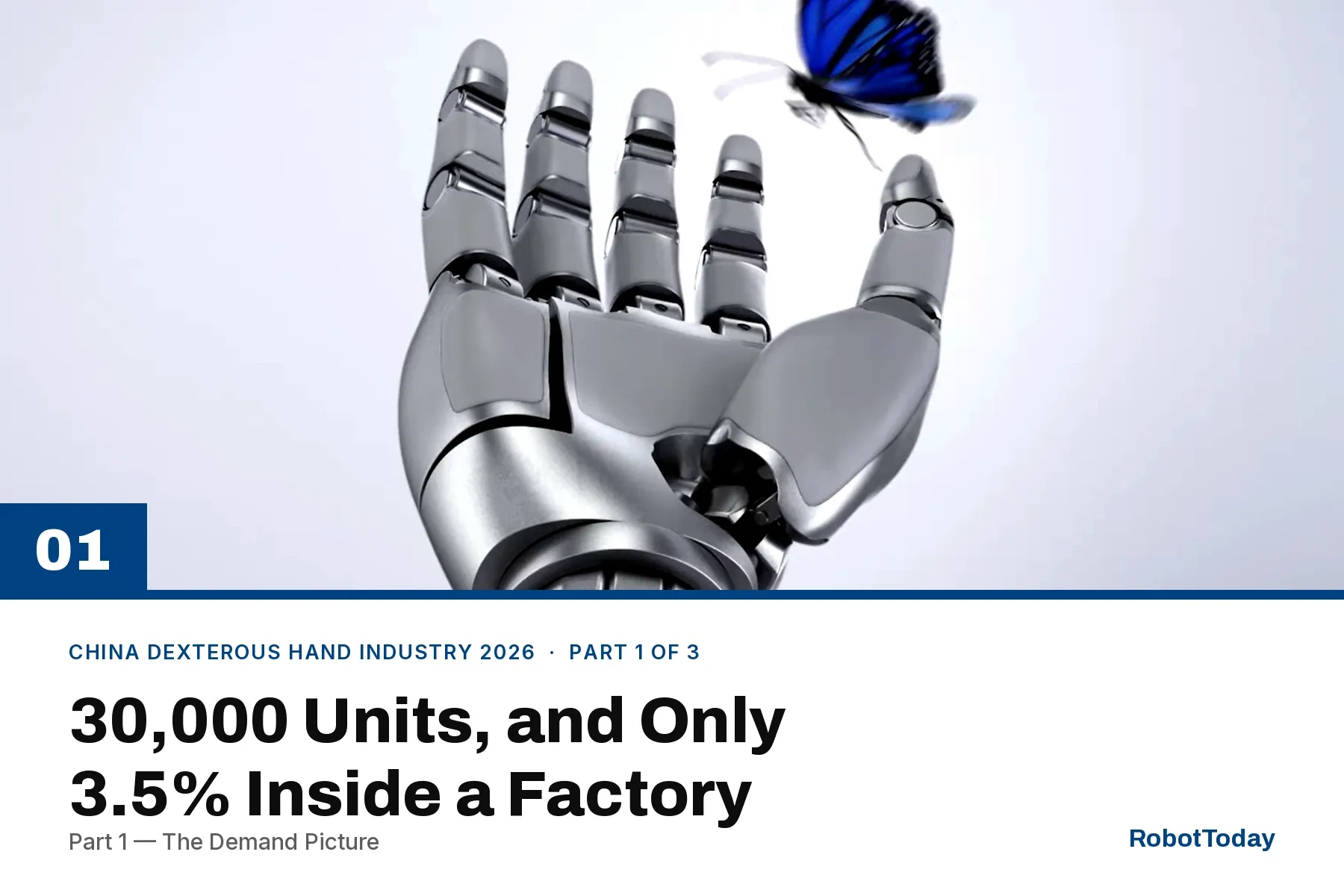
MIR Databank puts China dexterous hand shipments above 30,000 units in 2026, yet only 3.5% of 2025 demand came from factory production. Part 1 of 3.
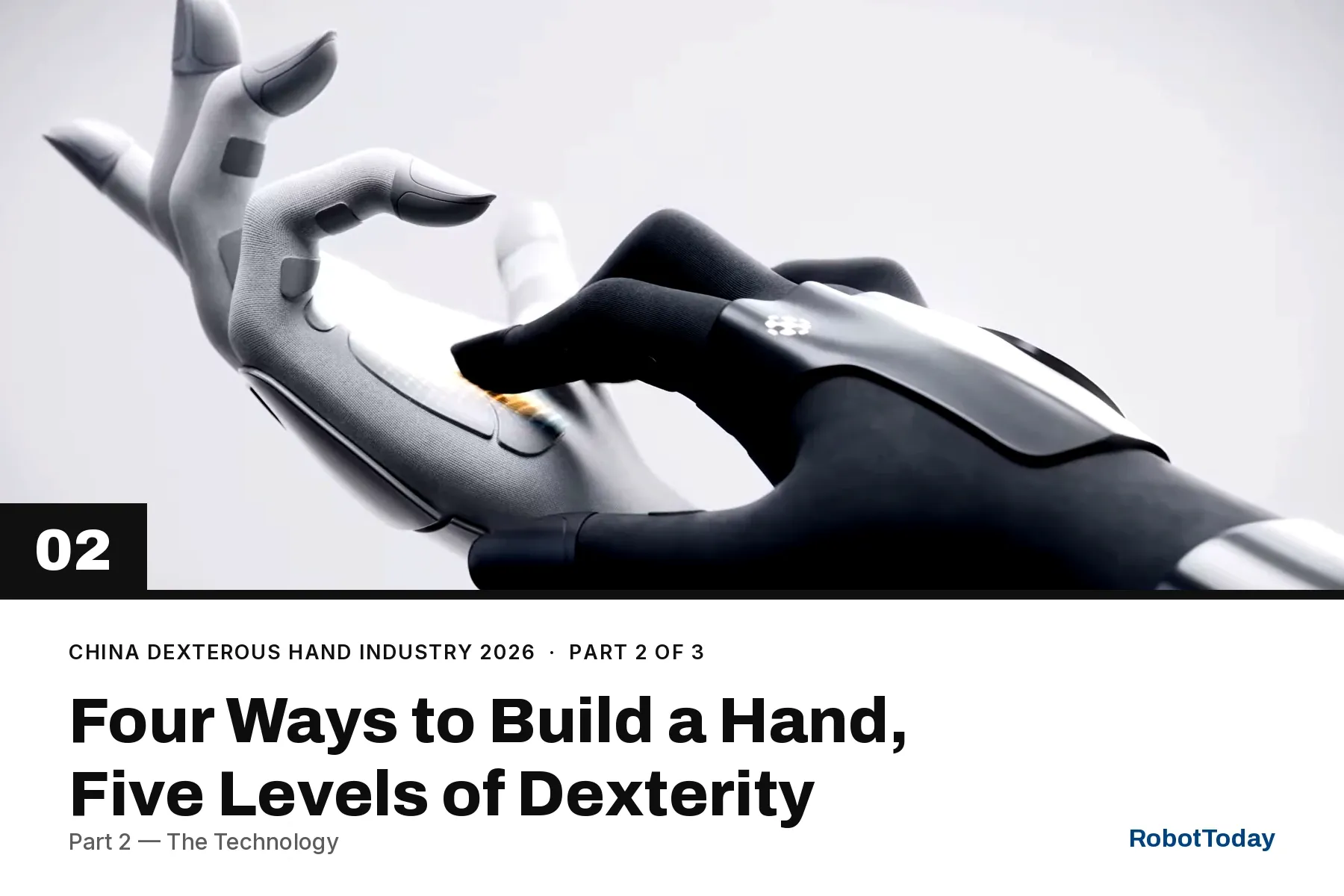
China’s Dexterous Hand Industry, 2026 Part 2 — The Technology
Linkage, tendon, direct drive or hybrid — and why hardware is converging while the DL1–DL5 manipulation scale decides who wins. Part 2 of 3.

Emerging 2D Flex Feeding Revolutionizes Industrial Part Picking with Simplified Vision Systems
The article discusses the advancements in 2D Flex feeding technology, which simplifies robotic vision for industrial part picking. Unlike traditional 3D bin picking, this new approach allows for quicker and more reliable implementations, making it accessible for a broader range of applications. This innovation is significant as it enhances the capabilities of industrial robots in manufacturing, reducing the complexity associated with advanced vision systems. Experts Nicholas Kern from SICK and Nick Barron from Feedall highlight the advantages of flex feeding over bowl feeding, showcasing early adopters who are already experiencing substantial benefits. Looking ahead, the future of feeding robots appears promising with the integration of smarter vision systems. As this technology continues to evolve, it will be essential to monitor its adoption and impact on manufacturing efficiency and productivity. No further timeline was disclosed at the time of publication.
Factory / Robotics
Universal Robot Launches Da Sheng 1: A Versatile Industrial Dexterous Hand
At the WRC exhibition, Universal Robot unveiled the Da Sheng 1, an industrial-grade dexterous hand designed to overcome existing limitations in robotic gripping technology. This innovative product aims to combine the high load capacity of traditional grippers with the versatile operational capabilities of dexterous hands, addressing a significant industry challenge. The Da Sheng 1 features a dynamic reconfiguration ability, allowing it to switch between multiple operational configurations, thus enhancing its adaptability for various tasks on production lines. This capability is crucial as manufacturing trends shift towards high variety and frequent changeovers, necessitating more flexible robotic solutions. Looking ahead, the industry will be keen to observe how the Da Sheng 1 performs in real-world applications and whether it can effectively replace traditional grippers in diverse operational scenarios. No further timeline was disclosed at the time of publication.
Dexterous Hands Industrial Robotics Automation Technology Robotics Innovation
Tsubaki KabelSchlepp Introduces Robotrax System for Protecting Industrial Robot Cables
Tsubaki KabelSchlepp has launched the Robotrax System, a specialized three-dimensional cable carrier designed to protect electrical cables and hoses in six-axis articulated robots. This innovative system addresses the mechanical stress caused by rapid movements and torsional twists, which often lead to conductor fatigue and costly production halts. The Robotrax System features a central steel cable that absorbs tensile loads, preserving conductor integrity and extending cable service life. Its unique spherical link design allows for smooth flexing across three axes, while modular cable routing prevents signal interference and mechanical abrasion. This design significantly reduces installation and maintenance time, making it a valuable solution for automated manufacturing environments. Looking ahead, the Robotrax System's active retraction mechanism minimizes collision risks during complex robot movements. With tailored protective accessories, it is built to withstand demanding industrial conditions. No further timeline was disclosed at the time of publication.
Articulated-robots Robot-uptime Automation Robot-arms Manufacturing Factory-robots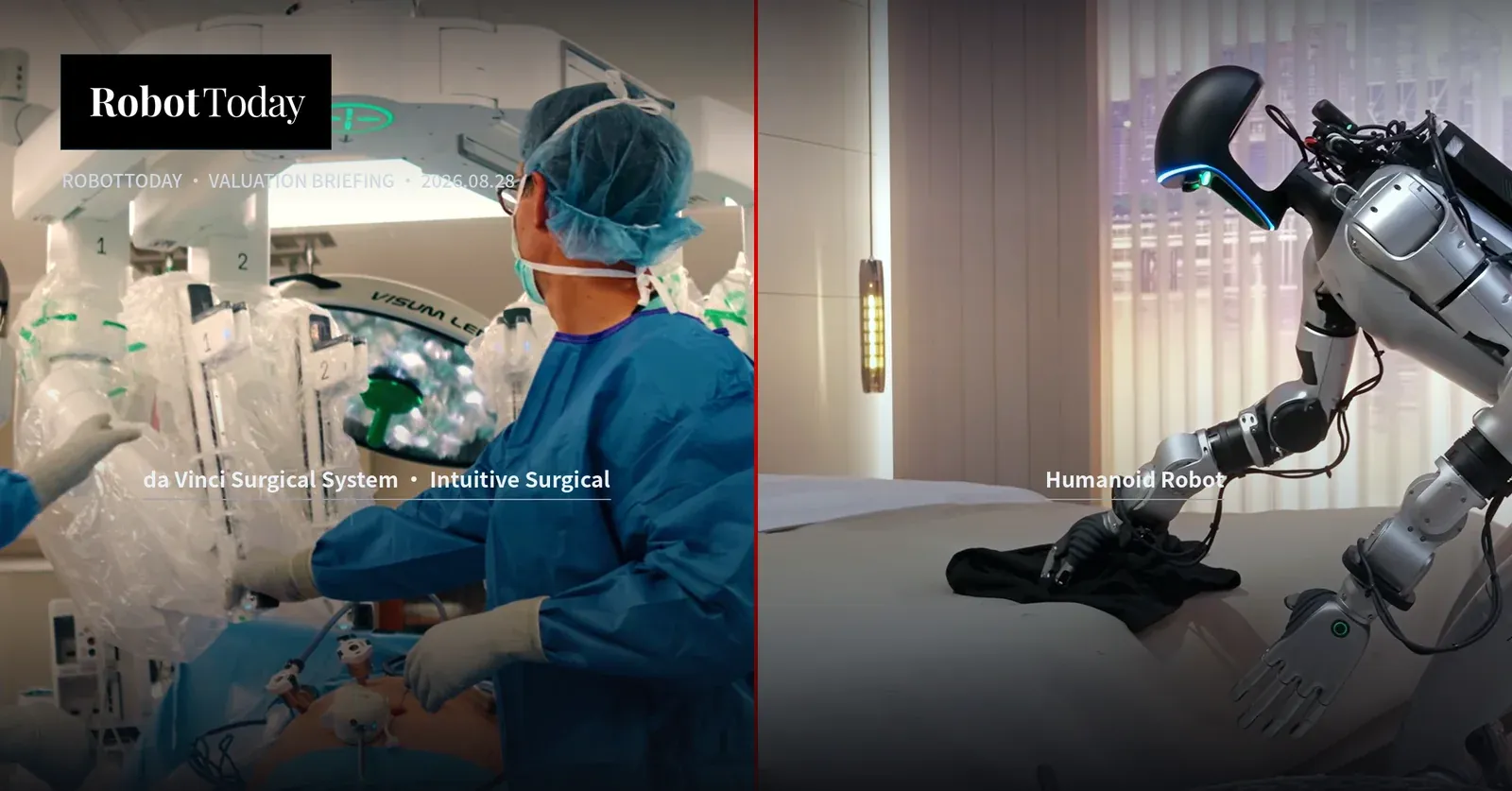
Robotics Investing: Intuitive Surgical or Unitree?
Unitree (STAR 688836) trades near 410x earnings after a 46% drawdown; Intuitive Surgical sits at 42.5x. A definition-aligned comparison of both companies.
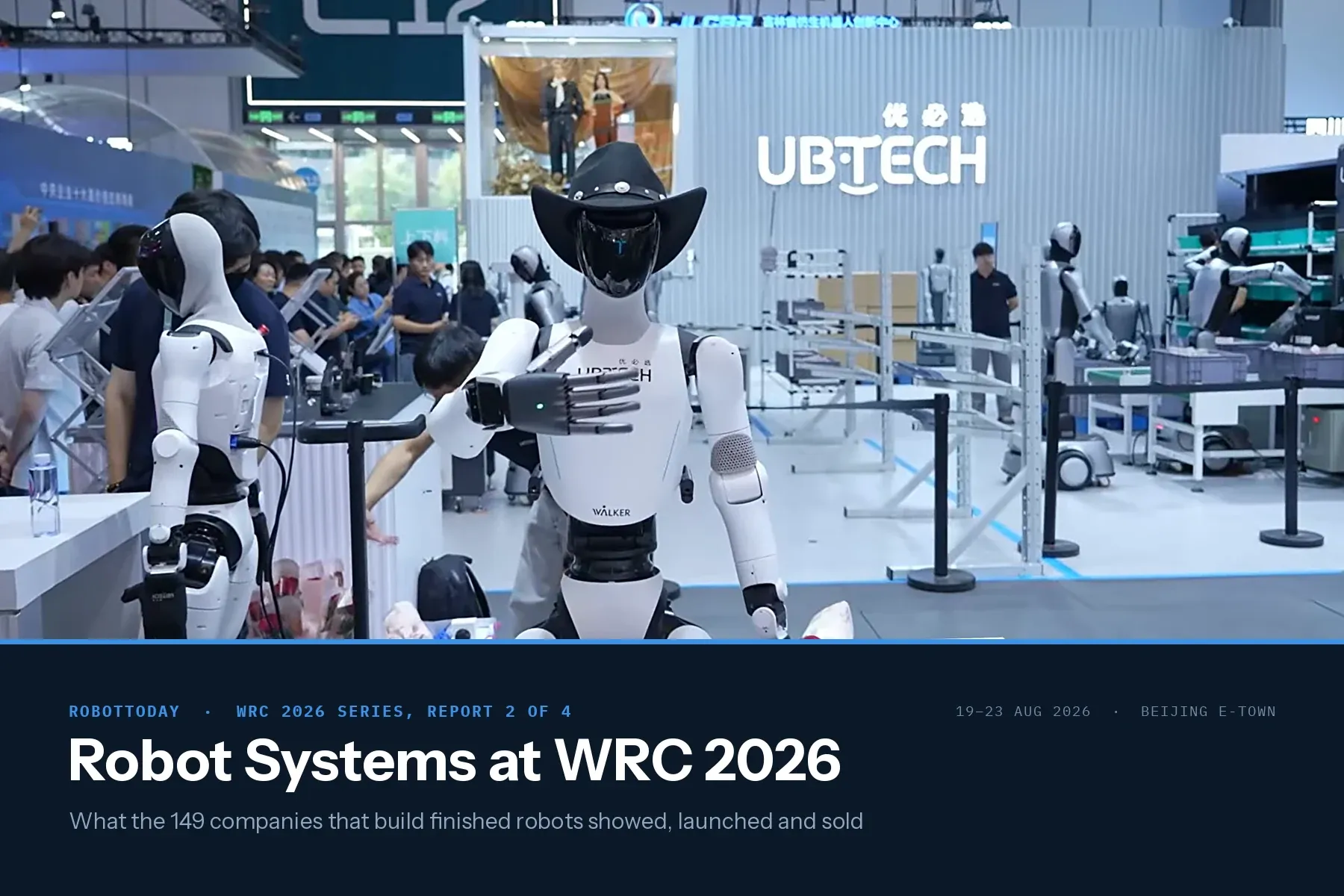
WRC 2026 Robot Systems: 149 Companies That Build Robots
149 of the 248 classified WRC 2026 exhibitors build finished robots. 93 build humanoid or legged machines. The audited humanoid sales number is one unit.

WRC 2026 Exhibitor Map: 248 Robotics Companies Mapped
We classified 248 WRC 2026 exhibitors with the RobotToday taxonomy. Motion & Actuation leads at 75 companies, Humanoid at 72, and compute stays thin at 12. (Modified 2026-08-27)

ROBOTTODAY Weekly August 10 – 14, 2026
Your weekly robotics briefing: Unitree's IPO is swamped by retail demand, the US puts 100% tariffs on imported drones, LG and Nvidia commit to a 2027 humanoid, and Uber and Pony.ai bring 2,000 robotaxis to Europe.

ROBOTTODAY Weekly August 3 – 7, 2026
This week in robotics: Unitree prices its Shanghai STAR Market IPO with DeepSeek taking a strategic stake, the FCC expands its foreign-robot ban as China threatens retaliation, BMW commits to Figure 03 humanoids, and Zoox goes paid in Las Vegas. August 3–7, 2026.


