

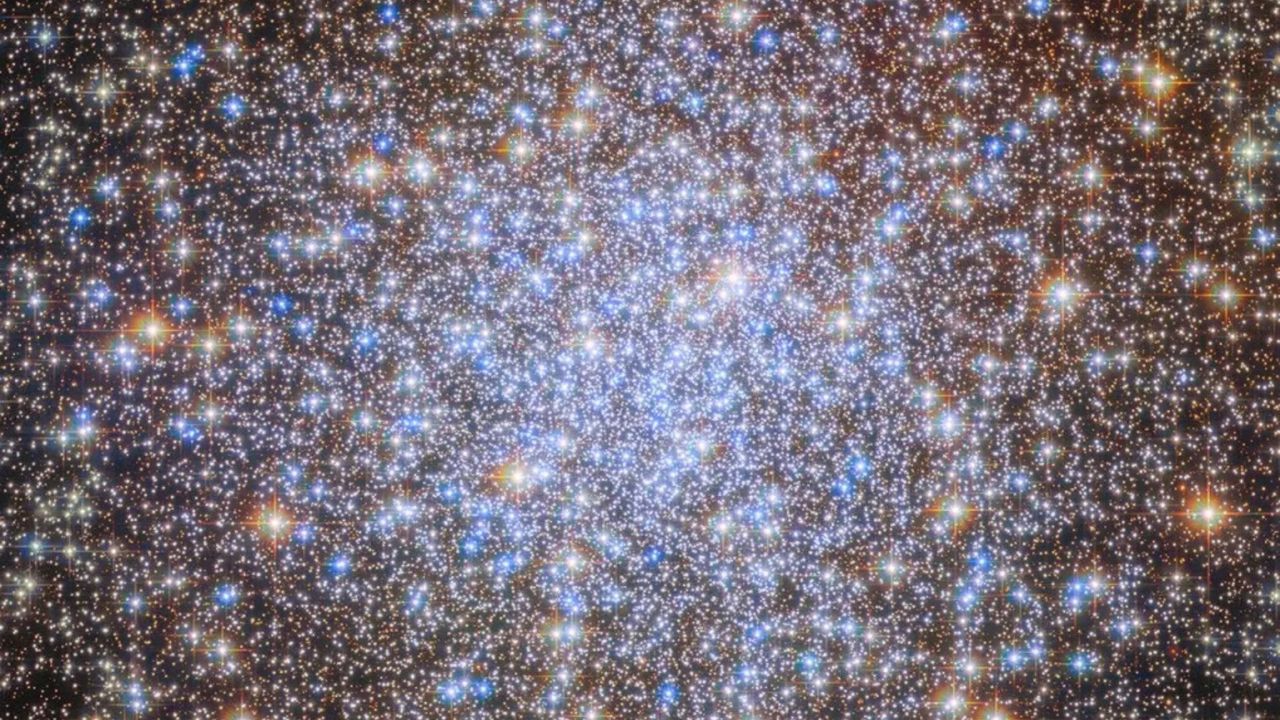
The Hubble Space Telescope has captured a breathtaking image of the Chandelier Cluster, also known as NGC 6723, located 27,000 light-years away in the Milky Way galaxy. This globular star cluster is renowned for containing some of the oldest stars in the galaxy, with many being over 10 billion years old.
The significance of the Chandelier Cluster lies in its composition of ancient stars, making it a vital subject for astronomers studying the early universe. Globular clusters like this one are massive, often containing tens of thousands to millions of stars, and are easier to spot than smaller clusters due to their brightness and density.
For amateur astronomers and skywatchers, the Chandelier Cluster can be observed with binoculars or telescopes, nestled in the constellation Sagittarius. Discovered in 1826 by British astronomer James Dunlop, this cluster continues to be a point of interest for those exploring the night sky. No further timeline was disclosed at the time of publication.
Editor's Note
The Chandelier Cluster exemplifies the importance of globular star clusters in understanding the formation and evolution of the universe. Their ancient stars provide insights into the early stages of stellar development and the conditions present in the early galaxy. As technology advances, more detailed observations of such clusters will enhance our comprehension of cosmic history.




























Leave a comment