


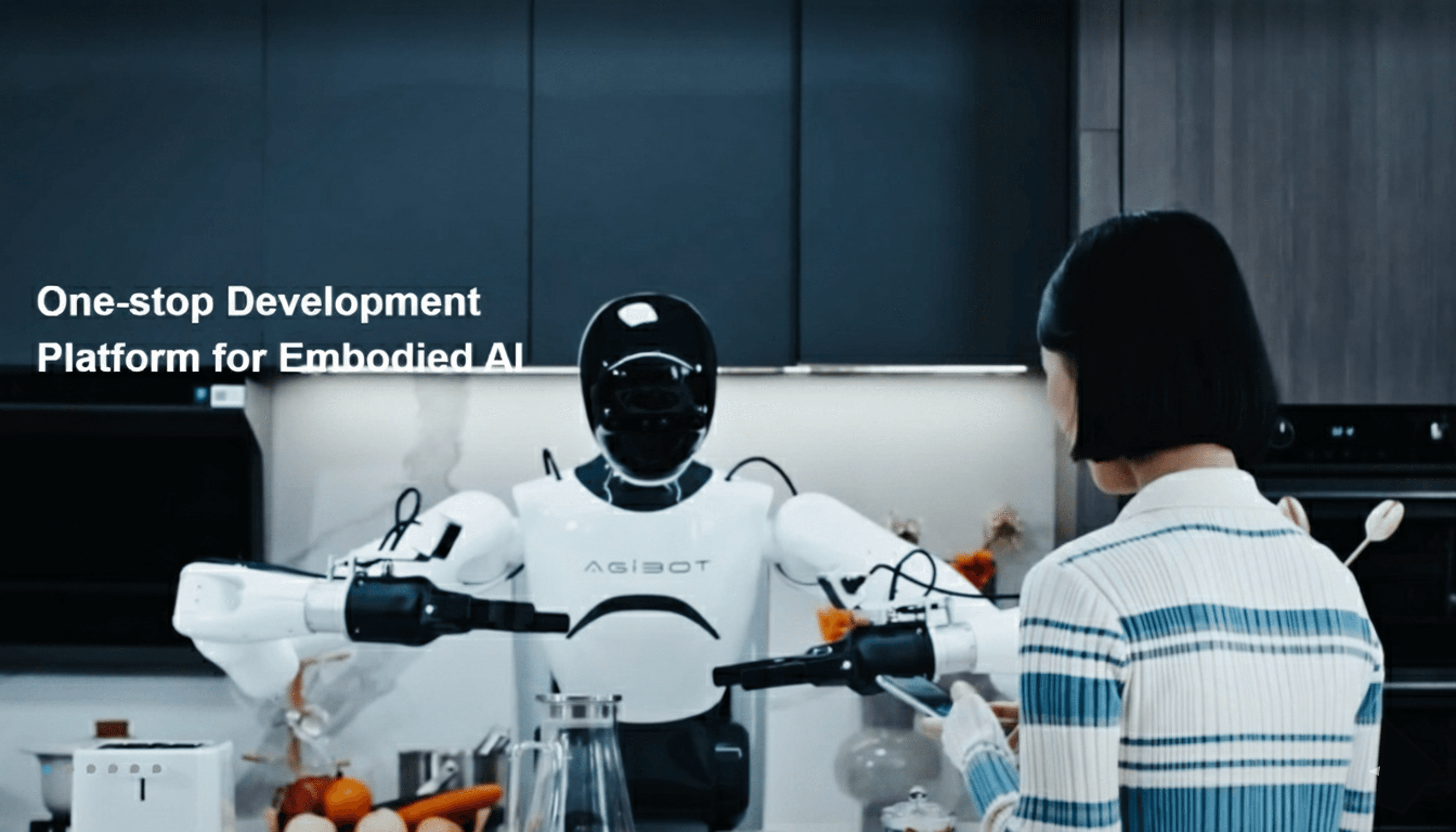
WUXI, China – Agibot is shifting the paradigm in robotics from a pure hardware race to an ecosystem and "traffic economy" competition with the grand opening of its first public-facing Embodied AI Experience Center in Wuxi. This move positions the humanoid robot as the next trillion-level traffic entry point, where dominating the "robot-plus-traffic" closed loop will define the next generation of consumer and B2B commerce.
The 1,300-square-meter center, strategically located in the historic Huishan Ancient Town, marks the world's first immersive venue specifically focused on humanoid robots for the C-suite consumer market. According to Wang Chuang, Partner, Senior Vice President, and President of the General Business Unit at Agibot, this launch is a critical step in scaling Embodied Intelligence (EI) technology from the lab environment into high-volume commercial, cultural, and tourism (B2C) applications.
The Pivot from Hardware to User Ecosystem
For the past decade, the robotics industry has prioritized hardware function, with competition centered on precision, battery life, and cost control for single-scenario deployment. However, with increasing penetration in industrial and educational sectors, the consumer market is ripe for revolution.
Wang Chuang emphasizes that as humanoid and other advanced robots achieve safe, high-frequency, and long-duration interaction with humans, their fundamental role transforms from a mere tool into a node connecting people and services. The resulting user engagement (traffic) becomes the new "digital oil," a value driver potentially exceeding the pure profit of hardware sales. This realization is driving the shift from a hardware race to an ecosystem competition aimed at unlocking a vast, untapped market for consumer robotics.
Designing for Persistent Interaction and Data Acquisition
The Wuxi center is deliberately designed not as a static exhibition but as a traffic-generation and data-collection platform built around sustained consumer interaction. Key features across the eight themed zones include:
• Dynamic Showcase: High-skill demonstrations by Agibot’s "Yuanzheng," "Jingling," and "Lingxi" series humanoid robots, showcasing complex actions like backflips, precise obstacle avoidance, and nuanced game playing (e.g., boxing, chess, curling).
• Immersive Media: A "Time-Space Corridor" featuring advanced technologies like naked-eye 3D and VR to build a mixed-reality experience.
• Theatrical Performance: A 100-seat robot theater offers a daily performance customized by experts from the Shanghai Theatre Academy, fusing modern dance, drama, and technology under the theme of "Human-Machine Symbiosis."
• Dual Operating Model: The theater runs both a daytime family/tourist-focused program and a nighttime "Tech Livehouse" format with food and beverage services, explicitly targeting young adult consumers who are likely to generate and share organic traffic across social media platforms.
The unique advantage of robot "endorsements," as Agibot explains, lies in "contextualized interaction," offering consumers higher trust and acceptance by allowing them to experience the product's application in a real-world setting.
Batch Deployment and Operational Resilience
Underpinning the "robot traffic economy" is the critical need for robust, reliable, and scalable technology. Agibot demonstrated its technical maturity by deploying 40 robots in just three days for the center's launch—a feat Wang Chuang noted as a challenge to product consistency, ease of use, and overall safety.
• Manufacturing Maturity: The rapid, high-volume deployment hinges on Agibot’s ability to ensure out-of-the-box stability and consistency across the entire batch, a capability bolstered by the company’s success in achieving mass production of over a thousand humanoid robots in 2024.
• Efficient Fleet Management: Agibot achieved this large-scale operation with an operating staff of only about 20 people. This efficiency is due to the robots' high degree of autonomy, including self-standing, self-positioning, 24-hour standby capability, and autonomous charging. This high usability not only reduces operational overhead but ensures the consistent, high-quality performance necessary to retain customer traffic.
• Prioritizing C-Suite Safety: Given the high foot traffic, particularly families, safety is paramount. The robots feature multi-sensor fusion for real-time pedestrian avoidance and are designed with soft coatings on frequently-contacted areas to mitigate collision risks.
While the upfront cost for 40 units is significant, Agibot views the consumer-friendly ticket price as an investment in essential data acquisition. Metrics on consumer willingness to pay, frequency of visits, and perceived robot reliability will inform the data-driven monetization model for large-scale replication of the "robot traffic economy."
Commercialization Roadmap: From Tourism to Total Industry Penetration
The Wuxi Experience Center serves a dual role: a C-suite traffic entry point and a vital B-suite sales and demonstration platform.
• B2B Conversion: The center acts as a highly accessible regional showroom, allowing corporate clients to experience the full range of Agibot's robots performing complex tasks (e.g., guiding, serving, interacting) before committing to deployment in their own factories or commercial spaces.
• Eight Commercialization Pillars: Agibot has outlined a path covering Entertainment/Commercial Performance, Data Collection/Training (currently the dual focus), remote assistance, logistics, R&D/education, commercial cleaning, and eldercare.
• Data-Driven Iteration: The continuous stream of human-robot interaction data collected daily at the center is fed directly back into Agibot's algorithms, creating a "data-service-traffic-data" positive feedback loop that continually refines the product for broader consumer needs.
Agibot is adopting a "government-enterprise partnership" (light-asset model) to facilitate rapid, scalable expansion. By co-investing with local state-owned development and tourism groups, Agibot provides the technology and training, while local partners offer capital, regional expertise, and a pipeline for localized talent, allowing the model to be quickly replicated in other cities.
Ultimately, Agibot predicts that the hardware profit will become secondary to the revenue generated by the traffic and ecosystem services. The robot will transition from a production tool to a supply chain collaboration hub, its true value measured not by units sold, but by the number of users connected and the service value created through that connection.




Leave a comment