


AI is already outperforming the humans it works alongside. The real battle isn't technical — it's political. RobotToday | Series: Robots vs. Labor | Article 2 of 3
There is a moment in every automotive factory when the line slows down — not because production demands it, but because a human being needs to look at something closely. A senior quality inspector, someone with 25 or 30 years on the floor, leans in under a work light and studies a weld seam or a paint surface with the kind of attention that no job description can fully capture. It is not just experience. It is a calibration of the eye that takes decades to build — the ability to see a hairline crack at an angle, to notice a color shift that no specification sheet would flag, to feel, almost instinctively, that something is wrong before the data confirms it.
At BMW's Spartanburg plant in South Carolina — one of the largest automotive facilities in the United States, producing over 1,500 vehicles a day — that kind of inspector is becoming harder to find. Retirements are outpacing new hires. Positions sit open for months. And quietly, running alongside the assembly line, a system of 26 cameras and AI algorithms is doing something that the company's own executives have admitted is no longer humanly possible: inspecting every single vehicle, every single day, without fatigue, without distraction, and without missing a defect.
The technology works. The data is unambiguous. And the people who built their careers on being the last line of quality defense are watching — not with hostility, exactly, but with a question that the entire manufacturing industry is not yet ready to answer: if the machine sees better than we do, what exactly are we still here for?
The Eye That Never Blinks
The gap between human and machine vision in quality inspection is no longer a matter of opinion. It is a measurable, documented fact.
Industry-wide data shows that human visual inspection in manufacturing settings carries an accuracy rate of roughly 80%. That figure is not a failure of training or attention. It is a structural limitation. Human eyes fatigue. After 30 minutes of continuous inspection, error rates climb by approximately 20%, according to research from the National Institute of Standards and Technology. On a line producing 1,500 vehicles a day, an inspector cannot look at every one. Sampling-based inspection — checking a percentage of output rather than every unit — has been the industry standard for decades, precisely because full inspection by humans is physically impossible at scale.
AI vision systems operate on an entirely different plane. Modern deep-learning-based inspection platforms achieve detection accuracies above 97%, with some configurations exceeding 99%. They do not fatigue. They do not vary between shifts. They can detect surface defects invisible to the naked eye — micro-cracks, sub-millimeter misalignments, paint inconsistencies measurable in microns. And unlike a human inspector, they can do it for every unit, every hour, indefinitely. At BMW Spartanburg, the AI system — branded AIQX — processes images from 26 cameras as each vehicle moves down the line. The system flags anomalies in real time for human correction. BMW's IT Project Lead described the before-and-after bluntly: before the AI upgrade, it was "not really humanly possible to inspect every single car." After, it is not only possible — it is routine.
The math here is not subtle. If an AI system catches defects at a rate ten times more reliable than a human inspector working under normal conditions, the question is no longer whether to deploy it. The question is what role, if any, the human inspector retains.
The Language War: "Augmentation" vs. the Rubber Stamp
Corporations have an answer to that question. It is a single word: augmentation.
In every corporate presentation, every investor deck, every press release about AI in manufacturing, the framing is the same. The machine does not replace the inspector. It assists the inspector. It flags potential issues. The human reviews, decides, and approves. The AI is a tool. The worker remains in control. This is not dishonest, exactly. It is how BMW describes its own system — AI identifies issues, a human fixes them. It is the language that labor relations departments have learned to use because it sounds collaborative, it sounds responsible, and — critically — it sounds like the kind of arrangement that unions should be able to accept.
But unions are not accepting it. Not without scrutiny.
The logic is straightforward, and labor representatives in several major manufacturing unions have articulated it with uncomfortable clarity. If the AI system's accuracy consistently exceeds the human inspector's, then the human's "review" step becomes, at best, a formality. The inspector is not exercising judgment. The inspector is clicking "approve." The role has not been augmented. It has been hollowed out — and the worker has been left holding the title without the substance. This critique has found an unlikely ally in European law. The EU AI Act, which entered into force in 2024, classifies certain AI systems as "high-risk" — and Manufacturing Intelligence, particularly in sectors like automotive and aerospace, falls squarely within that category when the AI system's output influences safety-critical decisions. Under Article 14 of the Act, high-risk AI systems must be designed so they "can be effectively overseen by natural persons." Under Article 26, deployers are required to "assign human oversight to natural persons who have the necessary competence, training and authority."
On paper, this is a victory for the unions' position. The law requires human oversight. The factory must keep a human in the loop.
In practice, the Act contains a gap that labor advocates have already identified. There is no definition in the legislation of what constitutes meaningful human oversight. The Act does not specify how much authority the human must actually exercise, or what happens when the human's judgment conflicts with the AI's output. Legal analysts have noted — with a word that sounds almost too on-the-nose — that without clearer standards, the human oversight requirement risks becoming little more than a "rubber stamp."
For unions negotiating the terms of AI deployment in European factories, this is not a theoretical concern. It is a bargaining chip. The EU AI Act gives them a legal basis to demand that human supervisors retain genuine decision-making authority — not just presence on the factory floor, but actual power to override, to question, and to reject what the machine recommends. Whether that authority survives contact with the economics of the situation is another question entirely.
When Accidents Decide: The Boeing Effect on Factory Automation
There is one scenario in which the "augmentation vs. replacement" debate disappears almost overnight. It is not a pleasant one.
Boeing's 737 MAX crisis is the most expensive quality control failure in modern industrial history. Two crashes, in 2018 and 2019, killed 346 people. The FAA grounded the entire fleet. Direct costs to Boeing exceeded $20 billion, and indirect costs to the broader aviation industry topped $60 billion. The company paid $8.3 billion to affected airlines and $2.5 billion to settle criminal fraud charges with the Department of Justice. The root cause, as multiple investigations confirmed, was a systemic failure in quality oversight — a culture that prioritized production speed over safety, compounded by inadequate inspection of critical systems. The aftermath reshaped the aviation industry's relationship with quality control. The FAA's response was not incremental. It was structural. Inspection standards were tightened. Supplier oversight was expanded. The phrase "zero tolerance" entered the industry's vocabulary not as a slogan but as a policy framework. And here is the dynamic that manufacturing executives understand but rarely discuss publicly: in the months following a major quality failure, unions become significantly more cooperative on automation. Not because they have changed their position on worker displacement. But because the alternative — another catastrophic failure, another $20 billion loss, another 346 lives — is a risk that no union leadership can defend against.
Industry insiders describe this as a "window." A quality incident opens a period — typically six to twelve months — during which the pressure to deploy better inspection technology overwhelms the normal friction of labor negotiations. Companies that move quickly during that window can establish AI inspection systems as a fait accompli before the political calculus shifts back to its default state. The systems become embedded. The workforce adapts. And by the time the next contract negotiation arrives, the AI is no longer a proposal. It is infrastructure.
This is not a hypothetical. It is a pattern that repeats across industries wherever safety-critical manufacturing intersects with labor relations. And it raises a question that labor advocates are only beginning to grapple with: if AI inspection genuinely prevents the kind of failures that cost lives and billions of dollars, can a union afford to be on the wrong side of that argument?
The Korean Contrast: Hyundai, Atlas, and the Union Standoff
The tension between quality imperatives and labor resistance finds its sharpest current illustration in South Korea — and specifically, in how Hyundai Motor Group's unions are approaching the question of humanoid robotics in manufacturing.
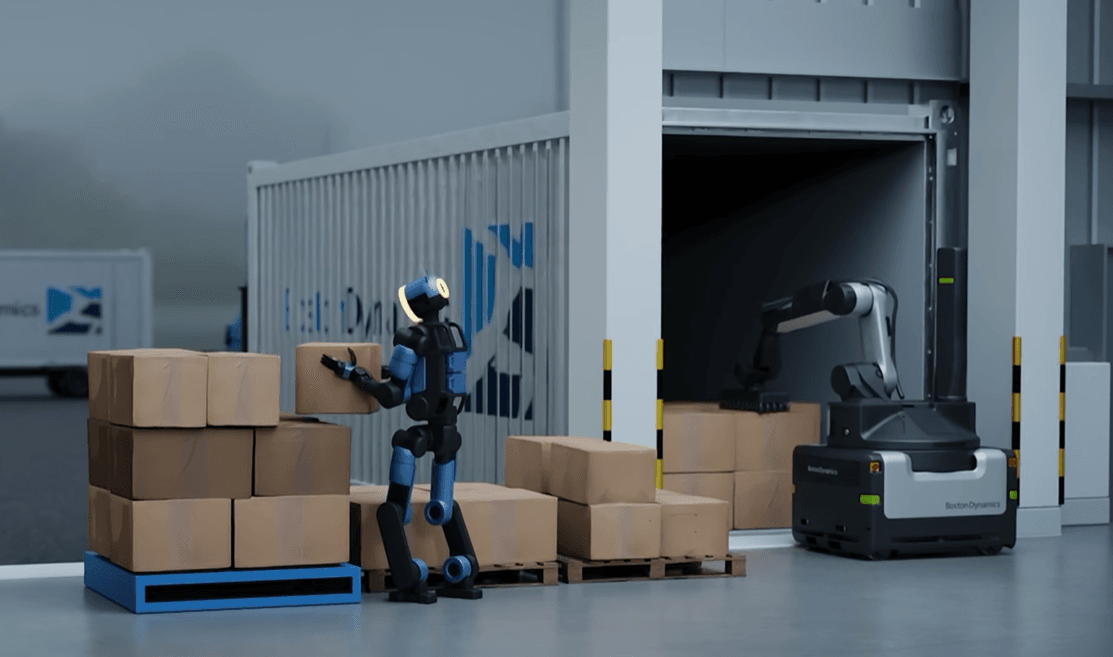
In late January 2026, Hyundai's labor union issued its now-famous ultimatum: "Not a single robot will be allowed onto the factory floor without a labor-management agreement." The target was Atlas, Boston Dynamics' humanoid robot, which Hyundai plans to deploy at its Georgia Metaplant starting in 2028. The union's objection was primarily economic — the long-term cost advantage of robots over human labor, and the workforce reduction it would inevitably entail. But the union's stance on Atlas is not uniform across all manufacturing functions. And the distinction matters.
On general assembly — the high-volume, high-visibility work that defines a factory's identity — Korean unions have drawn a hard line. Atlas will not touch those lines without an agreement. Hyundai has responded by planning its initial deployment in Georgia, not at its domestic plants in Ulsan or Asan.
Manufacturing Intelligence occupies a different position in the union's calculus. It is quieter work. It is less visible. And — critically — it is a function where even senior union members acknowledge a problem that no amount of loyalty to the workforce can solve: when the most experienced inspectors retire, their replacements cannot replicate decades of accumulated visual judgment. The defects that a 30-year veteran catches instinctively are, in many cases, genuinely invisible to a newer worker.
This is not something unions advertise. But it is a concession that shapes how the automation conversation actually unfolds behind closed doors. Manufacturing Intelligence is the one domain where the union's own internal logic supports the case for AI — not as a replacement for skilled labor, but as a stopgap for a skill that is disappearing faster than it can be taught.
As for Atlas itself, industry analysts and the Korea Herald's reporting make clear that meaningful deployment in factory settings remains years away. Hyundai's own timeline begins with low-risk parts sequencing in 2028 and expands to broader assembly tasks only by 2030. Experts estimate that at least four to five years of real-world operation will be required before humanoid robots can perform meaningfully in complex manufacturing environments — and longer still before the economics justify the investment at scale. The technology is not ready to replace inspectors today. But the trajectory is unmistakable.
The Quietest Battleground
Manufacturing Intelligence is where the automation war will be won or lost first — not because it is the most dramatic front, but because it is the one where the strongest case for AI is hardest to argue against.
In logistics, the case for humanoid robots rests on labor shortages and operational efficiency. In general assembly, it rests on cost reduction and productivity. Both arguments are compelling. Both are also politically fraught — they are, at their core, arguments for replacing human workers with machines.
Manufacturing Intelligence is different. Here, the argument is not about efficiency or cost. It is about safety. A defect that reaches a customer — in an automobile, in an aircraft, in a pharmaceutical product — is not an inconvenience. It is a liability. And when the AI system can detect that defect with a reliability that no human inspector can match, the moral weight of the argument shifts in a way that labor negotiations cannot easily absorb.
This is why Manufacturing Intelligence is likely to be the first domain where AI moves from "augmentation" to something closer to autonomous authority — not because unions will surrender the point, but because the alternative, in certain industries, is unacceptable. No union wants to be the organization that blocked the technology that could have prevented the next Boeing. No company wants to be the one that didn't deploy it.
The inspector's eye, after all, was never the point. The point was always what it could see. And now, for the first time, there is something that sees better. The question is not whether the industry will adopt it. The question is whether the humans who built their careers on that quiet, essential skill will have a say in what comes next — or whether the decision will already have been made for them.
Next in this series: The Last Wall Standing — Construction is the final frontier for robotics: brutal conditions, complex terrain, and a workforce that has never been more desperately needed. How humanoid robots are preparing to enter the industry's most unforgiving environment — and why the unions here may have less room to resist than they think.
Sources Referenced:
- CNBC — "How BMW uses AI to make vehicle assembly more efficient" (Jul. 2023)
- BMW Group Press — "Automated Surface Processing"
- National Institute of Standards and Technology — "Human Factors in Inspection and Manual Assembly" (2021)
- PMC / National Library of Medicine — "Artificial Intelligence-Based Smart Quality Inspection for Manufacturing"
- EU AI Act — Article 14: Human Oversight; Article 26: Obligations of Deployers
- Wikipedia — "Financial impact of the Boeing 737 MAX groundings"
- Harvard Business Review — "Boeing 737 MAX" (Jun. 2024)
- Korea Herald — "Hyundai Motor's humanoid push meets labor wall" (Jan. 30, 2026)
- Korea Herald — "[CES] Hyundai Motor shifts robotics from lab to factory floor with Atlas" (Jan. 6, 2026)
- CNBC — "Hyundai Motor Group plans to deploy humanoid robots at U.S. factory from 2028" (Jan. 6, 2026)




Leave a comment