

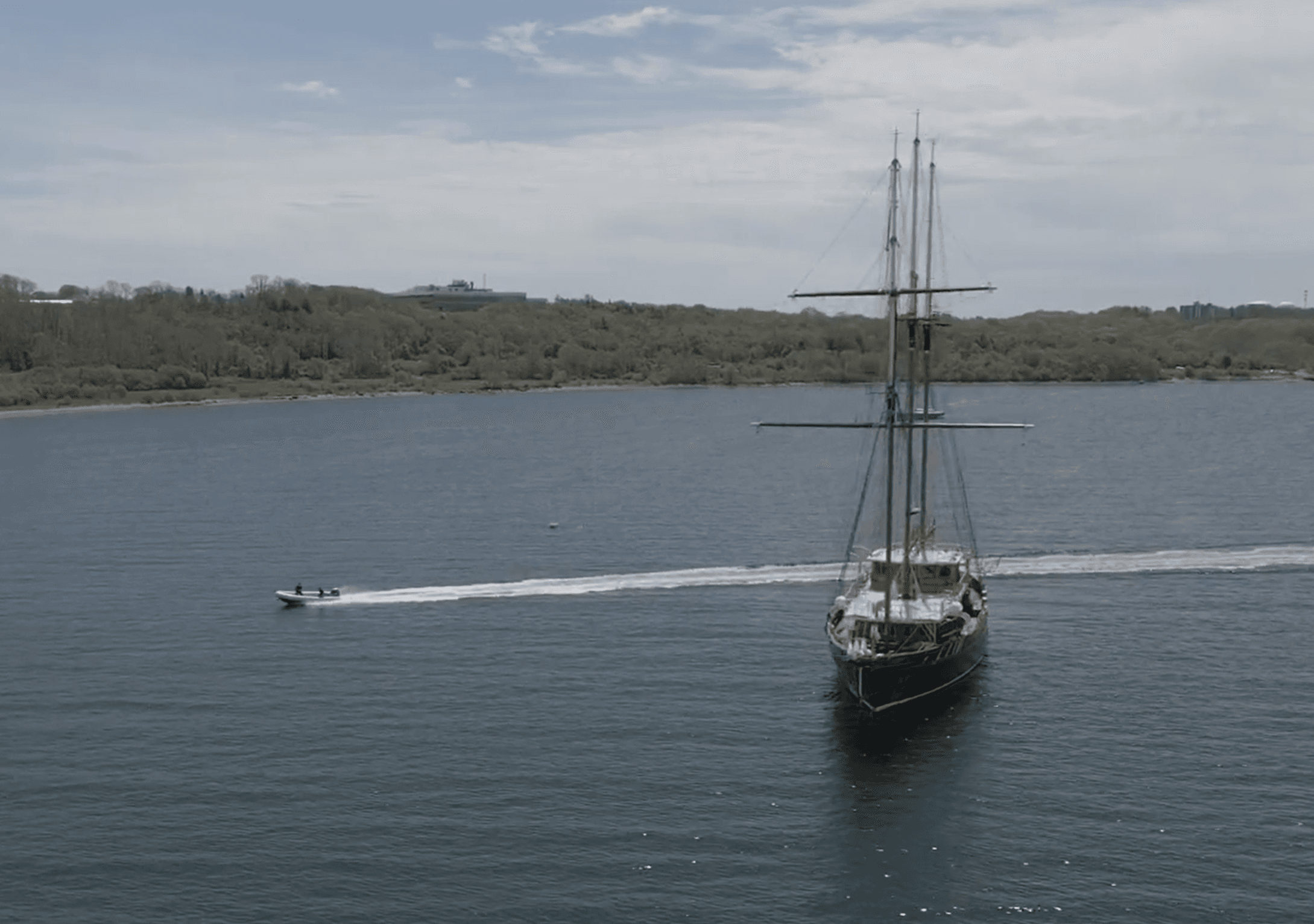
Two signals this week capture where the undersea competition is heading: Hanwha (Korea) partnering with U.S. startup Vatn Systems to co-develop low-cost, torpedo-shaped autonomous underwater drones for the U.S. Navy, explicitly framed around scaling “mass” in the Indo-Pacific. And separately, reporting points to China testing larger unmanned underwater drones, alongside ongoing open-source observations that Beijing is pushing into extra-large and even “XXL” categories of uncrewed subs.
What’s happening is bigger than a few programs: UUVs are shifting from niche ISR and mine warfare tools into a core layer of naval capability, because they offer persistence, scale, and ambiguity in a domain where detection is hard and escalation management is complicated.
1) Global UMV/UUV development: the main “lanes”
Think of the global UUV market as splitting into four mission lanes:
A. Mine countermeasures (MCM) + seabed surveying (most mature)
This is where UUVs have been fielded the longest: side-scan sonar mapping, route clearance, harbor approaches, post-storm inspection, cable/pipeline surveys. Platforms like HII’s REMUS family are widely exported and used across navies and civilian agencies.
B. ISR and “sensor networking” (fastest growth)
Persistent undersea sensing is increasingly about networks: distributed sensors + occasional UUV “data mules” that collect, compress, and move information. Undersea infrastructure security (cables, seabed nodes) is becoming a first-order driver as strategic chokepoints and deep-sea assets matter more.
C. Extra-large UUVs (XLUUVs) for long endurance + modular payloads (strategic tier) The U.S. Navy’s Orca XLUUV effort illustrates the ambition: long-range, large payload bay, and multi-mission modularity—though Western programs have also faced cost/schedule/complexity friction.
D. Low-cost “attritable” UUVs and swarms (the disruptive tier) This is where the Hanwha–Vatn story fits: torpedo-shaped autonomous vehicles priced for volume, aiming at surveillance and potentially strike roles, and explicitly referencing “swarming” behaviors.
2) North & East Asia: why the tempo is rising
China: “go bigger” + undersea pressure tools
Open-source reporting and specialist tracking suggest China is experimenting with very large uncrewed undersea platforms, including deployments for trials in the South China Sea, and a broader ecosystem of XLUUV-like designs.
The strategic logic is straightforward: large UUVs can potentially support long-endurance ISR, seabed operations, sensor collection, and threatening undersea infrastructure—all without the political and operational costs of crewed submarines.
South Korea: the manufacturing + integration advantage
Korea’s value-add is not only platforms, but also shipbuilding-grade production discipline and rapid integration with U.S. requirements. Reuters reports Hanwha invested in Vatn and is co-developing low-cost autonomous underwater drones for the U.S. Navy, a notable sign that allied supply chains for autonomy are being formalized.
Separately, South Korea has long-running indigenous activity around mine-hunting AUVs and related unmanned maritime concepts (some reporting is older, but consistent with Korea’s direction of travel).
Japan: methodical R&D → larger UUV class
Japan’s ATLA has shown an extra-large unmanned underwater vehicle (XLUUV) in R&D, reinforcing that Japan is taking the “bigger, longer endurance” tier seriously as part of a broader defense buildup direction.
Taiwan: asymmetric maritime drones (more surface than undersea, but converging)
Taiwan’s public direction is heavy on “sea drones” and asymmetric unmanned maritime systems; Reuters has reported Taiwan examining sea drones informed by Ukraine’s experience.
Even when surface-first, the command-and-control, autonomy, supply chain, and sensor stack tends to converge with undersea programs over time (shared perception, comms gateways, mission planning software, and attritable mass logic).
3) What changes in the next 3–5 years: tech that will actually move the needle
Underwater autonomy is constrained by physics (communication and navigation are hard), so the most meaningful advances are “stack” improvements rather than one magic breakthrough:
1) Autonomy that works with intermittent comms
Underwater comms remain bandwidth-limited; the practical path is better onboard perception + local decision policies that can operate for hours/days with minimal updates. Expect rapid progress in: onboard target classification, seabed change detection, and multi-agent behaviors that don’t require constant links.
2) Navigation without GPS: better underwater positioning
Watch for more operational use of: inertial navigation + terrain-aided nav, cooperative localization between vehicles, and occasional surfacing/buoy relay updates. This is a huge enabler for swarms.
3) Energy and endurance: “range is strategy”
Incremental but compounding improvements: higher energy-density batteries, safer packaging, better power management, and hybrid concepts for specific mission profiles. Large UUVs will keep pushing the endurance frontier; small “attritable” units will push cost-per-day down.
4) Modular payload bays + quicker mission re-roling
The winning architectures will look like “undersea trucks”: standardized power/data interfaces, swappable sensor packages, and software-defined mission kits—mirroring the modular payload direction seen in the XLUUV class.
5) Counter-UUV becomes a market
As UUV numbers rise, so does the need to find, classify, and neutralize them. Expect growth in: acoustic sensing, anomaly detection, seabed surveillance, and non-kinetic disruption approaches (jamming is harder underwater; deception and signature management matter more).
4) The reality check: why “underwater swarms” are slower than aerial swarms
Swarms are real—but undersea swarms are hard-mode:
- Comms bottleneck (acoustic is slow; optical is short-range; RF doesn’t travel well underwater)
- Navigation drift without GPS
- Collision avoidance in cluttered littorals
Reliability and recovery (losing vehicles is expected in attritable concepts, but you still need safety and accountability)
That’s why near-term “swarming” will often look like coordinated packs (a few vehicles) + distributed sensor fields, rather than hundreds of tightly synchronized units.
Takeaways
- Global UUV growth is no longer “nice to have”—it’s becoming a foundational layer of maritime competition.
- North & East Asia are shaping the pace: China with scale and experimentation at the large end, Korea with production + alliance integration, Japan with deliberate XLUUV R&D, and Taiwan leaning into asymmetric unmanned maritime logic.
- Over the next 3–5 years, the biggest advances will be in the autonomy/navigation/energy/software stack—the stuff that makes UUVs reliable enough to deploy in volume.








Leave a comment