

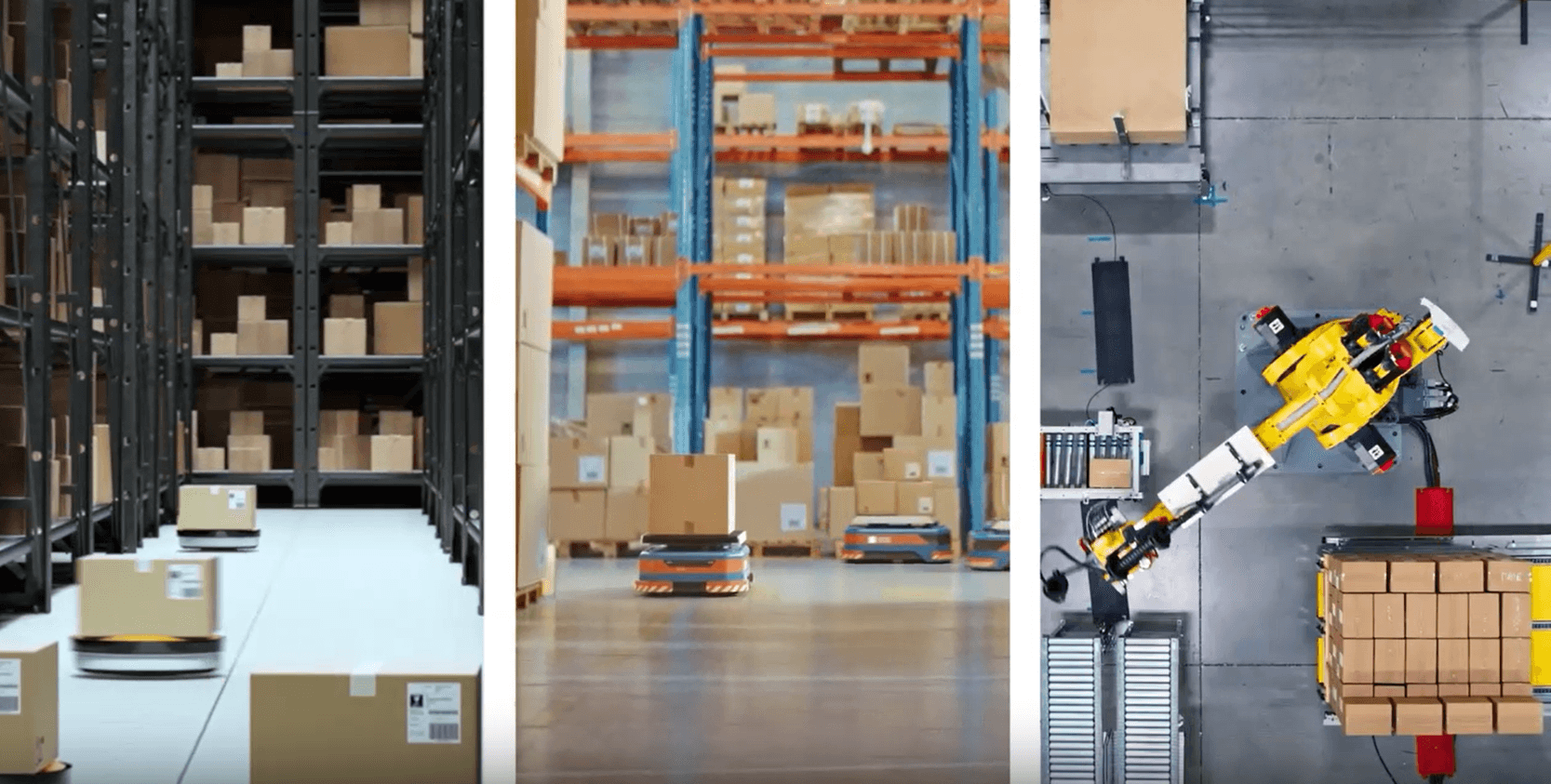
In the future, companies will most likely be running different types of robots from different vendors in the same facility. Companies need to prepare for this reality by deciding how these different robots will communicate with one another.
By Dan Gilmore and Raj Senguttuvan, Roboteon, a leading provider of robot management software
Interest in warehouse robotics remains high, driven by labor pressures and a general desire to further automate distribution processes. Likewise, the number of robot makers also continues to grow. By one count, more than 50 providers exhibited at the big MODEX show in Atlanta in April 2026, with similar numbers for the Automate show in Chicago in June.
In distribution environments, there is especially strong interest in autonomous mobile robots (AMRs) for collaborative order picking. In this application, the AMR meets pickers at the right inventory location, and the workers then place picks in totes on the robot, which then moves on to another location/picker or off to packing, greatly reducing human travel time.
While the use of robots in distribution is still early in its maturity, for many, if not most, companies, the future is one of heterogeneous robots—different types of bots from different vendors operating in a given facility. With the growth in robotics, these different robots will often need to communicate with each other—either directly or indirectly through use of an integration platform—to automate the flow of information and work. This is broadly termed “interoperability,” and it is an important concept for companies planning warehouse robotics initiatives, with the ultimate goal of achieving a “plug and play” environments where new robots can easily be added to the automation mix and processes adapted over time.
Interoperability example
Why is interoperability important?
Consider the following example. A company buys perhaps 20 AMRs to support collaborative picking. A few years later, additional AMRs are needed to support growth. But now there is another AMR from a different vendor that the company prefers for cost, design, change in stock keeping unit (SKU) attributes, or other factors.
Interoperability will allow a company to keep the AMRs they have and seamlessly add the new AMRs to the mix. Beyond basic integration, a company will want to manage the robots across both vendors in terms of visibility, task assignment, performance measurement, and more, operating as if it’s a single fleet.
That’s a good example of what interoperability is all about.
Are there interoperability standards?
There are some initiatives across the robotics sector to develop cross-vendor integration protocols that will make interoperability much easier. However, these standards, such as VDA5050 (a standardized interface for automated guided vehicles and AMRs) and the Mass Robotics Interoperability Standard, are either not widely used or are still under development.
Many vendors have also started offering support for what is called a “robot operating system” (ROS/ROS2). However, this is a loose, open-source framework (not a full standard) that doesn’t fully address the interoperability challenge.
The robotics orchestration platform alternative
In the absence of useful standards, companies still have a few options for achieving interoperability. One is the traditional approach of manually programming interfaces between different robots and interfaces between robots and software systems such as warehouse management (WMS) or warehouse execution systems (WES).
The downsides of this approach are well understood. They include extended developing times and the high cost to get the integrations done, as well as a significant lack of flexibility down the road, with some added risk thrown into the mix as well.
A better alternative is the use of a platform strategy, adopting the type of technology provided by Roboteon. Which begs the question: What is a robotics orchestration platform?
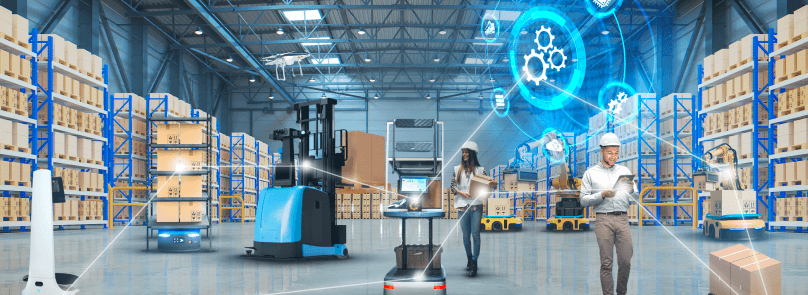
A robotics orchestration software platform is a middleware ecosystem—cloud-based or on-premise—that provides various capabilities and services from integration to fulfillment planning and execution. It also acts as a bridge between automation systems and various enterprise software applications.
The starting point for any robotic platform success is, in fact, integration. That integration capability includes advanced tools that enable flexible “no code/low code” approaches to connecting robot fleets.
The right platform can also more rapidly integrate with WMS/WES or other software applications, using AI to greatly accelerate the often time-consuming data-mapping process. Once the WMS/WES is connected to the platform, then the robots are also connected to enable real-time, bidirectional access to the WMS/WES data.
Such a platform delivers interoperability across robot types and connects different automated processes. A simple example would be a communication from the platform to a robot needed to move goods from receiving to reserve storage, where another robot is made aware via the platform that there is a new putaway task ready for completion.
Other interoperability considerations
To maximize interoperability opportunities, companies should consider the following interoperability-related capabilities that may be available from a given robotics platform:
Flexibility in integration based on robot software functionality: Different robot vendors come with software at different levels of maturity. An interoperability platform should be able to work with robotic vendors at any level of software functional capability, ensuring flexibility in robot selection.
User experience consistency: For interoperability to be functionally effective, the user interface across robotic-enabled processes and different vendor systems should be consistent, so that users can easily interact and switch between different tasks.
Flexible communication protocols: A platform should provide support for a wide range of different protocols, such as application programming interfaces (APIs), socket communication (a two-way communication link between a server and a client program), web services, ROS/ROS2.0, and VDA5050, to name just a few.
Observability: AMRs especially will generate huge of amount of data on their movements and activities that can be used for analytics. The robotics platform should normalize data packets from different vendors to create a unified dashboard.
Safety and risk mitigation: A robotics platform can help achieve safety across different types of robots by understanding the safety protocols of different machines and coming up with a common set of rules. These rules will exist in an unified fleet manager that runs in the platform and sits on top of the fleet managers of each individual brand of AMR.
While some of these capabilities may not be relevant in a company’s early years in warehouse robotics, they could prove valuable down the road, so give them some consideration today.
Interoperability use cases
We’ve already covered a couple of common robotic interoperability use cases:
Adding new robots of the same type but from a different vendor and having all of them operate together as a single fleet.
Connecting different types of robots or automation to support multi-step process flows (for example, receiving to putaway).
Here is another: One global consumer goods company wants to heavily automate distribution processes but give individual regions or countries they operate in the flexibility to select the vendor for a specific type of robot (for example, a layer picker) and be able to easily plug that specific equipment into the larger platform infrastructure. This allows a centralized automation strategy with local execution.
The Interoperability Imperative
For a significant and growing number of companies, the future on the distribution center floor will be robotics of multiple types and vendors. To maximize flow and productivity, these heterogeneous environments must adopt interoperability strategies, enabling systems of different types to operate as if a single fleet. While standards to help with all this may arrive in future, for now a robotics integration and execution platform will provide an attractive alternative to traditional programming-heavy approaches.
Robtoteon can help you get there easier, faster and at lower cost, while improving warehouse productivity and throughput.








Leave a comment