

Search Result for: rss-2026
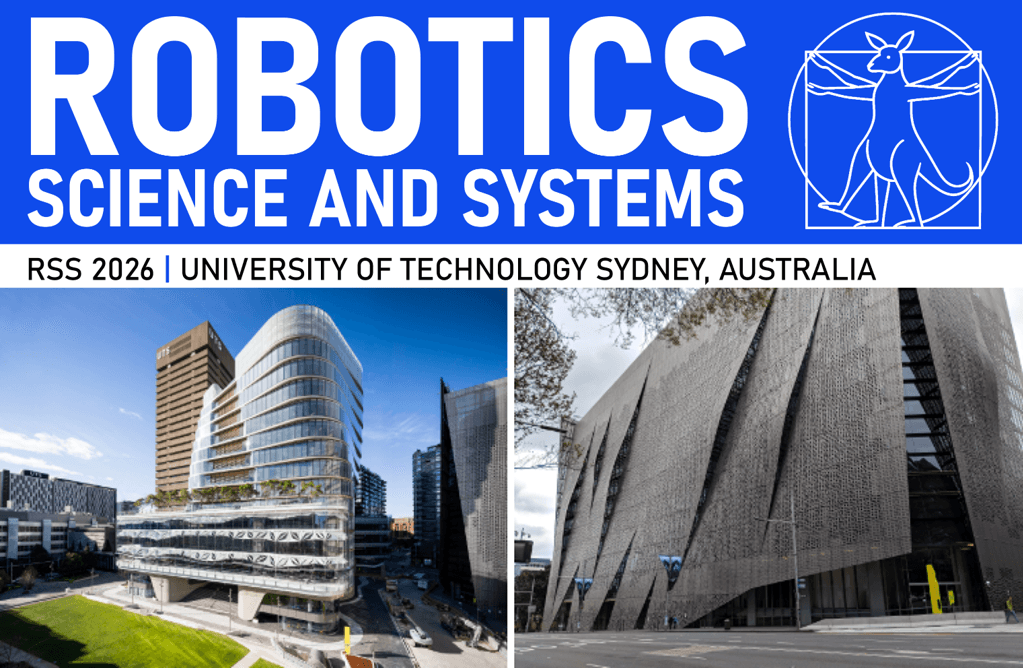
Robotics Science and Systems RSS 2026
Robotics: Science and Systems (RSS 2026) is an international robotics research conference held July 13–17, 2026 in Sydney, Australia, featuring peer-reviewed presentations, workshops, tutorials, posters, and networking opportunities for robotics scientists and engineers

20 years of KION – connecting the heritage with the future at the Annual General Meeting 2026
KION Group marked its 20th anniversary during the 2026 Annual General Meeting, reflecting on its transformation into "The Supply Chain Solutions Company." The event featured significant corporate decisions, including the election of three new members to the Supervisory Board and the approval of a €0.62 dividend per share for shareholders. Additionally, the company announced the extension of Michael Larsson's contract, ensuring his leadership through 2029. This gathering not only celebrated the company's achievements but also set the stage for its future direction in the evolving supply chain industry.

2026H2 Robotics Events Briefing: Tailored Recommendations for Robotics Readers
Discover the ultimate directory of global robotics events in 2026. Tailored briefings for engineers, investors, and founders on humanoid robots, AI, and industrial automation by RobotToday.

2026 Robotics Events Briefing: Tailored Recommendations for Robotics Readers
A curated briefing of major global robotics events in 2026, offering tailored recommendations for researchers, industry professionals, startups, and the broader robotics ecosystem.

Pakistan gives foreign banks an edge in shift to Islamic finance
FinancePakistan gives foreign banks an edge in shift to Islamic financeDomestic lenders required to convert to sharia-compliant model from 2028One currency, two banking systems. Pakistan's banks must all offer sharia-compliant services from 2028, but foreign banks will be able to continue offering non-Islamic services alongside -- giving them a possible advantage. © ReutersADNAN AAMIRJuly 7, 2026 14:31 JSTISLAMABAD -- In the run-up to its banking reform toward Islamic banking, the Pakistani government has decided to require domestically owned banks to operate under a fully sharia-compliant model from 2028 to eliminate interest-based finance.Read NextEnergyPakistan approves final link in 1,600-km national oil pipelineFinanceBangladesh bets $3.2bn to avert a banking crisis but reforms elusiveBusiness trendsPakistani gig workers' exports to hit record high but AI threats loomCommoditiesIndian families scale back on gold for weddings as prices hover near highsEnergyBangladesh power cuts deepen as government struggles to pay billsFood & BeverageIndia's sugar industry likely to exit exports and exist for ethanolDefensePakistan unfazed by Afghan-Russian military pact, say officialsTradeChinese firms brace for new EU rules as trade deficit tops $1bn a dayInternational relationsBangladesh courts China to drive infrastructure and trade pushBusiness dealsPakistan offers up 3 state-owned power distributors in privatization pushLatest on FinanceFinanceSingapore's Temasek to raise AI exposure 2.5-fold over 5 yearsFinanceJapan brokerages set sights on US mega-IPOs after strong SpaceX debutFinanceJapan's blockchain-based security tokens to open to foreign investorsSponsored ContentAbout Sponsored ContentThis content was commissioned by Nikkei's Global Business Bureau.
Video Friday: An Earthbound Mars Rover for the Moon
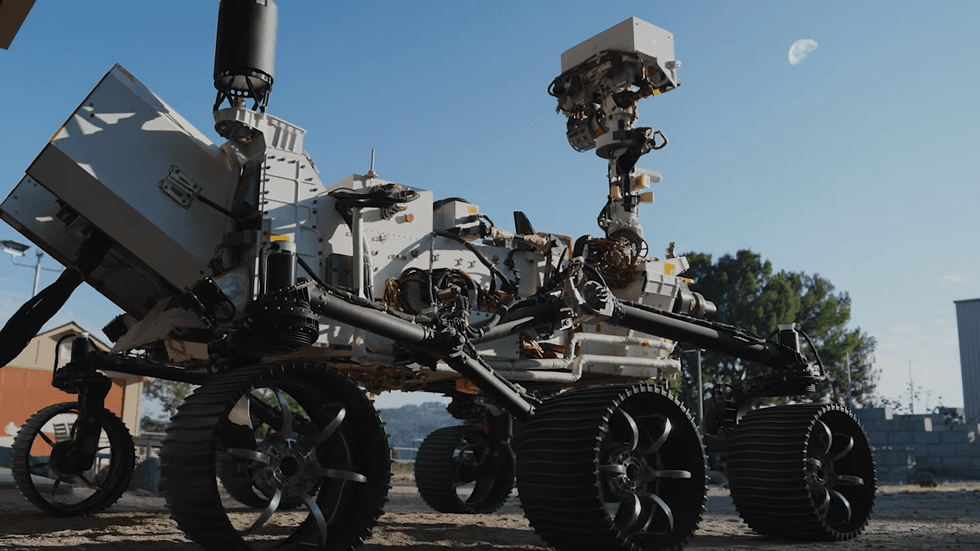
IEEE Spectrum robotics has released its latest edition of Video Friday, showcasing a variety of innovative robotics videos and announcing upcoming events in the field. Notable events include the RSS 2026 conference in Sydney from July 13-17, the Summer School on Multi-Robot Systems in Prague from July 29 to August 4, and IROS 2026 in Pittsburgh from September 27 to October 1. Among the featured projects is NASA's proposed PROMISE mission, which aims to send an advanced, nuclear-powered rover to the Moon's South Pole as part of its Moon Base initiative. This mission will utilize technology from the Curiosity and Perseverance Mars rovers, showcasing the adaptability of existing space exploration technology. In other developments, Weave Robotics is set to launch its home robot, Isaac 1, this fall, offering basic task autonomy for $500 per month. Meanwhile, UBTech Robotics has introduced a humanoid robot with lifelike features and emotional AI, reflecting a growing trend of integrating robots into domestic settings. Additionally, Carnegie Mellon’s Dr. Sebastian Scherer emphasizes the importance of developing robots capable of performing tasks in unpredictable environments, aiming to make them more functional and tool-like. The ongoing advancements in robotics, including soft, floating robots designed for social interaction and innovative applications like spatial audio technology from Georgia Tech, highlight the industry's commitment to enhancing human-robot collaboration and everyday life.
Video Friday: Give Robots a Hand
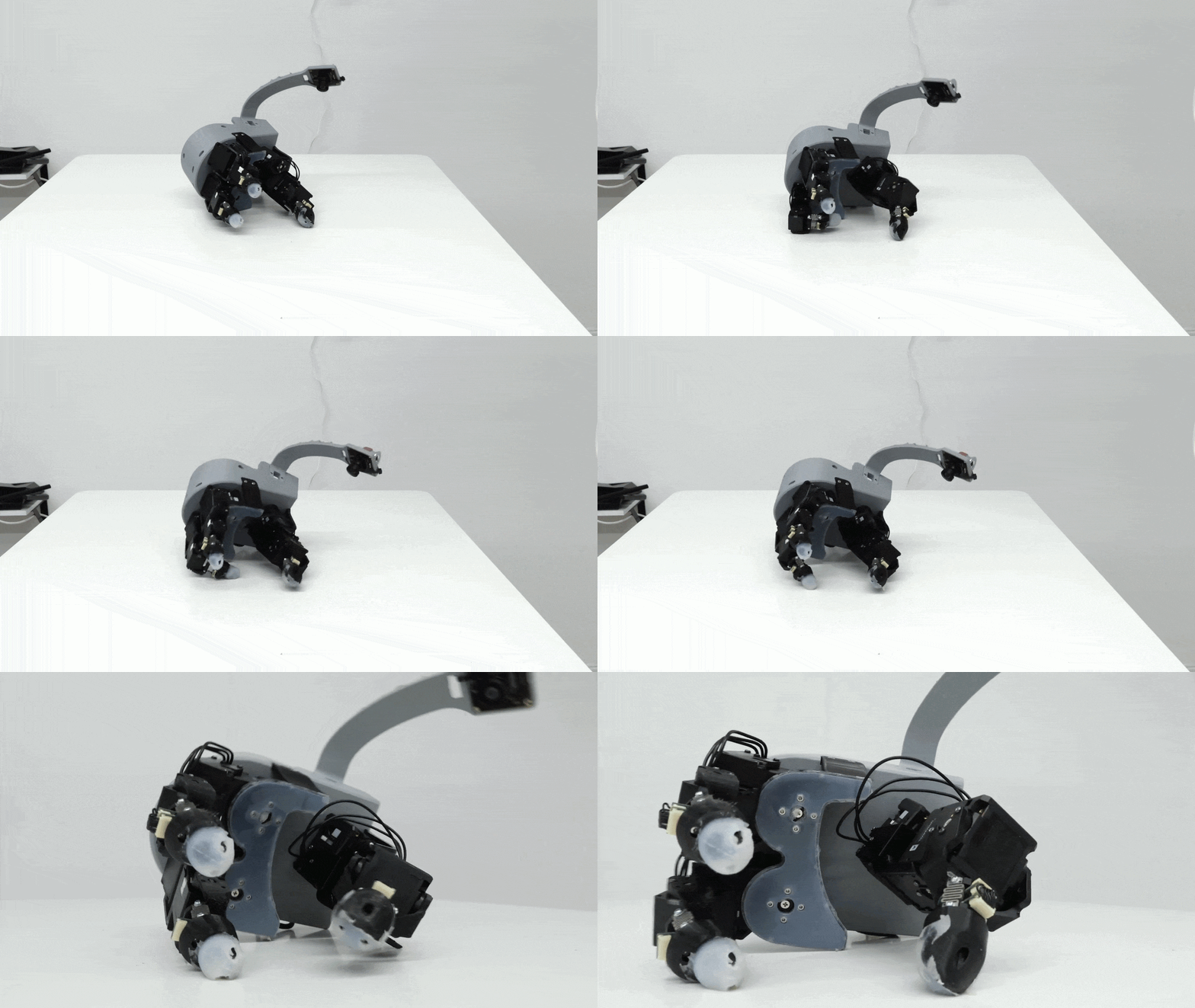
IEEE Spectrum robotics has released its latest edition of "Video Friday," showcasing a collection of innovative robotics videos along with a calendar of upcoming robotics events scheduled for 2026. The events include the RSS conference in Sydney from July 13-17, the Summer School on Multi-Robot Systems in Prague from July 29 to August 4, Actuate in San Francisco on August 18-19, and IROS in Pittsburgh from September 27 to October 1. Among the featured videos, Pulkit Agrawal from MIT CSAIL discusses his "SoftMimic" approach to enhancing robot safety around humans. The DARPA Lift Challenge, taking place from August 6-9 at the National Museum of the US Air Force, invites public participation. Notable demonstrations include Agility Robotics' Digit, which showcases advanced footstep planning to navigate obstacles, and DEEP Robotics' aggressive firefighting robot. Additionally, the potential for AI-driven robots to understand whale behavior and communication is explored by Harvard SEAS Professor Stephanie Gil. The edition also highlights discussions with Rodney Brooks, the creator of the Roomba, about the future of robotics. The content aims to engage the robotics community and stimulate interest in technological advancements and their applications.
Video Friday: Do Robots Even Need Legs?
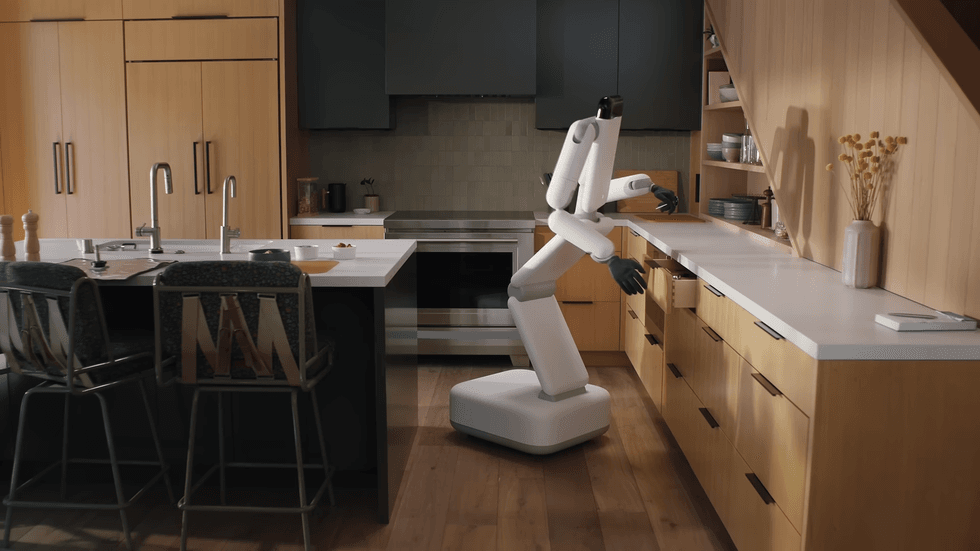
In the latest edition of Video Friday, IEEE Spectrum robotics showcases a variety of innovative robotics videos and announces upcoming events in the field. Notable events include RSS 2026 scheduled for July 13-17 in Sydney, the Summer School on Multi-Robot Systems from July 29 to August 4 in Prague, Actuate 2026 on August 18-19 in San Francisco, and IROS 2026 from September 27 to October 1 in Pittsburgh. Among the featured projects, Eno, an advanced AI and general-purpose robot developed by Genesis, exemplifies a new generation of robots designed to enhance human capabilities. Meanwhile, NASA's Jet Propulsion Laboratory is testing the ERNEST rover in California's Colorado Desert, which is being developed for future lunar missions and can operate autonomously over challenging terrain. Sony AI's Ace project demonstrates a robotic system capable of adapting to unpredictable scenarios in table tennis, while ANYbotics highlights the economic benefits of their quadruped robots in industrial inspections, preventing significant production losses. GITAI is preparing for a robotic satellite servicing demo, and Bi-AQUA is exploring underwater photography challenges for robots. Sanctuary AI has achieved impressive results in wire plugging tasks for a major automotive supplier, showcasing a success rate exceeding 99.5%. Additionally, various other robotics projects are highlighted, including a bipedal robot named GrowBot, which operates on a low-cost Raspberry Pi and aims to make physical AI accessible to a broader audience.
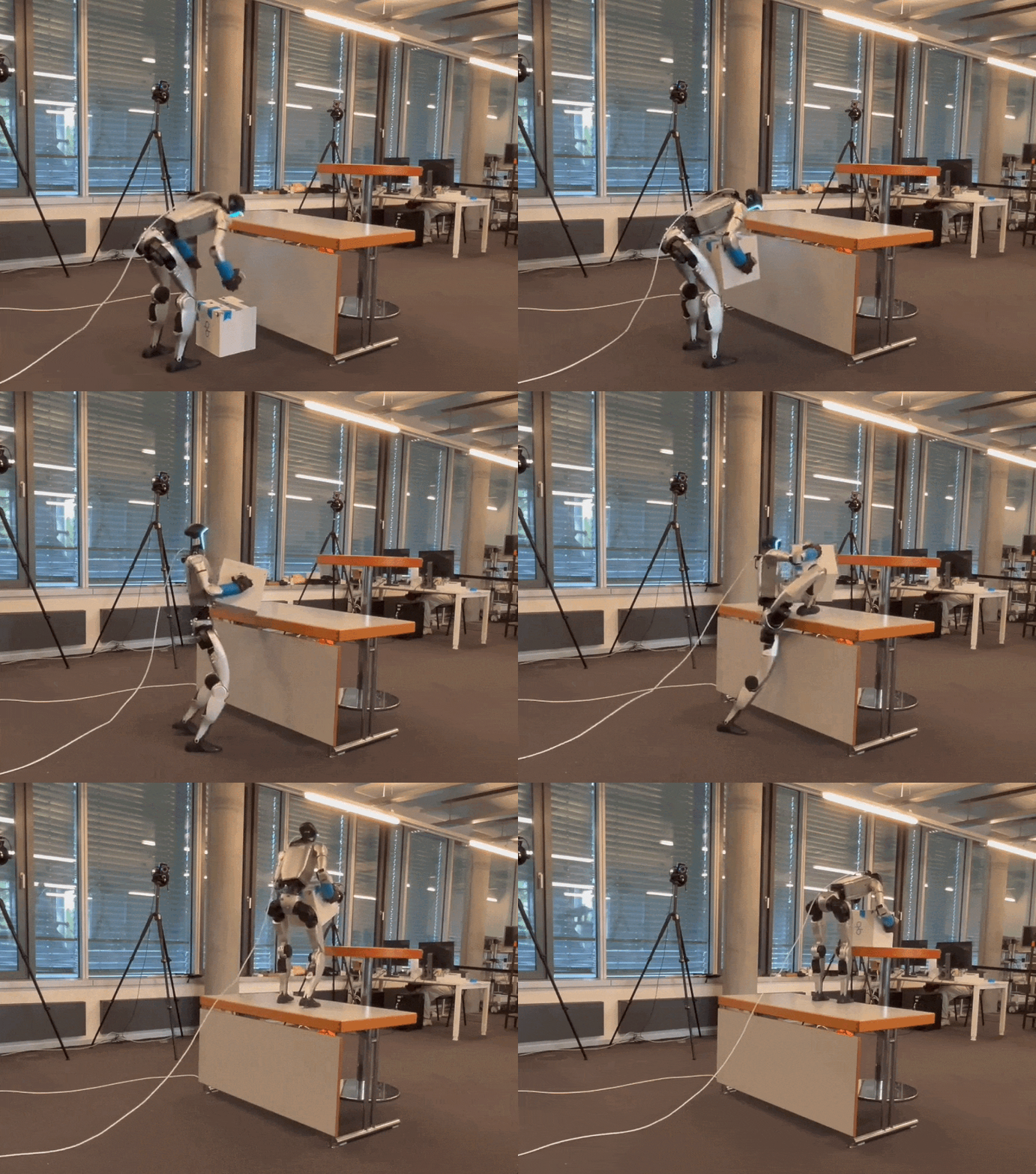
Video Friday: Robotic Motion Discovery Reveals Unusual Behaviors
IEEE Spectrum robotics has released its latest edition of Video Friday, showcasing an array of innovative robotics videos and announcing upcoming events in the field. Notable events include RSS 2026 in Sydney from July 13-17, the Summer School on Multi-Robot Systems in Prague from July 29 to August 4, and Actuate 2026 in San Francisco on August 18-19. Among the featured videos is MotionDisco, a framework that autonomously discovers complex humanoid loco-manipulation motions, highlighting the challenges of coordinating fluid movements across multiple joints. Additionally, the Human Support Robot (HSR) from Toyota is demonstrated in real home environments, assisting residents with daily tasks, showcasing the potential for robots to become long-term companions. Other highlights include the MIDAS Hand, an open-source robotic hand designed for manipulation and research, and a novel flight maneuver by a bipedal robot that showcases advanced aerial control. The European Space Agency shares a timelapse of Dextre, a robotic handyman, efficiently unloading equipment in space, while ROBOTIS introduces AI Sapiens, which learns humanoid motions using just a smartphone camera. In a collaborative effort, LUMOS Robotics has launched Project EDGE, inviting global innovators to explore humanoid robotics, while Sphero emphasizes its educational products designed to nurture computational thinking from early childhood through high school. These developments illustrate the rapid advancements and collaborative spirit within the robotics community.

Video Friday: Watch This Running Robot Not Fall Down Stairs
IEEE Spectrum robotics has released its latest edition of "Video Friday," showcasing a selection of impressive robotics videos and announcing upcoming robotics events scheduled for 2026. Notable events include RSS 2026 in Sydney from July 13-17, the Summer School on Multi-Robot Systems in Prague from July 29 to August 4, and Actuate 2026 in San Francisco on August 18-19. Among the featured videos, a humanoid robot from DEEP Robotics demonstrated remarkable recovery skills, raising questions about the role of luck in robotics. The DARoS Lab shared insights on their MPC-based balance controller, while Generative Bionics revealed their new robot, GENE01, designed and produced in just three months. A significant milestone was achieved by IHMC Robotics with their humanoid robot, Alex, which successfully took its first steps outdoors in preparation for a demonstration in Maryland. Flexiv Robotics introduced the Flexiv MICO, a compact dual-arm system designed for safe collaboration in various workspaces. Additionally, ICRA 2026 showcased CCRobot-S, a team of cable-climbing robots capable of collaboratively inspecting and maintaining bridge cables. Boston Dynamics provided a behind-the-scenes look at how their Atlas robot learned to play football, exploring the possibilities of robotics in sports without biological constraints. These developments highlight the rapid advancements in robotics technology and the ongoing exploration of their capabilities across diverse applications.
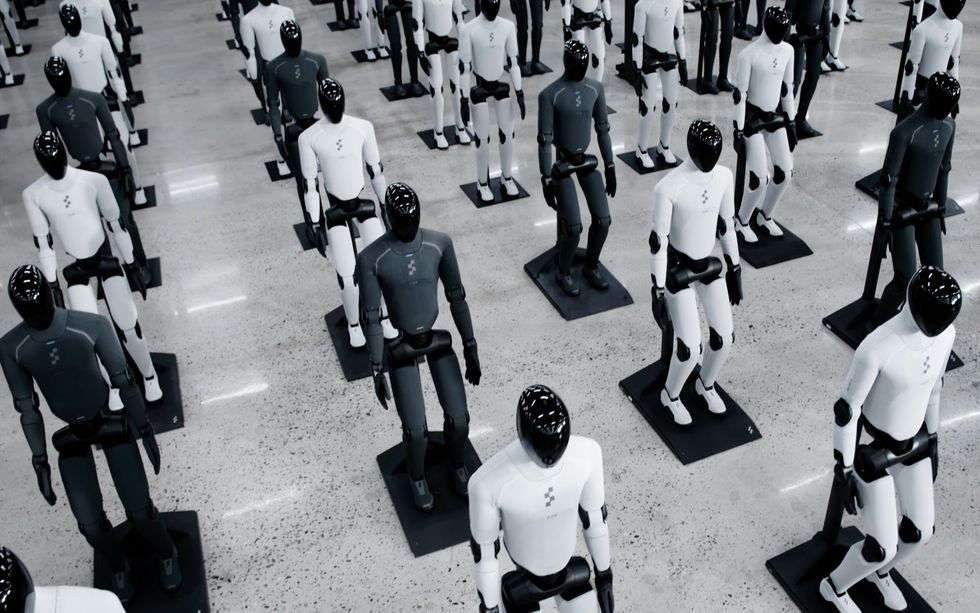
Video Friday: Figure, 1X Ramp Up Humanoid Robot Production
IEEE Spectrum robotics has released its weekly roundup of notable robotics videos and upcoming events, including major conferences like ICRA 2026 in Vienna and RSS 2026 in Sydney. A significant development in humanoid robotics has occurred with the opening of the NEO Factory in Hayward, California, which is now producing robots at a rate of 55 per week. This facility, which spans 58,000 square feet and employs over 200 staff, allows for complete in-house manufacturing, enhancing safety and efficiency. The first consumer robots are expected to ship in 2026, marking a pivotal step toward the realization of general-purpose home robots. In other news, NASA continues its exploration of Mars with two rovers, Perseverance and Curiosity, studying different geological eras of the planet. Meanwhile, the Chinese-made Unitree G1 humanoid robots are gaining traction in the U.S. tech landscape, being utilized by companies like OpenAI and Nvidia, raising questions about their implications for security and privacy. Additionally, advancements in robotics are showcased through various projects, including a surgical robot designed to streamline Neuralink implant procedures and a tactile-enabled humanoid manipulation system that enhances dexterity and stability in real-world tasks. As robotics technology evolves, experts are also exploring how autonomous systems make decisions in unpredictable environments, emphasizing the importance of AI in coordinating complex operations.
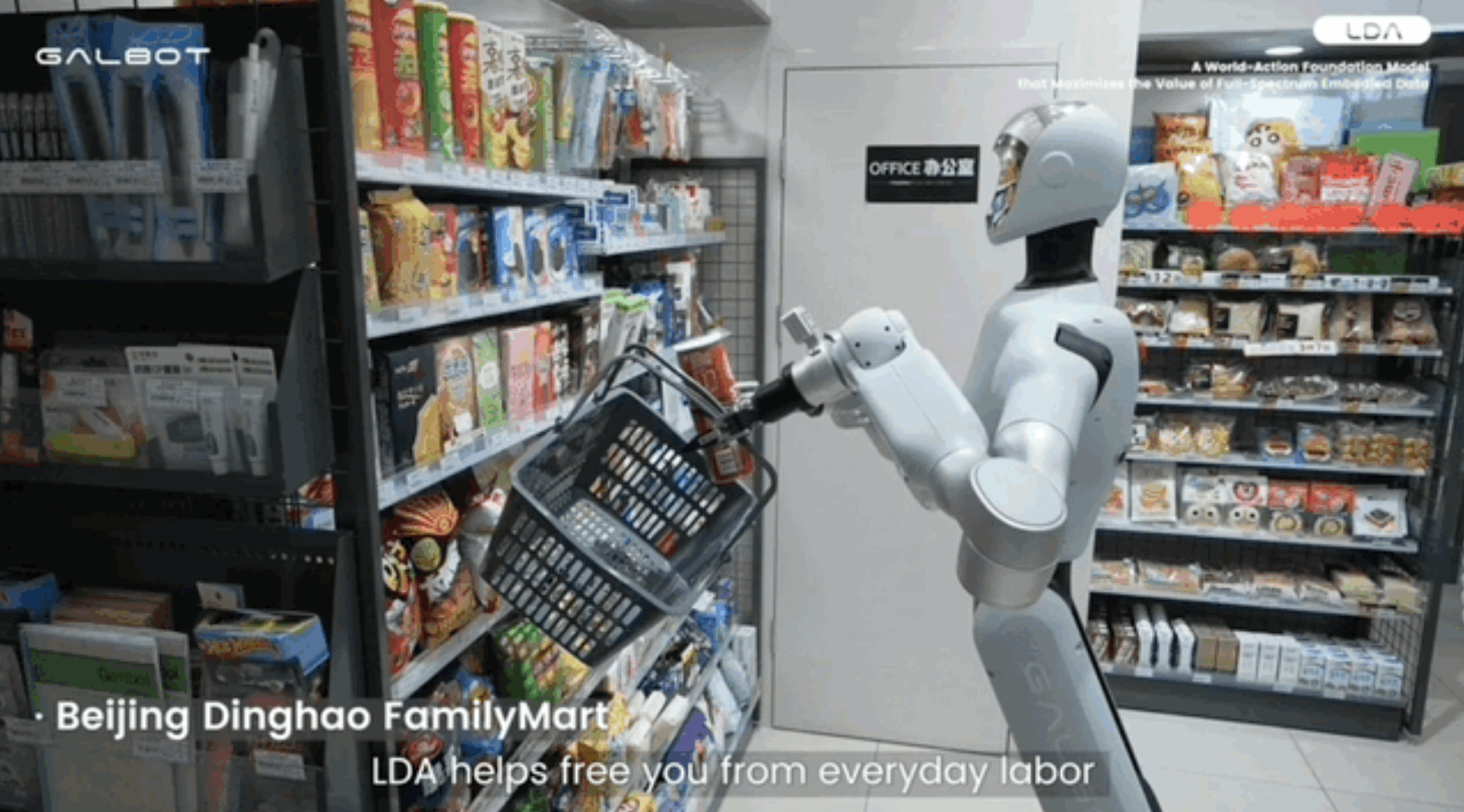
Galbot Launches LDA-1B World-Action Model, Open-Sources Framework
Galbot, China's leading unlisted embodied AI company valued at over RMB 20 billion (approximately $2.8 billion), has unveiled its latest innovation, the LDA-1B. This advanced model, featuring 1.6 billion parameters, integrates world and action learning, showcasing its ability to scale effectively with diverse data sets. The LDA-1B has been open-sourced and is set to be presented at the upcoming Robotics: Science and Systems (RSS) conference in 2026. This release marks a significant step in the field of AI, reflecting Galbot's commitment to advancing technology and contributing to the global AI community.
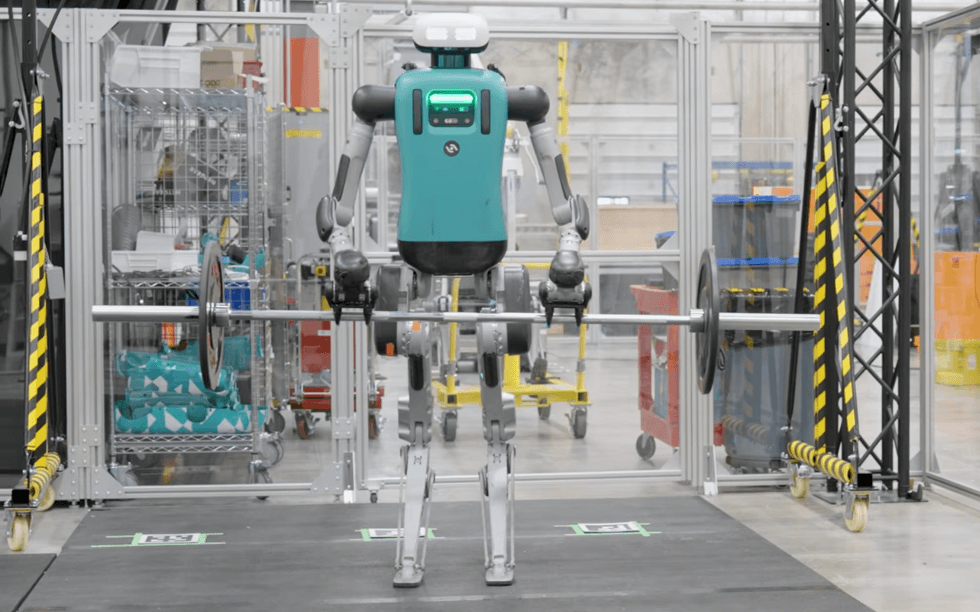
Video Friday: Digit Learns to Deadlift
IEEE Spectrum robotics has released its latest edition of "Video Friday," showcasing a selection of innovative robotics videos and announcing upcoming events in the field. The events include the International Conference on Robotics and Automation (ICRA) scheduled for June 1-5, 2026, in Vienna, the Robotics Science and Systems (RSS) conference from July 13-17, 2026, and a Summer School on Multi-Robot Systems taking place from July 29 to August 4, 2026, in Prague. Among the featured videos, researchers are training the robot Digit to perform a deadlift with a 65-pound object, emphasizing the importance of whole-body coordination and resilience in its actuators. This training allows for the development of a policy that enables Digit to execute a dynamically balanced lift in real-world scenarios. Additionally, Gatlin Robotics has introduced its first commercial showcasing robots in action as part of its Robot-as-a-Service (RaaS) contract. Dexterity highlights the expressive potential of motion intelligence in robotics, while Harvard researchers present a swarm of simple antlike robots capable of constructing and dismantling structures through adaptive group behavior. Lastly, a project from Michigan Robotics demonstrates a microcombustion actuator that rapidly inflates to launch colorful water droplets, challenging conventional notions about the capabilities of soft actuators. These advancements reflect the ongoing evolution and application of robotics technology across various domains.

Video Friday: This Floor Lamp Will Do Your Chores
IEEE Spectrum robotics has released its weekly roundup of notable robotics videos, along with a calendar of upcoming events in the field. Key events include the International Conference on Robotics and Automation (ICRA) scheduled for June 1-5, 2026, in Vienna, and the Robotics Science and Systems (RSS) conference from July 13-17, 2026, in Sydney. Among the highlights is Lume, a sculptural floor lamp that reportedly can perform household chores such as making beds and folding laundry, though skepticism surrounds its capabilities due to the presentation of its functionality in promotional materials. Additionally, researchers from MIT Media Lab and Politecnico di Bari have introduced Electrofluidic Fiber Muscles, a new type of artificial muscle that is soft and flexible, utilizing electric fields to operate silently without external pumps. Another innovation is GEN-1, a general-purpose AI model that significantly improves success rates in physical tasks and enhances speed, marking a step towards achieving generalist intelligence in robotics. The report also discusses advancements in legged manipulators, which face challenges in interacting with diverse articulated objects, and highlights the development of Tether, a system for autonomous interactive play that enhances policy learning through efficient data generation. As the robotics community continues to innovate, these developments signal exciting possibilities for the future of robotics applications.






