

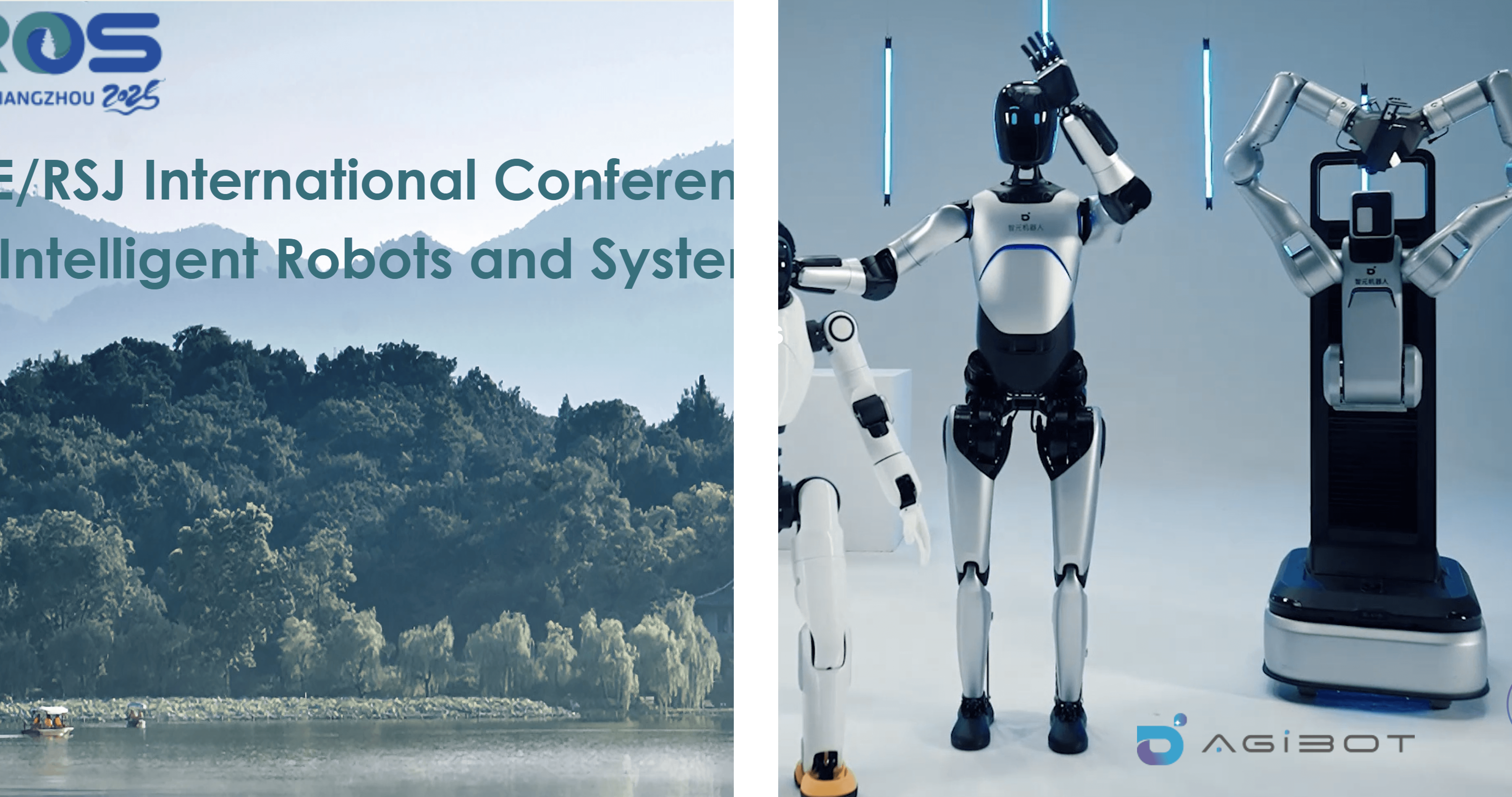
The 2025 IEEE/RSJ International Conference on Intelligent Robots and Systems (IROS), one of the world's largest and most influential robotics conferences, is set to return to mainland China after nearly 20 years. Held from October 19–25, 2025, at the Hangzhou International Expo Center, the event is expected to draw over 6,000 top experts from global robotics, AI, and automation fields.
This year's conference has already broken records, receiving 5,083 total paper submissions from 66 countries and regions. Furthermore, over 150 leading robotics manufacturers have signed on to exhibit, marking what will be IROS’s largest-ever exhibition.
In an exclusive interview, IROS 2025 General Chair and Shanghai Jiao Tong University Distinguished Professor He-Sheng Wang emphasized the historic nature of the event. Due to the conference’s continent-rotating mechanism, he notes, "This may be the only large-scale international top robotics conference held in mainland China for several years to come." This makes IROS 2025 a critical platform for Chinese firms seeking to cement a global presence.
Wang also offered a powerful assessment of China's position in the field, stating that its research in top conferences like IROS and ICRA has achieved a "cliff-like lead" in both submission and acceptance volume. He attributes this surge to strong national support, massive R&D funding, and the immediate, practical demands of China's advanced manufacturing sector, which has created a tight academic-industry loop for rapid innovation.
Embodied AI and Humanoids Lead the Charge
The core focus of the conference will be Embodied AI and Humanoid Robots. Wang pointed out that AI and large language models are fundamentally reshaping robot capabilities, with embodied intelligence being the next major frontier. He believes that humanoid robots, in particular, could become the "third major application platform" after smartphones and smart vehicles, given that the world is built for the human form.
While acknowledging that China still faces hurdles in original theoretical innovation and high-end core components (like precision reducers), Wang is optimistic about the future. He stresses that China's strength lies in its ability to rapidly iterate and scale technology from 1 to 100, placing it on a level playing field in emerging sectors like humanoids.
IROS 2025 is designed to be a crucial industry-academia nexus, featuring industry keynotes, specialized forums, technical tours, and entrepreneur-investor matchmaking events, aiming to not only showcase China's advancements but also foster the next generation of global robotics startups.








Leave a comment