


By 2030, humanoid robots are expected to enter a phase of explosive industrial deployment — led not by traditional robotics startups, but by automakers with vast manufacturing capacity and cost advantages. The market, valued at roughly $2–3 billion in 2024, could surpass $15 billion by 2030 (MarketsandMarkets). From Tesla’s Optimus to XPENG’s newly launched IRON, automotive players are racing to redefine the boundaries of intelligent manufacturing and human-robot collaboration.
The Automaker Advantage
Automakers possess a critical edge: decades of high-precision manufacturing expertise and global supply-chain control. Their entry into humanoid robotics transforms the field from experimental research into industrial engineering.
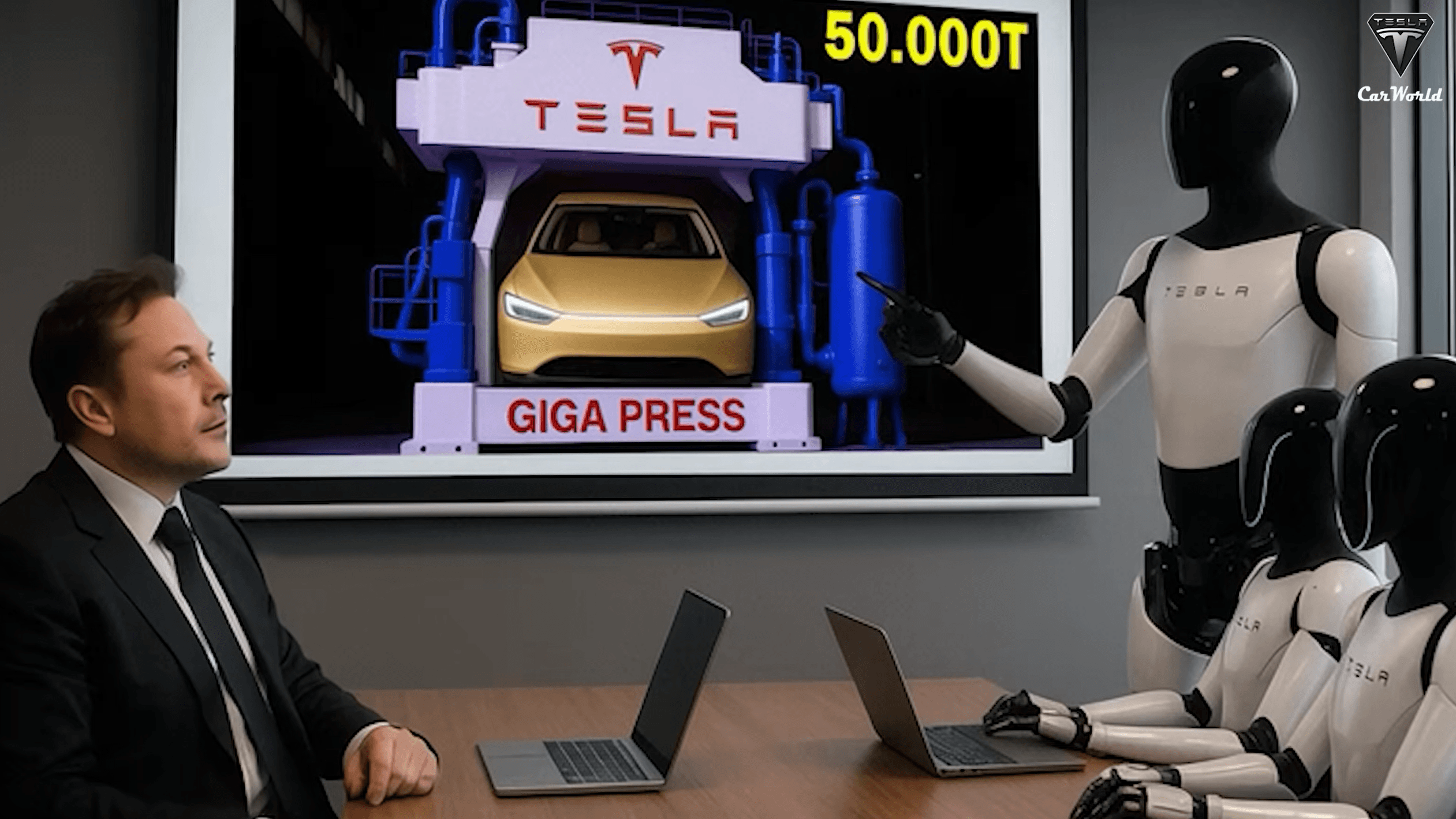
Tesla’s Optimus remains the clearest example. Elon Musk envisions Optimus as a mass-produced, low-cost humanoid worker priced between $20,000 and $30,000 — and believes it could eventually generate 80 percent of Tesla’s total revenue. The company’s Gigafactories serve as a testbed, where thousands of Optimus units will perform repetitive, high-risk, or precision tasks before scaling into logistics and warehouse environments. Tesla’s strategy is to drive down cost per unit and force a new industry standard — turning humanoid robotics into a commodity-level automation platform.
Automakers and the Humanoid Race
A summary of major automotive and tech players developing or deploying bipedal robotics.
| Automaker / Tech Entity | Robot Designation | Development Lead / Partner | Key Application & Strategic Status |
|---|---|---|---|
| Tesla | Optimus (Tesla Bot) | In-house | General-purpose; targeting factory integration and mass-market home use. |
| Hyundai Motor Group | Atlas | Boston Dynamics | Advanced mobility research; Hyundai holds a controlling stake in developer. |
| BMW | Figure 02 | Figure AI | Manufacturing pilot; currently testing in production facilities. |
| Mercedes-Benz | Apollo | Apptronik | Intralogistics; automating repetitive tasks within production lines. |
| Nio | Walker S | UBTECH Robotics | Assembly line piloting; establishing dedicated internal R&D team. |
| Xiaomi | CyberOne | In-house | AI and bionic tech showcase; high-fidelity robotics demonstration. |
| XPeng | Iron | In-house | Industrial and service-oriented bipedal applications. |
| GAC Group | GoMate | In-house | Currently in its third generation; future deployment roadmap active. |
| BYD | Agibot A2 | Agibot | Factory exploration; testing utility in high-volume manufacturing. |
| Chery | Mornine | Aimoga | Customer-facing; deployed within automotive dealerships. |
China’s Industrial-Scale Push
China’s automakers are emerging as the next wave of industrial humanoid developers, backed by strong government policy and world-leading integration speed. XPENG’s new “IRON” humanoid represents the country’s boldest step yet. The robot combines automotive-grade mechanical engineering, autonomous-driving perception algorithms, and self-balancing locomotion into a single embodied AI platform.
By building IRON atop its existing EV technology stack, XPENG positions humanoids as a natural extension of smart manufacturing, not a side project. The company’s approach leverages its existing R&D, sensors, and battery ecosystems to accelerate real-world deployment.
Other Chinese automakers such as GAC, Chery, and Great Wall Motors are following suit, integrating humanoids into production lines and logistics chains. This aligns with a national vision to close labor gaps and boost productivity through automation at scale.
Even Elon Musk has recognized the challenge, remarking that while Tesla may hold first place, “ranks two through ten will likely be Chinese companies.” That statement reflects not only competitive pressure, but the shift toward vertically integrated, rapidly commercialized robotics — an area where Chinese manufacturers excel.
Premium Automation for Industry 5.0
While U.S. and Chinese automakers compete on scale and cost, European carmakers such as Mercedes-Benz are carving out a premium positioning. Their strategy is to integrate humanoids as high-end collaborative workers inside next-generation “Industry 5.0” factories.
Rather than mass-producing robots for sale, Mercedes and others act as anchor customers, partnering with advanced robotics startups such as Apptronik to create tailor-made humanoids for flexible assembly and quality inspection.
Industry experts see this approach as a key bridge between legacy manufacturing and adaptive robotics. Dr. Yue Hu, head of the Active & Interactive Robotics Lab at the University of Waterloo, explains:
“Since humanoids are equipped with legs and are generally shaped like humans, there is no need for factories to reshape their environment. This makes them ideal for the seamless shift toward Industry 5.0 principles.”
This perspective underscores a critical point: humanoids can enter existing facilities with minimal modification — allowing manufacturers to upgrade to collaborative automation without expensive retrofits or workflow redesigns.
Outlook
By the end of this decade, the humanoid robot market will have evolved into a multi-tiered ecosystem shaped by automakers.
Tesla will lead in cost efficiency and global volume.
China’s XPENG IRON and its domestic peers will dominate industrial deployment and scaling.
European manufacturers will define standards for human-robot synergy in advanced factories.
Collectively, they are turning humanoids from futuristic prototypes into the backbone of next-generation manufacturing — an industrial revolution that, quite literally, walks on two legs.









Leave a comment