


This is an opinion/analysis piece based on public information and industry trends.
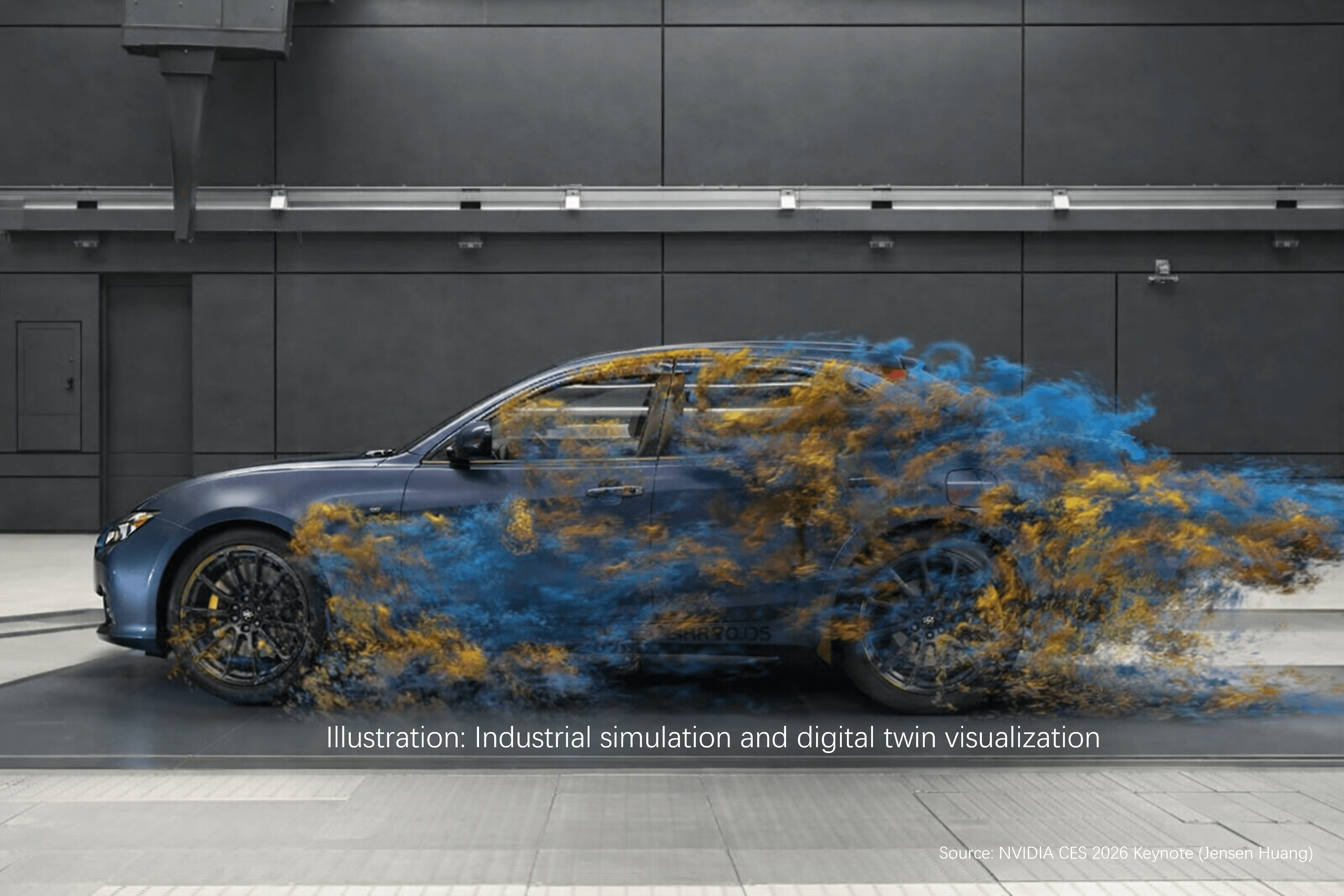
On January 6, 2026, at CES, Siemens and NVIDIA took the stage to announce a major expansion of their partnership: jointly building the “Industrial AI Operating System.” The goal is to deeply integrate Omniverse’s simulation capabilities and Physical AI models with Siemens’ digital twins and automation stack, ultimately creating the world’s first fully AI-driven, adaptive manufacturing sites—starting with Siemens’ own Electronics Factory in Erlangen, Germany, as the initial blueprint.
Media coverage was overwhelmingly positive, hailing it as a landmark alliance between an industrial giant and an AI powerhouse. But flip the perspective: this looks suspiciously like a beautifully wrapped Trojan Horse.
On the surface, Siemens gains access to NVIDIA’s top-tier compute power and world-model capabilities. Beneath that, NVIDIA is quietly extending its tentacles into the most critical industrial assets: training data, model iteration control, and world representation dominance. Once “world models” truly become the upper-layer architecture of industrial automation, the traditional moats of industrial incumbents—proprietary protocols, licensed software, hardware lock-in, customer inertia—will rapidly lose value.
Here’s a breakdown from four angles explaining why legacy control giants like Siemens and FANUC are likely to be disrupted by the “software-defined everything” paradigm within 3–5 years.
1. The Essence of World Models: Software Defines Everything; Legacy Architectures Become the Biggest Liability
Traditional industrial automation stacks are layered relics: Hardware layer (FANUC robot arms,

New players (especially those without historical baggage) build clean, inverted architectures: Universal world model (trained at cloud/edge scale, powered by NVIDIA Isaac, Omniverse, or even
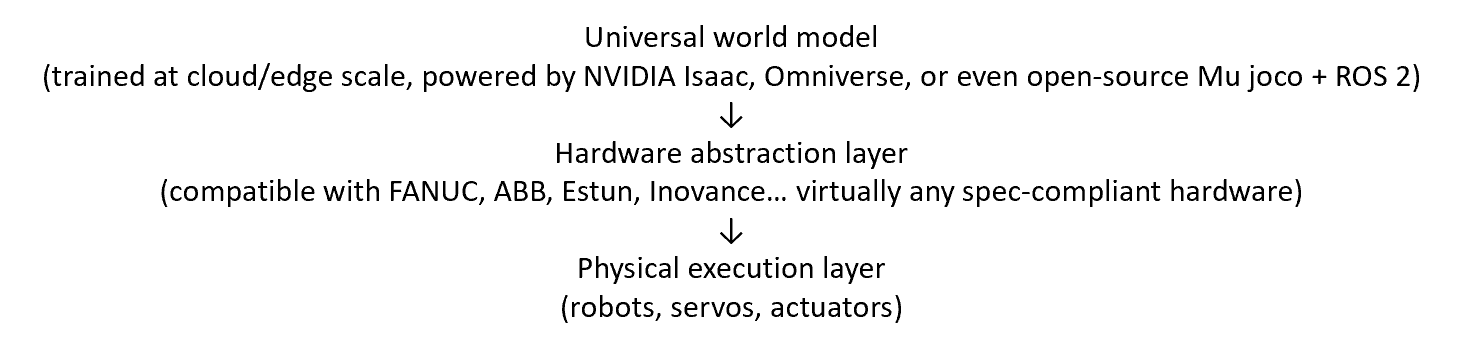
The core conflict: Siemens must protect the billions in annual licensing and service revenue from TIA Portal—it cannot fully open APIs or allow world models to directly override low-level control logic. In contrast, Tesla Optimus, Figure 01, or emerging Chinese players can design “model-first, hardware-agnostic” systems from scratch.
The result: incumbents are forced to “patch” world models onto legacy stacks, while newcomers use world models to “define” the entire system. One is incremental; the other is architectural.
2. Cloud Intelligence = The End of Moats; NVIDIA Omniverse Is the Real Threat
Many view the NVIDIA-Siemens deal as a “win-win powerhouse alliance,” overlooking the fundamental shift in power:
- Siemens contributes industrial data, scenarios, and customer relationships
- NVIDIA contributes compute, simulation platforms (Omniverse), Physical AI models, and training frameworks
Once world-model training scales in the cloud, data advantages evaporate quickly—Omniverse can aggregate cross-industry, multi-vendor data (far beyond just Siemens customers), with iteration speed controlled by NVIDIA and near-zero marginal replication cost.Historical parallels are stark:
- IBM mainframes owned the most enterprise core data, yet AWS cloud made “where the data lives” irrelevant
- Nokia had the largest operator networks and hardware, yet iOS + App Store redefined the value chain
Industrial automation is replaying the same script: “where the data is” no longer matters—what matters is “who controls world-model training and distribution.”
3. Open Source Movement + Chinese Manufacturing = The Deadliest Combo Punch
Open source is smashing barriers to entry:
- ROS 2 + NVIDIA Isaac Sim: free robot OS + high-fidelity industrial simulation
- DeepMind’s Mujoco physics engine (open-sourced)
- Various open/partial-open Physical AI models (including some released by NVIDIA itself)
Layer on China’s supply-chain dominance:
• Hardware costs 30–50% lower (servos, controllers, robot bodies) • Lightning-fast localized service response • AI engineering talent at 1/3–1/5 the cost of Silicon Valley
A realistic scenario is already emerging:
Chinese vendors → train policies using Isaac Sim + open world models → deploy on low-cost hardware (Inovance/Estun/Siasun, etc.) → continuously optimize online via Alibaba Cloud/Huawei Cloud → deliver crushing cost-performance ratios against Siemens/FANUC legacy solutions.
This isn’t “if it will happen”—it’s “how fast it scales.”
4. Organizational Inertia & Innovator’s Dilemma: The Hardest Barrier Isn’t Tech—It’s Themselves
The classic “innovator’s dilemma” symptoms are vividly present in Siemens/FANUC:
Symptom A: Revenue Structure Lock-in
Automation revenue heavily depends on hardware sales + software licenses + long-term service contracts. Shifting to AI subscription/cloud models directly threatens regional sales teams’ commissions and channel incentives—internal resistance is massive.
Symptom B: Crushing Technical Debt
TIA Portal is built on 20-year-old architecture. Truly supporting dynamic world models may require massive rewrites. Resources are perpetually torn between “maintaining legacy customer systems” and “building new tech.”
Symptom C: Customer Lock-in as a Double-Edged Sword
German auto plants and U.S. heavy-industry customers have sunk billions into Siemens/FANUC ecosystems—they fiercely resist anything that “disrupts existing lines.” Giants are held back by the inertia of their best customers, while startups/Chinese players target greenfield factories and incremental markets.
History has repeatedly shown:
-
GE’s Predix industrial internet platform: touted as having a “data moat,” later largely dismantled and written off
-
Legacy automakers vs. Tesla: supply-chain and manufacturing advantages melted away under “software-defined vehicles”
Counterarguments and Short-Term Strengths
To be fair, the NVIDIA-Siemens collaboration delivers real near-term value: Siemens instantly accesses top-tier GPU compute, Omniverse simulation fidelity, and pre-trained Physical AI models—speeding up digital twins and automation without starting from zero. Early pilots, like the 2026 Erlangen factory blueprint, promise gains in design speed, predictive maintenance, and energy efficiency, bolstering installed-base loyalty.
NVIDIA benefits from Siemens’ domain data and expertise, potentially building a mutual ecosystem moat rather than dominance. If Siemens acts boldly—integrating world models into TIA Portal, adding AI subscriptions, and realigning incentives—the window could stretch beyond 3 years. Yet history shows radical change is rare without upheaval (e.g., GE Predix). The risk: legacy constraints may turn these boosts into short-lived patches if NVIDIA ultimately controls model training and distribution.
Conclusion: A 3-Year Window—Revolutionize Yourself or Be Revolutionized
The honest assessment for Siemens/FANUC: Short term (now–2028): Installed base, customer relationships, and industry trust remain enormous advantages. But the half-life of those advantages is likely only 3–5 years.
Optimistic scenario (favorable to incumbents):
- Rapidly integrate world models into existing product lines within 3 years
- Launch genuinely AI-native new brands/new architectures
- Complete the organizational shift from “selling boxes + licenses” to “selling intelligence + subscriptions”
Pessimistic scenario (far more probable):
- 2026–2027: open-source Physical AI models mature
- 2027: Chinese AI+manufacturing alliances deploy low-cost solutions at scale • 2027–2029: new factories widely adopt “world-model-first” architectures • Once the tipping point hits, installed-base replacement accelerates, leaving giants on the defensive
The real question isn’t “will Physical AI strengthen incumbents?”
It’s how short is the time window?
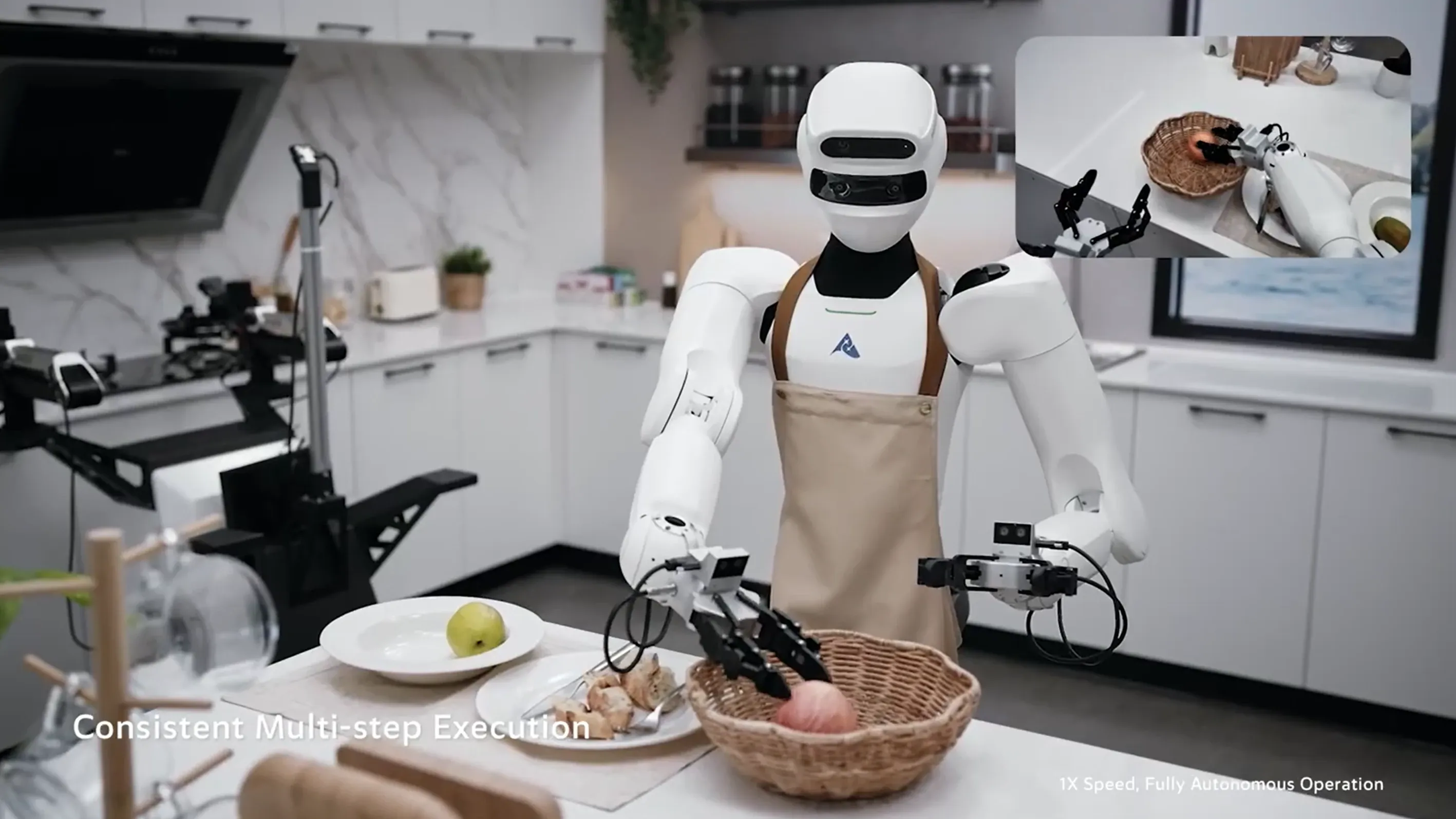
Without self-revolution, clinging to closed industrial loops and data castles will allow emerging forces (those with top-tier AI capabilities and zero legacy burden—Tesla entering industrial automation, Chinese AI+manufacturing alliances, Figure/1X, etc.) to overtake completely. The NVIDIA-Siemens embrace may look like a honeymoon, but the countdown has already begun. What do you think? Is 3 years enough? Or will it be even shorter?
Disclaimer The views expressed here are solely the author's and do not represent any organization or third party. This is an opinion/analysis piece for informational purposes only and is not financial, investment, legal, technical, or professional advice. Readers should perform their own due diligence and consult qualified professionals before acting on this content. No warranties are made regarding accuracy, completeness, or timeliness. The author disclaims liability for any reliance on this article. Historical examples are not guarantees of future outcomes.




Leave a comment