


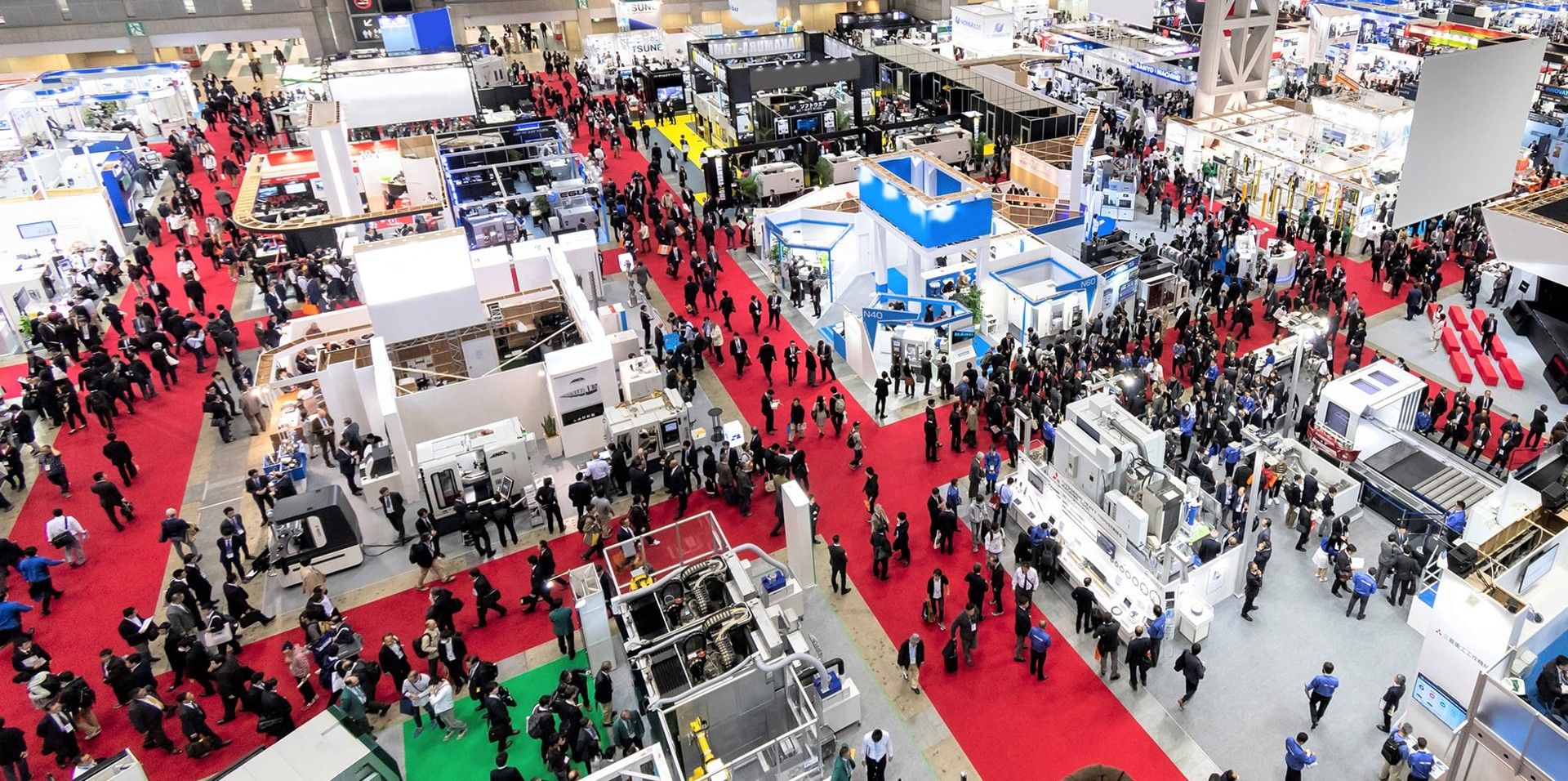
The 26th International Robot Exhibition (iREX 2025), held December 3–6 at Tokyo Big Sight, delivered a clear message to the global robotics industry: while the world obsesses over humanoids and flashy AI concepts, Asia’s manufacturing powerhouses—Japan, China, Korea, and Taiwan—are quietly building the real infrastructure that will determine the next decade of automation.
With more than 600 exhibitors across eight halls, iREX remains the world’s most concentrated display of deployable robotics technology. It is not CES, where futuristic prototypes dominate headlines, nor China’s robot expos, where dozens of humanoids parade for cameras. iREX is about precision, reliability, and engineering maturity—the ingredients required for robots to run factories, not stage demos.
1. A Show Defined by Industrial Pragmatism
The atmosphere at iREX 2025 was unmistakably practical. Booths were filled not with theatrics but with engineers tuning actuators, inspecting gearbox wear, optimizing cycle times, and demonstrating AI-enhanced visual servo systems. While global debate centers on whether robots will “replace jobs,” Japanese manufacturers approached the topic with calm realism: automation is not displacement—it’s workforce stabilization.
Recruitment booths sat alongside robot demonstrations, highlighting an industry addressing demographic decline with engineering rather than rhetoric. Robot cafés, robotics golf games, and live testing stations added energy to the venue, but the underlying theme remained consistent: robots as infrastructure, not entertainment.
2. An Asia-First Supply Chain: Japan Leads, China Accelerates, Korea and Taiwan Strengthen
iREX 2025 once again revealed the geographic truth of industrial robotics: it is overwhelmingly Asia-centric.
Based on the exhibitor list and on-site observations:
Japan formed the clear majority of exhibitors, spanning precision actuators, motion control, industrial arms, cobots, and system integration. Companies such as FANUC, Yaskawa, Kawasaki, DENSO, Nabtesco, Harmonic Drive, and THK demonstrated why Japan remains the backbone of global automation.
China represented the largest foreign contingent, with rapidly expanding presence in sensors, actuators, collaborative robots, AI-powered manipulators, and logistics robotics. Exhibitors included Flexiv, AUBO, Elite Robots, SEER, Standard Robots, PaXini, Percipio, and a wide ecosystem of component suppliers.
Korea contributed a smaller but visible cluster, particularly in AMRs, platforms, and component technologies from Hyundai Robotics Lab, ROBOTIS, and KETI.
Taiwan maintained strong representation in drives, transmissions, and industrial automation modules, notably from HIWIN and partners.
Western participation—Europe and the United States—was modest, concentrated in simulation (e.g., Visual Components), AI orchestration (Realtime Robotics), grippers (OnRobot), metrology, and safety systems.
This distribution reflects a deeper structural divide shaping global robotics:
Asia builds the hardware; the West builds the orchestration layer.
3. Core Technologies on Display: Industrial and Collaborative Robots Still Dominate
Despite the global spotlight on humanoids, iREX 2025 reaffirmed that industrial and collaborative robots remain the economic center of automation.
Key themes included:
• AI-Integrated Cobots
Techman Robot showcased an AI inspection system achieving notable efficiency gains, while Japanese and Chinese cobot ecosystems focused on precision, tactility, and safety.
• Industrial Arms with Embedded Intelligence
Mujin demonstrated rapid-deploy systems leveraging its motion planning AI stack, reducing deployment time compared with traditional integrator workflows.
• Logistics and Mobility Systems
Companies such as Standard Robots, SEER, Hai Robotics, and MIR highlighted the maturing AMR/AGV landscape—an area where Asia is rapidly closing the gap with Europe.
• High-Precision Components and Mechanisms
From harmonic drives to linear actuators, from force-torque sensors to advanced encoders, component suppliers formed one of the densest clusters at the exhibition—evidence that the real innovation bottleneck is frequently in mechanics, not AI.
4. Where Are the Humanoids? Present, but Not the Main Event
A few humanoids did appear—Kawasaki’s firefighting-oriented Kaleido, PAL Robotics’ models, Unitree’s fast-moving platforms—but they occupied a much smaller role compared with China’s exhibitions, where humanoids dominate the narrative.
iREX’s perspective is fundamentally different:
Japan prioritizes tasks over form factor.
Industrial reliability outweighs anthropomorphic design.
Humanoids are tools, not mascots.
This stands in stark contrast to global media expectations—and reinforces iREX’s identity as a show for engineers, not showmanship.
5. iREX vs. CES vs. China: Three Divergent Robotics Futures
CES:
Concept-driven, AI-heavy, hardware-light. Consumer robotics and speculative prototypes dominate.
China’s Robot Conferences:
Large humanoid presence, rapid iteration cycles, expanding low-cost supply chains, and growing ambitions to own the full industrial stack.
iREX (Japan):
Measured, engineering-driven, reliability-first.
Hardware depth > hype.
Precision > virality.
Integration > theatrics.
Together, these events reveal three competing global models for robotics development.
6. Strategic Implications for 2025–2030
• Asia will control the hardware stack more tightly than ever.
Japan’s precision, China’s scale, Korea’s platforms, and Taiwan’s motion components increasingly form a unified supply chain.
• Western companies must differentiate on software, simulation, compliance, and specialized robotics AI.
• Humanoid hype will not replace industrial fundamentals.
Factories still run on delta arms, SCARAs, articulated robots, AMRs—and the companies mastering these categories will define automation’s real growth trajectory.
• Cross-Asian cooperation (e.g., Chinese sensors + Japanese actuators) may create the world’s most cost-effective industrial systems.
Conclusion: iREX 2025 Shows the Real Future of Robotics—Practical, Precise, and Asian-Led
While social media obsesses over humanoid demos, iREX 2025 reminded the world that robotics progress is determined by engineering discipline, not viral videos.
For manufacturers, integrators, and investors, the message is clear:
The next robot era will be built not by hype, but by the countries already delivering reliable industrial automation today.
And those countries are overwhelmingly in Asia.





Leave a comment