

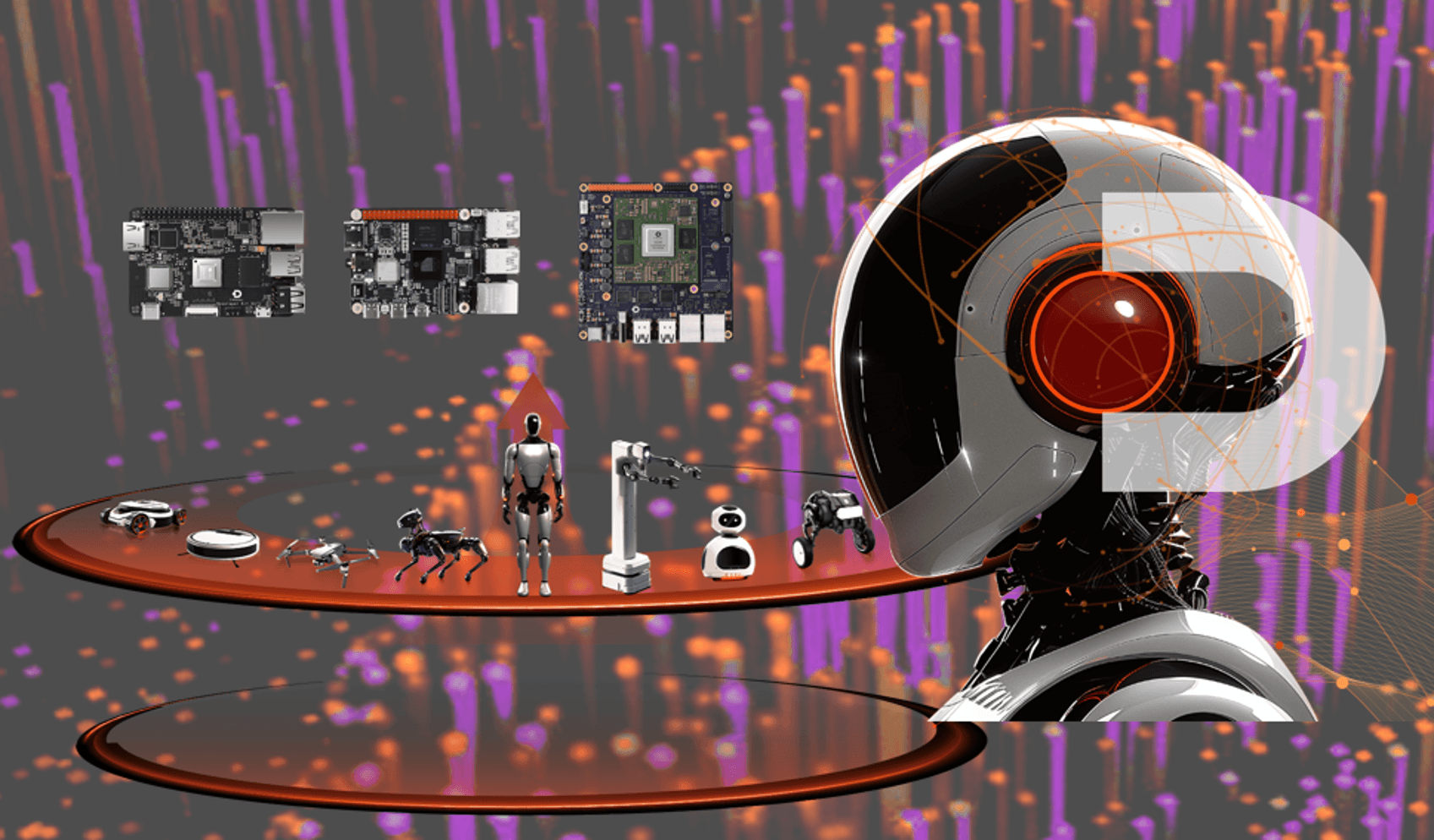
$220M Total Funding Raised | $120M Series B1 (March 2026) | 5 → 560 TOPS Compute Range | 2024 Spun Out of Horizon Robotics |
1. FUNDRAISING BRIEFING
D-Robotics, China's foremost provider of embodied intelligence infrastructure, closed a $120 million Series B1 funding round on 16 March 2026. The raise brings cumulative funding to $220 million, following a $100 million Series A completed in January 2025. The round was oversubscribed and attracted a strategically cohesive group of backers spanning industrial operators and blue-chip technology investors.
Strategic investors include Didi, Meituan Longzhu, and BAIC Capital—each bringing privileged access to high-volume deployment environments across mobility, last-mile delivery, and automotive manufacturing. Financial investors Hillhouse Venture Capital and Vertex Growth (the growth arm of Temasek) returned with increased follow-on commitments, underscoring continued institutional conviction in the company's infrastructure-layer thesis.
| "Selling shovels in the gold rush": D-Robotics does not compete with its customers—it supplies the standardised chips, algorithms, and software stacks that underpin the entire robotics ecosystem. |
The company positions itself as the common denominator of the robotics industry—a platform play that enables scalable deployment across humanoid robots, quadrupeds, drones, service robots, and logistics AMRs, without entering the crowded end-product market.
Investor Syndicate
| Investor | Type | Strategic Rationale |
|---|---|---|
| Didi | Strategic | Mobility / ride-hailing deployment at scale |
| Meituan Longzhu | Strategic | Last-mile delivery and service robotics deployment |
| BAIC Capital | Strategic | Automotive manufacturing and fleet integration |
| Hillhouse Venture Capital | Financial | Tier-1 Asia technology investor; follow-on from prior round |
| Vertex Growth (Temasek) | Financial | Singapore sovereign-linked growth investor; oversubscribed follow-on |
2. INVESTMENT THESIS — WHY D-ROBOTICS?
Core Value Proposition
D-Robotics occupies a structural position in the embodied intelligence stack that is analogous to what Arm Holdings provides for mobile processors, or what Wintel provided for personal computing. Rather than racing to ship end-use robots, the company builds and licenses the compute architecture, operating system, and algorithm toolchain that robot-makers depend on. This non-compete model eliminates channel conflict and allows D-Robotics to serve the entire industry without favouring any single customer.
Core Technology Stack
| Technology Layer | Description |
|---|---|
| BPU Architecture | Inherited from Horizon Robotics, with automotive-grade reliability and mass-production DNA validated across millions of units |
| Full Compute Spectrum | 5–560 TOPS product lineup covering edge computing through high-performance applications in a single unified architecture |
| Full-Stack Platform | Integrated chip + algorithm + software solution, comprising TogetheROS.Bot OS, NodeHub algorithm centre, and cloud development environment |
| Cross-Scenario Adaptability | Single architecture supporting humanoid robots, quadrupeds, drones, service robots, and logistics AMRs without fragmentation |
Team & Heritage
D-Robotics was carved out of Horizon Robotics (HKEX: 9660) in 2024, inheriting the company's AIoT and Robotics Division along with a decade of accumulated expertise in autonomous-driving edge AI and high-volume semiconductor engineering. The founding team brings a rare combination of deep chip architecture knowledge and practical mass-production discipline—a pairing the robotics industry critically lacks. Horizon Robotics itself shipped AI processors into tens of millions of vehicles, giving D-Robotics a pedigree that purely software-first robotics startups cannot replicate.
Proven Commercial Traction
D-Robotics has already achieved design wins across multiple product categories, validating its cross-segment architecture thesis in practice:
Narwal 逍遥002 robotic vacuum — AI binocular perception module
Insta360 影翎 Antigravity A1 — 360° autonomous drone
Weita Dynamics intelligent companion quadruped robot
These commercial deployments demonstrate the company's ability to traverse the frequently fatal gap between R&D prototypes and mass-market production—a capability that remains scarce across the global robotics industry.
Market Timing
The embodied intelligence sector is reaching an inflection point in 2026. Humanoid robot annual deliveries are projected to surpass 10,000 units this year; consumer quadruped volumes are expected to exceed 100,000 units. As manufacturers scale, the demand for standardised, reliable compute infrastructure intensifies—and the cost of fragmentation rises. D-Robotics is positioned to capture value at precisely this moment of market maturation.
3. GLOBAL COMPETITIVE LANDSCAPE
D-Robotics operates at the intersection of edge AI silicon and robotics middleware—a space currently addressed by a fragmented field of general-purpose chip vendors, narrowly focused vision processors, and legacy industrial compute suppliers. No single incumbent presently offers the combined depth of robotics-specific compute optimisation, full-stack software integration, and China-market manufacturing localisation that D-Robotics has assembled.
| Company | HQ | Positioning | Strengths | vs. D-Robotics |
|---|---|---|---|---|
| NVIDIA (Jetson) | USA | General-purpose edge AI | Dominant CUDA ecosystem; broad developer community | Not robotics-native; lacks embodied-AI-specific optimisation; high power consumption |
| Qualcomm (RB Series) | USA | Robotics-focused SoC | Mobile silicon heritage; strong connectivity stack | Fragmented tooling; limited full-stack software support |
| Intel (Movidius / OpenVINO) | USA | Vision & AI accelerators | x86 compatibility; established enterprise relationships | No unified robotics OS; heavy customisation required |
| Ambarella | USA | CV / robotics processors | Strong drone and automotive CV pedigree | Narrower compute range; limited China-market localisation |
| Horizon Robotics (parent) | China | Automotive ADAS / AD | Proven mass-production BPU architecture | Automotive-first focus; D-Robotics is the dedicated robotics spin-out |
| Allwinner / Rockchip | China | General-purpose SoC | Cost-competitive; broad product portfolio | No specialised AI acceleration; no robotics software stack |
D-Robotics' Structural Advantages
Mass-Production DNA: Unlike lab-focused or software-first competitors, D-Robotics inherits Horizon Robotics' automotive-grade engineering rigour—essential for achieving the reliability standards that large-scale commercial deployment demands.
Full-Stack Integration: While NVIDIA's Jetson platform offers powerful raw compute, D-Robotics delivers a complete cloud-to-chip development environment—including simulation tooling, synthetic data generation, and one-click deployment pipelines—expressly designed for robotics workflows.
China Manufacturing Ecosystem Advantage: Deep integration with domestic supply chains and OEM networks enables faster time-to-market for Chinese robotics manufacturers, who represent the fastest-growing customer segment globally.
Strategic Investor Deployment Access: Backed by Didi, Meituan, and BAIC, D-Robotics has preferential pathways into high-volume real-world deployment environments that hardware-only competitors cannot readily access.
Compute Range Breadth: The 5–560 TOPS product spectrum covers applications from entry-level household robots to compute-intensive humanoids—competitors typically serve narrower segments and require customers to switch platforms as requirements scale.
| D-Robotics aims to establish the standardised infrastructure layer that enables the robotics industry to move from fragmented innovation to scalable, commercial deployment at industrial scale. |







Leave a comment